
Most people treat their car insurance like a utility bill. It arrives in the mail or pops up in your inbox once every six months or every year, and you simply pay it. You might grumble a little if the price went up, but you figure that is just “the way things are.”
The truth is that insurance companies often count on your laziness. There is even a term for it in the industry called price optimization. This is a fancy way of saying that companies might charge you more simply because they think you are unlikely to shop around for a better deal.
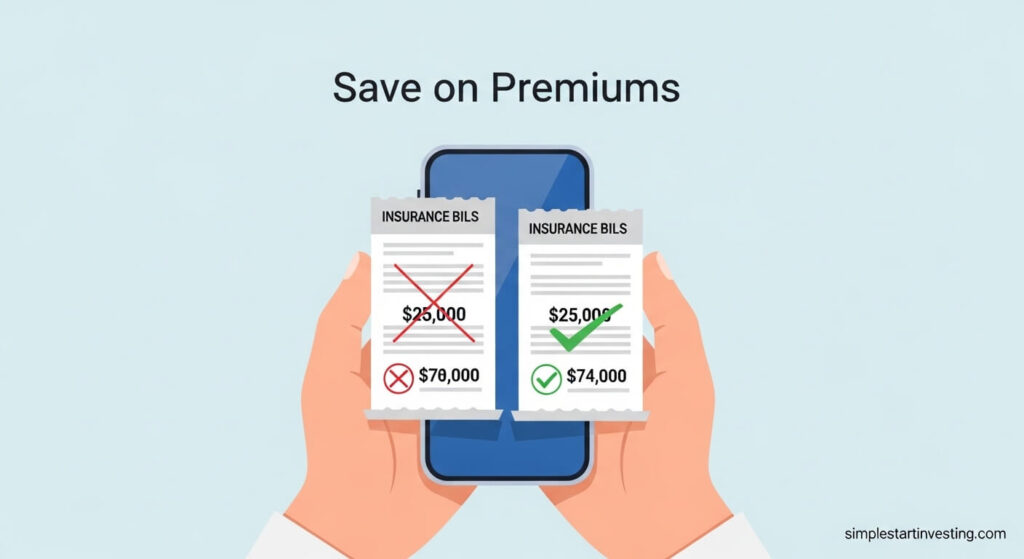
If you want to keep more money in your pocket, you have to stop being a passive consumer. Learning how to manage your car insurance premiums is one of the easiest ways to improve your personal finances without having to give up your daily coffee or sell your belongings.
What Exactly Are Car Insurance Premiums?
Before we dive into how to lower the cost, let’s make sure we are on the same page about what you are actually paying for. In the simplest terms, a premium is the price you pay to keep your insurance policy active. You can think of it like a subscription service, similar to Netflix or a gym membership.
As long as you pay your premium, the insurance company promises to help cover the costs if you get into an accident, if your car is stolen, or if it is damaged by something like a falling tree. If you stop paying the premium, the “subscription” is canceled, and you are on your own for any costs.

Most people pay their car insurance premiums in one of two ways. You can pay the whole amount upfront for six months or a year, or you can pay a smaller amount every month. Usually, paying the full amount upfront is cheaper because companies often charge a small “convenience fee” for monthly billing.
Why Your Rates Change (Even When You Haven’t Had an Accident)
One of the most frustrating experiences for a driver is seeing their bill go up even though they have a perfect driving record. It feels unfair, right? You didn’t do anything wrong, so why are you being punished?
Insurance is all about a giant pool of money. When you pay your premium, you are putting money into a pool with millions of other drivers. When someone in that pool has an accident, the insurance company pulls money out to pay for the repairs.
If the cost of car parts goes up, or if labor at repair shops becomes more expensive, the company has to take more money out of the pool. To keep the pool full, they have to charge everyone a little bit more. This is why your car insurance premiums might rise due to national inflation or a spike in local accidents, even if you are the safest driver on the road.
The Myth of Loyalty: Why Shopping Around Matters
Many people believe that staying with the same insurance company for twenty years will earn them a “loyalty discount” that makes their rate unbeatable. While some companies do offer small discounts for long-term customers, they often pale in comparison to the rates you could get by switching.
Think of it like a cell phone provider. They usually offer the best deals to new customers to get them to join. Existing customers often get stuck with older, more expensive plans.
Insurance companies use data to predict which customers are “price sensitive” and which ones are “inert.” If you haven’t checked prices in five years, the company assumes you aren’t going to leave, so they have very little incentive to lower your rate. By shopping around once a year, you prove that you are paying attention.
Understanding the Relationship Between Deductibles and Premiums
If you want to lower your monthly or yearly bill right now, the fastest lever you can pull is your deductible. But you need to understand the trade-off first.
A deductible is the amount of money you agree to pay out of your own pocket before the insurance company kicks in their share. For example, if you have a 500 dollar deductible and you get into an accident that causes 2,000 dollars in damage, you pay the first 500 dollars and the insurance company pays the remaining 1,500 dollars.

Here is the rule of thumb: the higher your deductible, the lower your premium.
If you raise your deductible from 500 dollars to 1,000 dollars, you are taking on more of the risk yourself. Because the insurance company is now “on the hook” for less money, they will reward you with lower car insurance premiums.
However, you should only do this if you actually have 1,000 dollars sitting in a savings account. If you raise your deductible but don’t have the cash to cover it, an accident could put you in a very difficult financial position.
Telematics: Letting Your Car Prove You Are a Good Driver
In the past, insurance companies had to guess how safe you were based on your age, your zip code, and your credit score. Today, they can actually “see” how you drive through a technology called telematics.
Most major insurance companies now have an app you can download or a small device you can plug into your car. It tracks things like:
- How hard you slam on your brakes.
- How fast you take corners.
- What time of day you usually drive (driving at 2:00 AM is considered riskier than 2:00 PM).
- How many miles you drive each year.
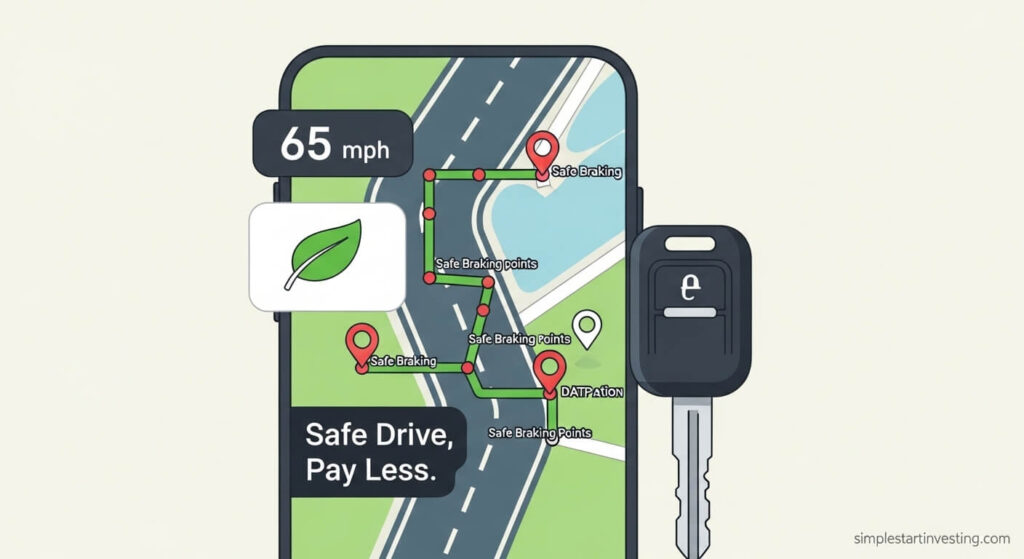
If the data shows that you are a cautious driver who doesn’t speed and avoids late-night trips, the company can offer you a massive discount. Some people save 30% or more on their car insurance premiums just by using these programs.
The downside? If you have a “lead foot” or frequently drive in heavy traffic where you have to brake suddenly, telematics might not save you much, or in some rare cases, could even highlight risks that keep your rates high.
The Power of Bundling Your Policies
One of the oldest tricks in the book is still one of the most effective. If you have car insurance with Company A and renters or homeowners insurance with Company B, you are likely overpaying.
Insurance companies love “sticky” customers. A customer who has both their house and their car insured with the same company is much less likely to switch. To encourage this, they offer “bundling” discounts.
By moving both policies under one roof, you might see a 10% to 25% reduction in your total costs. It also makes your life easier because you only have one login and one company to deal with if something goes wrong.
How Your Credit Score Affects Your Driving Bill
This is a point that surprises many people: in most US states, your credit score has a huge impact on your car insurance premiums.
Insurance companies have found a statistical link between how people manage their finances and how they drive. Generally, people with higher credit scores are seen as “lower risk” and are involved in fewer accidents.
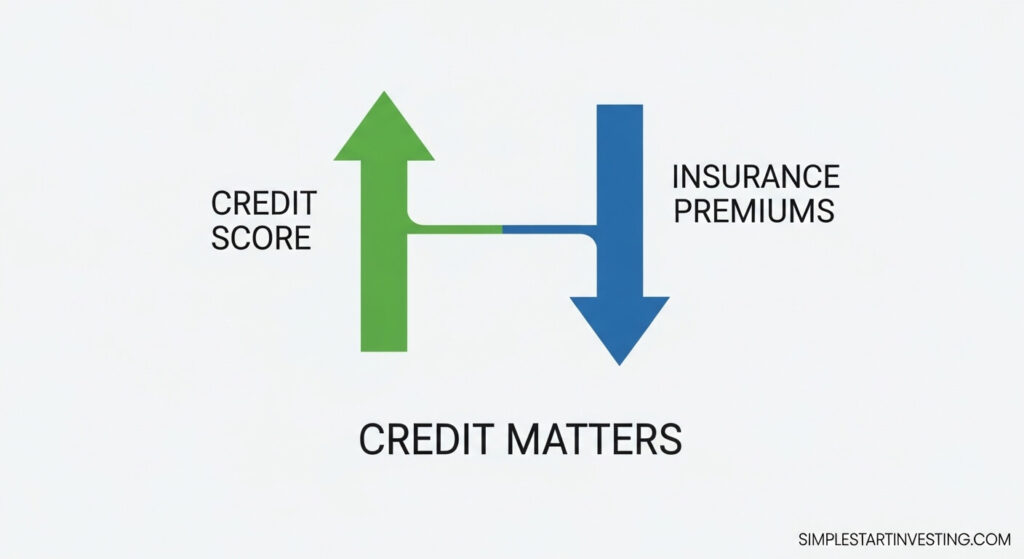
If you have spent the last year improving your credit score—perhaps by paying down credit card debt or ensuring all your bills are paid on time—you should call your insurance agent. Ask them to re-run your “insurance score.” A better credit profile could lead to a significantly lower premium, even if nothing else in your life has changed.
Reviewing Your Coverage as Your Car Ages
When you buy a brand-new car, you want “full coverage.” This usually includes Collision and Comprehensive insurance, which pays to fix or replace your car regardless of who is at fault.
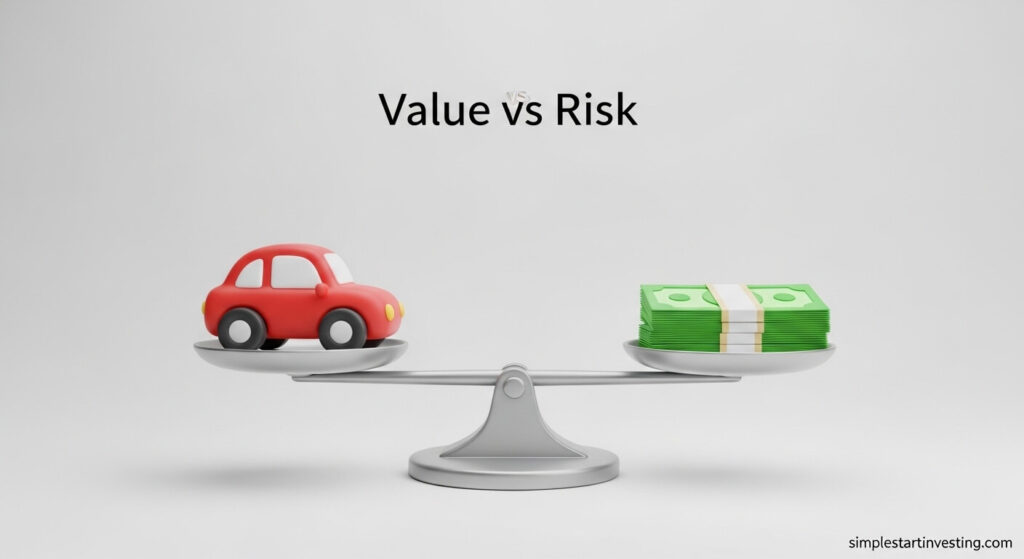
But as a car gets older, its market value drops. Eventually, you might reach a point where you are paying 400 dollars a year for coverage on a car that is only worth 2,000 dollars.
If your car is very old, it might make sense to drop Collision and Comprehensive and keep only the Liability coverage required by law. Liability pays for the other person’s car and medical bills if you cause an accident, but it doesn’t pay for yours.
A simple way to decide is to look at the annual cost of the extra coverage. If that cost, plus your deductible, is close to the total value of the car, it is time to drop the extra insurance and just “self-insure” by saving that money instead.
Searching for “Hidden” Discounts
Insurance companies have dozens of discounts that they don’t always advertise. You often have to ask for them specifically. Here are a few common ones to check for:
- Professional/Alumni Groups: Are you a teacher, a nurse, an engineer, or a member of a specific university alumni association? Many companies offer group discounts for these professions.
- Defensive Driving Courses: Taking an approved safety course (often available online for about 25 dollars) can sometimes shave 5% to 10% off your bill for several years.
- Good Student Discount: If you have a high school or college student on your policy with a B average or higher, you can get a discount.
- Low Mileage: If you started working from home and your annual mileage dropped from 12,000 miles to 3,000 miles, your risk of an accident is much lower. Make sure your policy reflects your actual mileage.
Step-by-Step: Your Annual Insurance Checkup
To make sure you are getting the best deal on your car insurance premiums, follow this simple routine once a year, about 30 days before your current policy expires:
- Gather your current data: Look at your “Declarations Page.” This shows exactly how much coverage you have and what you are paying.
- Get three quotes: Use a comparison website or call a few different companies. Make sure you are comparing “apples to apples”—the same coverage limits and the same deductibles.
- Call your current company: Tell them you found a lower rate elsewhere. Ask them, “Is there anything you can do to match this or any discounts I am missing?”
- Check for “Telematics” options: Ask if they have a safe-driving app that can lower your rate.
- Confirm the switch: If you find a better deal, sign up for the new policy before you cancel the old one. You never want a “gap” in your insurance coverage, as this can cause your rates to spike in the future.
Final Thoughts on Lowering Your Costs
Lowering your car insurance premiums isn’t about finding a “secret” company that no one knows about. It is about being an active participant in your own financial life. By understanding how deductibles work, utilizing modern technology like telematics, and refusing to pay a “loyalty penalty,” you can save hundreds of dollars every year.
Remember, the goal isn’t necessarily to find the cheapest insurance possible—you want to find the best value. This means having enough coverage to protect your assets if the worst happens, without overpaying for things you don’t need.
Take an hour this weekend to review your policy. That small investment of time could pay for your next vacation or help you reach your savings goals faster.
Disclaimer: This content is for educational purposes only and does not constitute financial advice. Insurance regulations and available discounts vary by state and individual circumstances. Always consult with a licensed insurance professional before making changes to your coverage.