Walking into a house for the first time is a lot like a first date. Within the first few seconds, you usually know if there is a “spark.” In the world of real estate, that spark is often created through a process called staging. If you are new to selling real estate or looking to get the best price for your current home, understanding home staging for beginners is your secret weapon for a faster, more profitable sale.
Many people think staging is just about buying fancy furniture or hiring an expensive interior designer. In reality, it is a strategic marketing tool. It is the art of preparing a private residence for sale in the real estate marketplace. The goal is to make the home appealing to the highest number of potential buyers, thereby selling the property more quickly and for more money.
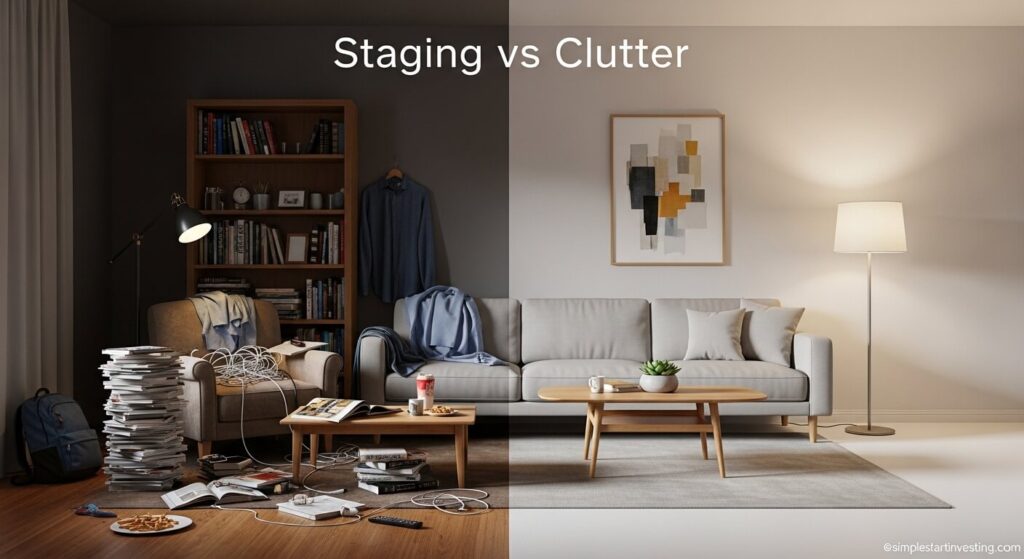
When you live in a home, you decorate it to reflect your personality and your lifestyle. When you sell a home, you need to do the exact opposite. You want to turn your “home” back into a “house”—a clean slate where someone else can imagine their own life unfolding. Let’s dive into how you can master this process without spending a fortune.
What Is Home Staging Really?
At its core, home staging for beginners is about highlighting a property’s strengths and downplaying its weaknesses. It is not about “hiding” flaws, but rather about directing the buyer’s eyes to the features that add value, like a spacious living room, a modern kitchen, or a beautiful backyard view.
A common misconception is that staging is the same as decorating. Decorating is personal; it’s about what you like. Staging is impersonal; it’s about what the market likes. Think of it like a car dealership. They don’t just leave a used car with the previous owner’s coffee cups and floor mats. They detail it until it looks and smells like new so that the next buyer can see themselves driving it.
In the US market, staging has become almost a requirement rather than a luxury. Most buyers start their search online, scrolling through photos on their phones. If the house doesn’t look inviting in those first few pictures, they won’t even book a showing. Proper staging ensures your home stands out in a crowded digital feed.
The Psychology of the “Blank Canvas”
Why does staging work? It’s because most people struggle with visualization. If a room is packed with your family photos, quirky souvenirs, and oversized furniture, a buyer sees your life, not theirs. They feel like an intruder in someone else’s space rather than a potential owner.
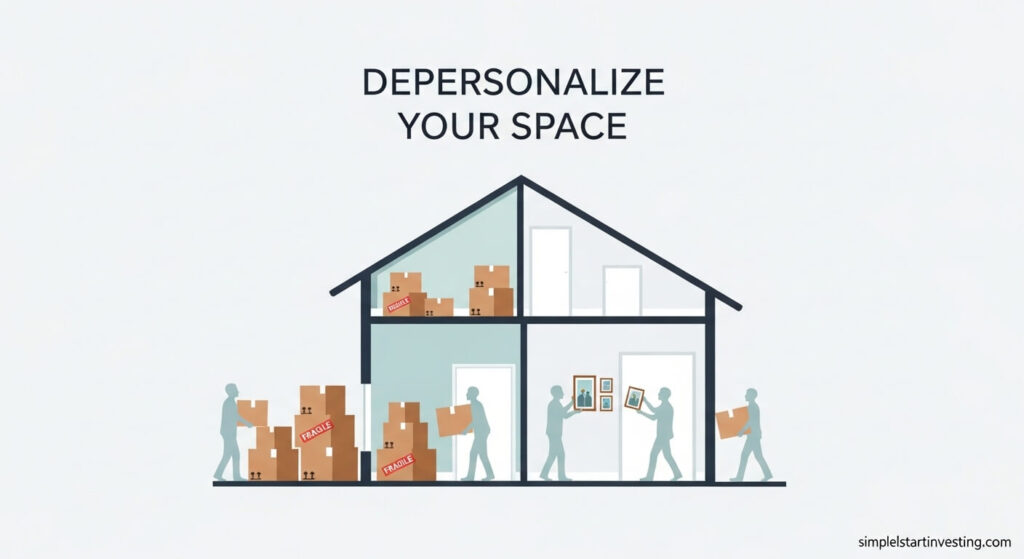
By depersonalizing the space, you create a blank canvas. You want a buyer to walk through the front door and think, “I can see my sofa sitting right there,” or “My kids would love playing in this den.” If they are busy looking at your high school trophies or your collection of vintage clocks, they aren’t looking at the square footage or the natural light.
When we talk about home staging for beginners, the psychological goal is to create an emotional connection. We want the buyer to feel a sense of calm and possibility. A cluttered, dark house feels stressful. A clean, bright, and organized house feels like a fresh start. Most people buy homes based on emotion and then justify it with logic later. Staging handles the emotional part of the sale.
The Three Pillars: Declutter, Depersonalize, and Deep Clean
Before you move a single piece of furniture or buy a new lamp, you must master the “Big Three.” These are the most cost-effective ways to increase your home’s value because they mostly cost you time rather than money.
1. The Art of Decluttering
Clutter kills deals. It makes rooms look smaller and suggests that the house doesn’t have enough storage. If your closets are bursting at the seams, a buyer will assume they won’t have enough room for their clothes either.
Start by removing about fifty percent of your belongings. This includes books on the shelves, gadgets on the kitchen counters, and extra chairs in the dining room. If you haven’t used it in a month, box it up and put it in storage. Empty space is perceived as “luxury” space in the eyes of a buyer.

2. Depersonalizing the Space
You love your family photos, but a buyer shouldn’t see them. Remove anything that identifies the home specifically as yours. This includes religious items, political posters, and children’s artwork on the refrigerator.
The goal is to make the house look like a high-end hotel suite. It should be stylish and welcoming, but neutral enough that anyone could feel at home there. This allows the buyer to focus on the architecture and the flow of the rooms rather than your personal history.
3. The Power of a Deep Clean
A “clean” home for living is different from a “clean” home for selling. For home staging for beginners, you need a level of cleanliness that borders on the professional. This means scrubbing the baseboards, cleaning inside the light fixtures, and ensuring the windows are crystal clear.
Buyers notice smells before they notice decor. If a house smells like pets, cigarettes, or heavy cooking, many buyers will walk out immediately. They associate bad smells with hidden damage or a lack of maintenance. A deep clean removes the source of these odors, creating a fresh environment that feels “move-in ready.”
Lighting: The Secret to Making Spaces Feel Large
Light is one of the most important factors in real estate. A dark house feels small, damp, and depressing. A bright house feels large, airy, and expensive. When you are looking at home staging for beginners, upgrading your lighting is one of the highest-return investments you can make.
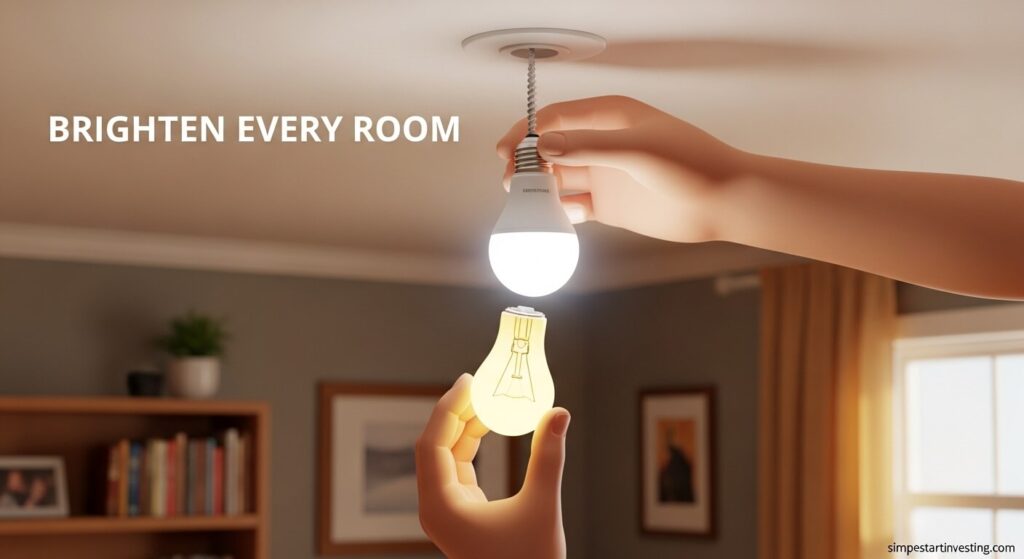
First, maximize natural light. Pull back the curtains, wash the windows, and make sure no large bushes are blocking the light from outside. During showings, every single light in the house should be turned on—even during the day. This eliminates dark corners and makes the home feel more inviting.
Second, consider the “color” of your light bulbs. Old, yellow incandescent bulbs can make a room look dated and “muddy.” Modern LED bulbs in a “Soft White” or “Warm White” range provide a crisp, clean glow that mimics daylight without feeling like a sterile hospital. Replacing all the mismatched bulbs in your house with consistent, bright LEDs can make a massive difference in how the space photographs.
The “First 30 Seconds” and Curb Appeal
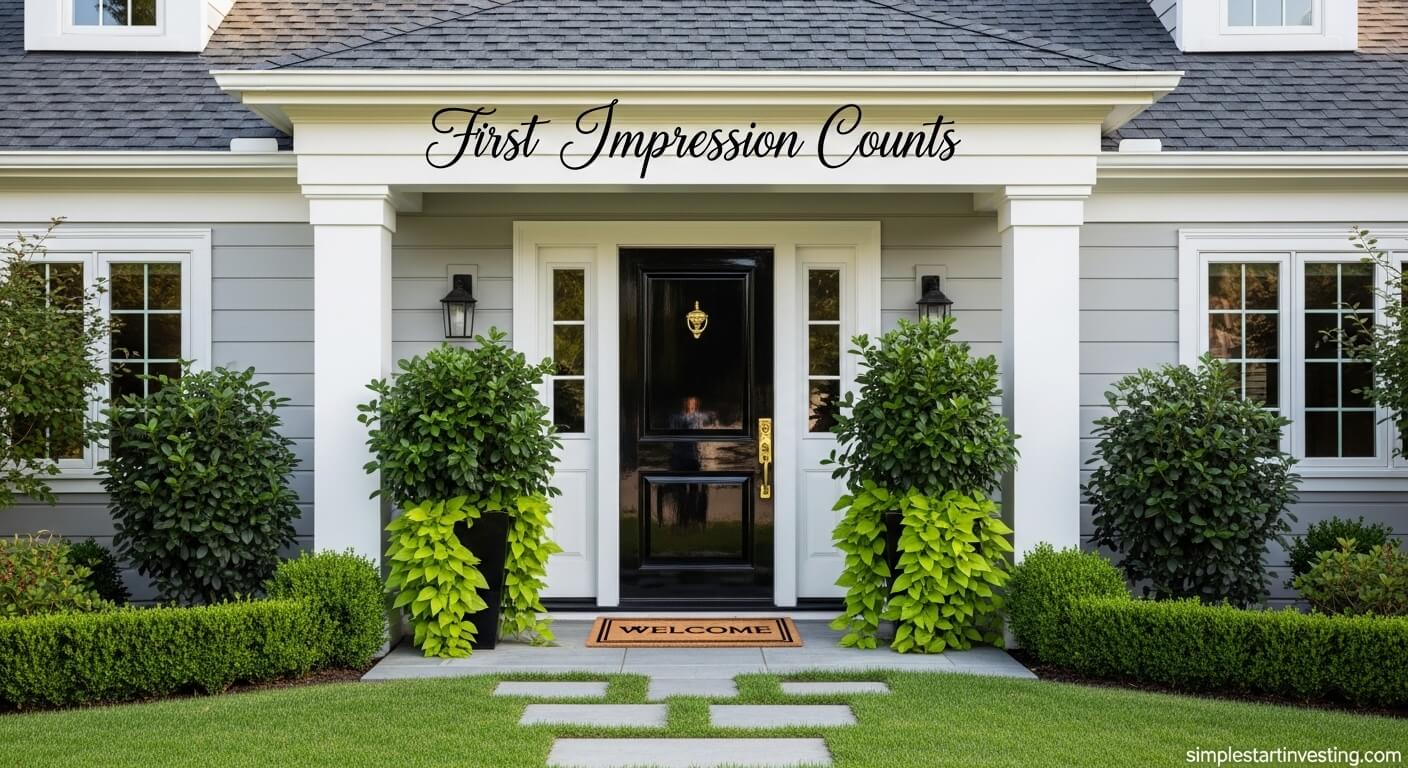
The showing starts long before the buyer walks through the front door. It starts the moment they pull up to the curb. If the exterior looks neglected, the buyer will assume the interior is neglected too. They might even decide not to go inside at all.
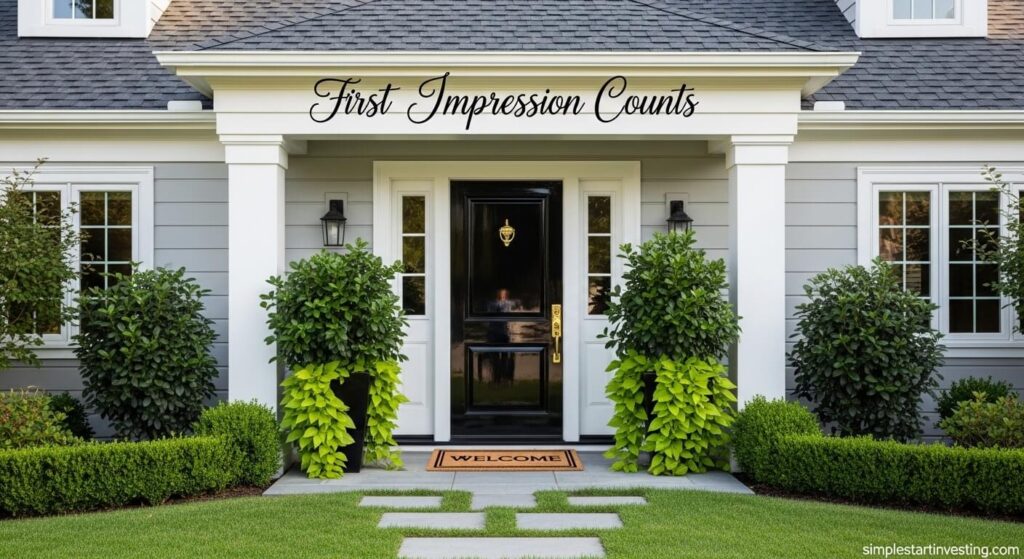
Curb appeal is the “packaging” of your product. You don’t need a professional landscaper to make a good impression. Simple tasks like mowing the lawn, pulling weeds, and adding a fresh layer of dark mulch can transform a yard.
A fresh coat of paint on the front door is another low-cost trick. Choose a color that stands out but complements the house—like a classic navy blue or a bold charcoal. Add a new, clean welcome mat and a couple of potted plants near the entrance. These small details signal to the buyer that the home has been well-cared for and is ready for a new owner.
Master the “Big Rooms” First
If you have a limited budget or time, focus on the rooms that have the most impact on a buyer’s decision. Generally, these are the Living Room, the Kitchen, and the Primary Bedroom.
The Living Room: Focus on Conversation
Arrange furniture to create a natural “conversation area.” Don’t push all the furniture against the walls; this actually makes a room feel smaller. By “floating” the sofa and chairs away from the walls, you create a better flow. Use a few neutral throw pillows to add a pop of color and texture without being overwhelming.
The Kitchen: The Heart of the Home
The kitchen is often the most important room in the house. You don’t need a full renovation to stage it effectively. Clear everything off the counters except for maybe one high-end appliance, like a clean espresso machine, or a bowl of fresh lemons. If your cabinets look dated, simply replacing the old handles and knobs with modern hardware can give the whole room a face-lift for less than a hundred dollars.
The Primary Bedroom: Create a Sanctuary
Buyers want to feel like they are entering a peaceful retreat. Use neutral, light-colored bedding. Make sure the bed is made perfectly with plenty of pillows. Keep the nightstands clear of clutter like phone chargers or medications. The goal is to make it look like a room where you can truly relax at the end of a long day.
Understanding the “Math” of Staging
While we aren’t using complex formulas, it is important to understand the logic of why people spend money on staging. Think of it as an investment rather than an expense.
Let’s look at a simple example. Suppose you are selling a house for 400,000 dollars. If the house is cluttered and dark, it might sit on the market for three months, forcing you to drop the price to 385,000 dollars to attract a buyer. In this scenario, you have “lost” 15,000 dollars.
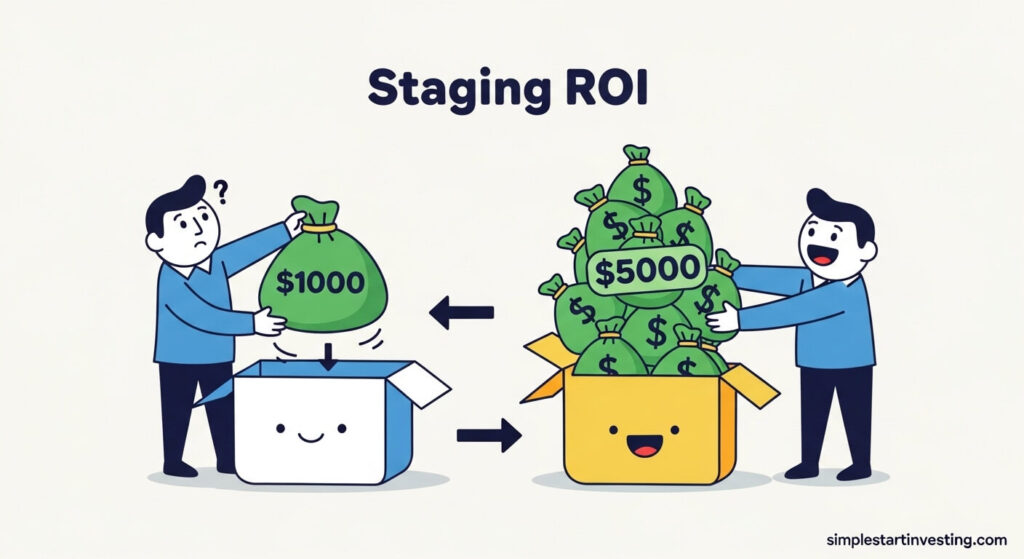
Now, imagine if you spent 1,000 dollars on staging before listing it. You spent 300 dollars on professional cleaning, 200 dollars on new light bulbs and hardware, and 500 dollars on a storage unit to hide your clutter. If those changes help you sell the house in the first week for the full 400,000 dollars, you haven’t really “spent” 1,000 dollars. You have actually saved 14,000 dollars that you would have lost through a price reduction.
This is the core of home staging for beginners: spending a small amount of money and effort upfront to protect your equity and avoid costly price cuts later. In many cases, staged homes sell for significantly more than non-staged homes because they attract multiple offers, which can drive the price even higher than the original asking amount.
Common Mistakes Beginners Make
Even with the best intentions, it’s easy to go overboard or miss the mark when you are new to this.
One major mistake is “over-staging.” You don’t want the house to look like a movie set where no one could actually live. If every single surface has a decorative vase or a tray with fake champagne glasses, it feels “try-hard” and can make buyers uncomfortable. Keep it simple and authentic.
Another mistake is ignoring the “nose factor.” We mentioned cleaning, but some sellers try to hide smells with heavy air fresheners or scented candles. This is a red flag for buyers. They will wonder what you are trying to hide—is it mold? Pet urine? Instead of masking odors, use an air purifier and open the windows to let in fresh air.
Lastly, don’t forget the “utility” spaces. Beginners often focus so much on the living room that they leave the garage or the laundry room looking like a disaster zone. Buyers look everywhere. A messy garage suggests that the owner didn’t have enough space or didn’t care about organization. Spend an hour tidying these areas too; it shows that the entire property has been maintained with pride.
Staging for the Digital Eye
In today’s market, your “First Open House” happens on a smartphone screen. Most people will decide whether to visit your home based on the photos they see on sites like Zillow or Realtor.com. This means your staging needs to be “camera-ready.”
Some things that look good in person don’t always look good in photos. For example, very small patterns on rugs or pillows can look “busy” or distorted in digital images. Large, solid blocks of color usually photograph better.
Also, consider the angles. Before you finalize a room, take a photo of it from the doorway with your phone. Does the room look balanced? Is there a clear path for the eye to follow? Seeing your home through a lens helps you spot the clutter or the awkward furniture placements that your eyes might have naturally skipped over.
The Finishing Touches
Once the heavy lifting of cleaning and decluttering is done, you can add a few “lifestyle” touches that make the house feel lived-in but aspirational.
A vase of fresh flowers on the dining table, a stack of high-end cookbooks in the kitchen, or a plush white robe hanging in the bathroom can trigger positive associations. These items suggest a certain quality of life that the buyer is hoping to achieve.
Remember, you are not just selling a structure made of wood and brick; you are selling a dream. Home staging for beginners is simply the process of making that dream as visible and attractive as possible. With a little sweat equity and a focus on the buyer’s perspective, you can turn a standard listing into a “must-have” property that commands top dollar in any market.
Disclaimer: This content is for educational purposes only and does not constitute financial or real estate advice. Real estate markets vary by location, and you should consult with a local professional before making significant financial decisions.