Setting the right price for your property is easily the most stressful part of the selling process. You want to walk away with the most money possible, but you also do not want your house sitting on the market for months while buyers ignore it. It feels like a high-stakes balancing act where one wrong move could cost you thousands of dollars or a year of your life.
When it comes to pricing your home, many beginners assume that the value is based on what they paid for it or how much they spent on that beautiful new kitchen. In reality, the market does not care about your expenses. The market only cares about what a willing buyer is ready to pay right now.
Think of your home price as a giant magnet. If the price is right, it pulls buyers in from all over the city. If it is too high, it actually pushes people away, directing them toward your neighbor’s house instead. In this guide, we are going to break down how to find that “sweet spot” using logic and market data rather than emotion.
What Does Market Value Actually Mean?
Before you pick a number, you have to understand that “value” is a moving target. It is not a fixed number written in stone. In the world of real estate, Market Value is simply the highest price a buyer is willing to pay and a seller is willing to accept.
A common mistake is confusing your “asking price” with the “sale price.” The asking price is your opening offer to the world. The sale price is the reality check at the end of the transaction. To get those two numbers as close as possible, you need to think like a buyer.
When a buyer looks at pricing your home, they are comparing it to every other available option. If three similar houses in your neighborhood are listed for 400,000 dollars and yours is listed for 450,000 dollars, you are essentially helping your neighbors sell their homes. Buyers will visit yours, see the higher price, and then run to the cheaper ones.
Why Online Estimates Are Often Wrong
We have all done it. You go to a popular real estate website, type in your address, and see a “Zestimate” or a “computer-generated value.” While these tools are fun to look at, they are often dangerously inaccurate for a serious seller.
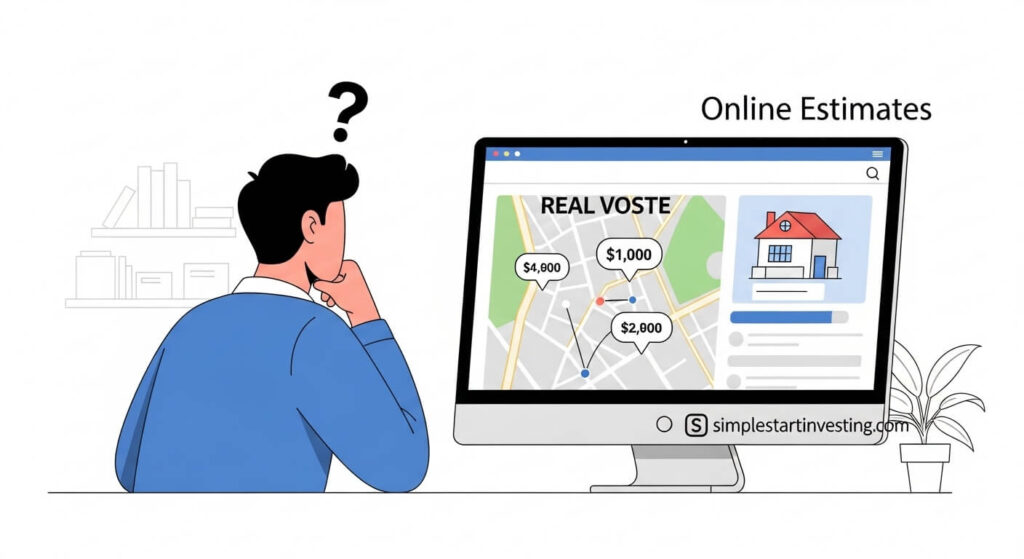
These algorithms use public records and general trends. They cannot see that you just installed premium hardwood floors, nor do they know that the house across the street has a persistent mold problem that lowered its sale price. They see numbers on a screen, not the actual condition of the property.
Relying solely on an automated tool for pricing your home is like asking a robot to tell you how a steak tastes based on its weight. It lacks the nuance of local “street-level” knowledge. You should use these sites as a starting point, but never as the final word.
The Power of the Comparative Market Analysis (CMA)
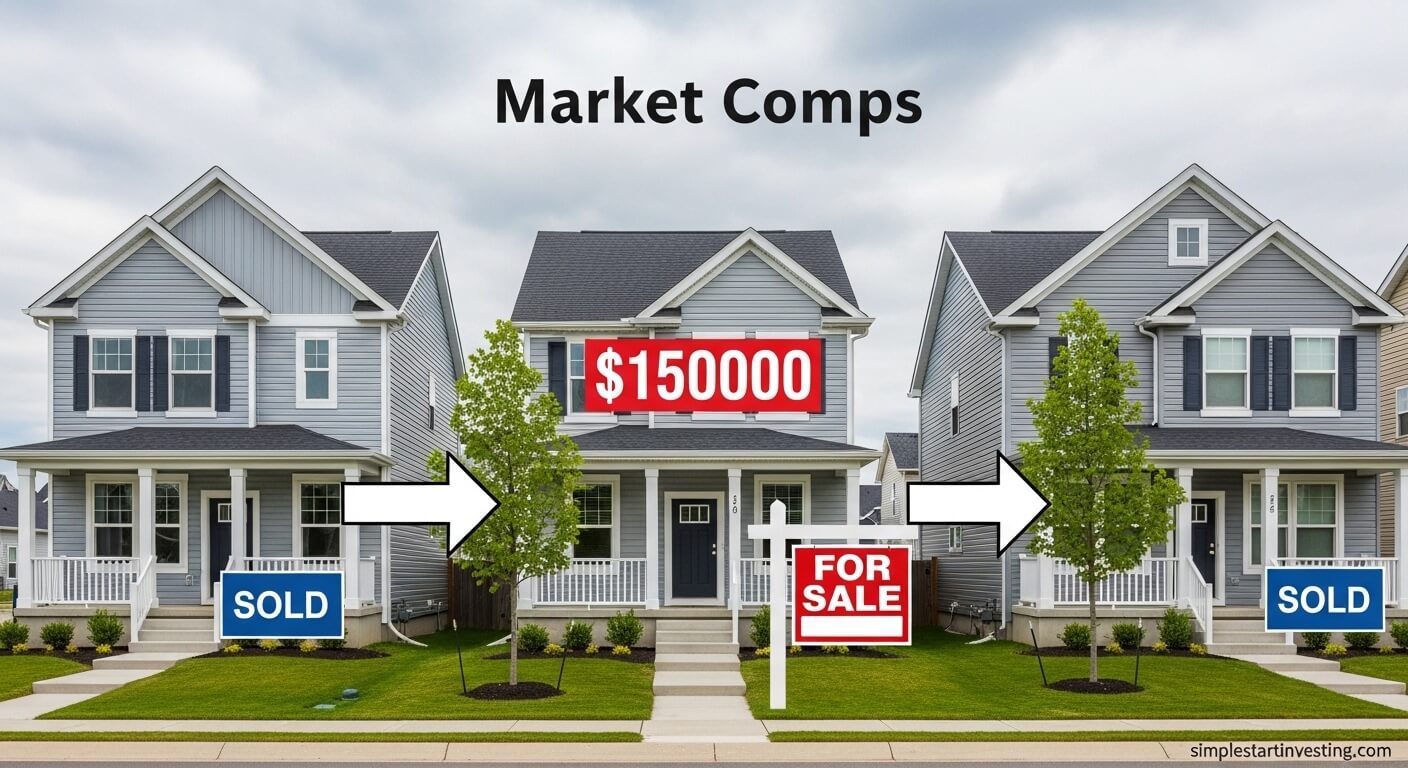
Professional realtors and savvy investors use a tool called a Comparative Market Analysis, or CMA. This sounds fancy, but it is just a logical way to look at “the comps.” Comps are “comparable properties”—houses similar to yours that have sold recently.
To do this correctly, you look for three specific types of properties in your immediate area:
- Sold Listings: These are your most important data points. They tell you what people actually paid in the last three to six months.
- Pending Listings: These are houses that have an accepted offer but haven’t closed yet. They tell you the current direction of the market.
- Active Listings: This is your competition. These prices tell you what other sellers hope to get, but they aren’t proof of value yet.
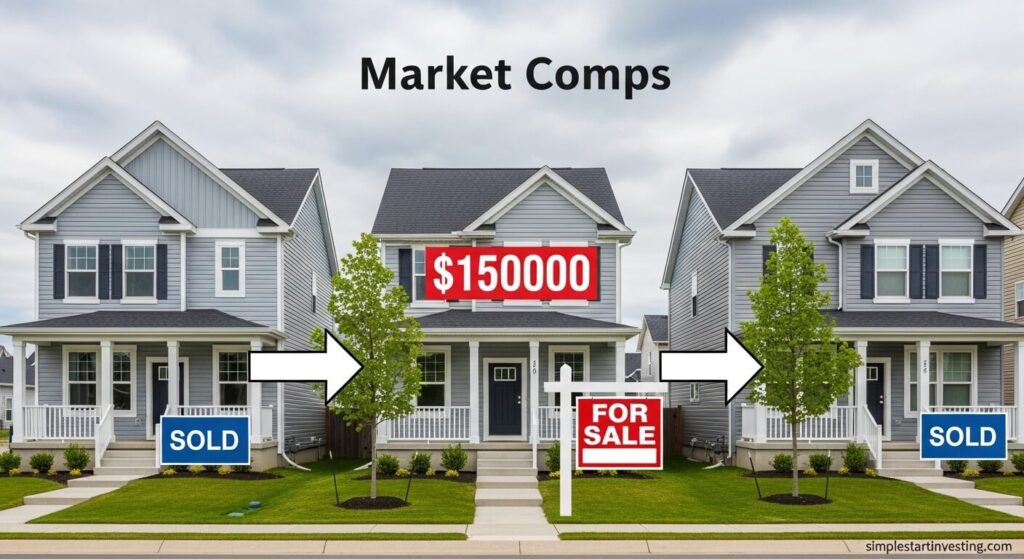
When pricing your home, you want to find at least three to five houses that are similar in square footage, number of bedrooms, and age. If a house down the street sold for 350,000 dollars but has an extra bedroom, you know your house is likely worth a bit less than that. If another house sold for 320,000 dollars but hasn’t been updated since 1980, your renovated home is worth more.
Understanding the “Days on Market” Red Flag
In real estate, time is your enemy. The first two weeks your home is on the market are the most critical. This is when “new listing” alerts go out to thousands of buyers. If you overprice the home during this window, you miss the peak interest.
When a house sits on the market for 60, 90, or 120 days, it develops a “stigma.” Buyers start asking, “What is wrong with it?” Even if the house is perfect, the long Days on Market (DOM) makes people think there is a hidden defect.

Eventually, to get it sold, you will have to drop the price. Interestingly, houses that start with a high price and eventually drop often sell for less than they would have if they had been priced correctly from day one. You lose your leverage when you are desperate to sell a “stale” listing.
The Psychology of the “9” and Round Numbers
Have you ever wondered why things are priced at 9.99 dollars instead of 10 dollars? Real estate works the same way. Most buyers set their search filters on websites in “round” increments, such as 400,000 dollars or 450,000 dollars.
If you decide on pricing your home at 405,000 dollars, you will completely miss every buyer who set their maximum search limit at 400,000 dollars. However, if you price it at 399,900 dollars, you show up in both the “under 400k” searches and the “above 350k” searches.
By staying just under a major psychological barrier, you increase the number of “eyeballs” on your listing. More eyeballs lead to more tours, which lead to more offers.
Adjusting for Condition and Upgrades
This is where many homeowners get emotional. You might have spent 20,000 dollars on a custom backyard deck and assume that adds exactly 20,000 dollars to your home’s value. Unfortunately, it rarely works that way.
Different upgrades have different “Returns on Investment.” A functional upgrade, like a new roof or a modern HVAC system, helps a home sell faster but doesn’t always drastically raise the price. Cosmetic upgrades, like a fresh coat of neutral paint or modern light fixtures, often provide the best “bang for your buck.”
When pricing your home, look at your property through the eyes of a stranger. If your neighbor’s house sold for 500,000 dollars and has a finished basement, but yours does not, you cannot realistically ask for 500,000 dollars unless you have other features that provide equal value.
The Danger of Pricing for “Negotiation Room”
A very common myth is that you should price your home 20,000 dollars higher than it’s worth to “leave room for negotiation.” While this sounds smart, it often backfires in the modern digital age.
Today’s buyers are very well-educated. They have apps that show them exactly what houses are worth. If they see a home that is clearly overpriced, they won’t even bother making a low-ball offer—they will simply skip it and move to the next one.
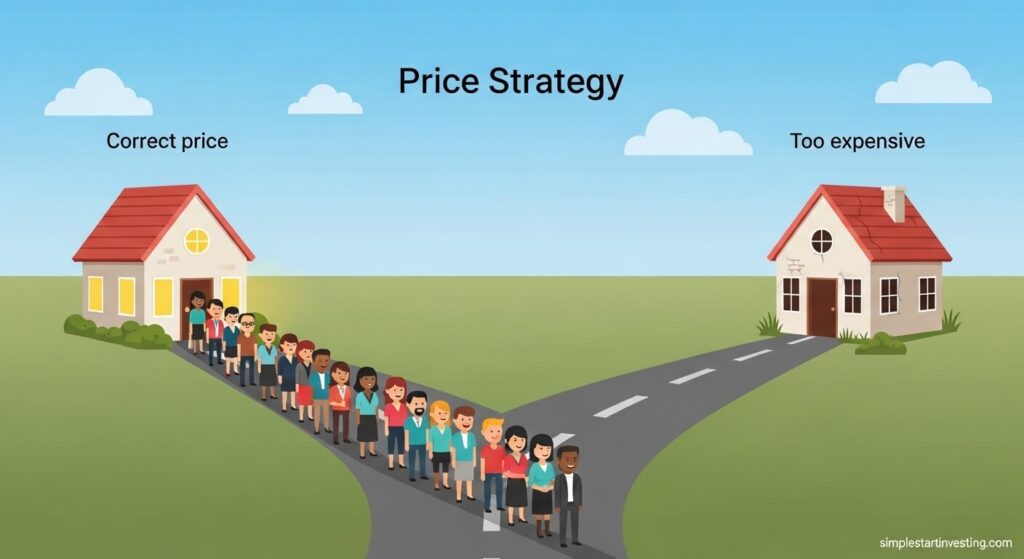
It is much better to price your home right at market value. This can actually create a “bidding war” where multiple buyers compete against each other, driving the price up beyond your expectations. You want the buyers to negotiate against each other, not against you.
Market Cycles: Are You in a Seller’s or Buyer’s Market?
The broader economy plays a huge role in pricing your home. You need to know which “cycle” you are in:
- Seller’s Market: There are more buyers than there are houses for sale. In this scenario, you can be a bit more aggressive with your pricing.
- Buyer’s Market: There are many houses for sale but few buyers. Here, you must be extremely competitive with your price to stand out.
- Neutral Market: Supply and demand are balanced.
Interest rates also dictate price. If interest rates are high, a buyer’s monthly mortgage payment increases. This means they can afford to borrow less money, which puts downward pressure on home prices. If you are selling during a year when rates are rising, you may need to price more conservatively than you would have a year ago.
The “Price It Right” Checklist
If you are feeling overwhelmed, take a breath and follow this simple logic for pricing your home effectively:
- Find the Comps: Look at three similar homes that sold in your zip code in the last few months.
- Adjust for Differences: Add value for your extra half-bathroom; subtract value if your carpet is 20 years old.
- Check the Competition: Look at what is currently for sale. If there are ten other houses just like yours, you need to be the best value of the bunch.
- Listen to the Market: If you have had ten showings and zero offers, the market is telling you your price is too high. If you have had zero showings, your price is much too high.
- Set a Deadline: Tell yourself that if the house doesn’t sell in 21 days, you will proactively lower the price by a small percentage, like 2 percent or 3 percent, to attract new interest.
Tax Implications for US Home Sellers
When pricing your home, it is also smart to keep the IRS in mind. If you make a significant profit on your home, you might worry about “Capital Gains Tax.”
However, for most Americans, there is a generous rule. If the home was your “primary residence” (meaning you lived in it) for at least two out of the last five years, you can often exclude up to 250,000 dollars of the profit from your taxes if you are single. If you are married and filing together, that exclusion usually jumps to 500,000 dollars.

Always check the current IRS guidelines for the specific year you are selling, as tax laws can shift. Knowing that your profit might be tax-free can help you feel more comfortable about settling on a fair market price rather than holding out for a “miracle” number that never comes.
Final Thoughts for the First-Time Seller
Pricing is not a “set it and forget it” task. It is a strategy. Your goal is to generate excitement and urgency. By using a data-driven approach and leaving your emotions at the door, you position yourself as a serious seller.
Remember, the goal of pricing your home is to get it sold so you can move on to the next chapter of your life. A house is an investment, but once you decide to sell, it becomes a product. Treat it like one, price it competitively, and the right buyer will find you.
Disclaimer: This content is for educational purposes only and does not constitute financial or real estate advice. Real estate laws and market conditions vary by state and change over time; please consult with a professional before making major financial decisions.