If you have spent any time looking into real estate investing, you have likely heard a strange-sounding acronym: BRRRR. It sounds more like a reaction to a cold winter day than a serious financial strategy, but for many successful investors, it is the engine that drives their entire portfolio.
At its core, the BRRRR method is a way to buy a property, fix it up, and then get your initial investment back so you can do it all over again. It is often called the “infinite money glitch” of real estate, though that name is a bit of an exaggeration. It takes a lot of hard work, careful planning, and a bit of patience.
For a complete beginner, the idea of buying multiple houses might seem impossible. You might think you need hundreds of thousands of dollars sitting in a bank account to get started. The beauty of this strategy is that it focuses on “recycling” the same pool of money rather than needing a new down payment for every single house you buy.
What Exactly Is the BRRRR Method?
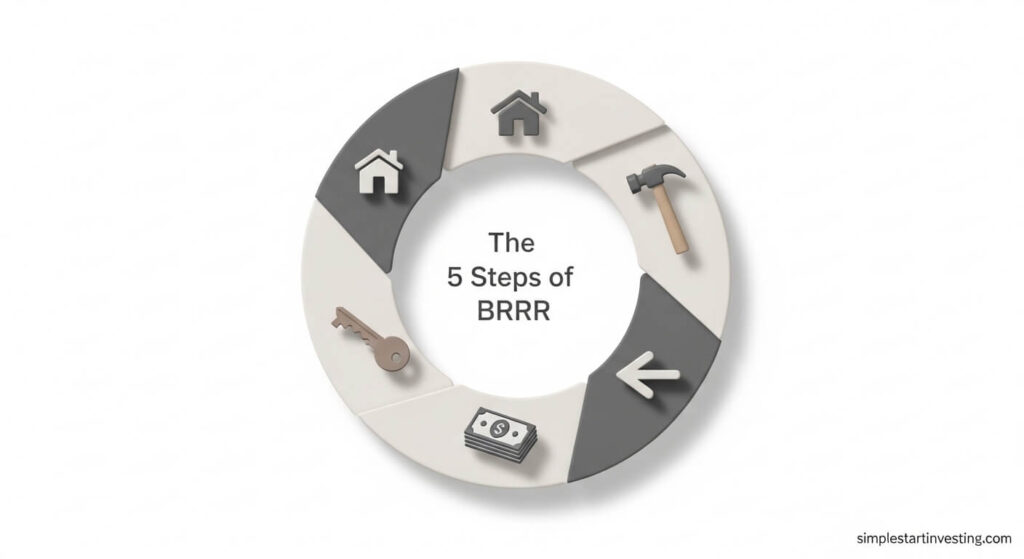
The acronym stands for Buy, Rehab, Rent, Refinance, Repeat. Each step is a vital link in a chain. If one link breaks, the whole strategy can struggle. The goal is to purchase a property that needs work, increase its value through renovations, and then use a bank loan to pull your original cash back out.
Think of it like buying a vintage car that doesn’t run. You buy it cheap because it’s broken. You spend money on parts and paint. Once it’s shiny and running perfectly, it is worth much more than what you paid and the cost of the parts combined. In real estate, we use that extra value to convince a bank to give us a new loan.
Many beginners mistake this for a “get rich quick” scheme. It isn’t. It is a “get rich through smart recycling” scheme. You are essentially creating equity through elbow grease and smart management. Instead of leaving your money “stuck” in one house, you are moving it from house to house.
The First Step: Buy
The “Buy” phase is where you make your profit. In the world of real estate, there is a common saying: “You make your money when you buy, not when you sell.” This means if you pay too much for a house at the start, no amount of pretty paint will save your investment.
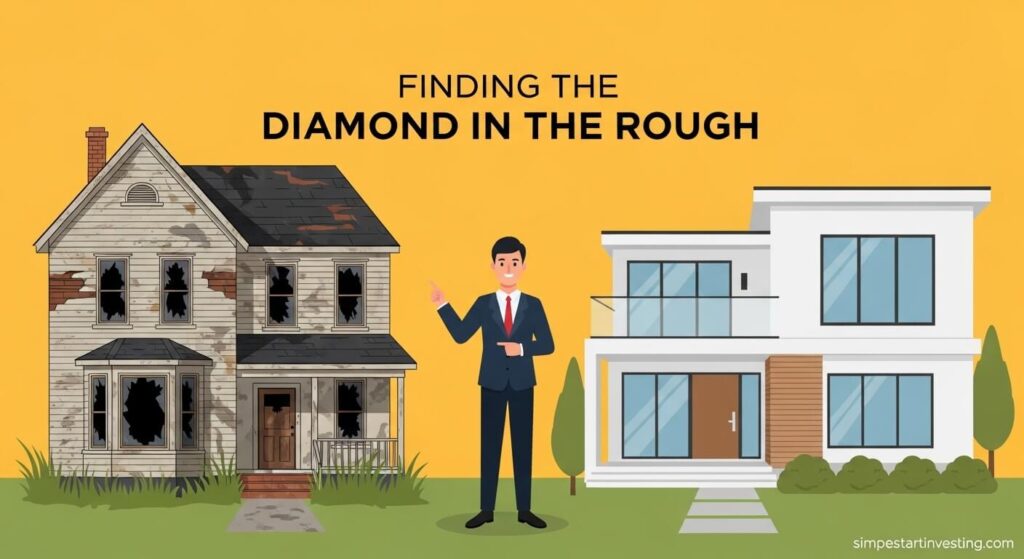
When using the BRRRR method, you aren’t looking for a move-in-ready home with a white picket fence. You are looking for the “ugly” house on a nice street. You want a property that has “distress.” This could mean it needs a new roof, has outdated kitchens, or has been neglected for years.
The goal is to buy the property at a significant discount. Ideally, you want to buy it for a price that, when added to your renovation costs, is still much lower than what the house will be worth when it is finished. Investors often aim to keep their total investment—the purchase price plus the repairs—at about 75 percent of the final value.
For example, imagine you find a house that is worth 200,000 dollars if it were in perfect condition. However, because it is falling apart, you buy it for 120,000 dollars. You estimate that it needs 30,000 dollars in work. Your total “all-in” cost is 150,000 dollars. Since 150,000 is exactly 75 percent of 200,000, this would be a perfect candidate for the strategy.
The Second Step: Rehab
Once you have the keys, the “Rehab” phase begins. This is where you transform the property from a liability into an asset. This step is about more than just making a house look good; it is about “forcing appreciation.”
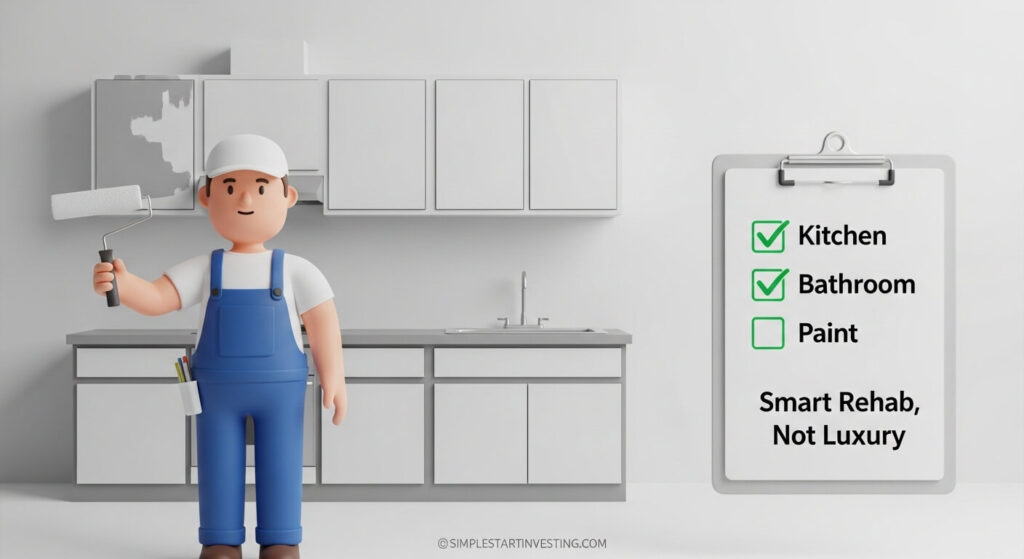
Forced appreciation is a fancy way of saying you are making the house worth more through specific improvements. You want to focus on renovations that provide the highest return on investment. In the American market, this usually means kitchens, bathrooms, and “curb appeal” like paint and landscaping.
A common mistake for beginners is over-renovating. You are not building your dream home; you are building a rental property. You want finishes that are durable, clean, and attractive to a wide range of tenants. Choosing expensive custom marble countertops might look great, but if a standard granite or quartz top gets you the same rent, you are wasting money.
It is also vital to handle the “invisible” repairs. If the house has a leaky roof or old electrical wiring, you must fix those first. An appraiser—the person the bank sends to value the house later—will look at the structural integrity just as much as the new cabinets.
The Third Step: Rent
Before you can go back to the bank to get your money, you need to prove that the property is an income-generating machine. This is the “Rent” phase. Banks are much more comfortable lending money on a property that already has a tenant paying monthly rent.

Finding the right tenant is perhaps the most underrated part of the BRRRR method. A bad tenant can damage your newly renovated home or stop paying rent, which puts your entire plan at risk. You want someone with a stable job, a good credit history, and positive references from previous landlords.
The rent you charge should cover all your expenses, including the future mortgage, insurance, taxes, and a little extra for repairs. This is called “cash flow.” If the house costs you 1,200 dollars a month to own and you rent it for 1,500 dollars, you have 300 dollars in positive cash flow.
Having a lease agreement in place shows the bank that the property is “stabilized.” It proves that the market accepts your property and that there is a demand for it. This makes the next step much easier.
The Fourth Step: Refinance
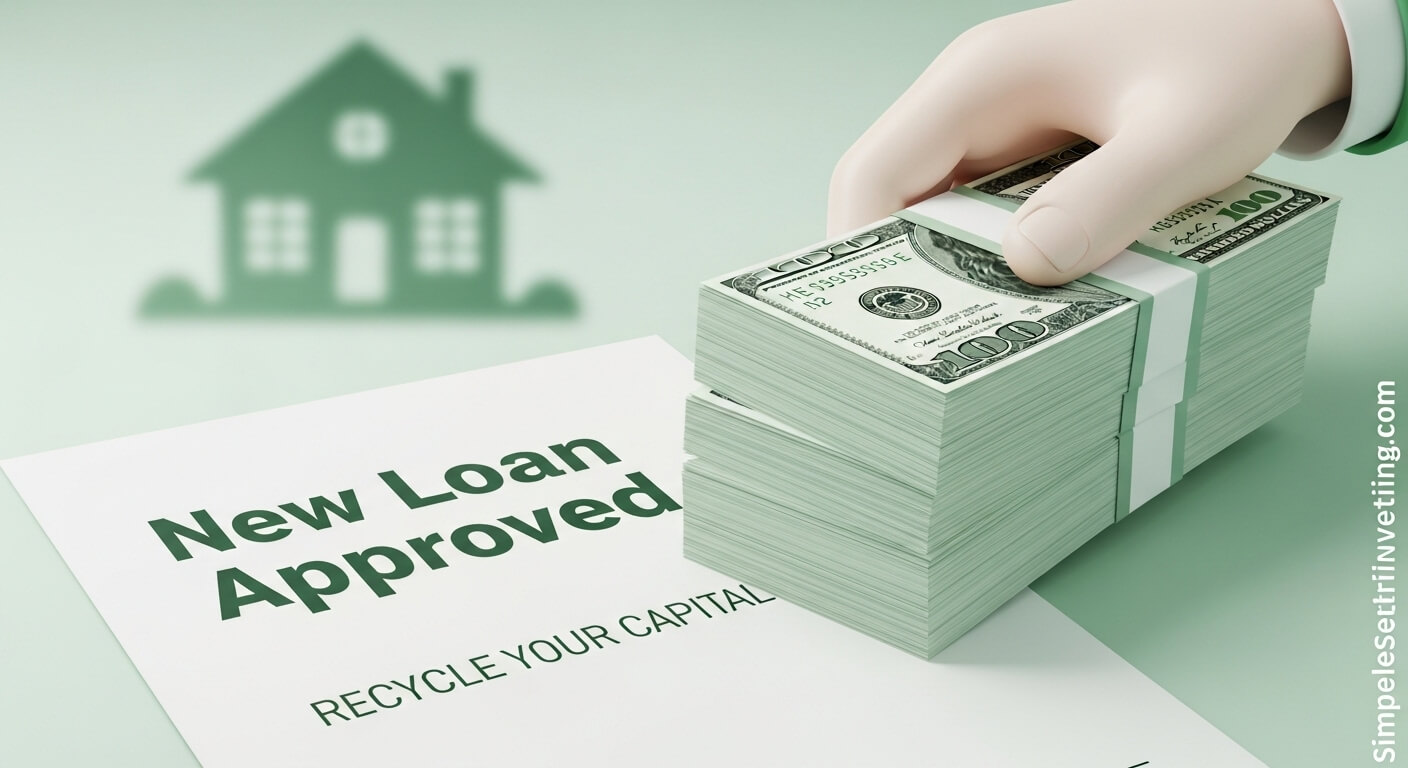
This is where the “magic” happens. In the “Refinance” phase, you go to a lender and ask for a new mortgage based on the new, improved value of the home. This is often called a “cash-out refinance.”
Let’s go back to our earlier example. You bought the house for 120,000 dollars and spent 30,000 dollars fixing it up, using 150,000 dollars of your own cash (or a short-term loan). Now, the house is worth 200,000 dollars.
Most banks in the U.S. will lend you up to 75 percent or 80 percent of the appraised value. If the appraiser agrees the house is worth 200,000 dollars, the bank might give you a loan for 150,000 dollars.
Think about what just happened. You received a check for 150,000 dollars from the bank. You can use that money to pay yourself back for the 120,000 you spent to buy the house and the 30,000 you spent on repairs. You now own a 200,000-dollar house, but you have zero of your own “original” dollars left in the deal.
One thing to watch out for is the “Seasoning Period.” Most traditional lenders require you to own the property for at least six months to a year before they will let you refinance based on the new appraised value. If you try to do it too early, they might only lend based on what you originally paid for it.
The Final Step: Repeat
The “Repeat” phase is what builds wealth over time. Because you pulled your original 150,000 dollars back out of the first house, you now have that money sitting in your bank account again. You can use it as a down payment or a cash purchase for house number two.
If you repeat this process once a year, in five years you could own five properties. Each of those properties is (hopefully) providing you with monthly cash flow. Each year, your tenants are paying down the mortgages for you, building your equity even further.
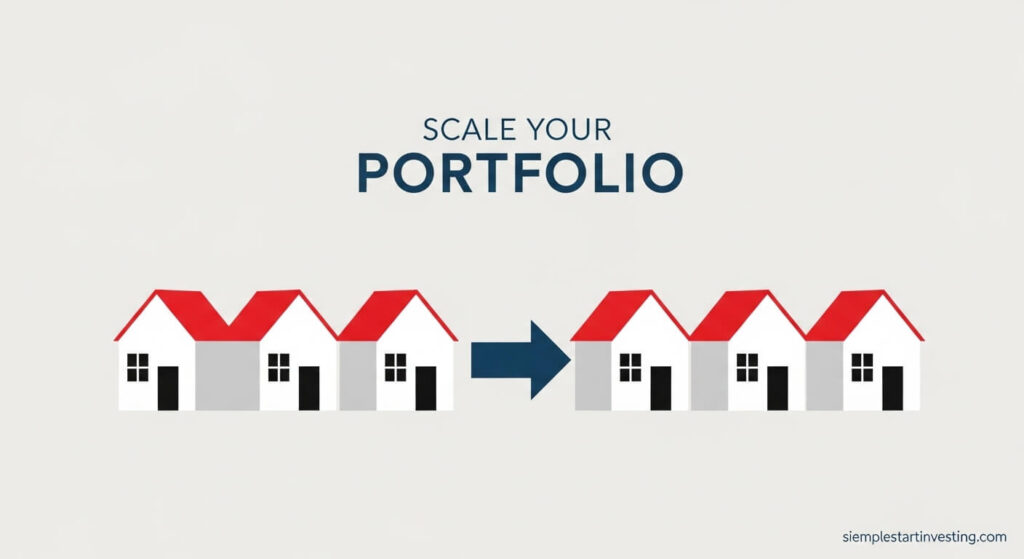
This is the power of the BRRRR method. Instead of saving up for years to afford a second down payment, you are using the same “pot” of money to acquire multiple assets. You are essentially trading your time and management skills for property ownership.
Common Misconceptions and Pitfalls
While the strategy sounds perfect on paper, beginners often run into trouble because they underestimate the risks. It is important to go into this with your eyes wide open.
1. The “Free House” Myth Many people think the BRRRR method means you get a house for free. It isn’t free. You now have a mortgage on that property. You have traded your cash for debt. The goal is to make sure the rent is high enough to pay that debt comfortably. If the house sits empty, you are the one responsible for that monthly mortgage payment.
2. Underestimating Rehab Costs This is the most common reason the strategy fails for beginners. You might think a kitchen will cost 10,000 dollars, but then you find mold behind the walls or outdated plumbing that needs to be replaced. Suddenly, that 10,000-dollar project costs 20,000 dollars. If your costs go too high, you won’t be able to pull all your money back out during the refinance step.
3. Overestimating the Final Value You might believe that after your renovations, the house will be worth 250,000 dollars. But if the appraiser comes back and says it is only worth 210,000 dollars, you will be “stuck.” You won’t be able to get a big enough loan to pay yourself back. This leaves your capital “trapped” in the house, preventing you from moving on to the next property quickly.
4. The Interest Rate Trap When you refinance, you are taking out a long-term mortgage. If interest rates have gone up significantly since you started the project, your monthly mortgage payment might be higher than you expected. This could eat into your cash flow or even cause you to lose money every month.
How to Set Yourself Up for Success
To succeed with the BRRRR method, you need a strong team. You are not just an investor; you are a project manager. You will need a reliable contractor who shows up on time and stays on budget. You will need a great real estate agent who understands how to find distressed deals. You also need a lender who is familiar with the BRRRR strategy and the cash-out refinance process.
Knowledge of the local market is also non-negotiable. You need to know exactly what houses in “perfect” condition are selling for in that specific neighborhood. Look at “comparables”—similar houses that have sold in the last six months within a mile of your property. This is the same data the appraiser will use.
It is also wise to have a “buffer” or a cash reserve. Don’t use every last penny you have on the purchase and rehab. Always keep some money aside for the “surprises” that inevitably happen when you are tearing down walls or dealing with old houses.
The Strategy for the Long Term
The BRRRR method is a marathon, not a sprint. The first house is always the hardest. You are learning how to manage contractors, how to screen tenants, and how to navigate the banking system. By the third or fourth house, you will have a system in place that makes the process much smoother.
The beauty of real estate in the United States is the tax treatment. As you build this portfolio, you can often take advantage of “depreciation.” This is a tax benefit where the IRS allows you to write off a portion of the house’s value every year, which can help lower the taxes you owe on your rental income. However, tax laws can change, so it is always smart to check current regulations.
Ultimately, this strategy is about building a life of financial independence. By focusing on buying right and adding value, you are creating a cycle of wealth that can grow as large as you are willing to manage it. You are no longer just saving money; you are building an empire, one “ugly” house at a time.
Remember that while the steps remain the same, the market does not. Prices change, interest rates fluctuate, and rental demand shifts. Successful investors stay flexible and always do their homework before signing a contract. The BRRRR method is a powerful tool, but like any tool, it works best in the hands of someone who has taken the time to learn how to use it properly.
Take it slow, start with a project you can handle, and focus on the fundamentals. Before you know it, you won’t just be saying “BRRRR”—you’ll be living the benefits of a growing, healthy real estate portfolio.
Disclaimer: This content is for educational purposes only and does not constitute financial or legal advice. Real estate investing involves significant risk, and you should consult with qualified professionals before making any investment decisions.