Imagine you are standing at a busy fruit market. You see a basket of shiny red apples. You can either walk up to the vendor and say, “Give me those apples right now, I will pay whatever you are charging,” or you can say, “I will only buy those apples if the price drops to 2 dollars per pound.”
In the world of the stock market, these are the two most basic ways to buy or sell shares. When you log into your brokerage account to buy a stock like Apple (AAPL) or Amazon (AMZN), you are faced with a choice. Do you use a market order or a limit order?
Choosing the wrong one could mean you pay much more than you expected, or it could mean you miss out on a great investment entirely. Understanding the simple difference between market orders vs. limit orders is one of the first and most important steps for any new investor in the US market.

What Exactly Is a Market Order?
A market order is an instruction to your broker to buy or sell a stock immediately at the best available current price. When you click the “Buy” button using a market order, you are telling the system that speed is your top priority. You want to own the stock right this second, and you are willing to accept whatever price the market offers.
How it works in plain English
Think of a market order like calling an Uber during rush hour. You need a ride right now. You don’t necessarily care if the price is 20 dollars or 25 dollars; you just need to get in the car and go. The transaction happens almost instantly because there is almost always someone willing to sell to you if you are willing to pay their price.
Real-world example at the checkout
Suppose you want to buy 10 shares of Walmart (WMT). The price on your screen says 160 dollars per share. You place a market order. However, in the few seconds it takes for your order to reach the stock exchange, the price moves slightly. Your order is filled at 160.05 dollars per share. Because you used a market order, you agreed to pay the “going rate,” even if it shifted slightly while you were clicking the button.
The common rookie mistake
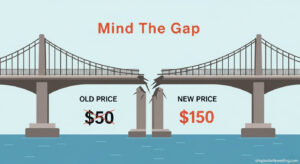
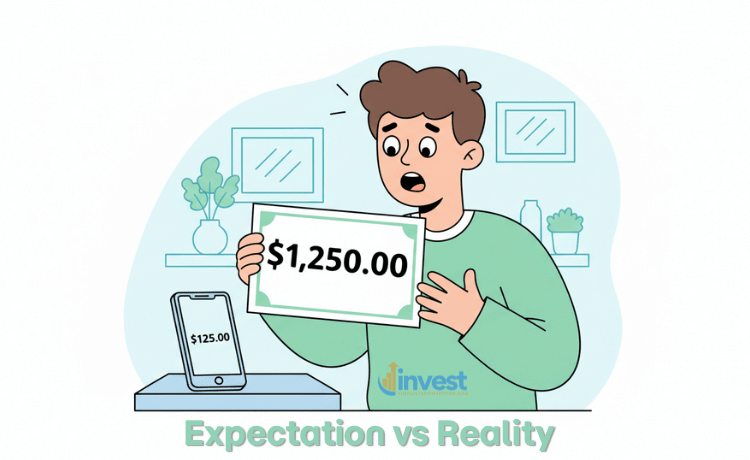
Many beginners believe that the price they see on their phone screen is the exact price they will pay. They see Tesla (TSLA) at 200 dollars, hit “Buy” with a market order, and are shocked to see their receipt shows 202 dollars per share. This is called “slippage.”
The mindset shift
A market order guarantees that your trade will happen (execution), but it does not guarantee the price. Use market orders only when you are investing in very large, stable companies and you don’t mind a few cents of difference because you plan to hold the stock for many years.
What Exactly Is a Limit Order?
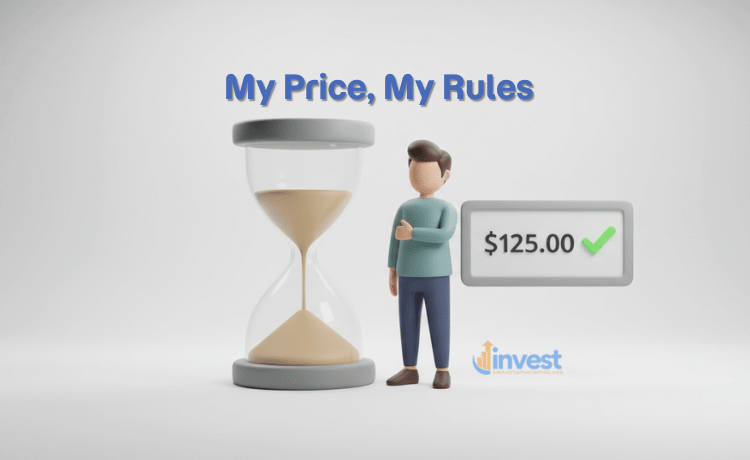
A limit order is an instruction to buy or sell a stock only at a specific price or better. You are setting a boundary. With a buy limit order, you are saying, “I will pay this price, or less, but not a penny more.” With a sell limit order, you are saying, “I will sell for this price, or more, but not a penny less.”
How it works in plain English
Think of a limit order like shopping on eBay with a “Maximum Bid.” You decide that a vintage watch is worth 500 dollars. You tell the system to bid for you, but if the price goes to 501 dollars, you walk away. You have total control over your money, but you might not get the watch if someone else outbids you.
Real-world example at the checkout
Let’s say you want to buy Microsoft (MSFT), which is currently trading around 400 dollars. You think that is a bit too expensive. You place a limit order to buy at 390 dollars. Your order will sit there patiently. If Microsoft’s price drops to 390 dollars tomorrow, your broker will automatically buy it for you. If the price stays at 400 dollars or goes up to 410 dollars, the trade never happens, and you keep your cash.
The common rookie mistake
New investors often set limit orders too far away from the current price, hoping for a “miracle bargain.” For example, they might try to buy NVIDIA (NVDA) at 50% off its current price. While they wait for a price that may never come, the stock might continue to rise, leaving them behind.
The mindset shift
A limit order guarantees your price, but it does not guarantee that the trade will actually happen. You must be okay with the possibility of “missing the boat” if the stock price never reaches your limit.
The Bid and The Ask: The Secret Behind the Price
To truly understand market orders vs. limit orders, you need to know about the “Bid” and the “Ask.” In the US stock market, there is always a gap between what buyers want to pay and what sellers want to receive.
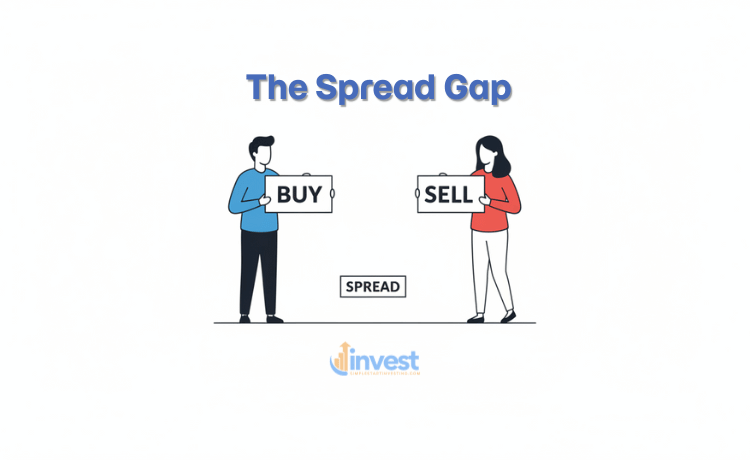
- The Bid: This is the highest price a buyer is currently willing to pay.
- The Ask: This is the lowest price a seller is currently willing to accept.
When you use a market order to buy, you are instantly matching with the “Ask” price. When you use a limit order, you are usually putting your own “Bid” into the system and waiting for a seller to come down to your level.
Why this matters for your wallet
If a stock has a Bid of 100 dollars and an Ask of 101 dollars, the “spread” is 1 dollar. If you use a market order to buy, you pay 101 dollars immediately. If you use a limit order for 100.50 dollars, you are trying to meet the seller halfway. By using limit orders, you are often able to “capture the spread” and save a small amount of money on every single share you buy. Over 20 or 30 years of investing, these small savings can add up to thousands of extra dollars in your retirement account.
When Should You Use a Market Order?
Despite the risks of paying a higher price, market orders have a place in a beginner’s toolkit. They are the “set it and forget it” tool for certain situations.
Speed is your priority
If a company like Costco (COST) is a stock you plan to own for the next 20 years, does it really matter if you pay 600.00 dollars or 600.10 dollars? In the long run, probably not. If you just want to get your money into the market today and stop thinking about it, a market order is the fastest way to do that.
You are buying “Blue Chip” stocks
Large companies that everyone knows, like JPMorgan Chase (JPM) or Home Depot (HD), are traded by millions of people every day. Because there are so many buyers and sellers, the gap between the Bid and the Ask is usually just a penny or two. In these cases, a market order is very safe because the price won’t jump around wildly in the seconds it takes to process your trade.
Avoiding the “No-Fill” frustration
There is nothing more frustrating than wanting to buy a stock, setting a limit order for 50.00 dollars, seeing the stock drop to 50.01 dollars, and then watching it rocket up to 60.00 dollars. You missed a huge gain because you were trying to save one penny. If you are terrified of missing out on a long-term move, a market order ensures you are “in the game.”
When Should You Use a Limit Order?
Limit orders are the tool of the disciplined investor. They are your shield against market volatility.
During “Crazy” market hours
The stock market is often very volatile (prices jump up and down quickly) during the first 30 minutes after the opening bell at 9:30 AM EST and the last 30 minutes before it closes at 4:00 PM EST. If you use a market order during these times, you might get a “surprise” price that is much higher than you expected. Using a limit order protects you from these sudden spikes.
Trading smaller companies
If you are interested in a smaller company that not many people trade (low volume), the gap between the Bid and the Ask could be large. It might be 5 dollars or 10 dollars. A market order here is dangerous. You could accidentally pay 10% more than the stock is actually worth. Always use a limit order for less popular stocks.
Buying the “Dip”
If you love Alphabet (GOOGL) but think it is currently a bit overpriced, you can set a limit order for a lower price and go about your day. You don’t have to stare at your computer screen all day. If the market dips while you are at work or sleeping, your broker will do the work for you at the exact price you requested.
Understanding “Time in Force” for Limit Orders
When you place a limit order, your broker will ask you how long the order should stay active. For a beginner, there are usually two main choices:
- Day Order: If the stock doesn’t hit your price by the time the market closes today, the order is canceled. You have to try again tomorrow.
- Good ‘Til Canceled (GTC): The order stays active for a long time (usually 60 to 90 days) until the price is hit or you manually cancel it.
The Rookie Error: Many beginners set a “Day” limit order on a Friday evening, forget about it, and wonder why they don’t own the stock on Monday. Remember, the market is closed on weekends! If you want your price to be honored over several days, choose GTC.
Protecting Yourself: The “Stop-Loss” Limit Order
One advanced but helpful way to use limit orders is for protection. Let’s say you bought Disney (DIS) at 100 dollars. You are worried that if the price drops too low, you will lose too much money.
You can set a “Stop-Loss” order. This tells the broker: “If the price drops to 90 dollars, sell my shares immediately to prevent further loss.”
However, there is a catch. In a market crash, the price might jump from 91 dollars straight down to 85 dollars. If you used a Market Stop, you would sell at 85 dollars. If you used a Limit Stop, you could specify that you won’t sell for anything less than 89 dollars. While this sounds safer, it could also mean your stock never sells and continues to crash to 50 dollars.
As a beginner, keep it simple: focus on buying quality companies and using limit orders to ensure you don’t overpay on the way in.
Summary: Market Orders vs. Limit Orders Logic
To make the best decision, ask yourself these two questions:
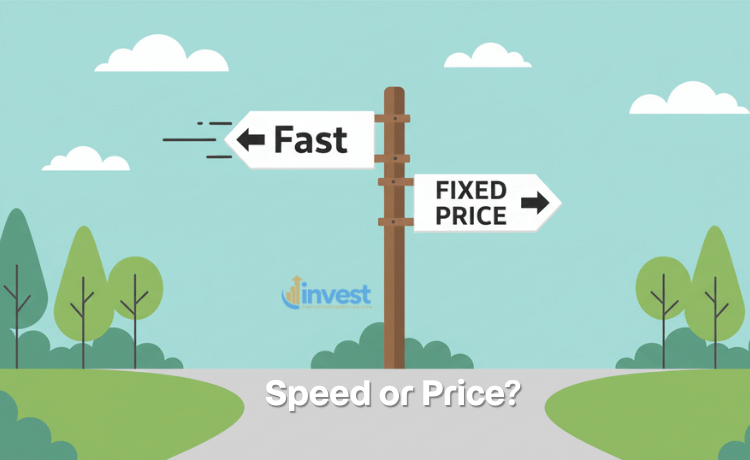
- Is getting the trade done right now more important than the price? * If Yes: Use a Market Order.
- Example: You have 500 dollars to invest every month into an Index Fund and you don’t care about a few cents.
- Is getting a specific price more important than getting the trade done right now?
- If Yes: Use a Limit Order.
- Example: You have done your research and decided that Tesla is only a “good deal” if it is below 190 dollars.
A Note on Regulations
In the United States, the Securities and Exchange Commission (SEC) and FINRA have rules like “Regulation NMS” which require brokers to give you the “Best Execution.” This means even if you use a market order, the broker is legally required to try and find the best possible price for you across all the different stock exchanges. However, “best” is relative during a market panic, which is why limit orders remain the safest choice for most situations.
Please note: Market regulations and brokerage features can change; please check current guidelines from the SEC or consult a financial professional.
Final Steps for the Beginner Investor
When you are ready to buy your first stock on a platform like Fidelity, Charles Schwab, or Robinhood:
- Look at the Bid and Ask spread. If the gap is small (a few pennies), a market order is usually fine.
- Check the time. If it is the middle of the trading day (noon in New York), prices are usually more stable.
- Default to Limit. When in doubt, use a limit order. Set the limit price a few cents above the current “Ask” price. This gives you the speed of a market order but puts a “ceiling” on the price so you don’t get a nasty surprise if the price spikes unexpectedly.
By mastering these two simple buttons, you are taking control of your financial future. You are no longer just a “shopper” at the mercy of the market; you are a disciplined investor who knows exactly what their money is doing.
Disclaimer: This content is for educational purposes only and does not constitute financial advice.