Choosing your first home is an emotional journey, but choosing your first mortgage is a purely financial one. For many beginners, the jargon can feel like a different language. You might hear people talking about locking in a rate for thirty years, while others suggest a “teaser rate” that could change later. At the heart of this decision are two main paths: Fixed-Rate and Adjustable-Rate Mortgages.
Understanding mortgage types for beginners is the first step toward homeownership that won’t keep you up at night. In today’s market, where interest rates have stabilized but remain higher than the historical lows of a few years ago, the choice you make today could save—or cost—you tens of thousands of dollars over the next decade. Let’s break down these two options so you can decide which one fits your life goals.
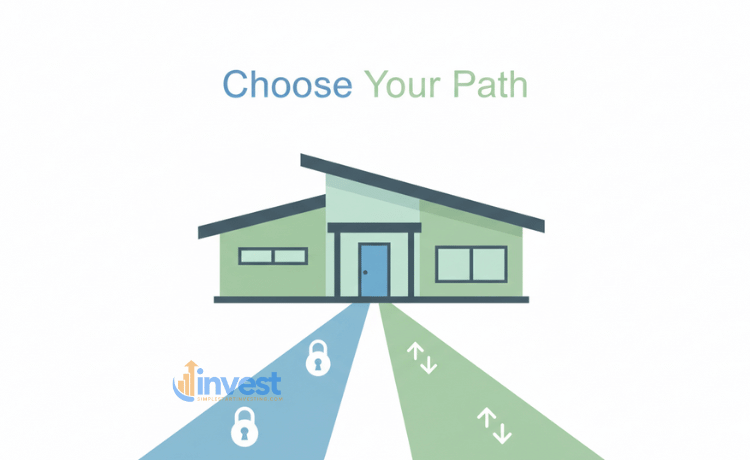
What is a Fixed-Rate Mortgage?
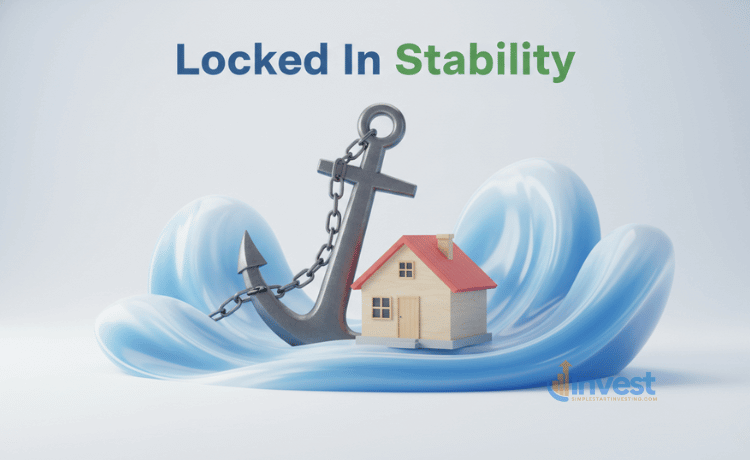
A fixed-rate mortgage is the “steady hand” of the housing world. When you sign the papers, your interest rate is locked in for the entire life of the loan—usually 15 or 30 years. Whether the economy booms or the housing market fluctuates, the interest rate you started with is the interest rate you keep.
How it works in plain English
Imagine you are at a restaurant that offers a “Life-Long Meal Plan.” You agree to pay 20 dollars for a steak dinner every Friday for the next thirty years. Even if the price of beef triples or inflation goes through the roof, your price stays 20 dollars. That is exactly what a fixed-rate mortgage does for your housing cost. Your “principal and interest” payment stays identical from the first month to the three hundred and sixtieth month.
Real-world US example
Let’s look at a new buyer named Sarah in Austin, Texas. Sarah buys a home and gets a 30-year fixed-rate mortgage at an interest rate of 6 percent. Her monthly payment for the loan itself is 1,200 dollars. Fast forward ten years: the economy has changed, and new mortgage rates have jumped to 9 percent. While Sarah’s neighbors are struggling with higher costs, Sarah’s payment is still exactly 1,200 dollars. She has “inflation-proofed” her housing cost.
The common beginner mistake
Many beginners assume that a “fixed payment” means their entire monthly bill will never change. They forget about property taxes and homeowners insurance. In the US, most people pay their taxes and insurance through an escrow account managed by their lender. While your mortgage interest rate is fixed, the local government can raise your property taxes, or your insurance company can hike your premiums.
The mindset shift
Don’t view a fixed-rate mortgage as just a loan; view it as a hedge against the future. If you plan to stay in your home for a long time, the stability of a fixed rate is your best friend. Even if it starts a little higher than an ARM, the peace of mind knowing your “rent” won’t go up for thirty years is often worth the extra cost.
What is an Adjustable-Rate Mortgage (ARM)?
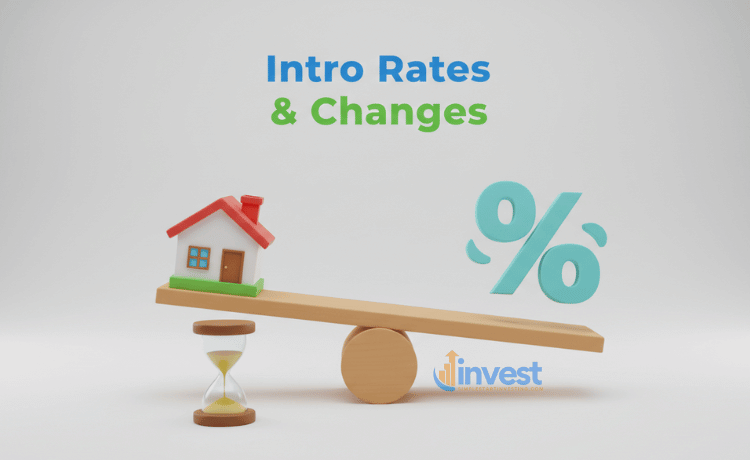
An Adjustable-Rate Mortgage, or ARM, is a loan where the interest rate can change over time. It usually starts with a lower “teaser” or introductory rate that stays the same for a few years. After that period ends, the rate “adjusts” based on what is happening in the overall financial market.
How it works in plain English
Think of an ARM like a gym membership that is incredibly cheap for the first six months but then switches to the “current market price” every month after that. You get a great deal at the start, which helps you save money now, but you are taking a gamble that the price won’t skyrocket later. Most ARMs are described with two numbers, like a “5/6 ARM.” This means the rate is fixed for the first 5 years and can adjust every 6 months after that.
Real-world US example
Consider Mark, a tech worker in San Francisco who knows he will likely move for a new job in four years. Instead of taking a 30-year fixed rate at 6 percent, he chooses a 5-year ARM at 5 percent. Because his interest rate is lower, his monthly payment might be 200 dollars less than Sarah’s. Since Mark plans to sell the house before the 5-year mark, he saves 12,000 dollars in interest over those five years and sells the house before the rate ever has a chance to go up.
The common beginner mistake
The most dangerous mistake is the “I’ll just refinance” trap. Many beginners take an ARM thinking that if rates go up, they will simply switch to a fixed-rate loan before the adjustment period starts. However, if the value of your home drops (meaning you owe more than the house is worth) or if your credit score takes a hit, you might not be able to refinance. You could be stuck with a payment that doubles or triples, leading to financial disaster.
The mindset shift
An ARM is not a “bad” loan; it is a specialized tool. It is designed for people who have a clear exit strategy. If you are 90 percent certain you will move or pay off the loan within the fixed period, the ARM can be a brilliant way to keep your costs down. But if this is your “forever home,” the ARM is a risky bet against an unpredictable future.
The “Secret Sauce”: How ARM Adjustments Actually Work
To truly understand mortgage types for beginners, you need to know how that adjustment is calculated. It isn’t just a random number picked by the bank. It is based on a transparent formula that uses two main parts: the Index and the Margin.
Explaining the formula without the math
The Index is a benchmark interest rate that reflects the general economy (like the cost of banks lending to each other). The Margin is an extra percentage the lender adds on top to make a profit.
Think of it like buying gasoline. The “Index” is the global price of crude oil, which fluctuates every day. The “Margin” is the 50 cents per gallon the gas station adds to cover their electricity and staff. Your total price is the Index plus the Margin.
Safety Nets: The Caps
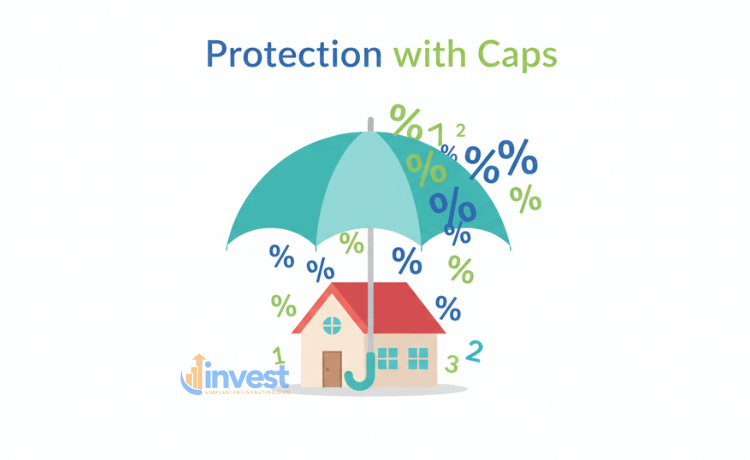
Because an unlimited interest rate could ruin a family’s finances, US regulations require ARMs to have “caps.” These are limits on how much the rate can move.
- Initial Cap: Limits how much the rate can jump the very first time it adjusts.
- Periodic Cap: Limits how much it can move in any single adjustment period after the first one.
- Lifetime Cap: The absolute maximum interest rate you could ever pay, no matter how bad the economy gets.
Real-world US example
If your ARM has a lifetime cap of 5 percent above your starting rate, and you started at 5 percent, your interest rate can never go higher than 10 percent. If you started with a monthly payment of 1,500 dollars, a jump to 10 percent might move your payment to 2,500 dollars. You must ask yourself: “Can I afford the absolute worst-case scenario?”
Comparing the Two: Which One Fits Your Life?
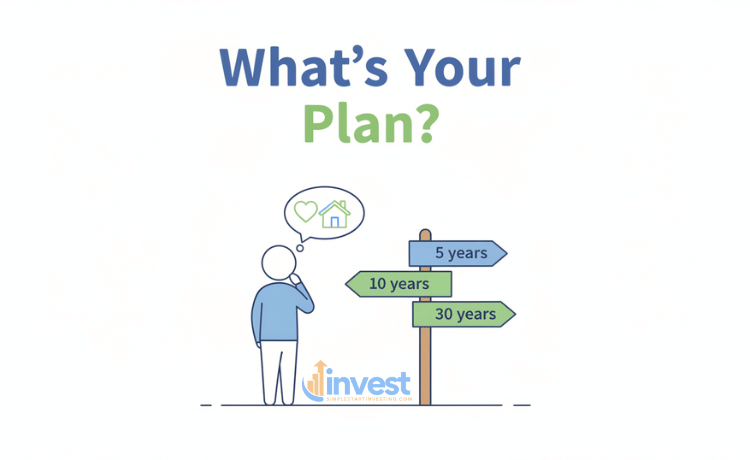
Since we aren’t using tables, let’s look at this through the lens of two different “Life Scenarios.” Choosing between these mortgage types for beginners often comes down to your “Time Horizon”—how long you plan to keep the loan.
Scenario A: The Long-Term nester
You are buying a home in a quiet suburb. Your kids are starting school, and you plan to live there for at least fifteen years.
- The Choice: 30-Year Fixed Rate.
- The Logic: Even if the interest rate is slightly higher today, you are buying “certainty.” You can build a 20-year budget because you know exactly what your housing cost will be. You don’t have to watch the news every morning to see what the Federal Reserve is doing with interest rates.
Scenario B: The Stepping Stone
You are a young professional buying a condo in a city like Charlotte or Denver. you expect to be promoted or married and moving to a larger house within five to seven years.
- The Choice: 7/6 ARM (Fixed for 7 years).
- The Logic: Why pay a premium for a 30-year “insurance policy” (the fixed rate) if you only need the loan for seven years? The lower interest rate of the ARM allows you to put more money toward the “principal” of the loan or into your savings for your next house.
Current Market Realities in the US
As we move through this year, the US mortgage market is in a unique spot. The Federal Reserve has been carefully managing interest rates to fight inflation. This means that for the first time in a generation, the “gap” between fixed-rate and ARM interest rates has narrowed.
In the past, an ARM might have been 2 percent lower than a fixed rate. Today, the difference might only be half of a percent. When the savings are small, the risk of an ARM often outweighs the reward for a beginner.
Note: Mortgage regulations and tax laws can change frequently. The IRS often updates rules regarding mortgage interest deductions. Always check current guidelines or consult with a tax professional before making a final decision.
Critical Factors Beginners Often Overlook
1. The Cost of Refinancing
Many people think, “I’ll take the ARM now and just refinance to a fixed rate later if I need to.” But refinancing isn’t free. In the US, refinancing a mortgage can cost between 2 percent and 5 percent of the loan amount in closing costs. If you have a 300,000 dollar loan, you might have to pay 9,000 dollars just to switch your loan type.
2. Qualification Hurdles
Lenders often use different rules to see if you “qualify” for an ARM. For a fixed-rate loan, they look at your ability to pay the current rate. For an ARM, some lenders are required to make sure you can afford the payment even if the rate goes up a certain amount. This can actually make it harder for some beginners to get an ARM, despite the lower starting rate.
3. Prepayment Penalties
Some older or more aggressive mortgage products included a “prepayment penalty”—a fee you pay if you sell the house or pay off the loan too early. While these are less common now for standard loans, always check the “fine print” of an ARM to ensure you aren’t penalized for moving before the rate adjusts.
How to Decide: The 3-Question Test
If you are still staring at the ceiling wondering which way to go, ask yourself these three questions:
- How long will I live here? If the answer is “I don’t know” or “More than 7 years,” lean toward a Fixed-Rate.
- Is my income likely to rise significantly? If you are in a career where your salary will double in five years, you might be able to handle the “risk” of an ARM adjustment.
- Can I sleep at night? Some people are naturally “risk-averse.” If the idea of your mortgage payment changing by 300 dollars makes you anxious, the fixed-rate loan is worth every penny of the slightly higher interest.
The Bottom Line on Mortgage Types for Beginners
A mortgage is likely the largest financial commitment of your life. The Fixed-Rate mortgage is a product of stability—it is the “boring” but safe choice that has helped millions of Americans build wealth. The Adjustable-Rate Mortgage is a product of strategy—it is a tool for those who are mobile and calculated.
Most first-time buyers in the US ultimately choose the 30-year fixed-rate mortgage. In a world of constant change, there is something incredibly powerful about knowing exactly what your home will cost you for the next three decades.
Disclaimer: This content is for educational purposes only and does not constitute financial, legal, or tax advice. Mortgage rules and market conditions change frequently; please consult with a qualified professional before making any financial decisions.