
Buying or selling a home is likely the biggest financial move you will ever make. It is not just about finding a pretty house or putting a “For Sale” sign in the yard. It is about legal contracts, massive sums of money, and complex negotiations. This is why knowing how to choose a real estate agent is the most important first step in your journey.
In the current market, the rules have changed. You cannot just walk into an open house and expect things to work the way they did a few years ago. Today, having a professional who knows the latest regulations and local trends is your best defense against expensive mistakes.

In this guide, we will break down exactly how to interview an agent. We will go beyond the surface-level talk and get into the “nitty-gritty” questions that reveal whether an agent is a true professional or just someone with a license and a business card.
Why Choosing the Right Agent is Different Today
The real estate world in the United States has seen major shifts recently. New rules from the National Association of Realtors (NAR) mean that transparency is now the law of the land. Buyers now have more responsibility to understand how their agents are paid, and sellers have more choices in how they offer incentives.
If you are a beginner, you might think all agents do the same thing: they show houses and sign papers. But a great agent is actually a data analyst, a master negotiator, and a legal guide all in one.
When you learn how to choose a real estate agent correctly, you aren’t just hiring a “door opener.” You are hiring a strategist who ensures you don’t overpay for a home or leave money on the table during a sale.
The Big Shift: The Buyer Representation Agreement
Before we dive into the questions, you must understand one critical change in the American market. In the past, you could tour dozens of homes with an agent without signing a single thing. Those days are gone.

Now, before an agent can even show you a single house, you must sign a Buyer Representation Agreement. This is a legal contract that outlines what the agent will do for you and how they will be compensated. Because this happens so early in the process, the “interview phase” is more important than ever. You are essentially “getting married” to your agent before the first date (the home tour).
12 Critical Questions to Ask Before You Hire
Here are the essential questions to ask during your interview. Use these to compare at least three different agents before making your choice.
1. Are you a full-time real estate agent?
The Simple Explanation: Real estate is a fast-moving business. A full-time agent is someone whose entire livelihood depends on knowing the market, answering the phone, and being available for last-minute showings. A part-time agent might have another job, meaning they might not be able to help you during the middle of the work day when a hot new house hits the market.

Real-World Example: Imagine a popular home in a neighborhood near a Walmart or a Costco hits the market on a Tuesday morning. A full-time agent can get you a tour by lunch. A part-time agent might be stuck at their office job until 5 PM. By the time you get there, the seller might already have three offers.
The Common Mistake: Many beginners hire a friend or relative who “does real estate on the side” to be nice. They assume the process is slow enough that it won’t matter.
The Right Logic: You need an agent who is “all in.” Real estate involves strict deadlines for inspections and financing. If your agent misses a deadline because they were busy at another job, you could lose your deposit, which might be thousands of dollars.
2. How many homes have you helped clients buy or sell in this specific neighborhood?
The Simple Explanation: Real estate is extremely local. Prices and trends in one part of town can be totally different from another part of town just two miles away. You want someone who knows the “street-level” details of where you are looking.

Real-World Example: An agent might have sold fifty homes in the city, but if none of them were in the specific suburb you want, they won’t know that a particular street has issues with traffic noise or that a certain school district is about to change its boundaries.
The Common Mistake: Beginners often look at an agent’s total sales volume across the entire state. They think “big numbers” automatically mean “good for me.”
The Right Logic: Hyper-local knowledge is power. An agent who lives and breathes your target neighborhood knows what a fair price looks like before the data even hits the public websites.
3. Can you explain the current commission structure and the Buyer Representation Agreement?
The Simple Explanation: As we mentioned, the way agents get paid in the US has changed. You need to know exactly how much your agent expects to be paid and who is responsible for that payment. Usually, it is a percentage of the home’s sale price.
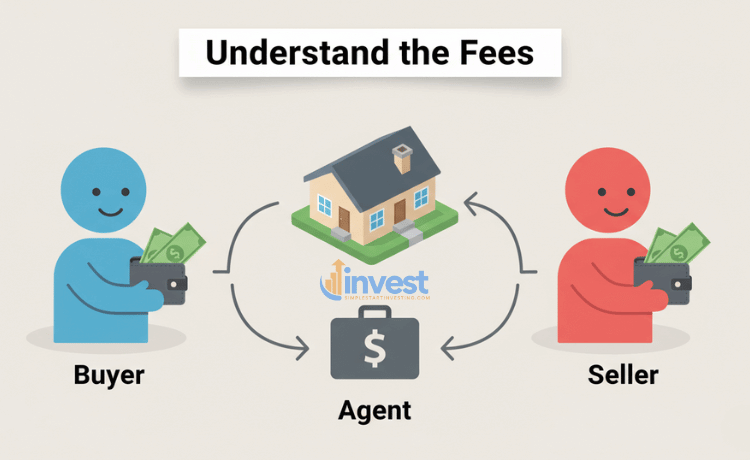
Real-World Example: If you buy a home for 400,000 dollars and your agreement says the agent earns 2.5 percent, that is 10,000 dollars. You need to ask: “If the seller doesn’t pay this, do I have to?”
The Common Mistake: New buyers often assume “the seller always pays the commission.” While sellers often do offer a credit to cover it, it is no longer a guarantee.
The Right Logic: A professional agent will be very comfortable talking about money. If they can’t explain how they get paid clearly, they probably won’t be able to negotiate a complex deal for you either.
4. What is your preferred method and frequency of communication?
The Simple Explanation: Nothing is more frustrating than a silent agent when you are nervous. You need to know if they prefer texting, phone calls, or emails, and how quickly they usually respond.
Real-World Example: You see a house on a Saturday evening. You text your agent. Do they reply in ten minutes, or do they wait until Monday morning? In a competitive market, those hours matter.

The Common Mistake: Beginners assume the agent will adapt to their style. If you love texting but your agent only checks email once a day, you will be miserable.
The Right Logic: Match your communication styles early. If you want daily updates, tell them. If they say they only work “9 to 5,” and you need weekend help, they are the wrong fit.
5. How many other clients are you currently representing?
The Simple Explanation: You want an agent who is successful (has other clients) but not so busy that you are just a number.
Real-World Example: If an agent is helping fifteen other buyers at the same time, they might send a junior assistant to show you houses instead of going themselves. You want to know who is actually doing the work.
The Common Mistake: Thinking that the “top producer” in town is the best choice. Often, the top producer is too busy to give a beginner the education they need.
The Right Logic: Look for a balance. You want someone with enough experience to be dangerous in a negotiation, but enough time to answer your “silly” questions.
6. Do you work alone or as part of a team?
The Simple Explanation: Some agents are “solopreneurs,” while others are part of a large team with specialized roles (a showing assistant, a closing coordinator, etc.).
Real-World Example: On a team, Agent A might do the interview, but Agent B shows you the houses, and Assistant C handles the paperwork. With a solo agent, you deal with one person for everything.
The Common Mistake: Beginners get confused when they call “their” agent and someone else answers. They feel passed around.
The Right Logic: Neither is inherently better, but you must know the “who’s who” from day one. If you value a single point of contact, a solo agent might be better. If you want 24/7 availability, a team is usually superior.
7. Can you provide references from at least three recent clients?
The Simple Explanation: Past behavior is the best predictor of future performance. Talking to someone who just finished a deal with the agent will tell you the truth.
Real-World Example: Call a reference and ask: “What was the hardest part of the deal, and how did the agent handle it?” A great agent shines when things go wrong, like a bad inspection or a low appraisal.
The Common Mistake: Reading online reviews and stopping there. Reviews can be faked or filtered. A real phone call is much more revealing.
The Right Logic: An agent who cannot provide three happy clients from the last six months is a major red flag.
8. What is your strategy for winning in a multiple-offer situation?
The Simple Explanation: In many US markets, good houses get multiple offers. You need to know how the agent will make your offer stand out without just “throwing more money” at the problem.

Real-World Example: A skilled agent might suggest a “clean” offer with fewer contingencies or a flexible closing date that helps the seller. They might have a relationship with the listing agent that helps get your offer to the top of the pile.
The Common Mistake: Beginners think the highest price always wins. Often, the most certain offer wins.
The Right Logic: Your agent needs to be a tactician. Ask them for a specific story about a time they helped a buyer win against five other offers.
9. Do you practice “Dual Agency”?
The Simple Explanation: Dual agency is when the same agent (or same office) represents both the buyer and the seller in the same deal. This is illegal in some states and controversial in others.
Real-World Example: If you want to buy a house and your agent is also the one selling it, whose side are they really on? It is very hard for one person to get the highest price for the seller and the lowest price for the buyer at the same time.
The Common Mistake: Thinking it makes the process “easier” or “faster.”
The Right Logic: As a beginner, you want “Single Agency.” You want someone who is 100 percent loyal to you and has no conflict of interest.
10. Can you explain the current market trends for buyers/sellers right now?
The Simple Explanation: The market changes monthly. You need to know if it is a “Buyer’s Market” (lots of houses, lower prices) or a “Seller’s Market” (few houses, high prices).
Real-World Example: If the agent says, “Houses are sitting for an average of 45 days right now,” you know you have room to negotiate. If they say, “Everything is selling in three days for over asking price,” you know you have to move fast.
The Common Mistake: Relying on national news headlines. The news might say “The Housing Market is Crashing,” but in your specific town, prices might still be rising.
The Right Logic: Trust local data over national drama. Your agent should be able to show you “Comps” (comparable sales) from the last 90 days to prove their point.
11. What vendors (lenders, inspectors, etc.) do you recommend, and why?
The Simple Explanation: A real estate deal requires a whole team: a mortgage lender, a home inspector, a title company, and maybe a contractor. A good agent has a “rolodex” of trusted pros.
Real-World Example: If your agent recommends a lender who can close a loan in 21 days instead of the usual 30, that might be why a seller picks your offer over someone else’s.
The Common Mistake: Thinking you must use whoever the agent says. You should always shop around.
The Right Logic: Use their recommendations as a starting point, but do your own research. Ask the agent if they receive any “kickbacks” or fees for the referral (usually, this is illegal or must be disclosed).
12. What happens if I am unhappy and want to cancel our agreement?
The Simple Explanation: Since you are signing a legal contract (the Representation Agreement), you need to know the “exit strategy.”
Real-World Example: If you sign a six-month contract and after two weeks you realize the agent is lazy, can you leave? A professional will usually have a “cancellation clause” that allows you to part ways if it’s not a good fit.
The Common Mistake: Signing a long-term contract without an exit clause. You could be “stuck” with a bad agent for months.
The Right Logic: Confidence is key. A great agent isn’t afraid to let you go because they know they provide great value. If they try to “trap” you in a long contract with no way out, keep looking.
Red Flags: When to Walk Away
While interviewing, keep an eye out for these warning signs:
- The “Yes” Man: If they agree with everything you say and never challenge your expectations (like if you want a mansion for the price of a shack), they are just trying to get a commission, not give you advice.
- The “Too Busy” Agent: If they take three days to return your first call, imagine how slow they will be when the deal is actually happening.
- The “Discount” Agent: If they immediately offer to cut their fee to the bone, ask yourself: If they can’t even negotiate to protect their own income, how will they negotiate to protect your money?
- No Data: If they talk in “feelings” rather than “numbers,” they aren’t doing the work. You need someone who knows that the average home in your zip code is selling for 98 percent of the listing price.
Final Thoughts: Trust Your Gut
Learning how to choose a real estate agent is a mix of logic and intuition. Use the twelve questions above to handle the logic. Make sure they have the experience, the local knowledge, and the right legal paperwork.
But also, pay attention to how you feel. You will be spending a lot of time with this person. You will be sharing your financial secrets and your family’s dreams with them. If you don’t trust them or if they make you feel small for asking questions, move on to the next candidate.
In the 2026 market, a skilled agent is your greatest asset. Take the time to find the right partner, and your path to homeownership—or a successful sale—will be much smoother.
Disclaimer: This content is for educational purposes only and does not constitute financial or legal advice. Real estate laws and commission structures vary by state and are subject to change. Always consult with a licensed professional in your specific area before signing legal documents.