When most people think about building wealth, they immediately picture buying shares of famous companies like Apple or Tesla. They imagine their money growing every time the stock market ticks upward. While investing is a powerful way to grow your money, there is one step that is even more important than your first stock purchase. That step is building a solid emergency fund strategy.
An emergency fund is not just a pile of cash sitting in a bank account. It is your defensive shield. In the world of finance, we often talk about “offense,” which is making money through investments. But without a strong “defense,” even the best offensive strategy can crumble. Think of your emergency fund as the foundation of a house. If the foundation is weak, the most beautiful house will eventually fall when a storm hits.
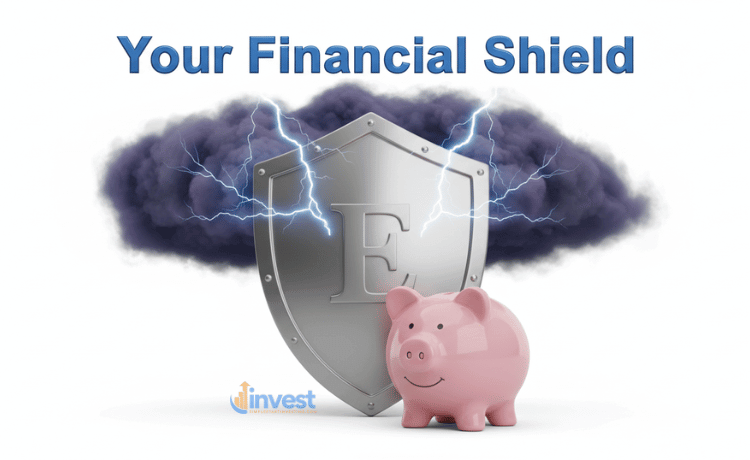
The reality of the American market is that life is unpredictable. Your car might break down on the way to work, a medical bill might arrive unexpectedly, or a job situation might change. Without an emergency fund strategy, these common life events turn into financial disasters. Instead of letting your investments grow for decades, you might be forced to sell them at the worst possible time just to pay your bills.
What Exactly is an Emergency Fund?
In the simplest terms, an emergency fund is a specific amount of cash set aside for unexpected and necessary expenses. It is money that you do not touch for vacations, new shoes, or even “good” investment opportunities. It exists for one reason only: to protect your life and your portfolio from the unknown.
The Plain English Definition
Think of it as a “Break Glass in Case of Emergency” box. Inside that box is enough cash to cover your basic living costs for a few months. It is separate from your daily checking account so that you aren’t tempted to spend it on a Friday night dinner.
A Real-World Example
Imagine you own ten shares of Amazon. Suddenly, your air conditioning unit breaks during a Texas summer heatwave. The repair cost is 2,000 dollars. If you have an emergency fund strategy, you simply take 2,000 dollars from your dedicated savings account, fix the AC, and move on. Your Amazon shares remain untouched, continuing to grow in the background.
The Common Beginner Mistake
Many beginners think that a credit card is a valid emergency fund. They assume that if something goes wrong, they can just “swipe the card” and pay it off later. This is a dangerous trap because credit cards often come with high interest rates, sometimes over 20 percent. If you can’t pay the card off immediately, that 2,000 dollar repair could eventually cost you 3,000 dollars or more.
Adjusting Your Mindset
Instead of seeing this cash as “lazy money” that isn’t earning a high return, see it as “insurance money.” The “return” on your emergency fund isn’t the interest rate the bank pays you; it is the fact that it prevents you from going into high-interest debt or ruining your long-term investment plans.
The Danger of the “Forced Sale”
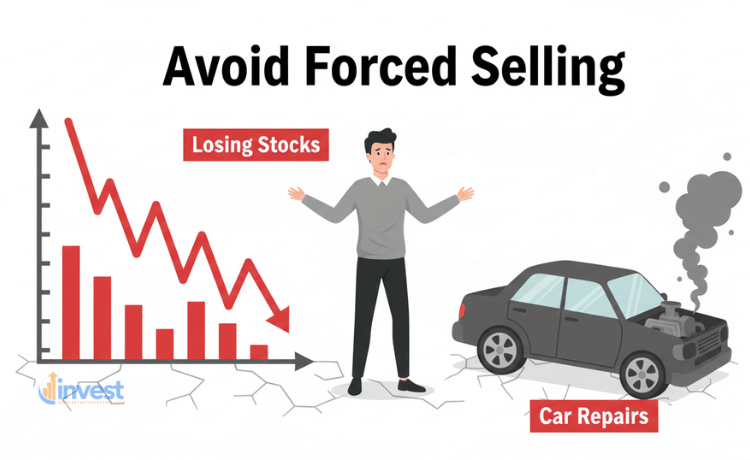
The biggest reason why an emergency fund strategy is the most important part of investing is that it prevents “forced selling.” This is a term used when an investor is required to sell their stocks because they need cash immediately, regardless of whether the stock price is up or down.
Why Forced Selling Hurts
The stock market does not move in a straight line. Sometimes, the market goes through a “down” period where stock prices for great companies like Costco or Walmart might drop by 10 or 20 percent. This is normal. Usually, an investor would just wait for the price to recover. However, if you have an emergency—like a job loss—and you have no cash, you are forced to sell those stocks while they are “on sale.”
A Real-World Example
Let’s say you invested 5,000 dollars into Apple (AAPL) when the price was 200 dollars per share. A month later, the market has a bad week, and the price drops to 160 dollars per share. You still believe in Apple, but suddenly your roof starts leaking. You need 4,000 dollars for repairs right now. Because you have no emergency fund, you must sell your Apple shares at 160 dollars. You have now turned a “temporary dip” into a permanent loss of 1,000 dollars of your hard-earned money.
The Common Beginner Mistake
Beginners often believe they can just “sell a little bit of stock” whenever they need money. They don’t realize that emergencies and stock market crashes often happen at the same time. During a recession, people lose jobs and the stock market goes down simultaneously. If you rely on your stocks for emergencies, you are essentially planning to sell your assets at their lowest value.
Adjusting Your Mindset
Understand that your emergency fund “buys you time.” It allows your investments to stay in the market for five, ten, or twenty years without interruption. By having cash on hand, you ensure that you only sell your stocks when you want to, not when you have to.
How Much Cash Should You Have?
A common question for anyone starting an emergency fund strategy is exactly how much money to save. The standard rule of thumb in the United States is to save between three and six months of your essential living expenses.
Calculating Your Number
To find your number, you don’t need complex math. Simply look at your monthly bills for the things you absolutely must pay to survive. This includes your rent or mortgage, your groceries, your utilities like electricity and water, your insurance, and any minimum debt payments.
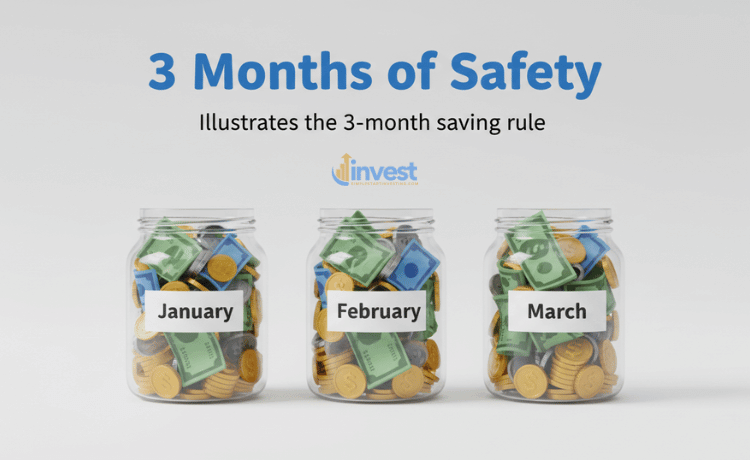
For example, if you add up all those essential costs and they come to 3,000 dollars per month, your goal for a three-month fund is 9,000 dollars. If you want a more secure six-month fund, your goal would be 18,000 dollars.
Why Three Months vs. Six Months?
If you have a very stable job and you are single, three months might be enough. However, if you have children, a mortgage, or if you work in an industry where it is hard to find a new job quickly, aiming for six months is much safer. In 2026, with the way the economy fluctuates, many experts even suggest leaning toward the six-month mark for extra peace of mind.
The Common Beginner Mistake
Many people try to save based on their income rather than their expenses. For example, if you earn 5,000 dollars a month but only spend 3,000 dollars, you don’t need to replace the full 5,000 dollars. You only need to cover the 3,000 dollars that keeps your life running. Saving based on income often makes the goal feel too big and discouraging.
Adjusting Your Mindset
Don’t feel like you have to save the full amount overnight. Start with a “Mini Emergency Fund” of 1,000 dollars or 2,000 dollars. This small buffer will cover most minor car repairs or medical co-pays. Once you have that “starter” fund, you can slowly build up to your full three-to-six-month goal while you also begin your investing journey.
Where to Keep Your Emergency Fund
The location of your emergency fund is just as important as the amount. You need a place that is safe, accessible, and earns a little bit of interest to keep up with the cost of living.
High-Yield Savings Accounts (HYSA)
In the current year, the best place for an emergency fund strategy is a High-Yield Savings Account. Unlike a regular savings account at a big local bank that might pay almost zero interest, a High-Yield account at an online bank often pays much more.
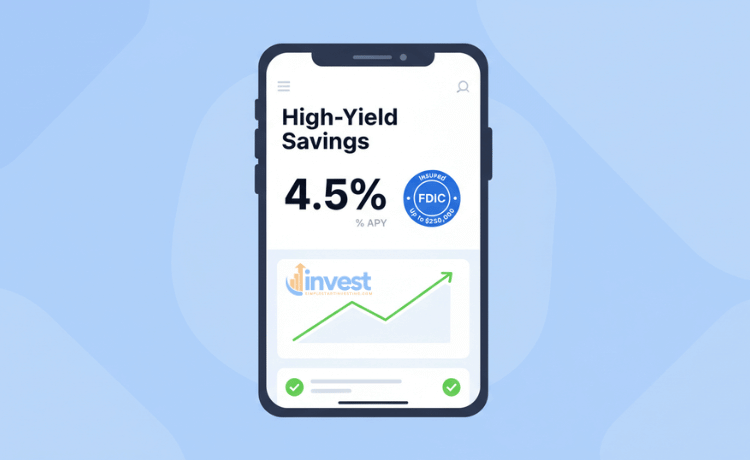
If you have 10,000 dollars in a regular account, you might only earn 1 dollar of interest in a whole year. But in a High-Yield account paying 4 percent, you would earn 400 dollars in that same year. That is a significant difference for doing almost no extra work.
Accessibility and Safety
Your emergency fund must be “liquid,” which means you can get the cash out within a day or two. You should also make sure the bank is FDIC-insured. This means the United States government guarantees your money up to 250,000 dollars if the bank ever goes out of business. This is why we don’t “invest” an emergency fund in stocks—stocks can lose value, but an FDIC-insured savings account will not.
The Common Beginner Mistake
Some beginners keep their emergency fund in physical cash under a mattress. This is risky because of fire, theft, or simply losing it. Others keep it in their main checking account. The problem here is “spending creep.” When you see a large balance in your checking account, you are much more likely to spend it on a non-emergency because the money feels “available.”
Adjusting Your Mindset
Treat your emergency fund account like a “vault.” You should be able to see the balance, but it should be at a different bank than your everyday checking. This “out of sight, out of mind” approach helps you resist the urge to dip into it for things that aren’t true emergencies.
Psychology: The “Sleep Better” Factor
One of the most overlooked benefits of a great emergency fund strategy is the psychological impact on your investing behavior. Investing can be scary when prices are moving up and down. Having a pile of cash makes you a much calmer investor.
The Logic of Peace of Mind
When you know that your rent is paid for the next six months regardless of what happens at work, you don’t panic when the stock market drops. You can look at a company like Tesla (TSLA) dropping in price and think, “That’s okay, I don’t need that money today.” This allows you to think logically rather than emotionally.

A Real-World Example
Imagine two investors. Investor A has 10,000 dollars in stocks and zero in savings. Investor B has 10,000 dollars in stocks and 10,000 dollars in an emergency fund. If the market crashes by 30 percent, Investor A will be terrified because they have no safety net. They might sell their stocks in a panic. Investor B will stay calm because their daily life hasn’t changed. Investor B is much more likely to become wealthy in the long run.
The Common Beginner Mistake
New investors often focus purely on the math of “how much can I make?” They ignore the “sleep test.” If your investment portfolio is keeping you awake at night because you are worried about needing that money for bills, you have invested too much and saved too little.
Adjusting Your Mindset
True financial freedom isn’t just about having a million dollars; it’s about not being afraid of a “check engine” light. By prioritizing your emergency fund, you are giving yourself the gift of clarity. You are making sure that your financial decisions are driven by your goals, not by your fears.
New Rules: The SECURE 2.0 Act and Emergencies
In the last year or two, the United States government has recognized how hard it is for people to save for emergencies. Because of a law called the SECURE 2.0 Act, there are now some new ways to access money in a crisis.
The 1,000 Dollar Rule
Under current regulations, some retirement plans now allow you to take out up to 1,000 dollars once a year for an “unforeseeable or immediate” personal emergency without paying the usual 10 percent early withdrawal penalty. While this is a helpful safety valve, it should not be your primary emergency fund strategy.
Why This Isn’t Enough
1,000 dollars is a great start, but it rarely covers a major emergency like a three-month job loss. Furthermore, when you take money out of your retirement account, you are taking money away from your future self. You also still have to pay regular income taxes on that money in most cases.
The Common Beginner Mistake
Some people hear about these new rules and think, “Great, I don’t need a savings account because I can just use my 401k.” This is a mistake. Using your retirement fund for an emergency is like “eating your seeds” instead of planting them. You won’t have a harvest later.
Adjusting Your Mindset
View these government rules as a “last resort” for extreme situations. Your goal should always be to have your own independent emergency fund so that you never have to touch your retirement accounts until you actually retire. Regulations can change, and your specific employer’s plan might have different rules, so always check the current guidelines or talk to a professional.

Conclusion: Build Your Shield First
An emergency fund strategy is the most important investment strategy because it protects every other investment you make. It turns an “emergency” into a mere “inconvenience.” It allows you to be the kind of patient, long-term investor that actually builds wealth in the American stock market.
Before you buy your next share of Apple, Amazon, or a low-cost index fund, look at your savings. If you don’t have at least one to three months of expenses tucked away in a safe, high-yield account, make that your number one priority. Your future self will thank you for the peace of mind.
Disclaimer: This content is for educational purposes only and does not constitute financial, legal, or tax advice. Financial regulations and bank rates are subject to change. Always consult with a qualified professional before making significant financial decisions.