You have spent decades diligently saving for retirement. You have watched your 401(k) or Traditional IRA grow, thanks to tax-deferred contributions and the power of compound interest. But there is a catch that many beginners overlook: the government eventually wants its share of that money. This is where Required Minimum Distributions, commonly known as RMDs, come into play.
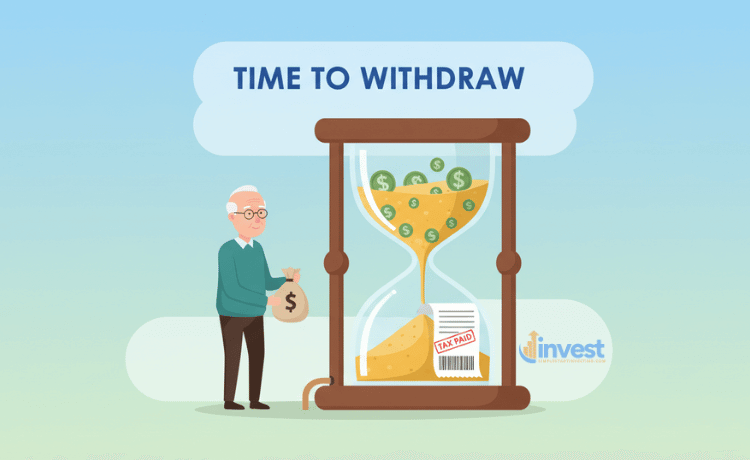
Think of an RMD as a mandatory “exit fee” for your retirement accounts. For years, the IRS allowed you to skip paying taxes on the money you put into these accounts. In exchange, they require you to start taking a specific amount out once you reach a certain age so they can finally collect those taxes. If you don’t play by their rules, the penalties can be some of the harshest in the entire US tax code.
In this guide, we will break down everything a beginner needs to know about RMD rules, how to calculate your withdrawal without getting a headache, and the common pitfalls that could cost you thousands of dollars in unnecessary fees.
What Exactly Are Required Minimum Distributions?
At its simplest level, a Required Minimum Distribution is the minimum amount of money that the federal government requires you to withdraw from your retirement accounts each year. This is not a choice; it is a legal obligation once you hit a specific age milestone.
The logic behind this rule is straightforward. Most retirement accounts, like a Traditional IRA or a 401(k) through an employer like Walmart or Amazon, are “tax-deferred.” This means you didn’t pay income tax on that money when you earned it. The IRS is patient, but they aren’t infinite. They want you to move that money from your tax-sheltered account into your pocket so it can be taxed as regular income.
A Simple Example Imagine you have a retirement account that has grown to 500,000 dollars. For years, that money has been sitting there, untouched by taxes. Once you reach the age of 73, the IRS essentially says, “It is time to start using that money.” They will provide a specific number—based on your age—that you must withdraw. If that number is 18,000 dollars, you must take at least that much out and report it as income on your tax return.
The Beginner’s Mistake Many new investors think that because it is “their” money, they can leave it in the account forever to pass on to their children. They assume that if they don’t need the cash for living expenses, they can just let it keep growing tax-free.
The Financial Reality The IRS does not care if you need the money or not. The “Required” part of RMD is literal. If you fail to take the distribution, you aren’t just missing a deadline; you are inviting a massive penalty that can eat a huge chunk of your savings. You must plan for these withdrawals as part of your long-term tax strategy.
At What Age Must You Start Taking RMDs?
One of the most confusing parts of RMDs is that the “starting age” has changed recently. Thanks to new laws like the SECURE Act 2.0, the government has pushed the start date back, giving retirees a bit more time to let their money grow.
Currently, for most people, the magic number is 73. If you were born between 1951 and 1959, your RMDs start at age 73. If you were born in 1960 or later, the age will eventually jump to 75.
A Real-World Scenario Let’s look at a worker who retired from a company like Costco. If they turn 73 this year, they are officially in their first “RMD year.” They have a choice: they can take the money by December 31st of this year, or they can wait until April 1st of next year to take their very first payment. However, waiting until April has a hidden trap that we will discuss later.
The Beginner’s Mistake A common error is following “old advice” from parents or older friends who say you have to start at age 70 and a half or age 72. Laws change frequently in the US, and using outdated age requirements can lead to total confusion in your financial planning.
The Financial Reality Always verify the current age requirement based on your specific birth year. As of right now, 73 is the standard for those entering retirement. Delaying your withdrawal because you thought the age was 75 (when it is actually 73 for you) will result in an immediate penalty from the IRS.
Which Accounts Are Subject to RMDs?
Not every bucket of money is treated the same way by the IRS. It is vital to know which of your accounts are “on the clock” and which ones can be left alone.
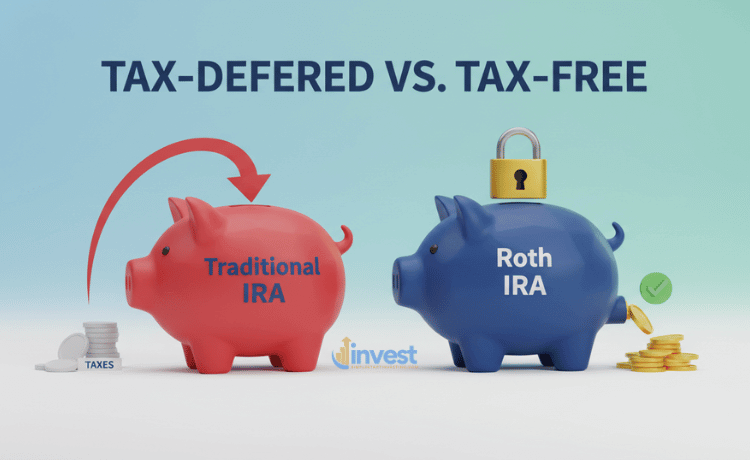
Generally, any account where you received a tax break on the way in will require RMDs. This includes:
- Traditional IRAs
- SEP IRAs and SIMPLE IRAs (often used by small business owners)
- 401(k) plans (like those offered by Apple or Tesla)
- 403(b) plans (often used by teachers or non-profit workers)
The Big Exception: Roth IRAs The “superpower” of the Roth IRA is that it does not have RMDs for the original owner. Because you paid taxes on the money before you put it in, the IRS doesn’t care how long you leave it there. You can let a Roth IRA grow until you are 100 years old, and the government will never force you to take a dime.
A Simple Example Suppose you have 100,000 dollars in a Traditional IRA and 100,000 dollars in a Roth IRA. When you turn 73, the IRS will force you to take money out of the Traditional IRA. However, the 100,000 dollars in the Roth IRA can stay exactly where it is, continuing to grow tax-free.
The Beginner’s Mistake Many beginners assume that all “retirement accounts” follow the same rules. They might think that because they have a 401(k), they automatically have to take RMDs. While that is usually true, they often don’t realize that they could roll that money into a Roth IRA (after paying some taxes) to avoid RMDs entirely in the future.
The Financial Reality Tax diversification is key. By having both Traditional and Roth accounts, you have more control over your future tax bill. If you want to avoid being “forced” to take income you don’t need, the Roth IRA is your best friend.
How to Calculate Your RMD (Without Complex Math)
You might be worried that calculating your RMD requires a degree in accounting, but it is actually a simple two-step process. You don’t need complex formulas or calculators to understand the logic.
Step 1: Find your balance. Look at your account balance as of December 31st of the previous year. If you are calculating your withdrawal for this year, you look at what was in the account on the last day of last year.
Step 2: Find your “Life Expectancy Factor.” The IRS provides a table (usually called the Uniform Lifetime Table) that assigns a number to every age. This number represents how many more years the IRS expects you to live. For example, at age 73, the factor is currently 26.5.
To find your RMD, you simply take your balance and divide it by that factor.
A Simple Example Let’s say your Traditional IRA had 265,000 dollars in it on December 31st of last year. You are now 73 years old, so your factor is 26.5. To get your RMD, you divide 265,000 by 26.5. The result is 10,000 dollars. That is the minimum amount you must withdraw this year.
The Beginner’s Mistake A common mistake is thinking the RMD is a fixed percentage, like “I always have to take out 4 percent.” In reality, the percentage changes every single year. As you get older, your life expectancy factor gets smaller, which means the percentage you are forced to take out gets larger.
The Financial Reality The RMD is designed to slowly empty your account over your remaining lifetime. Because the divisor (the factor) gets smaller every year, the IRS is essentially making sure that the older you get, the faster you withdraw the money. This ensures they get their tax revenue before the account owner passes away.
Deadlines: The April 1st Trap
Timing is everything when it comes to the IRS. For most years, the deadline is simple: you must take your RMD by December 31st. However, the very first year you are required to take a distribution, the IRS gives you a “grace period” until April 1st of the following year.
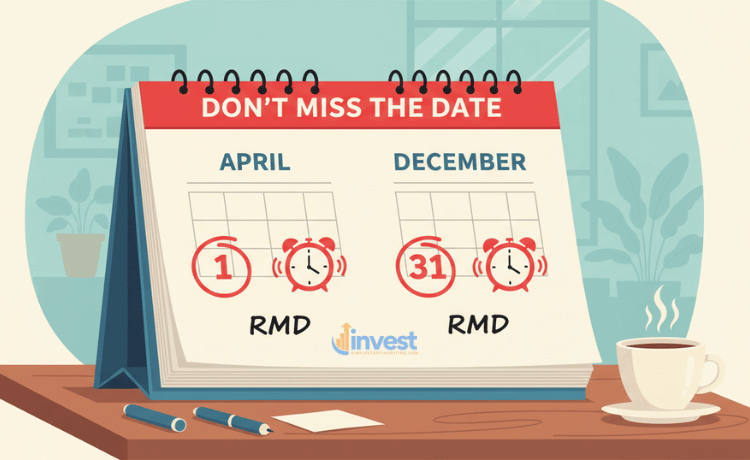
While this sounds like a nice favor, it can be a massive tax trap for the unwary.
A Simple Example Imagine you turn 73 this year. You decide to wait and take your first RMD (let’s say it’s 15,000 dollars) on March 15th of next year. You have technically met the deadline for your first RMD. However, you still have to take your second RMD (for that next year) by December 31st of that same year. Now, you have two large RMDs hitting your income in a single calendar year. This could push you into a much higher tax bracket and potentially increase the cost of your Medicare premiums.
The Beginner’s Mistake New retirees often think, “I’ll delay taking the money as long as possible to keep it growing.” They wait until that April 1st deadline without realizing they are doubling up their tax burden in year two.
The Financial Reality In almost all cases, it is better to take your first RMD during the actual year you turn 73. Spreading the income across two separate tax years is usually much more tax-efficient than bunching them together. Only delay until April if you have a very specific reason and have consulted with a tax pro.
The Penalty: Why You Cannot Afford to Forget
The IRS does not take RMDs lightly. In the past, the penalty for missing a distribution was a staggering 50 percent of the amount you failed to take. While the law has softened recently, it is still incredibly painful.
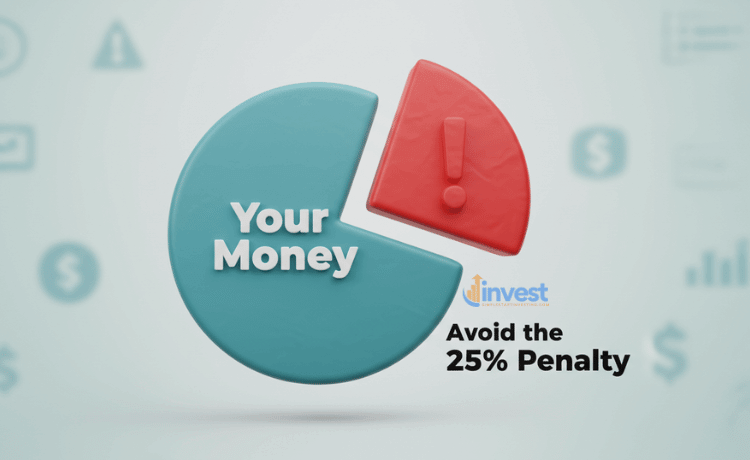
Currently, the penalty for missing an RMD is 25 percent. If you catch the mistake and fix it quickly (usually within two years), the penalty can be reduced to 10 percent.
A Simple Example Suppose your RMD was 20,000 dollars, but you completely forgot to take it. The IRS will charge you a 25 percent penalty on that 20,000 dollars. That is 5,000 dollars gone—just because of a missed deadline. You still have to pay the regular income tax on that 20,000 dollars as well. Between the penalty and the taxes, more than half of your withdrawal could end up in the government’s hands.
The Beginner’s Mistake Some people think, “If the IRS doesn’t send me a bill, I’m safe.” They assume the government won’t notice a missing withdrawal among millions of taxpayers.
The Financial Reality Financial institutions, like Vanguard or Fidelity, report your account balances and RMD status to the IRS. The government has automated systems to flag accounts that didn’t take their required distributions. It is not a matter of “if” they find out, but “when.” It is always cheaper to take the money on time than to pay the “forgetfulness tax.”
Managing Multiple Accounts: The “Aggregation” Rule
If you have multiple retirement accounts, the rules for how you take your RMDs can get a bit tricky. The IRS allows some flexibility for IRAs, but they are very strict about 401(k)s.
For IRAs: If you have three different Traditional IRAs, you must calculate the RMD for each one separately. However, you can add those totals together and take the entire amount from just one of the accounts.
For 401(k)s: Workplace plans are different. If you have a 401(k) from an old job at Walmart and another one from a job at J.P. Morgan, you must take the RMD for each account from that specific account. You cannot “total them up” and take it all from one.
A Simple Example John has two IRAs. IRA A needs a 5,000 dollar withdrawal, and IRA B needs a 5,000 dollar withdrawal. John can choose to take 10,000 dollars out of IRA A and leave IRA B alone. However, if John also has a 401(k) that requires 5,000 dollars, he must take that 5,000 dollars specifically from the 401(k) plan.
The Beginner’s Mistake A common error is totaling up every single retirement account (IRAs and 401ks) and taking the lump sum from just one IRA. This will satisfy the IRA requirement but will leave the 401(k) with a “missed” RMD and a 25 percent penalty.
The Financial Reality Keep a clear list of every retirement account you own. Categorize them by type (IRA vs. 401k). Calculate each one separately, and make sure you know which ones can be combined and which ones must be handled individually.
Strategies to Reduce the RMD Burden
If you don’t actually need the money from your RMD to live on, it can feel frustrating to be forced to take it and pay taxes. Fortunately, there are a few legal ways to manage the impact.
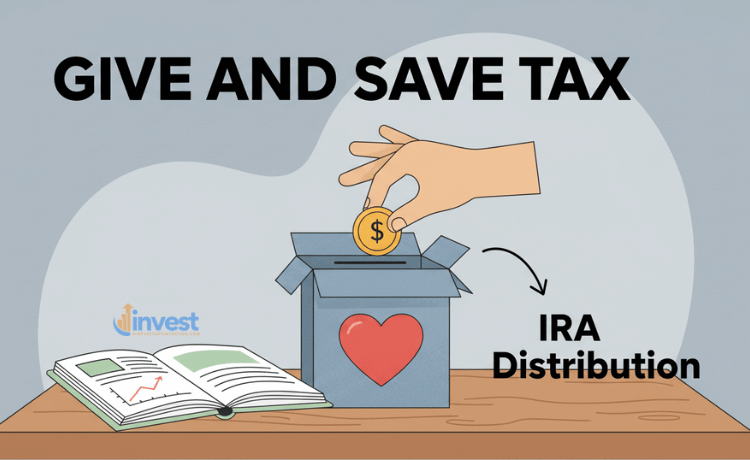
1. The Qualified Charitable Distribution (QCD) If you are at least 70 and a half years old, the IRS allows you to send up to 100,000 dollars per year directly from your IRA to a qualified charity. This money counts toward your RMD, but because it goes to charity, it is not included in your taxable income. It is a “win-win” for those who are charitably minded.
2. Still Working? If you are still working at age 73 and you don’t own more than 5 percent of the company, many 401(k) plans allow you to delay RMDs for that specific employer’s plan until you actually retire. This does not apply to your personal IRAs, but it can save you from taking large workplace distributions while you still have a high salary.
3. Roth Conversions Before you hit age 73, you can choose to move money from a Traditional IRA to a Roth IRA. You will pay taxes on the move now, but that money will never be subject to RMDs again. This is a great strategy to use in years when your income is lower than usual.
The Beginner’s Mistake Many people wait until they are 73 to think about RMDs. By then, their options are much more limited.
The Financial Reality RMD planning should start in your 60s. By looking ahead, you can decide if it makes sense to “shrink” your Traditional accounts through Roth conversions or charitable giving before the mandatory deadlines kick in.
Conclusion
Required Minimum Distributions are a non-negotiable part of the American retirement system. While the rules can feel like a burden, they are simply the final chapter of the tax-deferred deal you made with the IRS years ago.
By understanding your starting age (73 for most current retirees), knowing how to calculate your withdrawal using the life expectancy factor, and keeping a close eye on the December 31st deadlines, you can navigate these rules with confidence. Most importantly, staying organized and knowing which accounts are subject to these rules will save you from the painful 25 percent penalty that catches so many beginners by surprise.
Regulations regarding taxes and retirement can change; please check current IRS guidance or consult with a financial professional to ensure your specific plan is up to date.
Disclaimer: This content is for educational purposes only and does not constitute financial or tax advice.