
When most people think about retirement, they picture a beach, a golf course, or extra time with the grandkids. They think about their 401k balances and Social Security checks. But there is one massive piece of the puzzle that often gets overlooked until the very last minute: healthcare. In the United States, your bridge to health security once you stop working is a program called Medicare.
If you are just starting to look into your future, understanding Medicare basics is just as important as knowing how to invest in the stock market. Healthcare is often one of the largest expenses for retirees, and making the wrong choice can lead to permanent financial penalties or, worse, being stuck without coverage when you need it most. This guide will walk you through the “alphabet soup” of Medicare in plain English so you can plan with confidence.
What Exactly Is Medicare?
At its simplest level, Medicare is a federal health insurance program primarily for people who are 65 or older. It also covers younger people with certain disabilities or specific permanent health conditions. Unlike the health insurance you might have had through an employer like Walmart or Amazon, Medicare is not a single plan that covers everything for one price. It is a modular system made of different parts that cover different types of care.
Think of Medicare like a modular home. You have the foundation, the walls, and the roof. You can choose to stick with the basic structure, or you can add on extra features to make it more comfortable. Understanding Medicare basics means knowing which modules you need and how they fit together.
A Common Misunderstanding: Many beginners believe that Medicare is completely free because they paid taxes into the system for decades.
The Reality: While most people do not pay a monthly fee for the “hospital” part, almost everyone pays monthly premiums for the “medical” and “drug” parts. Medicare is a cost-sharing program, not a free pass. You are still responsible for monthly premiums, deductibles, and a portion of your medical bills.
Part A: Your Hospital Insurance
Medicare Part A is often called “Hospital Insurance.” This is the part that helps cover the big stuff—when you are actually admitted to a facility. It covers inpatient hospital stays, care in a skilled nursing facility, hospice care, and some home health care.

How Part A Works
If you have worked and paid Medicare taxes for at least ten years (or 40 quarters), you typically do not have to pay a monthly fee for Part A. This is why it is often called “premium-free Part A.” However, if you didn’t work long enough in the U.S., you can still buy into it, but it can be quite expensive, costing hundreds of dollars every month.
A Real-World Example: Imagine you are a retired manager from a company like Costco. You are 68 years old and unfortunately trip on a curb, breaking your hip. You are admitted to a local hospital for surgery and stay for four days. Medicare Part A is the “bucket” that pays for your hospital room, the nursing care, and the meals you eat while you are an inpatient.
Common Mistake: Beginners often think Part A covers everything that happens in a hospital.
The Financial Logic: Part A has a “deductible” for every benefit period. For example, if you go into the hospital this year, you might have to pay the first 1,736 dollars of your bill out of your own pocket before Medicare pays a single cent. It is important to realize that this deductible is not a once-a-year fee; if you are out of the hospital for 60 days and then go back in for a different issue, you might have to pay that 1,736 dollars all over again.
Part B: Your Medical Insurance
If Part A is for the hospital, Part B is for everywhere else. This is “Medical Insurance.” It covers services from doctors and other health care providers, outpatient care, home health care, durable medical equipment (like wheelchairs), and many preventive services like flu shots or screenings.
The Cost of Part B
Unlike Part A, everyone pays a monthly premium for Part B. For most people this year, the standard premium is 202.90 dollars per month. This amount is usually deducted directly from your Social Security check. If you have a high income—for instance, if you were a high-level executive at a firm like JPMorgan Chase—you might have to pay an extra surcharge known as IRMAA.
A Real-World Example: Let’s say you need to see your primary care doctor for a check-up or you need to visit a specialist because of a recurring back pain. You drive to their office, they run some tests, and you go home. Since you were not “admitted” to the hospital as an inpatient, these costs fall under Part B.
Common Mistake: Many people think they can skip Part B if they feel healthy to save 200 dollars a month.
The Financial Logic: If you don’t sign up for Part B when you are first eligible and you don’t have “creditable” coverage from a current employer, you will face a permanent late-enrollment penalty. For every 12-month period you waited, your premium increases by 10 percent for the rest of your life. If you wait five years to sign up, your monthly bill could be 50 percent higher than everyone else’s forever.
Part D: Prescription Drug Coverage
Neither Part A nor Part B covers the cost of the medications you pick up at a pharmacy like CVS or Walgreens. For that, you need Part D. These plans are run by private insurance companies approved by Medicare.

Understanding the “Cap”
In the past, drug costs were a major fear for retirees because there was no limit on how much you could spend. However, starting recently, there is a hard cap on out-of-pocket spending. This year, once you spend 2,100 dollars on covered drugs, you won’t have to pay a penny more for your prescriptions for the rest of the year.
A Real-World Example: Suppose you take a specific brand-name medication for a heart condition that costs 500 dollars a month. Without Part D, you would pay 6,000 dollars a year. With a Part D plan, you would pay your monthly premium (which averages around 34.50 dollars) and your co-pays until you hit that 2,100 dollar limit. After that, your drugs are essentially “free” for the remainder of the calendar year.
Common Mistake: Thinking you don’t need Part D because you don’t take any pills right now.
The Financial Logic: Just like Part B, Part D has a lifetime penalty if you join late. Medicare calculates the penalty based on how long you went without “creditable” drug coverage. Even if you only take one generic aspirin today, it is usually smarter to sign up for the cheapest available plan to “lock in” your enrollment and avoid future penalties.
The Big Choice: Original Medicare vs. Medicare Advantage
This is where many beginners get confused. You generally have two main pathways to receive your benefits.

Pathway 1: Original Medicare (A + B + D + Medigap)
This is the traditional way. You have Part A and Part B provided by the government. You add a stand-alone Part D plan for drugs. Then, most people add a “Medigap” (Supplement) policy. Medigap helps pay for the 20 percent of costs that Part B doesn’t cover.
- Pros: You can see any doctor in the country that accepts Medicare (which is most of them). No referrals needed.
- Cons: You have multiple monthly premiums to track.
Pathway 2: Medicare Advantage (Part C)
Medicare Advantage is an “all-in-one” alternative. You still have Medicare, but you get your benefits through a private company like UnitedHealthcare or Humana. These plans usually bundle Part A, Part B, and Part D into one plan.
- Pros: Often has lower monthly premiums (some are 0 dollars beyond the Part B premium). They may include extra perks like dental, vision, or gym memberships.
- Cons: You are usually restricted to a network of doctors. You often need “prior authorization” or referrals to see specialists.
Common Mistake: Thinking Medicare Advantage is “free” because the plan premium is 0 dollars.
The Financial Logic: Even if your Advantage plan has a 0 dollar premium, you still have to pay your standard Part B premium (the 202.90 dollars we mentioned earlier). Also, while the monthly cost is low, you might have higher “co-pays” when you actually get sick. It is a trade-off between predictable monthly costs (Original Medicare + Medigap) and pay-as-you-go costs (Medicare Advantage).
When Do You Sign Up?
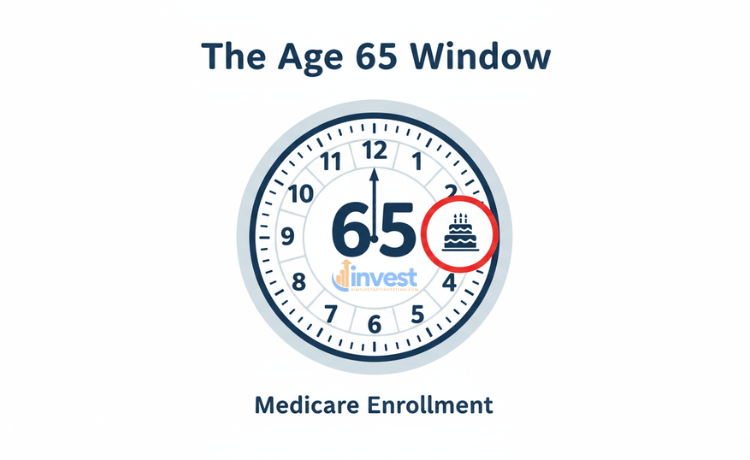
Timing is everything in the world of Medicare. For most people, the magic window is the Initial Enrollment Period. This is a seven-month window that includes:
- The 3 months before you turn 65.
- The month you turn 65.
- The 3 months after you turn 65.
If you are still working for a large employer (usually 20 or more employees) and have health insurance through them, you might be able to delay Part B without a penalty. However, you should always verify this with your HR department.
A Real-World Example: If your 65th birthday is in July, your window opens in April and stays open until October. If you miss this window and you aren’t working, you have to wait for the “General Enrollment Period” which happens at the start of the following year, and your coverage won’t start until later. This could leave you with a multi-month gap where you have no insurance at all.
Common Misunderstandings Summary
To master the Medicare basics, you must unlearn some common myths:
- “Medicare covers long-term care.” It does not. If you need to stay in a nursing home indefinitely because you can no longer care for yourself, Medicare will not pay for it. That requires long-term care insurance or spending down your assets to qualify for Medicaid.
- “Medicare covers dental and vision.” Original Medicare (Parts A and B) generally does not cover routine dental cleanings, glasses, or hearing aids. You either need a Medicare Advantage plan that includes these or a separate private insurance policy.
- “I’m healthy, so I’ll wait until I’m sick to sign up.” As we discussed, the penalties are permanent. Medicare is designed to be an “all-in” system. You pay in when you are healthy to ensure the fund is there when you are sick.
Final Thoughts for Beginners
Navigating your health insurance in retirement is a marathon, not a sprint. Start by identifying your “Must-Haves.” Do you have a specific doctor you refuse to leave? Original Medicare might be better. Are you on a very tight budget and want the lowest monthly bill? Medicare Advantage could be the answer.
Remember, the rules around premiums and deductibles can change every single year. It is a good habit to review your coverage every October during the “Open Enrollment” period. This is your chance to switch plans if your current company has raised prices or changed the list of drugs they cover.
Planning for healthcare is just as much a part of “investing” as buying stocks or real estate. By protecting your health, you are protecting your wealth.
Disclaimer: This content is for educational purposes only and does not constitute financial or legal advice. Medicare regulations and costs are subject to change; please verify current guidelines at Medicare.gov or consult with a licensed insurance professional.