Buying a home is a marathon, and the final walk-through is that last hundred-meter dash before you cross the finish line. You have spent months searching for the perfect house, negotiated back and forth, and navigated a sea of paperwork. Now, you are just hours away from signing the closing documents and receiving the keys to your new American dream. But before you pick up that pen, there is one critical step you cannot afford to skip: the final walk-through.
This is not just a casual stroll through your future living room to imagine where the Christmas tree will go. It is a strategic, high-stakes verification process. In the fast-paced real estate market of this year, where every dollar counts, ensuring that the property is exactly as promised is vital. The final walk-through serves as your ultimate insurance policy, ensuring that the seller has held up their end of the bargain and that no new disasters have struck since you last visited.
Many beginners feel overwhelmed at this stage, thinking the hard part is over once the mortgage is approved. However, skipping or rushing this step can lead to expensive “homeowner surprises” that could cost you thousands of dollars the moment you move in. In this guide, we will break down exactly what you need to look for, how to handle problems, and why this moment is the most important hour of your entire home-buying journey.
What Exactly Is a Final Walk-Through?
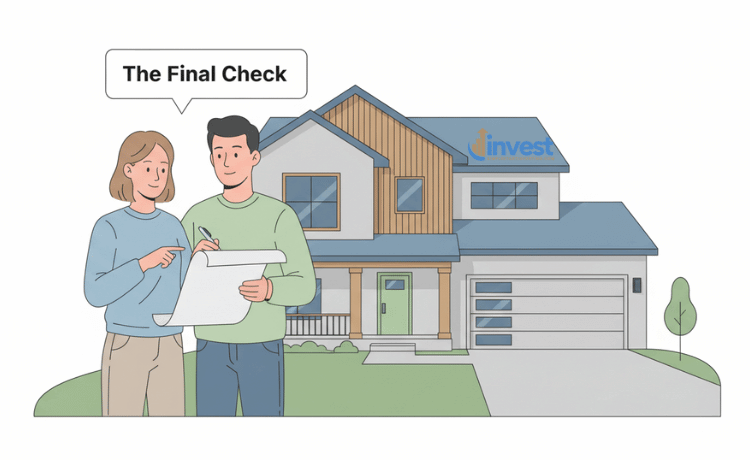
In plain English, the final walk-through is a scheduled visit to the property that usually takes place twenty-four to forty-eight hours before the official closing. Its primary purpose is to verify two things. First, you are checking that any repairs the seller agreed to make after the initial inspection have actually been completed. Second, you are making sure that the home is in the same condition as when you signed the contract—meaning no new holes in the walls, no flooded basements, and no missing appliances.
Think of it like buying a certified pre-owned car from a large dealership like CarMax. You saw the car three weeks ago, and they promised to fix a crack in the windshield and deep-clean the interior. The final walk-through is your chance to walk around the car, test the radio, and look at that windshield before you hand over your check and drive off the lot. If you find a new dent today that wasn’t there before, you wouldn’t just ignore it—you would ask the dealer to address it.
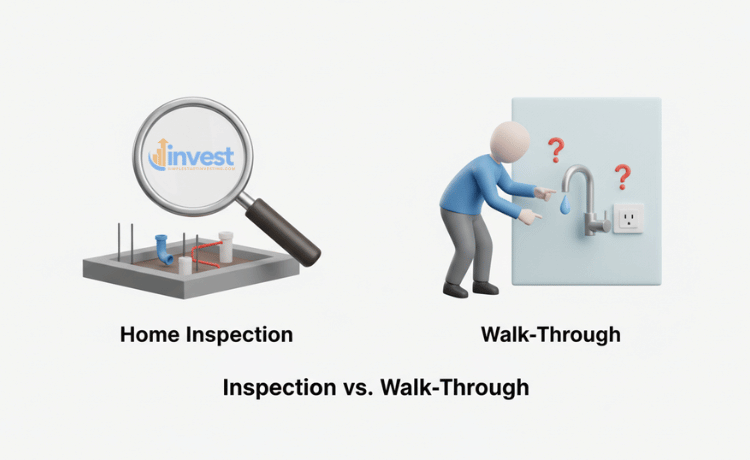
A common mistake for beginners is thinking that the final walk-through is the same thing as a professional home inspection. It is not. The home inspector’s job happened weeks ago; they looked at the “bones” of the house, like the foundation and the roof’s lifespan. Your job during the walk-through is much more practical. You are acting as the future owner, verifying that the home is “broom clean” and functional.
You should adjust your mindset from “dreaming about decor” to “detective mode.” You aren’t looking at the paint color anymore; you are looking for a leak under the sink that might have started yesterday. You are checking to see if the seller took the beautiful chandelier that was supposed to stay with the house. By staying objective, you protect your bank account from unexpected repairs.
Why Timing and Tools Matter
Timing is everything. Most real estate agents recommend doing the final walk-through as close to the closing time as possible. If you are closing on a Friday morning, doing your walk-through on Thursday afternoon is ideal. If you do it three days early, the seller still has time to cause damage while moving out. In the current US market, many sellers are moving quickly, and accidents—like a heavy sofa scratching a hardwood floor—happen most often during the final hours of moving.
You don’t need a heavy toolbox, but you do need a few essentials. Bring your original home inspection report so you can specifically check the items the inspector flagged. Bring your sales contract to verify which “fixtures” (like appliances or light fixtures) were supposed to stay. A simple phone charger is also a great tool to test if electrical outlets are working. Finally, use your smartphone to take photos or videos of any new issues you discover.

The Ultimate Room-by-Room Checklist
To make sure you don’t miss anything, it is best to follow a logical path through the house. Don’t just wander; follow a system. Here is how a pro handles a final walk-through in a standard American home.
1. The Exterior and Curb Appeal
Start outside. Walk the entire perimeter of the home. Look at the siding and the windows. Are there any new cracks? Did a recent storm blow a branch through a window? If the home has a yard, check that the seller didn’t dig up the expensive rose bushes or the fruit trees. In the US, landscaping is generally considered part of the real estate, and sellers shouldn’t take plants unless specifically agreed upon in writing.
Check the garage. Test the garage door opener several times. It is a common item that fails right at the end. Also, ensure the seller has removed all their trash. It is a common headache for buyers to move in and find the garage filled with old paint cans and tires that the city’s trash service won’t pick up.
2. The Kitchen: The Heart of the House
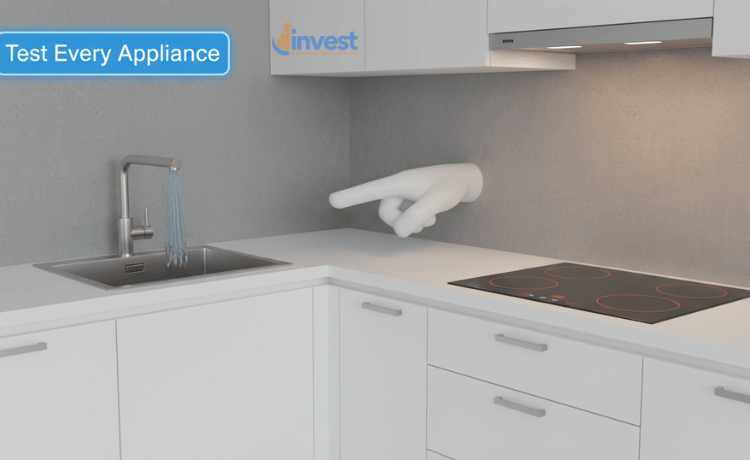
The kitchen has the most moving parts, so spend extra time here. Turn on every appliance that is staying with the home. This includes the stove, the oven, and the microwave. For the dishwasher, run a quick “rinse” cycle to ensure it doesn’t leak onto the floor.
Open the refrigerator and freezer to make sure they are cold. Check the ice maker if it has one. Under the sink, turn on the hot and cold water and let them run for a minute. While the water is running, look underneath with a flashlight to ensure there are no drips. Turn on the garbage disposal to make sure it hums smoothly rather than grinding or leaking.
3. Bathrooms and Plumbing
Go to every bathroom and flush every toilet. You want to make sure they flush completely and don’t “run” constantly after. Run the showers and the bathtubs to check the water pressure. This is also a good time to check for “slow drains.” If a bathtub takes ten minutes to drain, you might be looking at a plumbing bill on day one.
Check the cabinets under the bathroom sinks just like you did in the kitchen. In older American homes, a small leak can go unnoticed for days behind a stack of towels, leading to mold. A quick check today saves you a major headache later.
4. HVAC and Electrical Systems
Even if it is a hot summer day in Florida, you need to turn on the heater for a few minutes to make sure it blows warm air. Conversely, if it is a freezing winter day in Chicago, turn on the air conditioning. You want to hear the system kick on and feel the air coming through the vents. Replacing a central AC unit in the US can easily cost 5,000 dollars or more, so this “five-minute test” is worth its weight in gold.
Walk through every room and flip every light switch. Use your phone charger to test a few outlets in each room. Check the ceiling fans to ensure they don’t wobble dangerously when turned on. If the home has a doorbell or a security system, test those too.
Solving the “Missing Fixture” Mystery
A common point of tension during a final walk-through involves fixtures. In US real estate law, a “fixture” is generally anything that is attached to the house, like curtain rods, flat-screen TV mounts, or smart thermostats. Beginners often assume the seller will leave everything that was there during the open house, but that isn’t always the case.
For example, imagine you fell in love with a high-end Nest thermostat or a specific designer chandelier in the dining room. If the contract didn’t say the seller was taking them, they should be there. A common mistake is walking in and finding a cheap, basic thermostat or a bare lightbulb where the expensive item used to be.
If you find something missing, don’t panic, but don’t ignore it either. This is why you have a real estate agent. They will contact the seller’s agent immediately to demand the item be returned or a credit be given at closing. Understanding that “attached” means “stays” helps you stand your ground during the walk-through.
What Happens When You Find a Problem?
It is very common to find at least one small issue during a final walk-through. Maybe a window screen is torn, or a lightbulb is burnt out. Most small things aren’t worth delaying the closing. However, if you find a major issue—like a broken water heater or a hole in the ceiling—you have several options to protect yourself.

Option 1: The Seller Fixes It
If the closing is still a day or two away, the seller might be able to get a professional in to fix the issue before you sign. They must provide you with a receipt for the work. However, in the current fast-moving market, this is often difficult to coordinate.
Option 2: The Seller Gives a Closing Credit
This is often the easiest solution. If you find a broken dishwasher that will cost 600 dollars to replace, the seller can “credit” you that 600 dollars. This means the amount you have to pay at closing is reduced by 600 dollars, or the seller’s profit is reduced by that much, and you get the cash to buy a new one yourself.
Option 3: The Escrow Holdback
This is a more formal “safety net” used for larger repairs. If a repair is supposed to cost 2,000 dollars, but it can’t be finished before closing, the seller can leave a larger amount—often 3,000 dollars—in a special account held by the title company. This is called an escrow holdback.
To explain this without complex math: if a repair is estimated at 1,000 dollars, the lender or title company might require the seller to set aside 1,500 dollars. This extra 500 dollars acts as a “buffer” in case the repair ends up being more expensive than the original estimate. Once the repair is finished and you are happy, the repairman is paid from that 1,500 dollars, and any money left over goes back to the seller.
Beginners often fear that finding a problem means the house deal is “dead.” This is a misconception. Real estate contracts are designed to handle these bumps in the road. Most sellers want to close just as badly as you do, so they are usually willing to negotiate a fair solution to move the deal forward.
The “Broom Clean” Standard
In the US, most standard contracts require the seller to leave the home in “broom clean” condition. This is a common source of confusion for beginners. “Broom clean” does not mean “professionally deep-cleaned.” It simply means the seller has removed all their personal belongings, swept the floors, vacuumed the carpets, and wiped down the counters.
Do not expect the windows to be sparkling or the baseboards to be scrubbed with a toothbrush. If you walk in and find the house is dusty but empty, the seller has likely met their obligation. However, if you find piles of trash, old furniture left in the attic, or a refrigerator full of rotting food, that is a different story. You can ask for a “cleaning credit” (perhaps 200 dollars to 500 dollars) so you can hire a professional cleaning crew before you move in.
Adjusting your expectations is key here. The final walk-through is about functionality and contract compliance, not about finding a “hotel-perfect” home. If the house is safe, functional, and matches the contract, you are ready to head to the closing table.
Final Thoughts for the First-Time Buyer
The final walk-through is your moment of power. Once you sign those closing papers, the house and all its problems become yours. If you find a leak the day after closing, you usually cannot go back and ask the seller for money. That is why this one-hour visit is so vital.
Go into the walk-through with a clear head. Bring a friend or your agent for a second set of eyes. Be thorough, be patient, and don’t be afraid to speak up if something isn’t right. You are about to make the biggest investment of your life; you deserve to know exactly what you are getting.
Disclaimer: This content is for educational purposes only and does not constitute financial or legal advice. Real estate laws and practices can vary by state; please consult with a qualified real estate professional or attorney in your area.