
Leaving a job is a whirlwind of emotions. You are focused on the new role, the goodbye parties, and the pile of paperwork on your desk. But there is one very important piece of mail you will likely receive a few weeks after your last day: a letter from your old employer asking what you want to do with your 401(k) rollover options.
Many people make the mistake of ignoring this letter or, worse, asking for a check to be sent to their house. While a lump sum of cash sounds great for a vacation or a down payment, it can be a massive mistake for your future self. Handling a 401(k) rollover correctly is one of the simplest ways to protect your hard-earned savings and keep your retirement goals on track without the IRS taking a giant bite out of your balance.
In this guide, we will break down exactly what a rollover is, why you should care about it, and the four main paths you can take with your money today.
What Exactly is a 401(k) Rollover?
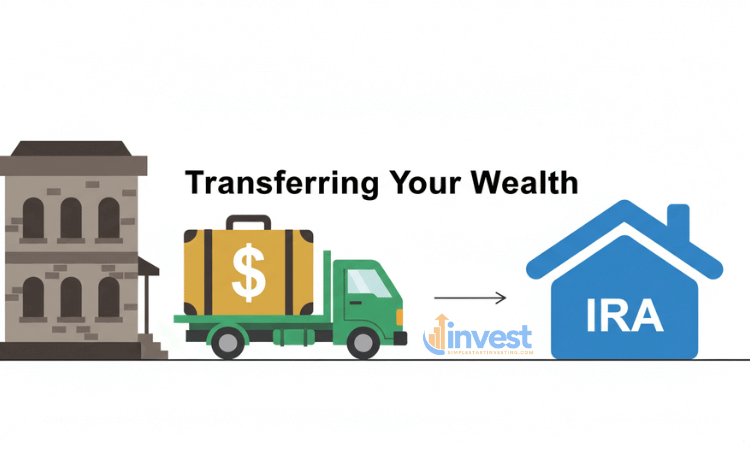
Think of your 401(k) as a specialized suitcase designed to carry your retirement savings. As long as the money stays inside this suitcase, the government lets it grow without charging you taxes every year. When you leave your job, you cannot leave your suitcase in the old company’s office forever, and you certainly cannot just dump the money into your regular backpack (your checking account) without consequences.
A 401(k) rollover is simply the process of moving your retirement funds from your old employer’s plan into another qualified retirement account. This could be a new employer’s plan or an Individual Retirement Account (IRA) that you control yourself.
The Everyday Example Imagine you are moving from one apartment to another. You wouldn’t throw all your furniture in the trash and buy new stuff just because you changed addresses. Instead, you hire a professional moving company to transport your belongings safely from the old place to the new one. A rollover is that moving truck for your money.
The Beginner Mistake Many beginners think that “rolling over” means they are withdrawing the money to spend it. They see a balance of 10,000 dollars and think, “I’ll just take the cash now and start over at my next job.”
The Right Logic A rollover is not a withdrawal; it is a transfer. When you roll over, the money never touches your personal bank account. It stays “wrapped” in a tax-protected bubble. If you take the cash, you aren’t just starting over; you are paying a massive “exit fee” to the government and losing years of potential growth.
The Danger of the “Cash Out” Trap
It is incredibly tempting to see a few thousand dollars sitting in an old account and want to use it for immediate needs. Maybe you want to buy some shares of Tesla (TSLA) in a regular brokerage account, or perhaps you just want to pad your savings. However, cashing out is almost always the most expensive way to handle your retirement.

How the Math Works (No Formulas) Let’s say you have 20,000 dollars in your old 401(k). If you ask the company to send you a check, the IRS immediately considers that “income.” First, the company is often required to withhold 20 percent for federal taxes right away. That means your 20,000 dollars becomes 16,000 dollars before the check even hits your mailbox.
Then, if you are under the age of 59 and a half, the IRS adds an extra 10 percent early withdrawal penalty. Now you are down to 14,000 dollars. Finally, you might owe state taxes too. By the time you are done, that 20,000 dollars might only be 12,000 dollars in your pocket. You essentially gave away 40 percent of your retirement just to have the cash today.
The Beginner Mistake Beginners often believe they can “fix it later” by saving more at their next job. They don’t realize that the 8,000 dollars lost to taxes and penalties is money that will never have the chance to double or triple over the next twenty years.
The Right Logic Instead of seeing your 401(k) as a “savings account,” see it as a “wealth engine.” Every dollar you keep inside the retirement system is a soldier working for you. If you cash out, you are essentially firing your best employees.
Option 1: Roll Over to an Individual Retirement Account (IRA)
This is the most popular choice for people who want more control. An IRA is an account you open at a financial institution like Fidelity, Vanguard, or Charles Schwab. You are the boss of this account, not your employer.
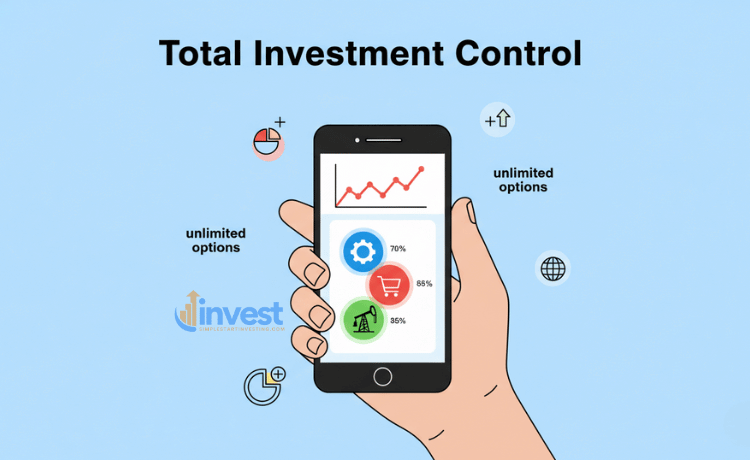
Why People Love IRAs In a workplace 401(k), you are usually limited to a small menu of 15 to 20 mutual funds chosen by your company. If you don’t like those options, you’re stuck. With a rollover IRA, the entire world of investing is open to you. You can buy individual stocks like Apple (AAPL) or Walmart (WMT), or you can choose low-cost index funds that track the entire stock market.
The Everyday Example A workplace 401(k) is like a cafeteria with a fixed menu. You have to pick from what they serve. A rollover IRA is like a giant grocery store. You can walk down any aisle and pick exactly the ingredients you want for your financial meal.
The Beginner Mistake A common misconception is that you need a lot of money to open an IRA. People think, “I only have 5,000 dollars; Vanguard won’t want me.”
The Right Logic Most major financial institutions make it very easy for beginners to start. Many have no minimum balance requirements for rollover accounts. They want your business because they know that 5,000 dollars today could grow into 50,000 dollars over time.
Option 2: Roll Over to Your New Employer’s 401(k)
If you already have a new job lined up and they offer a 401(k), you can often move your old balance into your new plan. This is called a “plan-to-plan” transfer.

The Main Benefit: Simplicity The biggest reason to do this is to keep your life simple. Instead of having one account at your old job at Amazon (AMZN) and another at your new job at Costco (COST), you can combine them. It is much easier to track your progress when all your retirement money is in one place with one login and one quarterly statement.
The Beginner Mistake Beginners often assume every 401(k) is the same. They might move their money into a new plan that has much higher fees than their old one without checking.
The Right Logic Before you move the money, ask for the “Summary Plan Description” of your new job’s 401(k). Look at the fees. If the new plan charges you high administrative costs, it might be better to use an IRA instead. Keep your money where the fees are lowest.
Option 3: Leave the Money Where It Is
Believe it or not, you don’t always have to move your money. If your old account balance is over 7,000 dollars (as per current rules), most employers will let you keep the account exactly where it is.
When This Makes Sense Maybe your old employer was a massive company like Alphabet (GOOGL) and they had an incredible 401(k) with extremely low fees and investment options you can’t get anywhere else. In that case, leaving it alone might be the smartest move.
The Beginner Mistake The danger here is “forgotten money.” If you change jobs five times in your career and leave five different accounts behind, you will almost certainly lose track of some of them. You might forget which website to log into or lose access to the email address associated with the account.
The Right Logic Only leave the money behind if the investment options are truly superior. If they are just “average,” it is usually better to consolidate your accounts into an IRA or your new 401(k) so you can manage your total wealth in one glance.
Direct vs. Indirect: The Secret Trap
This is the most technical part of a 401(k) rollover, but it is also the most important. There are two ways to move the money: the “Easy Way” (Direct) and the “Dangerous Way” (Indirect).
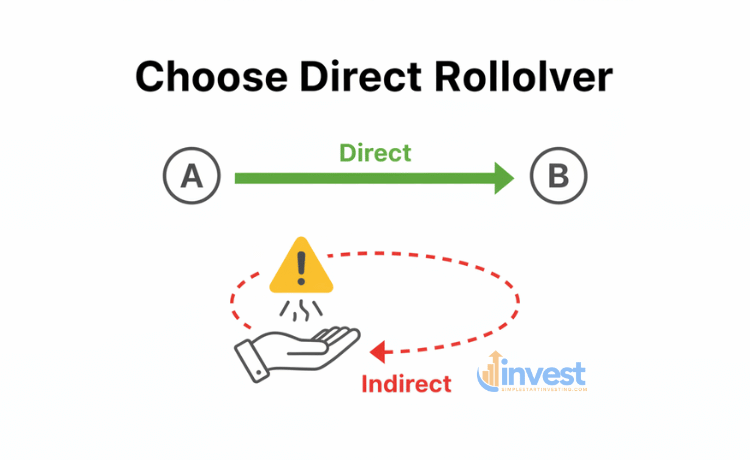
The Direct Rollover (The Easy Way) In a direct rollover, you tell your old 401(k) provider to send the money directly to your new IRA or your new employer’s plan. The check is usually made out to the financial institution (e.g., “Fidelity, for the benefit of [Your Name]”). You never touch the money. No taxes are withheld, and the IRS is happy.
The Indirect Rollover (The Dangerous Way) In an indirect rollover, the old company sends the check directly to you. You then have exactly 60 days to deposit that money into a new retirement account.
The Math Trap If you choose an indirect rollover, the company is required by law to withhold 20 percent for taxes. If you have 10,000 dollars, they send you 8,000 dollars. To avoid taxes and penalties, you must deposit the full 10,000 dollars into your new account within 60 days. That means you have to find 2,000 dollars of your own money to bridge the gap until you get that withholding back at tax time next year. If you can’t find that 2,000 dollars, the IRS considers it a withdrawal and hits you with taxes and penalties on that portion.
The Beginner Mistake People often choose the indirect method because they want to “hold the check” for a few weeks to feel secure. They don’t realize they just triggered a 20 percent tax withholding that is a nightmare to fix.
The Right Logic Always, always choose a Direct Rollover. It removes the human error. You don’t have to worry about the 60-day clock, and you don’t have to worry about the 20 percent withholding.
A Step-by-Step Guide to Your First Rollover
If you have decided to move your money into an IRA (the most flexible choice), here is how the process usually looks in the real world.
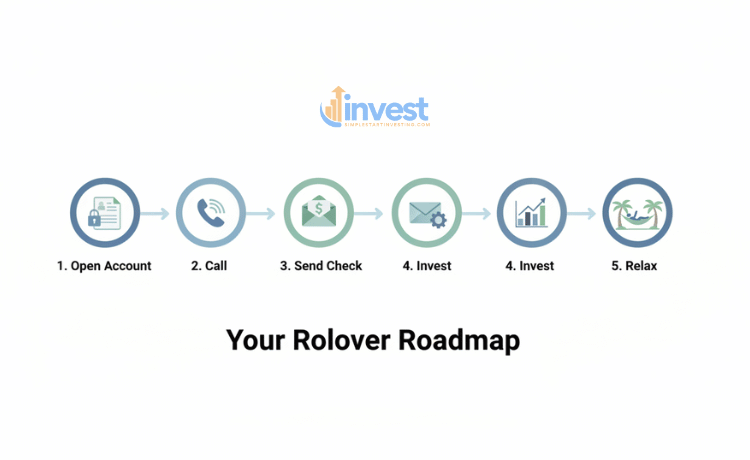
Step 1: Open Your New Account Go to a major broker (like Vanguard or Charles Schwab) and select “Open a Rollover IRA.” This takes about ten minutes online. You will need your Social Security number and your employment details.
Step 2: Get Your Old Account Info Find your most recent statement from your old 401(k). You will need the account number and the name of the institution managing it (like Empower or Alight).
Step 3: Initiate the Transfer Call your old 401(k) provider or use their website. Tell them you want a “Direct Rollover to an IRA.” They will ask for the name of your new broker and your new account number.
Step 4: The Check Travels The old provider will mail a check. Sometimes they mail it to your new broker directly; sometimes they mail it to you, but the check is made out to the broker. If it comes to you, don’t panic! Just mail it immediately to your new broker’s deposit address. Since it isn’t made out to you, it doesn’t count as a withdrawal.
Step 5: Invest the Money This is the step everyone forgets! When the money arrives in your new IRA, it usually sits in “Cash” (like a boring savings account). You must log in and actually buy investments like index funds or stocks like JPMorgan Chase (JPM). If you don’t buy anything, your money won’t grow.
Important Rules for the Current Year
Tax laws can be tricky, so it is important to stay updated. For this year, the IRS has slightly increased the limits on how much you can contribute to these accounts.

While a rollover doesn’t count against your annual contribution limit (you can roll over a million dollars if you have it!), knowing the limits helps you plan your next steps. For example, if you are under 50, the limit for 401(k) contributions this year is 23,500 dollars (increasing to 24,500 dollars next year). For an IRA, the limit is 7,000 dollars (increasing to 7,500 dollars next year).
Always remember that these rules are subject to change by the government. It is a good idea to check the latest guidance on IRS.gov or speak with a tax professional if you have a complicated situation, such as owning company stock within your 401(k).
Final Thoughts for the New Investor
Rolling over your 401(k) might feel like just another chore on your “to-do” list after quitting a job, but it is actually a major milestone in building your wealth. By choosing a direct rollover, you avoid the sting of the 10 percent penalty and the burden of unnecessary taxes.
Whether you choose the simplicity of a new employer’s plan or the vast freedom of an IRA, the most important thing is to take action. Don’t let your hard-earned money sit in a “zombie account” that you might forget about in five years. Take control of your suitcase, move it to your new home, and keep those “money soldiers” working for your future.
Disclaimer: This content is for educational purposes only and does not constitute financial, legal, or tax advice. Please consult with a qualified professional regarding your specific situation. Rules and regulations regarding retirement accounts may change; please verify with current IRS guidelines.