Saving for retirement in the United States can feel like trying to learn a new language. You hear terms like “401k,” “403b,” and “IRA,” and it is easy to feel overwhelmed before you even begin. However, if you want to build real wealth and protect your future, understanding the Traditional vs Roth IRA debate is one of the most important steps you will ever take.
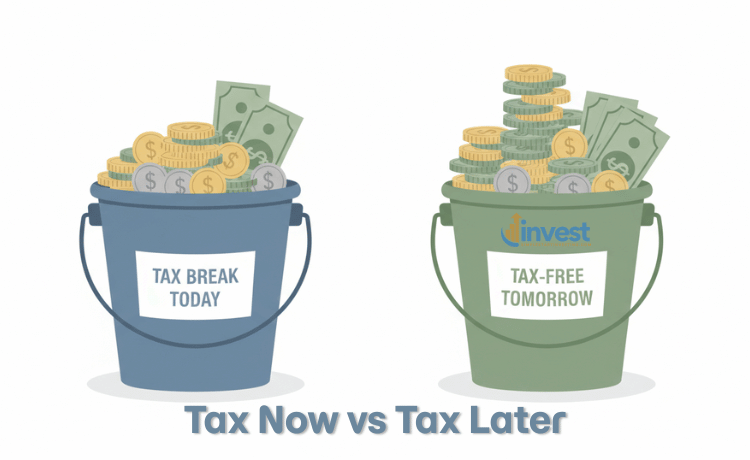
An Individual Retirement Account (IRA) is essentially a special “bucket” designed by the government to help you save for your golden years. The magic of these buckets isn’t just that they hold your money; it is how they handle your taxes. Depending on which bucket you choose, you could save thousands of dollars in taxes over your lifetime.
In this guide, we are going to break down the Traditional vs Roth IRA comparison in plain English. We will look at how they work, why most beginners get them confused, and how to decide which one fits your specific financial life right now.
What Exactly Is an IRA?
Before we compare the two types, let’s define the core concept. An IRA is not an investment itself. It is a tax-advantaged account. Think of it like a specialized suitcase. You can put different things inside that suitcase—like stocks in companies such as Apple (AAPL) or Tesla (TSLA), or even simple index funds. The suitcase itself is what gives you the tax perks.
The main reason the U.S. government offers these accounts is to encourage you to save for your own retirement so you don’t have to rely solely on Social Security later on. To make it worth your while, they offer two different ways to handle your tax bill.

Why Beginners Often Get Confused
Many people think that once they put money into an IRA, their work is done. They assume the money will just “grow” automatically.
The Common Mistake: Beginners often open an IRA, move money from their bank account into it, and then leave it sitting there as “cash.” Because they didn’t actually use that cash to buy investments (like shares of Amazon or Walmart), the money stays flat and never grows.
The Correct Mindset: Opening the account is only step one. Step-two is choosing what to buy inside that account. Think of the IRA as the “shell” and the stocks or funds as the “engine” that actually moves you forward.
The Traditional IRA: Tax Savings Today
The Traditional IRA is the “classic” version of this retirement bucket. Its primary selling point is that it gives you a tax break right now, in the year you put the money in.
How It Works in Plain English
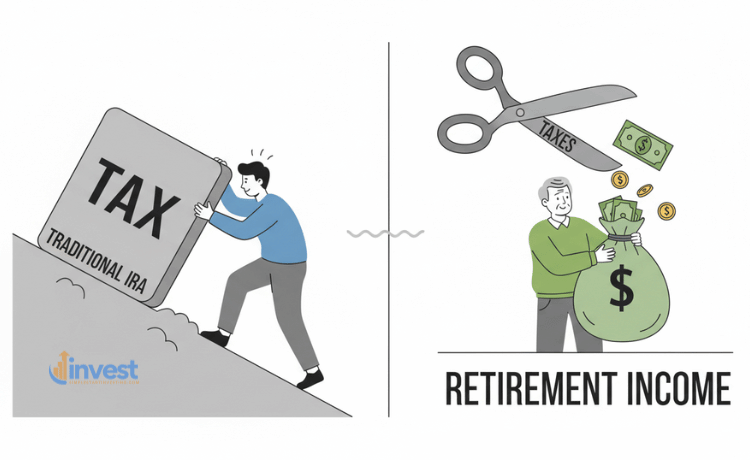
When you contribute money to a Traditional IRA, the government often allows you to “deduct” that amount from your taxable income for the year. This means you are telling the IRS, “Hey, I earned this money, but since I put it in my retirement bucket, please don’t tax me on it today.”
You only pay taxes much later, when you are retired and start taking the money out to live on.
A Real-World Example
Let’s look at a hypothetical scenario with a worker named Marcus. Marcus earns 60,000 dollars a year. This year, he decides to put 7,000 dollars into a Traditional IRA.
When tax season rolls around, the IRS looks at Marcus and says, “Even though you earned 60,000 dollars, we will only charge you income tax on 53,000 dollars.” Because Marcus is “hiding” that 7,000 dollars in his retirement bucket, he pays less in taxes today. He might get a bigger tax refund or owe less when he files his return.
However, thirty years from now, when Marcus is 65 and wants to spend that money, he will have to pay income tax on whatever he withdraws.
The Common Misconception
Many beginners believe that a Traditional IRA is “tax-free.” They see the immediate refund and think they have beaten the system.
The Reality Adjustment: A Traditional IRA is tax-deferred, not tax-free. You aren’t avoiding the tax; you are just procrastinating. You are making a bet that your tax rate will be lower when you are 70 years old than it is today.
The Roth IRA: Tax-Free Growth for Tomorrow
The Roth IRA is often the favorite of younger investors and those just starting their journey. It flips the tax benefit of the Traditional IRA upside down.

How It Works in Plain English
With a Roth IRA, you do not get a tax break today. You pay your taxes on your full salary as usual. You then take your “after-tax” dollars (the money that actually hits your bank account) and put it into the Roth bucket.
The trade-off is incredible: once that money is in the bucket, it grows completely tax-free. When you retire and take the money out, you don’t owe the IRS a single cent on the original money or the profit it made.
A Real-World Example
Imagine Sarah, who is 25 years old. She pays her taxes and then puts 7,000 dollars into a Roth IRA. She uses that money to buy shares of a diversified fund that includes companies like Costco and Microsoft.
Over the next thirty-five years, her 7,000 dollars grows into 100,000 dollars because of the power of the stock market. When Sarah turns 60, she can withdraw the entire 100,000 dollars. She owes zero dollars in taxes on that 93,000 dollars of pure profit. If she had used a Traditional IRA, she would have had to give a large chunk of that 100,000 dollars back to the government in taxes.
The Common Misconception
Beginners often feel “cheated” by the Roth IRA because they don’t see an immediate reward on their tax return this year. It feels like they are paying “extra” compared to their friend with a Traditional IRA.
The Reality Adjustment: You are trading a small benefit today for a massive benefit later. If you believe your investments will grow significantly over time, the tax-free growth of a Roth IRA is usually much more valuable than a small tax deduction today.
Comparing the Two: Side-by-Side Logic
Since we aren’t using tables, let’s walk through the three biggest differences between Traditional vs Roth IRA accounts using simple logic.
1. The Timing of the Tax
- Traditional: You get the “coupon” now. You pay the “bill” later.
- Roth: You pay the “bill” now. You get the “everything is free” card later.
2. Income Limits and Rules
The government puts limits on who can use these accounts. For a Roth IRA, if you make too much money (usually a high six-figure salary), the IRS says you aren’t allowed to contribute directly.
For a Traditional IRA, anyone can contribute, but you might not be allowed to “deduct” it from your taxes if you earn a high income and already have a retirement plan at your job.
Note: IRS regulations and income thresholds can change every year; please check the current guidelines or consult a professional for the exact numbers for this year.
3. Taking Your Money Out (Withdrawals)
- Traditional IRA: You generally cannot touch this money before age 59 and a half without paying a 10 percent penalty plus taxes. The government also eventually forces you to take money out once you reach age 73 or 75 (known as Required Minimum Distributions).
- Roth IRA: This bucket is much more flexible. Because you already paid taxes on the money you put in (your “contributions”), you can actually take that original money out at any time for any reason without penalty. However, you must leave the “earnings” (the profit) in the account until retirement to keep the tax-free status.
Which One Should You Choose?
This is the most common question for any beginner looking at Traditional vs Roth IRA options. While there is no “perfect” answer, here is the logic most experts use to decide.

Choose a Roth IRA if…
- You are young: You have decades for your money to grow. Tax-free growth is a superpower over 30 or 40 years.
- You are in a lower tax bracket now: If you don’t make a lot of money today, your tax “savings” with a Traditional IRA would be small anyway. It is better to pay the low tax now and never pay it again.
- You want flexibility: If you think you might need to access your original contributions for an emergency, the Roth is safer.
Choose a Traditional IRA if…
- You are in your peak earning years: If you are making the most money you will ever make right now, your tax rate is likely very high. Saving on taxes today is a huge win.
- You think you will be in a lower tax bracket in retirement: If you plan to live a modest lifestyle when you retire, your tax rate then might be much lower than it is today.
- You need the tax break to afford to invest: If getting a 1,000 dollar tax refund is the only way you can justify putting money away for retirement, take the win today.
The “Hidden” Step: Investing the Money
Regardless of which account you choose in the Traditional vs Roth IRA debate, the most important thing is what you do after the account is open.
Imagine you go to a grocery store (the IRA provider like Fidelity, Vanguard, or Charles Schwab). You buy a grocery bag (the IRA account). If you walk home with an empty bag, you have nothing to eat. You must fill the bag with “groceries”—which in this case are investments.
For a beginner, this often means looking at:
- Index Funds: These allow you to own a tiny piece of hundreds of American companies at once.
- Target Date Funds: These are “set it and forget it” funds that automatically adjust your risk as you get closer to retirement age.
- Individual Stocks: If you have done your research, you might buy shares of household names like JPMorgan Chase (JPM) or Alphabet (GOOGL).
Common Mistake: Buying an investment, seeing it drop 5 percent in one month, and panicking. The Correct Mindset: These accounts are for the long term (10 to 40 years). Short-term ups and downs are normal. In fact, for a beginner, a market drop is often just a “sale” where you can buy more shares for the same amount of money.
Can You Have Both?
Yes! You can actually own both a Traditional IRA and a Roth IRA. However, there is a catch. The IRS sets a total limit for how much you can put into IRAs each year combined.
For example, if the limit for this year is 7,000 dollars, you could put 3,500 dollars into a Traditional IRA and 3,500 dollars into a Roth IRA. You cannot put 7,000 dollars into each.
Many people like to “tax-diversify.” By having both, they give themselves options in retirement. They can take some money from the Roth (tax-free) and some from the Traditional (taxed) to keep their total tax bill as low as possible.
Summary of Key Takeaways
Choosing between a Traditional vs Roth IRA doesn’t have to be a permanent, life-altering decision that keeps you from starting. The “wrong” choice is usually better than doing nothing at all.
- Traditional IRAs give you a tax break today, making them great for people with high incomes who want to lower their current tax bill.
- Roth IRAs give you tax-free wealth in the future, making them the “gold standard” for young investors and those who expect to be more successful later in life.
- Both accounts require you to actually pick investments (stocks, bonds, or funds) once the money is inside.
- Rules change: Always stay updated on the latest IRS contribution limits and income thresholds, as they are adjusted for inflation almost every year.
Starting your retirement journey is about consistency. Whether you choose the tax break now or the tax-free growth later, the most important factor in your success will be how much you contribute and how long you let it grow.
Disclaimer: This content is for educational purposes only and does not constitute financial, legal, or tax advice. Please consult with a qualified professional before making any financial decisions.