
If you work for a small business or a startup, you might have heard your boss mention a SIMPLE IRA. While the name sounds easy enough, retirement accounts often feel like a maze of confusing codes and tax rules. However, the SIMPLE IRA is actually one of the most powerful tools available for everyday workers to build wealth with help from their employers.
The SIMPLE IRA stands for Savings Incentive Match Plan for Employees. It is a retirement plan designed specifically for small businesses with 100 or fewer employees. Because big companies often have complex 401(k) plans that cost a lot of money to run, the government created this “simple” version to make sure employees at smaller shops don’t get left behind.
In this guide, we will break down exactly how this account works, why the “employer match” is basically a guaranteed raise, and how you can use it to secure your financial future.
What is a SIMPLE IRA and How Does It Work?
At its core, a SIMPLE IRA is a personal retirement account where both you and your employer put money. Think of it as a bucket that holds your investments. You decide how much of your paycheck goes into the bucket before taxes are taken out, and your employer is legally required to add some money too.
The money inside the bucket doesn’t just sit there. You can use it to buy stocks, bonds, or mutual funds. Because the money goes in before you pay income tax, it actually lowers your tax bill today. If you earn 50,000 dollars a year and put 5,000 dollars into your SIMPLE IRA, the IRS only looks at you as if you earned 45,000 dollars.
The 4-Step Deep Dive: Understanding the Account
- Plain English: It is a workplace savings plan where your boss must give you “free money” to match what you save for retirement.
- Real-World Example: Imagine you work at a local marketing agency. Every month, you decide to contribute 200 dollars from your paycheck. Because it is a SIMPLE IRA, your boss might add another 200 dollars to your account. By the end of the month, you have 400 dollars saved, but it only cost you 200 dollars of your own money.
- Common Mistake: Many beginners think they can only open a SIMPLE IRA if they are self-employed.
- The Right Mindset: While self-employed people can use it, this plan is primarily a benefit provided by a small employer to their team. If your boss offers it, you should almost always take it.
The Power of the Mandatory Employer Match
The best part of a SIMPLE IRA is the mandatory employer contribution. Unlike a 401(k), where a boss can choose not to give a match, the law requires employers who offer a SIMPLE IRA to contribute to your account. This is one of the most worker-friendly rules in the financial world.

There are usually two ways an employer can do this. The most common is a “dollar-for-dollar” match. Usually, they will match whatever you put in, up to 3 percent of your total salary. The second option is a “non-elective” contribution, where they put 2 percent of your salary into your account even if you don’t contribute a single penny yourself.
The 4-Step Deep Dive: The Match Logic
- Plain English: The match is a mandatory bonus for saving for your own future. It is literally an immediate 100 percent return on your money.
- Real-World Example: Let’s say you earn 60,000 dollars a year at a small design firm. If you contribute 3 percent of your salary, which is 1,800 dollars, your employer must also chip in 1,800 dollars. You now have 3,600 dollars in your account. You doubled your money before you even invested in a single stock like Apple (AAPL) or Costco (COST).
- Common Mistake: People often contribute only 1 percent or 2 percent because they want more cash in their paycheck today.
- The Right Mindset: By not contributing at least 3 percent, you are leaving “free money” on the table. It is like refusing a 1,800 dollar raise that your boss is legally required to give you if you just ask for it.
Contribution Limits: How Much Can You Save?
While you might want to put all your money into this account, the IRS sets a limit on how much you can contribute each year. These limits are updated periodically to keep up with the cost of living. For the current year, the limit for employees is significantly higher than a standard Traditional or Roth IRA.
If you are age 50 or older, you are also allowed to make “catch-up” contributions. This allows you to put even more money away as you get closer to retirement age. Because these limits are higher than individual IRAs, the SIMPLE IRA is a fantastic way to supercharge your savings if you started late.
The 4-Step Deep Dive: The Limits
- Plain English: There is a “ceiling” on how much you can put in, but that ceiling is quite high—usually over 16,000 dollars for the year.
- Real-World Example: Suppose you are a high-earner at a small tech startup and you want to save aggressively. While a standard IRA might only let you save around 7,000 dollars, your SIMPLE IRA allows you to put away 16,500 dollars this year. If you are 55 years old, you might be able to add an extra 3,500 dollars on top of that.
- Common Mistake: Beginners often confuse the SIMPLE IRA limit with the much lower Traditional IRA limit.
- The Right Mindset: View the SIMPLE IRA as your primary retirement vehicle. Use it to max out your savings before you look at other accounts, especially because of the employer match.
The “Two-Year Rule”: A Trap for the Unwary
One unique feature of the SIMPLE IRA that every beginner must know is the two-year rule. The IRS wants to encourage you to keep your money in the account for the long term. To enforce this, they have a very strict penalty if you take money out too early.
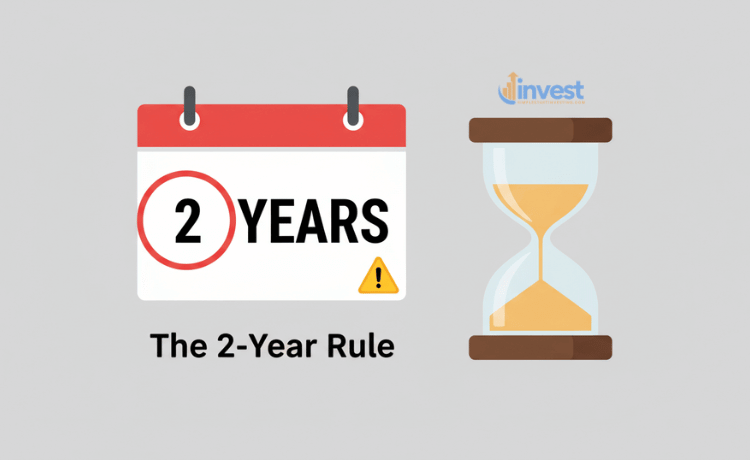
Normally, if you take money out of a retirement account before age 59 and a half, you pay a 10 percent penalty plus taxes. However, with a SIMPLE IRA, if you withdraw money within the first two years of joining the plan, that penalty jumps to a massive 25 percent.
The 4-Step Deep Dive: The Two-Year Penalty
- Plain English: If you touch your money in the first two years, the government will take one-fourth of it as a fine, plus income taxes.
- Real-World Example: Imagine you have 10,000 dollars in your account after 18 months. You decide you want to buy a new car and withdraw the money. Because you haven’t hit the two-year mark, the IRS takes 2,500 dollars immediately as a penalty. After you pay regular income taxes, you might only walk away with 5,000 dollars.
- Common Mistake: Many people treat their SIMPLE IRA like a standard savings account for emergencies.
- The Right Mindset: This money is for “Future You.” Once it goes into the SIMPLE IRA, pretend it doesn’t exist for at least two years—and ideally, until you retire. Always check the current guidelines or consult a professional before moving money.
Immediate Vesting: You Own It All
In many big company 401(k) plans, you have to work there for three to five years before you “own” the money the employer contributed. This is called a vesting schedule. If you leave early, the company takes back their match.
The SIMPLE IRA is different and much better for employees. It features immediate vesting. This means every single dollar your employer puts into your account belongs to you the very second it hits the account. If your boss puts in a match on Friday and you quit on Monday, that money stays with you.
The 4-Step Deep Dive: Ownership
- Plain English: You own 100 percent of all the money in the account from day one.
- Real-World Example: You work for a small construction firm for six months. Your employer matches 1,000 dollars of your savings. You get a better job offer elsewhere and decide to leave. That 1,000 dollars from your boss goes with you to your next retirement account.
- Common Mistake: Employees stay in jobs they hate because they think they will lose their retirement match if they leave.
- The Right Mindset: Knowing you have immediate vesting gives you professional freedom. Your retirement security isn’t tied to staying at one specific small company for a decade.
Tax Advantages: Pay Less to the IRS
The SIMPLE IRA is a “pre-tax” account. This is a fancy way of saying the money comes out of your check before the government takes its cut. This provides an immediate benefit to your wallet. Not only is your money growing, but you are also paying less in taxes right now.
When you eventually retire and take the money out, you will pay taxes on it then. The logic is that you might be in a lower tax bracket when you are retired than you are now while you are working full-time. Some employers are also starting to offer “Roth” versions of these plans, where you pay tax now but the money is tax-free later, though the traditional version is still the most common.
The 4-Step Deep Dive: Tax Savings
- Plain English: Putting money in this account “hides” that income from the tax man this year.
- Real-World Example: If you earn 4,000 dollars a month and put 400 dollars into your SIMPLE IRA, your taxes are calculated as if you only earned 3,600 dollars. This might save you 80 to 100 dollars in taxes every single month, depending on your tax bracket.
- Common Mistake: People think they aren’t saving enough because they see their “take-home pay” drop.
- The Right Mindset: Your take-home pay drops by less than the amount you save because of the tax savings. If you save 100 dollars, your paycheck might only go down by 75 dollars because you saved 25 dollars in taxes.
How to Choose Your Investments
Once the money is in your SIMPLE IRA, it doesn’t just grow by magic. You have to choose how to invest it. Most SIMPLE IRA plans allow you to open an account at a major brokerage like Fidelity, Schwab, or Vanguard. From there, you can choose from thousands of options.

For beginners, the easiest path is often a “Target Date Fund.” This is a fund that automatically manages your risk based on when you plan to retire. As you get older, it moves your money from “risky” things like stocks (Tesla or Amazon) to “safer” things like bonds.
The 4-Step Deep Dive: Investing Strategy
- Plain English: You must pick where your money goes, or it might just sit in cash earning almost nothing.
- Real-World Example: You open your account and see a list of 500 options. Instead of guessing, you pick a “Target Date 2060 Fund” because you plan to retire in about 35 years. The fund managers do the hard work of buying a mix of big companies like Walmart (WMT) and government bonds for you.
- Common Mistake: New investors often pick the stock that went up the most last year, hoping it happens again.
- The Right Mindset: Consistency and diversification are more important than “picking a winner.” Slow and steady growth over 20 years is how you become a millionaire, not by gambling on a single “hot” stock.
What Happens if You Change Jobs?
Life happens, and you might not stay at your small company forever. If you leave your job, your SIMPLE IRA is still yours. You have a few choices: you can leave it where it is, move it to your new employer’s plan (like a 401k), or move it into a “Rollover IRA” that you control entirely.

However, remember that “Two-Year Rule” we mentioned earlier. If you try to move the money to a different type of account (like a 401k) before you have been in the SIMPLE IRA for two years, you could face that 25 percent penalty. Always wait until the two-year anniversary of your first contribution before moving the money to a non-SIMPLE account.
The 4-Step Deep Dive: Leaving Your Job
- Plain English: Your money follows you, but you have to be careful about the timing of the move.
- Real-World Example: You leave your small bakery job after three years to work at a big corporation. Since you’ve been in the plan for over two years, you can “roll over” your 15,000 dollar SIMPLE IRA balance into your new company’s 401(k) without paying a single penny in taxes or penalties.
- Common Mistake: People often “cash out” their account when they leave a job to pay for moving expenses.
- The Right Mindset: Cashing out is a massive mistake. You lose the money, you pay heavy taxes, and you lose the future growth. Always “roll it over” to another retirement account to keep your momentum going.
Summary for the Beginner Investor
The SIMPLE IRA is one of the best gifts a small employer can give you. It provides a way to save for retirement with high limits, immediate ownership of your money, and a mandatory match that acts as a guaranteed bonus.
If you are just starting out:
- Sign up as soon as you are eligible.
- Contribute at least 3 percent to get the full employer match.
- Choose a simple, diversified investment like a Target Date Fund.
- Leave the money alone for at least two years to avoid the 25 percent penalty.
By following these simple steps, you are taking advantage of one of the most effective wealth-building tools in the American financial system.
Disclaimer: This content is for educational purposes only and does not constitute financial advice. Regulations and tax laws can change; please check current IRS guidelines or consult with a qualified financial professional.