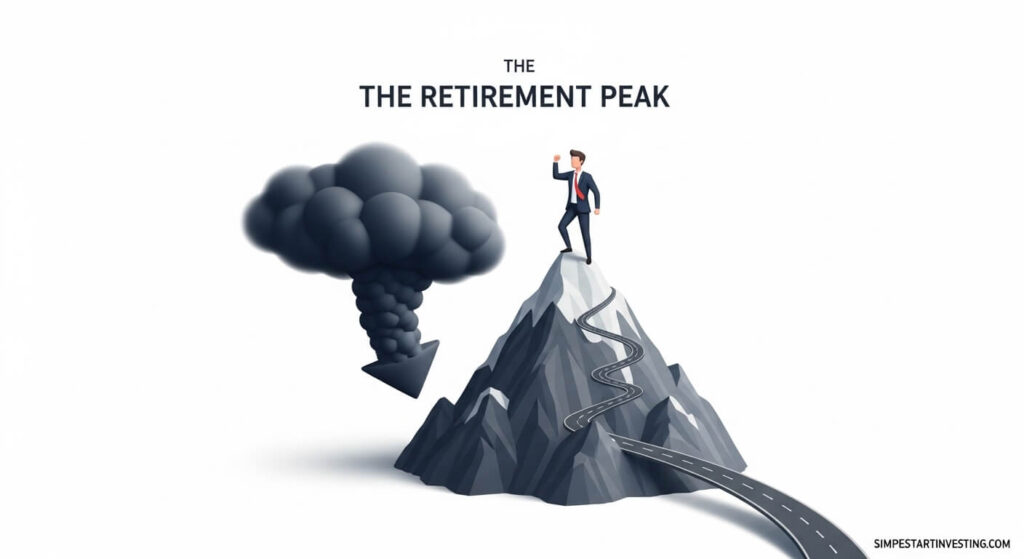
Imagine you have spent thirty or forty years carefully climbing a financial mountain. You have saved diligently, avoided unnecessary debt, and watched your 401(k) grow. Now, you are standing at the peak, ready to enjoy the view—retirement. But as you start your descent, the weather suddenly turns. The market crashes.
Most people believe that as long as the stock market goes up “on average” over time, their retirement will be fine. Unfortunately, when you transition from saving money to spending it, the math changes completely. This is where a hidden danger called sequence of returns risk comes into play.
In the world of investing, the order in which you earn your returns can be just as important as the returns themselves. If the market hits a rough patch during the first few years of your retirement, it can create a “hole” in your portfolio that is nearly impossible to climb out of, even if the market performs well later on.
Understanding the Basics: What is Sequence of Returns Risk?
At its simplest, sequence of returns risk is the danger that the stock market will perform poorly exactly when you begin withdrawing money from your accounts. When you are working and “accumulating” wealth, a market drop is actually often a good thing—it allows you to buy more shares at a lower price.
However, once you retire, you enter the “distribution” phase. You are no longer buying; you are selling. If you have to sell your investments while their prices are low just to pay for groceries and housing, you are effectively “locking in” those losses. This leaves fewer assets in your account to grow when the market eventually recovers.
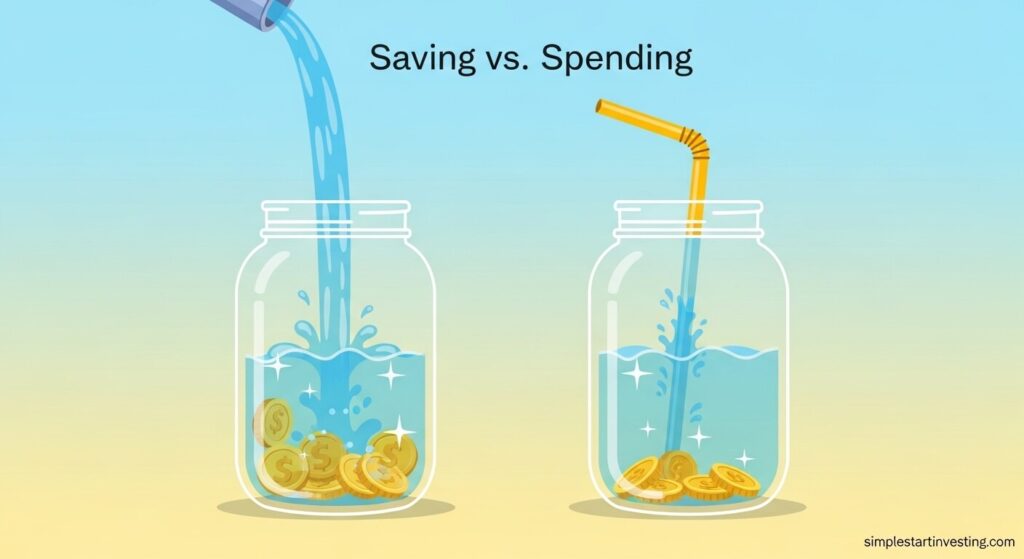
Think of your retirement fund like a lake. During your working years, you were the rain, constantly adding water. In retirement, you are the straw, drawing water out. If a drought (a market crash) hits while you are still drinking heavily from that straw, the water level can drop so low that the lake dries up, even if heavy rains return years later.
Why the “Average Return” is a Dangerous Myth
One of the biggest misunderstandings for new investors is the reliance on “average annual returns.” You might hear that the S&P 500 returns about 10% per year on average. While this is historically true over long periods, the market almost never returns exactly 10% in a single year. It might be up 25% one year and down 15% the next.
When you are just saving, the order of those ups and downs doesn’t matter for your final balance. Whether the 15% drop happens in Year 1 or Year 30, your final total would be the same if you weren’t touching the money.
But once you start taking withdrawals, the order matters immensely. A bad sequence early on is devastating. A bad sequence at the end of your retirement is usually just a minor inconvenience. This is why the year you choose to retire—and the market conditions surrounding that year—is the single most important factor in the longevity of your savings.
The Tale of Two Retirees: Same Average, Different Lives
To see how sequence of returns risk works in the real world, let’s look at two hypothetical neighbors, John and Mary. Both retire with 1 million dollars in their accounts. Both plan to withdraw 50,000 dollars every year (adjusted for inflation) to live on. Over their 25-year retirement, both experience an average market return of 7%.
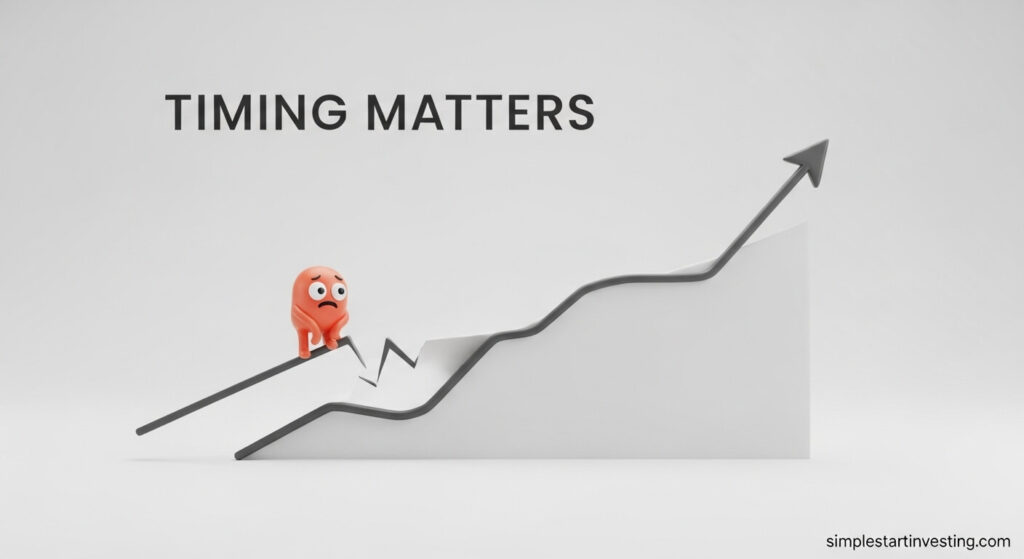
John retires in a “Good Sequence” year. In his first few years, the market is booming. His 1 million dollars grows to 1.1 million, even after he takes out his 50,000 dollars. By the time a market crash eventually happens ten years later, his “lake” is so full that the drought doesn’t really hurt him. He finishes his retirement with more money than he started with.
Mary, however, retires in a “Bad Sequence” year. In her first year, the market drops 20%. Her 1 million dollars becomes 800,000 dollars. Then, she withdraws her 50,000 dollars for living expenses, leaving her with 750,000 dollars. To get back to 1 million, she now needs a massive gain on a much smaller pile of money.
Even though the market eventually gives Mary great returns in her later years, her account balance was depleted too early. Mary might run out of money in year 18, while John is still wealthy in year 25. The only difference between them was the “luck” of when they stopped working.
The Fragile Decade: 5 Years Before and 5 Years After
Retirement experts often talk about the “Fragile Decade.” This is the window of time starting five years before you retire and ending five years after you retire. This is the period when your portfolio is at its largest and your timeline to recover from a loss is at its shortest.
If you lose 30% of your portfolio when you are 35 years old, you have decades of paychecks coming in to help you buy the dip. If you lose 30% of your portfolio when you are 65 and have no paycheck, you are in a vulnerable position.
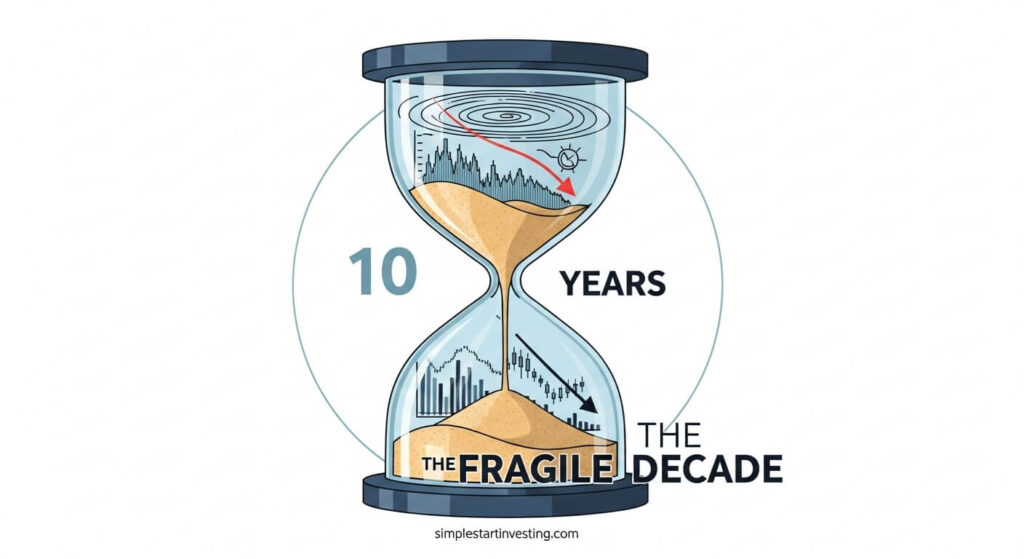
During this fragile decade, sequence of returns risk is at its peak. A major downturn during this window can force you to make difficult choices, like returning to work, significantly cutting your lifestyle, or moving to a smaller home. Understanding that this window exists is the first step in protecting yourself.
How Market Crashes Lead to a “Death Spiral”
Why is a loss early in retirement so much worse than a loss later? It creates what some call a “portfolio death spiral.”
When your account value drops, the percentage of the portfolio you are withdrawing increases. Let’s say you have 1 million dollars and withdraw 40,000 dollars. That is a 4% withdrawal rate. If the market crashes and your account drops to 600,000 dollars, that same 40,000 dollars withdrawal is now nearly 7% of your remaining balance.
By taking out a higher percentage of a smaller pot, you are leaving less money “on the field” to participate in the eventual market recovery. You are essentially cannibalizing your future growth to pay for today’s coffee and electricity bills. This is the heart of why sequence of returns risk is so feared by financial planners.
Common Misconceptions About Retirement Timing
Many people think they can beat sequence of returns risk by just “waiting it out.” They assume that if the market goes down, they will simply stop looking at their statements and wait for the bounce.
The problem is that life doesn’t stop just because the stock market does. You still have to pay property taxes. You still have health insurance premiums. You still need to eat. Unless you have a massive pile of cash sitting outside of your investment accounts, you will be forced to sell shares at the worst possible time.
Another misconception is that diversifying into bonds will solve everything. While bonds are generally less volatile than stocks, they are not immune to risk. In years where both stocks and bonds decline—which happens occasionally—even a diversified portfolio can suffer from sequence risk.
Strategies to Protect Your Portfolio
While you cannot control what the stock market does in the year you retire, you can control how you react to it. There are several ways to mitigate sequence of returns risk so that you aren’t entirely at the mercy of “market luck.”
1. The Cash Bucket Strategy
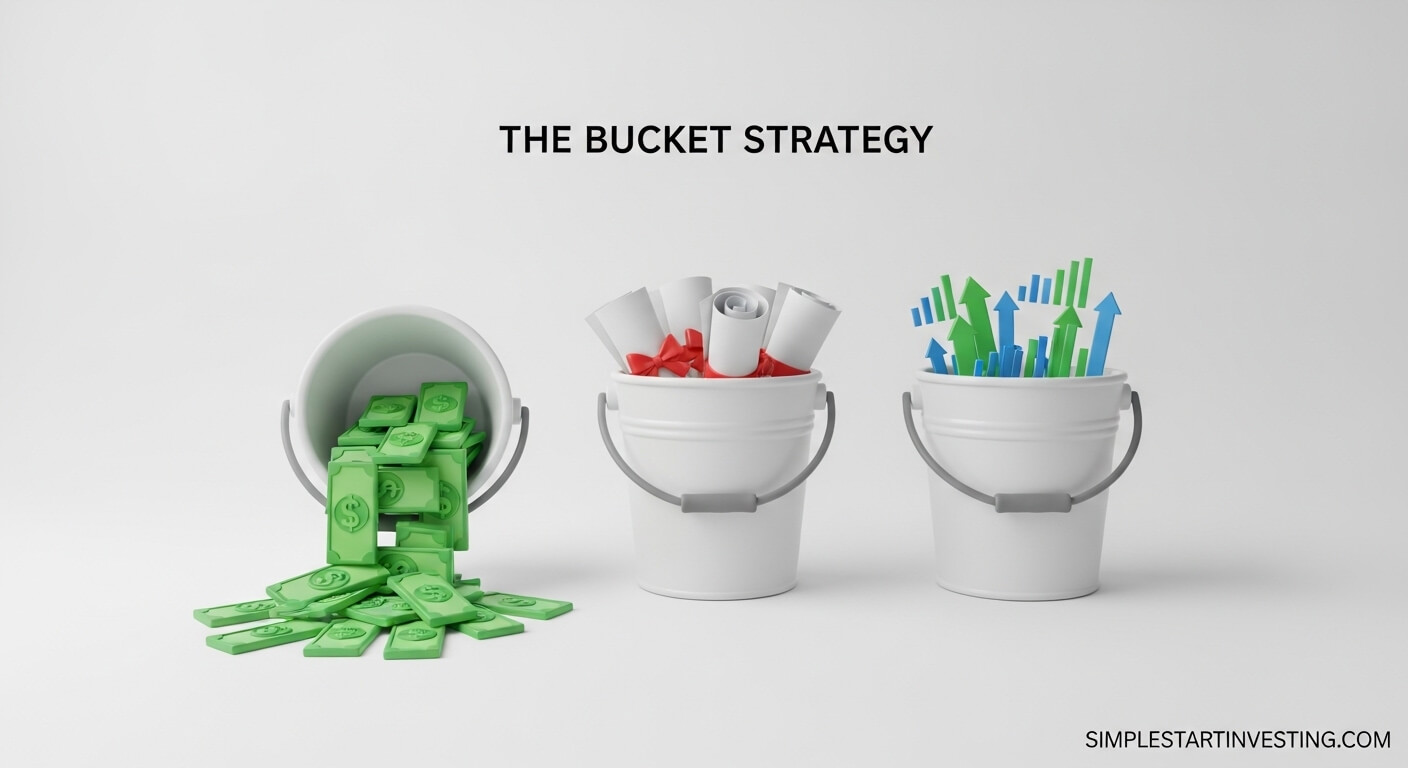
One of the most popular ways to fight sequence risk is to keep a “bucket” of cash or very safe short-term investments (like Treasury bills or high-yield savings accounts) that can cover two to three years of living expenses.
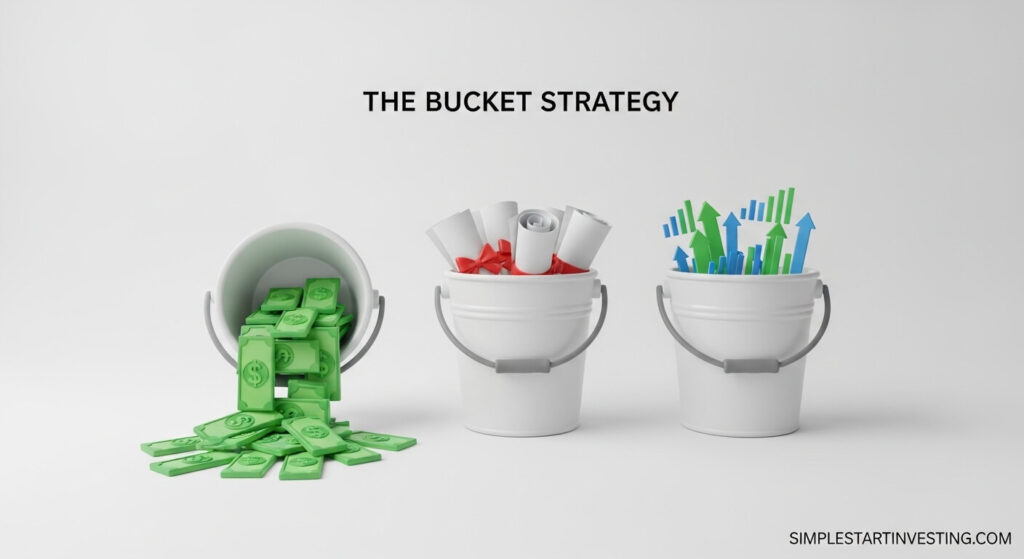
If the stock market crashes in your first year of retirement, you don’t touch your stocks. Instead, you “drink” from your cash bucket. This gives the stock market a few years to recover before you are forced to sell any shares. This simple psychological and financial buffer can be a lifesaver.
2. Flexible Spending (Dynamic Withdrawals)
The “4% Rule” is a famous guideline that suggests you can withdraw 4% of your portfolio in the first year and adjust for inflation thereafter. However, being too rigid can be dangerous.
A better approach to manage sequence of returns risk is to be flexible. If the market is down significantly, you might decide to skip your big annual vacation or delay buying a new car. By reducing your withdrawals during “down” years, you leave more money in the account to recover. Even a small reduction in spending during a bear market can add years of longevity to your portfolio.
3. The “Bond Tent” Approach
Some investors use a strategy called a “bond tent.” This involves increasing your allocation to bonds and cash as you approach your retirement date, then slowly moving back into more stocks after you have been retired for five or ten years.
By having more bonds right at the “peak” of the mountain (your retirement date), you reduce the impact of a market crash during that fragile decade. Once you are safely past the highest risk years, you can afford to take a bit more risk again.
The Role of Guaranteed Income
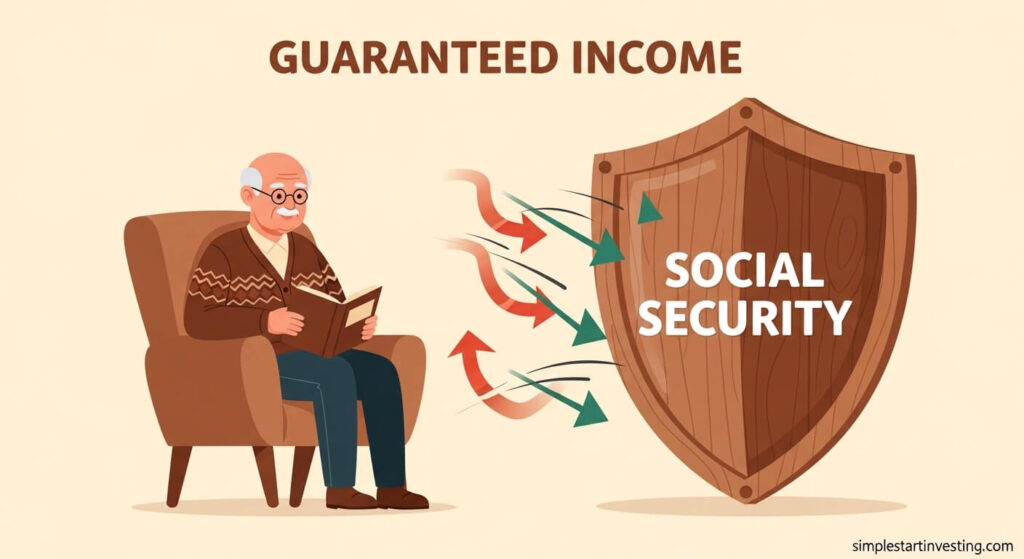
Social Security and pensions are the ultimate “sequence risk” killers. Because these payments are guaranteed and do not fluctuate with the stock market, they provide a floor for your income.
If your basic needs (food, housing, utilities) are covered by Social Security or a pension, then your investment portfolio is only responsible for your “wants” (travel, hobbies). This makes sequence of returns risk much less scary, because even if the market drops, your ability to survive is not threatened. This is one reason why many people choose to delay Social Security until age 70, as it increases that “guaranteed” monthly amount.
Why You Should Care Even if You Are Years From Retirement
If you are still ten or fifteen years away from retirement, you might think sequence of returns risk isn’t your problem yet. But understanding this concept now allows you to build a more resilient plan.
It helps you realize that “getting the highest return” isn’t the only goal. As you get closer to your goal, “not losing what you have” becomes equally important. It also highlights the importance of having an emergency fund and a variety of different types of accounts (like a Roth IRA, a traditional 401(k), and a regular brokerage account) to give you options on where to pull money from during a downturn.
Psychology and the “Sleep at Night” Factor
Financial planning is as much about psychology as it is about math. Seeing your hard-earned savings drop by 200,000 dollars in the same month you stop receiving a paycheck is terrifying. Many retirees panic and sell everything, moving to cash at the bottom of the market. This is the ultimate mistake.
By understanding sequence of returns risk ahead of time, you can prepare yourself mentally. You will know that a market dip is a possibility and that you have a plan (like your cash bucket) to handle it. Having a plan prevents panic, and preventing panic is often the key to a successful retirement.
Looking Ahead: Preparing for Your “Year One”
The year you retire is indeed a high-stakes moment. You are essentially making a bet on the state of the world at that specific point in time. However, by focusing on what you can control—your spending flexibility, your cash reserves, and your asset allocation—you can take the “luck” out of the equation.
As you look toward your own retirement, remember that the goal isn’t just to reach the finish line with the most money. The goal is to ensure that the money lasts as long as you do. Managing sequence of returns risk is a vital part of that journey.
If you are feeling overwhelmed by these concepts, you aren’t alone. Retirement planning in the US has become increasingly complex as we move away from traditional pensions toward self-funded accounts like 401(k)s. Take it one step at a time, keep learning, and stay focused on the long term.
Disclaimer: This content is for educational purposes only and does not constitute financial, legal, or tax advice. Market conditions and regulations change frequently; please consult with a qualified professional regarding your specific situation.