
You finally own a piece of the American Dream, or maybe you’re looking to flip your first investment property. Naturally, your mind starts racing with ideas. You picture a professional-grade chef’s kitchen, a sparkling blue swimming pool in the backyard, or maybe knocking down that wall to create a massive open-concept living space. You’re thinking about increasing property value, and it feels like every dollar you pour into the house will magically double when you decide to sell.
Here is the cold, hard truth that most HGTV shows won’t tell you: not all renovations are created equal. In fact, some of the most expensive projects you can undertake might actually result in a net loss when it comes time to close the deal. Increasing property value is less about your personal taste and much more about understanding what the “average” buyer in your specific neighborhood is willing to pay for.
If you are new to the world of real estate, the term Return on Investment, or ROI, is going to be your best friend. It is a simple way to look at how much money you get back compared to how much you spent. If you spend 1,000 dollars on a project and your home’s value goes up by 800 dollars, you have an 80 percent ROI. You didn’t “make” money, but you recovered most of the cost while enjoying the upgrade. To truly succeed at increasing property value, you want to target the projects that get as close to—or even exceed—that 100 percent mark.
What Does Increasing Property Value Actually Mean?
For a beginner, it is easy to confuse “making the house look better” with increasing property value. They aren’t always the same thing. Value is determined by an appraiser and, ultimately, by what a buyer is willing to sign on the dotted line for.
Think of your home as a product on a shelf. If you add a feature that only one person out of a hundred likes, you haven’t really increased the value for the general market. However, if you fix a problem or add a feature that ninety-five out of a hundred people want, you have successfully increased the demand and the price.
Increasing property value is the strategic process of making improvements that raise the fair market value of a home. This involves looking at “comps”—or comparable homes in your area—to see what they have that yours doesn’t. If every house on your block has a two-car garage and you only have a carport, adding a garage is a smart move for increasing property value. If you already have the best house on the block, adding more luxury might not give you any return at all because the neighborhood “ceiling” will limit your price.
The Curb Appeal Myth: Why the Outside Matters Most
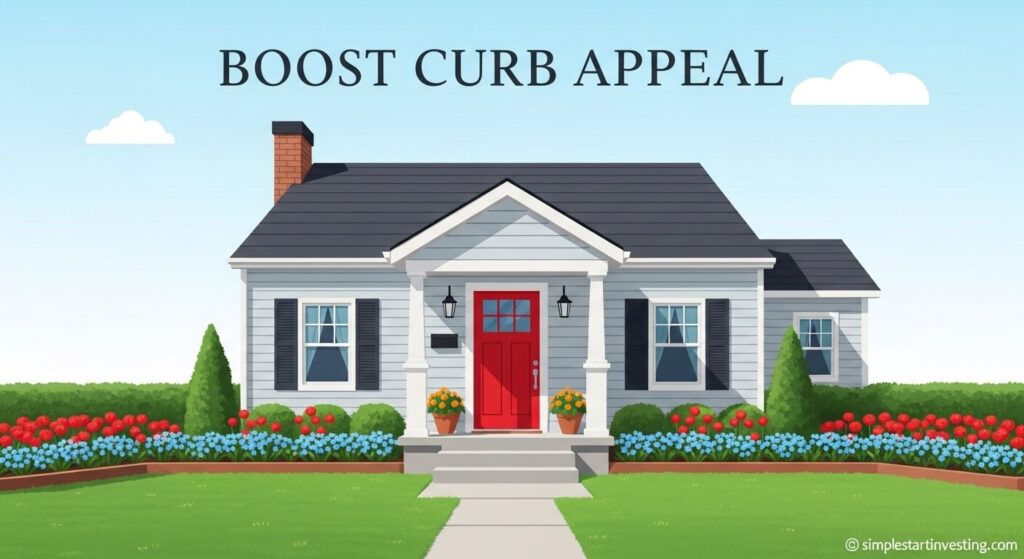
Many beginners think they need to start with the kitchen. While kitchens are important, the exterior of your home is what forms the “first impression.” In real estate, we call this curb appeal. If a buyer pulls up to the curb and sees peeling paint, overgrown bushes, or a dented garage door, they are already subconsciously lowering their offer before they even step inside.
Interestingly, some of the highest ROI projects for increasing property value are actually quite boring. For example, replacing a garage door consistently ranks as one of the top investments. Why? Because it is a massive part of the home’s face.
Let’s look at a simple scenario. Imagine you spend 4,000 dollars on a brand-new, modern, insulated garage door. When the appraiser comes by or a buyer makes an offer, they might value that improvement at 3,800 dollars or even the full 4,000 dollars. That is a nearly 100 percent return. You’ve essentially improved your home for “free” in the long run because you’ll get that money back at the closing table.
Landscaping is another heavy hitter. You don’t need a professional botanical garden. Simple things like fresh mulch, trimmed hedges, and a green lawn can do wonders. If you spend 500 dollars on basic landscaping and a few bags of colorful flowers, the perceived value of the home could jump by thousands. Buyers see a well-maintained exterior and assume the “bones” of the house are well-maintained too.
The Kitchen: Don’t Over-Invest in Luxury
The kitchen is often called the heart of the home, and it is true that a beautiful kitchen sells houses. However, this is also where beginners make their biggest financial mistakes. There is a massive difference between a “minor kitchen remodel” and a “major upscale renovation.”
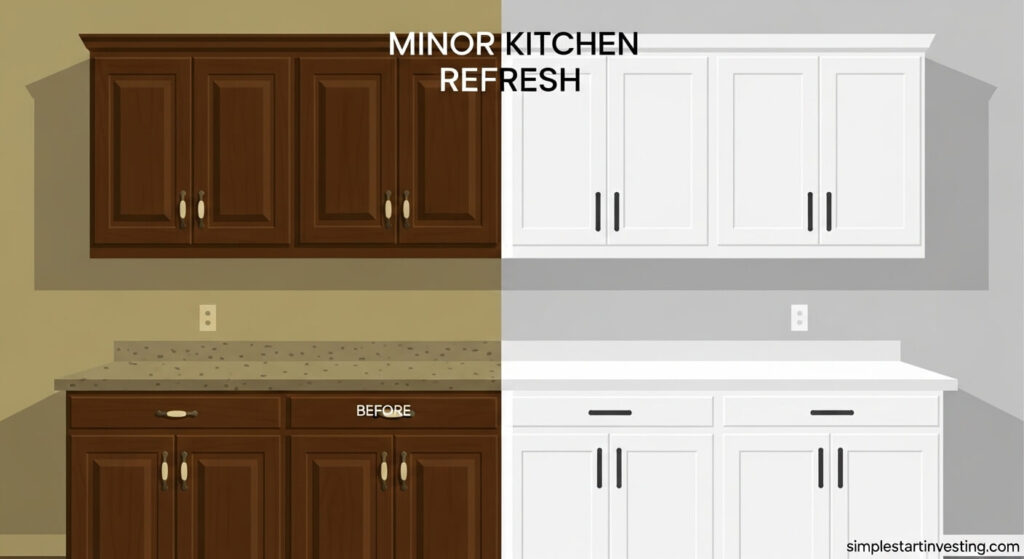
A minor remodel might include painting the cabinets, replacing old laminate countertops with mid-range granite or quartz, and updating the appliances to matching stainless steel. If you spend 15,000 dollars on these types of updates, you might see a value increase of 12,000 dollars. That is a solid 80 percent ROI.
On the other hand, an upscale renovation involves gutting the entire room, moving plumbing lines, and installing custom-built cabinets and 5,000-dollar commercial-grade ovens. If you spend 80,000 dollars on a luxury kitchen in a neighborhood where houses only sell for 300,000 dollars, you will never get that money back. The buyer in that price range isn’t looking for a professional chef’s setup; they just want a clean, functional space.
When you focus on increasing property value, always aim for “clean and modern” rather than “expensive and unique.” Neutral colors like whites, light grays, or beiges are your best friends. They allow the buyer to imagine their own life in the space.
Bathrooms: Adding vs. Remodeling
After the kitchen, bathrooms are the next priority. There are two ways to look at this: upgrading an existing bathroom or adding a new one.
If your home only has one bathroom and most families in your area expect two, adding a second bathroom is one of the most powerful ways of increasing property value. It changes the “category” of your home. A three-bedroom, one-bathroom house is much harder to sell than a three-bedroom, two-bathroom house.
If you are just remodeling an existing bathroom, the same rules as the kitchen apply. Focus on the “wet areas.” Replacing an old, stained bathtub or updating a leaky shower can yield a high return. Modernizing the vanity and lighting can make a small, cramped bathroom feel like a spa.
Think about it this way: if you spend 5,000 dollars to turn a dingy, 1970s bathroom into a bright, clean space, you are removing a “negative” that would have scared buyers away. People often over-calculate the cost of repairs in their heads. A buyer might see a dated bathroom and think, “That’s going to cost me 20,000 dollars to fix,” even if it only costs you 5,000 dollars. By doing the work yourself or hiring a pro before you list, you capture that “value gap.”
The “Invisible” Upgrades: Maintenance and Efficiency
This is the part that isn’t fun or pretty, but it is vital for increasing property value. If your roof is leaking or your HVAC (heating, ventilation, and air conditioning) system is twenty years old, no amount of granite countertops will save your sale.
Buyers view a home as a bundle of future costs. If they see a roof that needs replacing, they see a 15,000-dollar bill waiting for them. Most buyers today want “move-in ready” homes. They are often stretching their budget just to make the down payment, so they don’t have an extra 10,000 dollars lying around for a new furnace.
Energy efficiency is also becoming a huge selling point. Adding extra insulation in the attic is one of the cheapest ways to improve a home’s “score.” If you spend 1,500 dollars on blown-in insulation, it not only helps you save on your own energy bills while you live there, but it also becomes a great talking point for a real estate agent. “This home is highly energy-efficient” is a phrase that resonates with modern buyers who are worried about rising utility costs.
Why Beginners Often Lose Money on Renovations
The biggest mistake beginners make is “over-improving” for the neighborhood. This is a trap that is easy to fall into. You love your home, so you want the best of everything. But real estate is a game of comparisons.
Imagine a neighborhood where every house sells for between 250,000 and 275,000 dollars. If you buy a house for 250,000 dollars and spend 100,000 dollars making it the most incredible mansion on the block, you have spent a total of 350,000 dollars. When you go to sell, you will likely find that no one is willing to pay 350,000 dollars. Why? Because for that price, they can go to a better neighborhood where the average house is worth 350,000 dollars.
Another common error is choosing highly personalized designs. You might love bright purple walls or unique Moroccan floor tiles, but those choices shrink your pool of potential buyers. To maximize increasing property value, you have to think like a mass-market retailer. You want your home to appeal to as many people as possible. This means neutral colors, durable materials, and standard layouts.
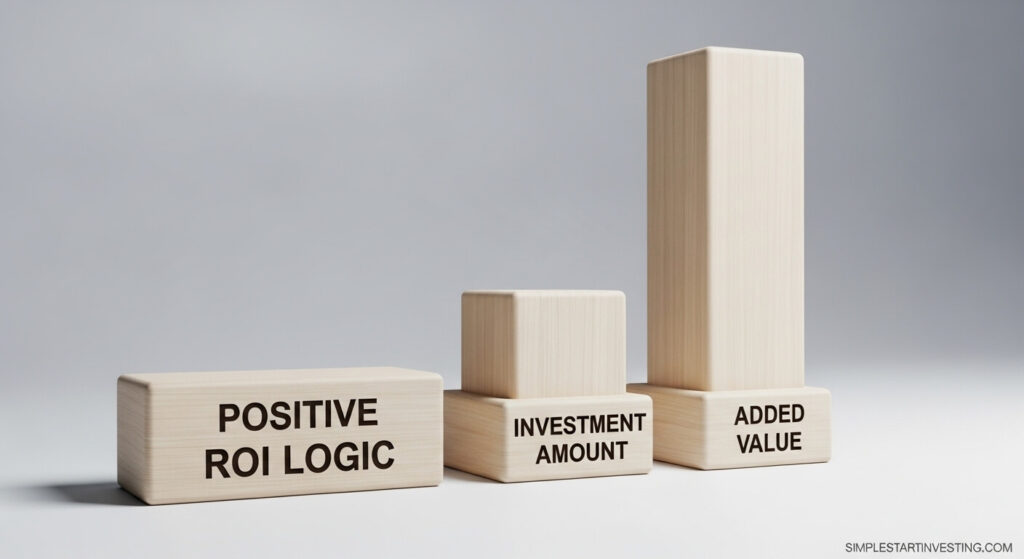
The Logic of ROI: A Simple Example
Let’s walk through a mental exercise to understand how the money flows. Imagine you have a home worth 400,000 dollars. You decide to spend 10,000 dollars on a series of small updates: you paint the entire interior a soft white, you replace the old carpet with modern vinyl plank flooring, and you swap out all the old, yellowed light switches and fixtures.
When you finish, the home feels entirely different. It feels new, clean, and bright. An appraiser comes by and now values the home at 415,000 dollars.
In this case, you spent 10,000 dollars to gain 15,000 dollars in value. Not only did you get all your money back, but you also created 5,000 dollars in “equity”—which is the difference between what the house is worth and what you owe. This is the “gold standard” of increasing property value. You didn’t just maintain the home; you made a profit on the improvement itself.
Low ROI Projects: What to Avoid
While we’ve talked about what works, it is just as important to know what doesn’t. Some projects are notorious for having a low return on investment.
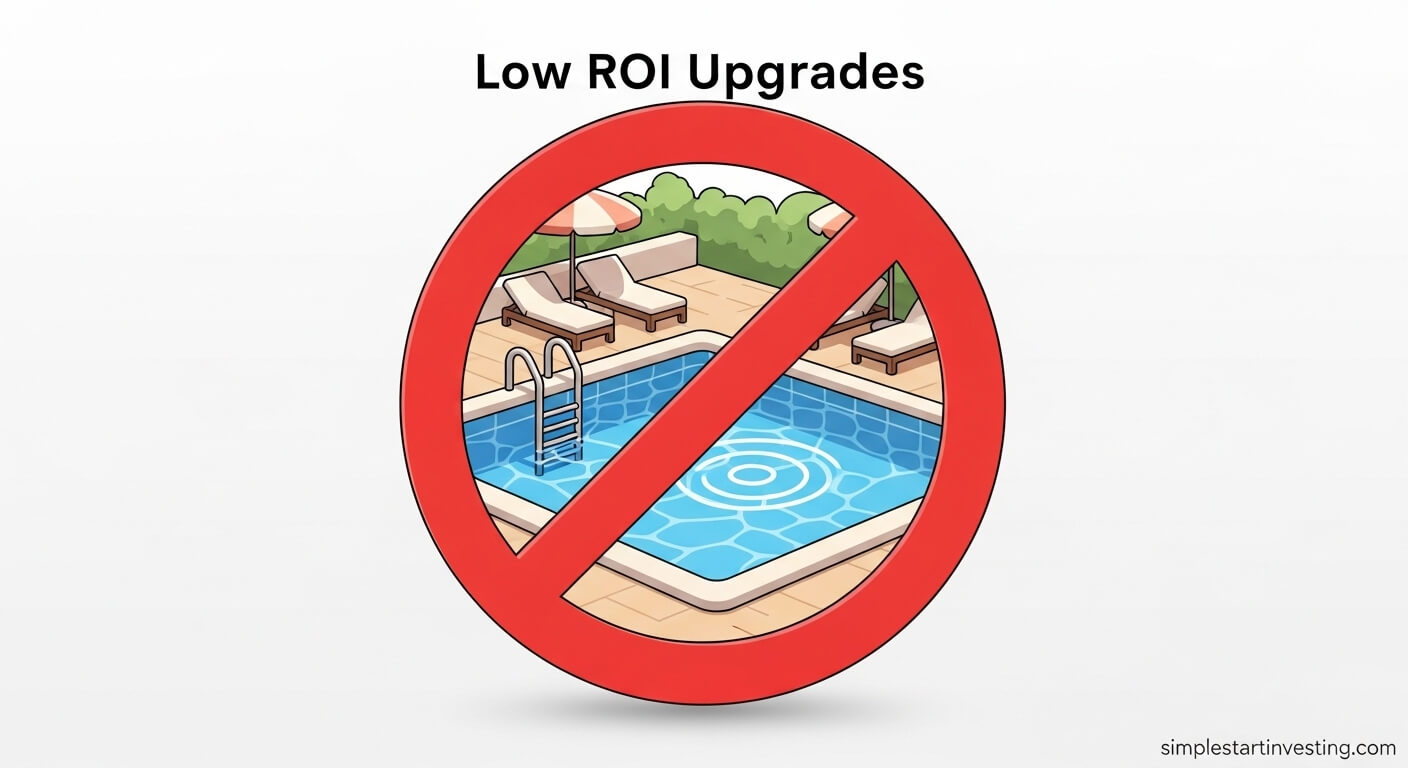
- Swimming Pools: In some warm climates like Florida or Arizona, a pool might be expected. But in most parts of the U.S., a pool can actually decrease the number of people interested in your house. Some buyers see a pool and only see liability, high maintenance costs, and safety concerns for their children. You might spend 50,000 dollars installing one and only see a 10,000-dollar bump in value.
- Converting a Garage: Many people think turning a garage into a “bonus room” or a bedroom is a great way to add square footage. However, most buyers in the U.S. desperately want a place to park their cars and store their tools. By removing the garage, you might actually lower your home’s value or make it much harder to sell.
- Luxury Electronics: Built-in sound systems or high-end smart home setups often date very quickly. What is “cutting edge” today is obsolete in three years. These rarely add significant resale value.
How to Plan Your Strategy
If you are serious about increasing property value, your first step shouldn’t be going to the hardware store. It should be doing research.
Look at “Sold” listings in your area on websites like Zillow or Realtor.com. Pay attention to the photos. What do the kitchens look like in the houses that sold in less than a week? Do they have granite or laminate? Are the yards professionally landscaped or just neatly kept?
You can also talk to a local real estate agent. Most agents are happy to give you a “Broker Price Opinion.” They can tell you, “In this neighborhood, buyers really want a fenced-in backyard,” or “Don’t bother fixing the basement; people here just use them for storage anyway.” This local knowledge is the secret weapon of successful investors.
Small Changes, Big Impact
You don’t need a huge budget to start increasing property value. Sometimes the most effective changes are the ones that cost the least.
Deep cleaning is the number one highest-return activity you can do. A house that smells fresh and sparkles from floor to ceiling feels more valuable than a dirty one, even if the “bones” are identical. Decluttering is another free way to add value. By removing excess furniture and personal knick-knacks, you make the rooms look larger. In the mind of a buyer, “larger” always equals “more expensive.”
Lighting is another “low-cost, high-impact” area. If your home has old, dim yellow bulbs, replace them with “daylight” or “cool white” LED bulbs. This simple change can make a dark, depressing room feel vibrant and modern for less than 100 dollars.
Understanding the “Baseline”
Every neighborhood has a baseline. This is the set of features that a buyer expects for the price. If the baseline is a three-bedroom house with a fenced yard and a clean kitchen, and your house meets that baseline, you are in a good spot.
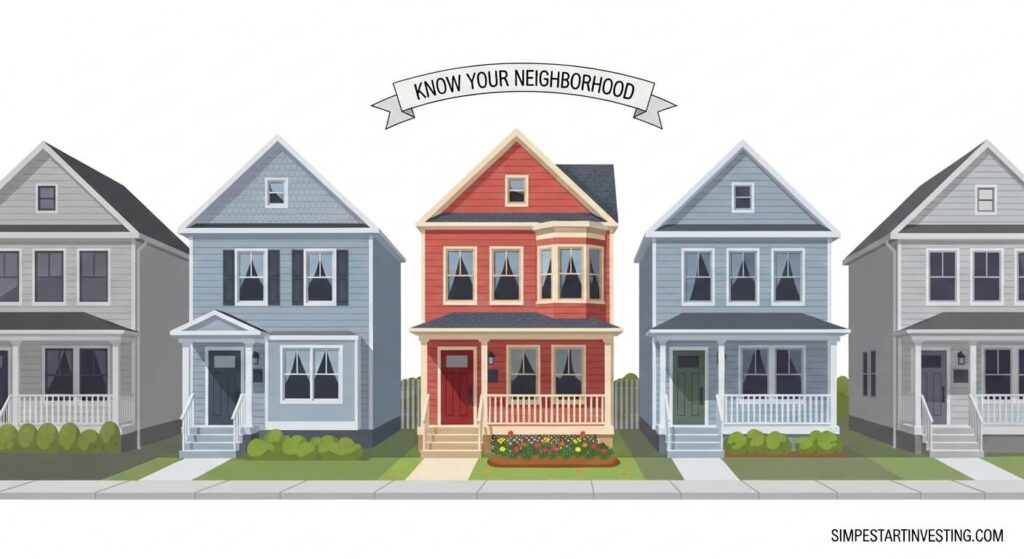
Increasing property value effectively is about bringing a “sub-baseline” house up to the neighborhood standard. If you buy a “fixer-upper” that is missing the features people expect, and you add them efficiently, you capture the most profit. Once you go far beyond the neighborhood baseline, your ROI starts to drop significantly.
Think of it like a ladder. It is easy and profitable to climb from the bottom rung to the middle. It is much harder, and much more expensive, to climb from the top rung to a place where no one else in your area has gone.
Final Thoughts for the Beginner Investor
Real estate is a powerful tool for building wealth, and increasing property value through smart renovations is a key part of that journey. But remember, your home is both an investment and a place to live. If you plan on staying in your home for twenty years, then go ahead and install that custom library or the specialized hobby room that makes you happy. Your personal enjoyment has its own kind of “ROI.”
However, if your goal is to build equity and eventually sell for a profit, you must keep your “investor hat” on. Stay disciplined. Watch your budget. Focus on the projects that the market rewards: curb appeal, functional kitchens, updated bathrooms, and solid maintenance.
By avoiding the common pitfalls of over-personalization and over-spending, you can ensure that your hard work translates into real dollars at the closing table. Real estate isn’t about having the fanciest house; it’s about having the right house for the right buyer at the right price.
Disclaimer: This content is for educational purposes only and does not constitute financial or real estate advice. Real estate markets vary significantly by location; always consult with a local professional before making major investment decisions.