
You finally landed that new job at a company like Walmart or Amazon. You did the math in your head based on your hourly wage or annual salary, and you were excited for that first Friday. But then, you opened your pay stub and felt a little sting. The amount of money that actually hit your bank account was lower than you expected. You see a line item labeled FICA or perhaps two separate lines for Social Security and Medicare.
If you are a beginner in the American workforce, this is often the first “welcome to adulthood” moment. Understanding payroll taxes FICA is essential because it is likely the most consistent tax you will pay throughout your entire working life. Unlike federal income tax, which can change based on your deductions and credits, FICA is a steady rhythm that follows almost every dollar you earn.
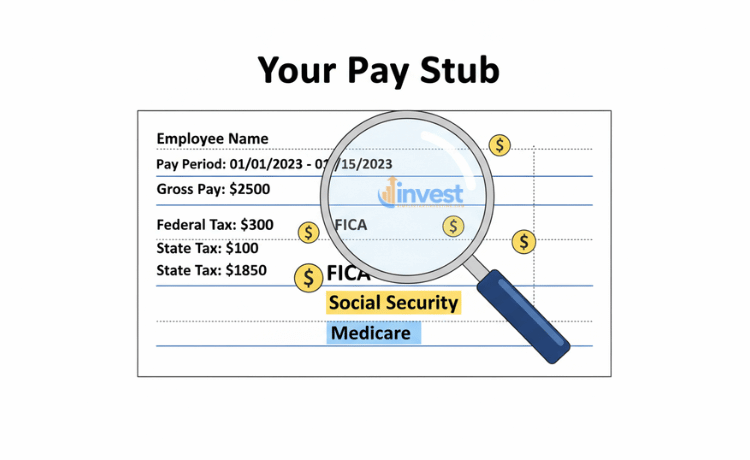
In this guide, we are going to peel back the layers of these taxes. We will look at where the money goes, why it is taken out, and why understanding this now will help you plan for a much more secure future. This isn’t just about losing money today; it is about “pre-paying” for your life decades from now.
What Exactly Are Payroll Taxes (FICA)?
When we talk about payroll taxes FICA, we are referring to the Federal Insurance Contributions Act. This is a federal law that requires a deduction from the paychecks of most employees. Think of it less like a standard “tax” that pays for roads or the military, and more like a mandatory insurance premium.
The money collected through FICA goes into specific trust funds managed by the government. These funds are used to provide benefits to retirees, people with disabilities, and children of deceased workers. It also pays for health insurance for seniors.
When you see FICA on your paycheck, you are actually paying into two different programs at once. The first is Social Security, which provides you with a monthly income when you retire or if you become unable to work. The second is Medicare, which covers your hospital visits and medical needs once you reach age 65.

A Simple Way to Visualize the Cost
Let’s look at how this works in a real-world scenario. Imagine you are working at a local Costco and you earn 1,000 dollars in a single pay period. Before that money reaches your pocket, the government takes a specific percentage.
For most workers, the total FICA rate is 7.65 percent. If we take your 1,000 dollars and calculate 7.65 percent, that comes out to 76 dollars and 50 cents. This amount is taken directly from your gross pay. You don’t have to write a check or send a payment; your employer does the work for you and sends it to the IRS.
The Beginner’s Trap: “It’s Just Another Income Tax”
A very common mistake for beginners is thinking that FICA is the same thing as Federal Income Tax. This is a misunderstanding that can lead to confusion during tax season.
Federal Income Tax is “progressive,” meaning the more you earn, the higher the percentage you pay. You can also reduce your income tax by having children, owning a home, or giving to charity. However, payroll taxes FICA are generally “flat.” Almost everyone pays the exact same percentage on their first dollar earned, regardless of whether they have a dozen kids or no deductions at all.
The mindset shift you need is this: Income tax pays for the government to run today. FICA is a contribution to your own future safety net.

The Two Pillars: Social Security and Medicare
To truly understand payroll taxes FICA, you have to look at the two components separately. They serve different purposes and have slightly different rules.
1. Social Security (OASDI)
The technical name for this is Old-Age, Survivors, and Disability Insurance. This part of the tax takes the biggest bite. It is usually 6.2 percent of your gross pay.
Let’s use a hypothetical example. If you earn 100 dollars, 6 dollars and 20 cents goes toward Social Security. This money is used to pay current retirees. When you eventually retire, the workers of that future generation will pay for your benefits.
The Beginner Mistake: Many people believe that the specific dollars taken from their check are sitting in a personal bank account with their name on it. The Reality: That isn’t how it works. Your money is used to pay people who are retired right now. In exchange, you earn “credits.” Once you earn enough credits (usually after 10 years of work), you become eligible to receive your own checks in the future.
2. Medicare
This part of the tax is much smaller, usually 1.45 percent of your gross pay. On that same 100 dollars we mentioned earlier, only 1 dollar and 45 cents goes to Medicare.
This program ensures that when you turn 65, you won’t be left without health insurance. Because healthcare in the US can be very expensive, this small contribution every payday acts as a long-term investment in your physical well-being.
The Beginner Mistake: Thinking that since you have private health insurance through your job at a company like Apple or Tesla, you don’t need to pay the Medicare tax. The Reality: Everyone pays, regardless of their current insurance. Medicare is specifically for your senior years, and paying into it now is what makes you eligible for it later.
The Hidden Benefit: Your Employer’s Match
One of the most surprising things for people new to payroll taxes FICA is learning that you aren’t the only one paying. In the United States, your employer is required by law to match your contribution dollar-for-dollar.
Let’s go back to the example of earning 1,000 dollars. As we discussed, 76 dollars and 50 cents is taken out of your pay. However, your employer also has to reach into their own pocket and pay another 76 dollars and 50 cents to the government on your behalf.
In total, 153 dollars is being sent to the Social Security and Medicare funds because of your work, but you only “feel” half of that cost.

Why This Matters for Your Mindset
When you look at your pay stub and feel frustrated about the missing money, remember that your job is essentially doubling your contribution. If you work for a large corporation like Target or Starbucks, they are paying millions of dollars extra every year just to match these FICA contributions for their employees. This is a significant part of your “total compensation” that you never actually see in your bank account, but it is working for you behind the scenes.
What Happens if You Are Your Own Boss?
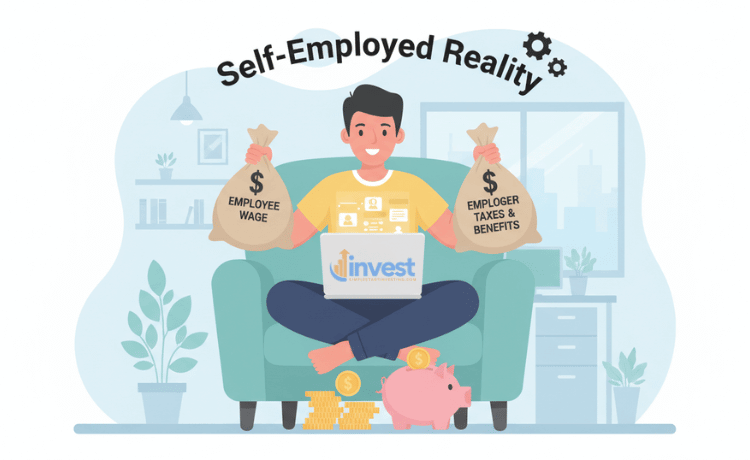
If you decide to leave the corporate world to become a freelancer or start your own small business, the rules for payroll taxes FICA change significantly. In the eyes of the IRS, you are now both the employee and the employer.
This means you are responsible for both halves of the tax. This is often called the “Self-Employment Tax.” Instead of paying 7.65 percent, you will pay the full 15.3 percent yourself.
The Beginner Mistake: Many new freelancers set their rates based only on what they want to take home, forgetting that they now have to pay double the FICA tax. The Reality: If you were used to making 20 dollars an hour at a job, and you start freelancing for 20 dollars an hour, you are actually making much less money because you are now paying the employer’s portion of the tax too. You must adjust your mindset to account for this 15.3 percent “cost of doing business.”
The Wage Base Limit: A Rule for High Earners
There is a unique feature of Social Security tax that is different from almost any other tax in the US. It has a “ceiling” or a “cap.” This is known as the Social Security Wage Base Limit.
Every year, the government sets a maximum amount of earnings that can be taxed for Social Security. Once you earn more than that amount in a single year, the government stops taking the 6.2 percent for Social Security out of your check for the rest of that year.
For example, let’s say the limit for this year is 168,000 dollars. If you are a high-level engineer at a company like Google and you earn 200,000 dollars, you only pay the Social Security tax on the first 168,000 dollars. Every dollar you earn after that is “Social Security tax-free.”
Important Note: This cap only applies to Social Security. The 1.45 percent for Medicare never stops. You pay that on every single dollar you earn, no matter how much it is. In fact, if you earn a very high salary (usually over 200,000 dollars), you might even have to pay an additional 0.9 percent for Medicare.
Why Do These Taxes Exist?
It is easy to view payroll taxes FICA as a burden. However, from a financial logic perspective, they serve a very specific purpose: preventing poverty in old age.
Before these laws were passed, many Americans reached their 70s and 80s with no income and no way to pay for a doctor. By forcing everyone to contribute a small portion of every paycheck, the country created a “floor” that no one should fall below.
While you might think you could invest that money better on your own in the stock market, FICA acts as a “forced savings” plan that is guaranteed by the federal government. It is the foundation of a retirement plan, upon which you should build your own personal investments like a 401k or an IRA.
Common Misconceptions About FICA
To become a master of your own finances, you need to clear away the myths. Here are the most frequent things beginners get wrong about payroll taxes FICA:
“I can opt-out if I don’t want the benefits.”
In almost all cases, you cannot. If you are a standard employee in the US, paying FICA is mandatory. There are a few very specific exceptions for certain religious groups or foreign students on specific visas, but for 99 percent of workers, it is a requirement of employment.
“Social Security will be gone by the time I retire.”
This is a popular headline in the news, but it is often misunderstood. While the trust funds face challenges, the system is designed so that as long as people are working and paying payroll taxes FICA, there will be money coming in to pay out benefits. The rules might change—such as the age when you can start collecting money—but the system is a fundamental part of the American economy.
“I don’t have to pay FICA on my investment gains.”
This is a very important distinction. FICA only applies to “earned income”—money you get from working a job or running a business. If you buy shares of a company like Netflix and sell them later for a profit, you do not pay FICA on that profit. You only pay capital gains tax. This is why many wealthy people pay a lower overall tax rate; much of their income comes from investments rather than a paycheck subject to FICA.
How to Check if You Are Paying the Right Amount
Most of the time, your employer’s payroll software handles everything perfectly. However, it is always a good idea to double-check your pay stub once in a while.
- Find your Gross Pay: This is the big number before any taxes are taken out.
- Do the mental math for Social Security: Multiply your gross pay by 0.062. For every 100 dollars, it should be about 6 dollars and 20 cents.
- Do the mental math for Medicare: Multiply your gross pay by 0.0145. For every 100 dollars, it should be about 1 dollar and 45 cents.
If the numbers on your check are significantly different, you should speak with your human resources department. Errors are rare but they do happen, especially if you work for a very small business that does payroll manually.
Final Thoughts for the Beginner
When you see payroll taxes FICA mentioned in financial news or on your pay stub, don’t view it as a penalty. Instead, view it as a mandatory contribution to a collective insurance policy.
By understanding that you pay 7.65 percent and your employer matches that same 7.65 percent, you can see that a total of over 15 percent of your productivity is being funneled into a system designed to protect you later in life.
Knowing these numbers helps you calculate your true “take-home pay” more accurately. When you are negotiating a salary for a new job, always remember that the number they offer you is the “Gross” number. After FICA and income taxes, you will usually see about 70 to 75 percent of that number in your actual bank account. Being aware of this “gap” is the first step toward moving from a beginner to a financially savvy adult.
Regulations regarding tax rates and wage limits can change based on new legislation passed by Congress or updates from the IRS; please check current guidelines or consult with a tax professional for the most up-to-date information.