When you first dive into the world of the US stock market, it is easy to get overwhelmed by thousands of tickers like AAPL, TSLA, or AMZN. Most beginners start by looking at the stock price. If the price goes up, they think the company is doing well. If it goes down, they worry.
However, experienced investors like Warren Buffett look at something much deeper. They want to know if the management team is actually good at their jobs. One of the most powerful tools to measure this is called Return on Equity, or ROE.
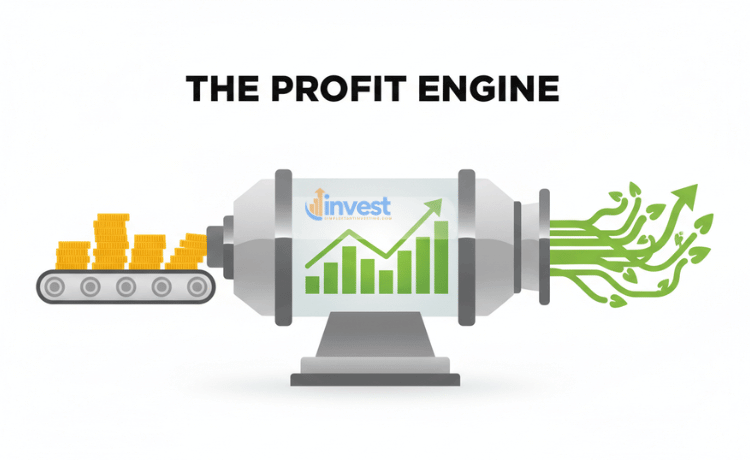
Think of Return on Equity as a report card for how efficiently a company uses the money you and other investors have provided. It is the bridge between a company simply making money and a company being a high-quality machine. In this guide, we will break down everything you need to know about this metric without any confusing jargon or complex math.
What Exactly Is Return on Equity?
At its heart, Return on Equity is a measure of profitability from the perspective of the shareholder. When you buy a stock, you become a part-owner of that business. The money you pay for that stock, combined with the money the company has kept from previous years, represents the “Equity.”
Return on Equity tells you how many cents of profit the company generates for every dollar of shareholder equity. If a company has a high ROE, it means they are very good at turning your investment into more profit. If the ROE is low, it might mean the company is wasteful or operating in a very difficult industry.
The Plain English Breakdown
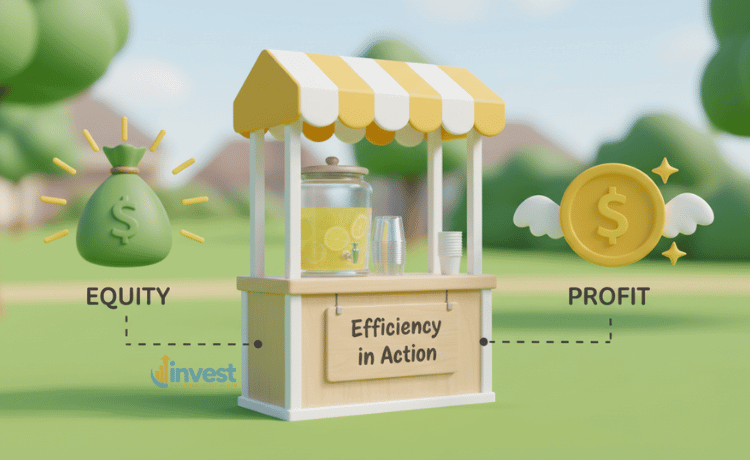
Imagine you and a friend decide to open a lemonade stand. You both put in 50 dollars, so the total “equity” in the business is 100 dollars. At the end of the summer, after paying for lemons, sugar, and permits, you have 20 dollars of pure profit left over.
In this scenario, your Return on Equity is 20 percent. You took 100 dollars of owner money and turned it into 20 dollars of profit. This percentage helps you compare your lemonade stand to other businesses. If your neighbor also started a stand with 100 dollars but only made 5 dollars in profit, their ROE is only 5 percent. Even though you both have the same starting amount, your business is much more efficient.
A Real-World Example: Apple vs. A Startup
Let’s look at a giant like Apple (ticker: AAPL). Apple is famous for having an incredibly high Return on Equity. This is because they have a powerful brand that allows them to sell products at high prices while keeping their costs controlled. They don’t need to build a thousand new factories every year to make more money; they just need to keep innovating.
On the other hand, a brand-new electric vehicle startup might have a negative ROE. They are spending billions of dollars on factories and research (the equity) but are not yet making a profit. For a beginner, seeing a negative ROE is a signal that the company is still in its “burning cash” phase, which is much riskier than an established winner.
The Common Beginner Mistake
Many new investors confuse “Profit” with “Return on Equity.” They see that a company made 1 billion dollars and assume it is a great investment.
This is a mistake because it doesn’t account for how much money was needed to make that billion. If a company had to spend 100 billion dollars to make 1 billion in profit, that is only a 1 percent return. You could likely get a better return just by putting your money in a high-yield savings account at a US bank. Always look at the profit relative to the investment.
Shifting Your Mindset
Instead of asking “How much money did this company make?”, start asking “How hard did the owners’ money work this year?” High-quality companies are those that can generate high returns consistently over many years. This is the secret sauce of long-term wealth building in the stock market.
Understanding the Two Pieces of the ROE Puzzle
To truly understand Return on Equity, we have to look at the two components that create it: Net Income and Shareholder Equity. You can find both of these on the financial statements that US companies are required to file with the SEC.
1. Net Income: The “Bottom Line”
Net Income is the amount of money a company has left over after paying every single bill. This includes the cost of goods sold, employee salaries, electricity, taxes to the IRS, and interest on any loans. It is the “take-home pay” of the corporation.
In the US market, companies report this every three months (quarterly). When you hear people on news channels like CNBC talking about “Earnings,” they are usually talking about Net Income. For ROE to be positive, Net Income must be positive.
2. Shareholder Equity: The “Owner’s Stake”
This is often the most confusing part for beginners. Think of Shareholder Equity as the “Net Worth” of the company. If a company sold all its buildings, sold all its inventory, and paid off every single debt it owed, the money left over would be the Shareholder Equity.
It consists of the original money invested by founders and shareholders, plus all the profits the company has kept over the years instead of paying them out as dividends.
A Number-Based Example
Let’s say a local grocery chain has 1,000,000 dollars in Net Income. You look at their balance sheet and see that their Shareholder Equity is 5,000,000 dollars.
To find the Return on Equity, you take the 1,000,000 dollars of profit and compare it to the 5,000,000 dollars of equity. In this case, the ROE is 20 percent. This means for every dollar the shareholders own in the business, the company is generating 20 cents of profit annually.
The Common Beginner Mistake
New investors often forget that equity can change. If a company issues more stock to raise money, the “Equity” goes up. While that sounds good, it actually makes it harder to have a high ROE because the “denominator” is now bigger. The company has to make even more profit just to keep the same percentage.
Shifting Your Mindset
Think of Shareholder Equity like the “engine size” and Net Income like the “speed.” A small engine that goes very fast is extremely efficient. A massive engine that moves slowly is inefficient. As an investor, you are looking for the most efficient engine possible for your money.
Why Is Return on Equity So Important for New Investors?
You might be wondering why we don’t just look at the stock price. The reason is that stock prices are driven by emotion in the short term, but they are driven by business quality in the long term. Return on Equity is one of the best “quality” filters available.
Identifying “Moats” and Competitive Advantages
In the US, companies like Coca-Cola or PepsiCo have high ROEs because they have what investors call a “moat.” A moat is a competitive advantage that protects a company from rivals. Because everyone knows their brand, they can charge more than a generic soda brand. This leads to higher profits without needing more investment, which naturally pushes the ROE higher.
When you see a company maintaining an ROE of 15 to 20 percent for a decade, you are likely looking at a business with a very strong moat.
Comparing Different Businesses
ROE allows you to compare a tech company like Microsoft (MSFT) to a retail giant like Walmart (WMT). While they do completely different things, ROE gives them a common language. It tells you which management team is better at squeezing value out of the resources they have.
The Common Beginner Mistake
A common trap is comparing the ROE of a software company to the ROE of a utility company or a bank. Software companies often have massive ROEs (sometimes 30 percent or more) because they don’t need many physical assets. Utilities need billions of dollars in power lines and plants, so their ROE is usually much lower (around 8 to 10 percent).
Shifting Your Mindset
Don’t look for the highest ROE in the entire market. Instead, look for companies that have a higher ROE than their direct competitors. If Walmart has a higher ROE than Target, it suggests Walmart might be managing its inventory or stores more efficiently.
The “Debt Trap”: When a High ROE Is Actually Dangerous
This is the most critical lesson for any beginner. A high Return on Equity is usually good, but it can sometimes be a warning sign. There is a “cheat code” companies can use to boost their ROE without actually becoming more profitable: Debt.
How Debt Inflates the Numbers
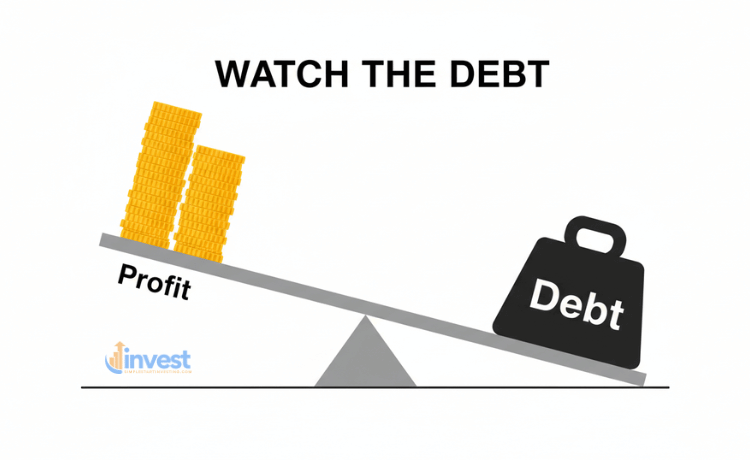
Remember that ROE is Profit compared to Equity. But Equity is only what is left after debts are paid. If a company takes on a massive amount of debt to buy back its own stock or fund its operations, the “Equity” portion of the business shrinks.
If the bottom number (Equity) gets smaller while the top number (Profit) stays the same, the percentage (ROE) will automatically go up. This looks great on paper, but the company is now much riskier because they have a mountain of debt to pay back to the bank.
A Real-World Example: The Airline Industry
US airlines often have fluctuating ROEs. Sometimes, an airline might show a very high ROE, but when you look closer, you see they have billions in debt from buying new planes. If the economy slows down and people stop flying, that debt doesn’t go away. A company with a “fake” high ROE driven by debt can go bankrupt very quickly in a recession.
The Common Beginner Mistake
Assuming that an ROE of 50 percent is always better than an ROE of 15 percent. If the 50 percent ROE is built on a mountain of debt, the 15 percent ROE company might actually be the safer and better long-term investment.
Shifting Your Mindset
Always check a company’s debt levels alongside their ROE. In the US, you can look for the “Debt-to-Equity” ratio. If ROE is high and debt is low, you have found a potential gold mine. If ROE is high but debt is also extremely high, proceed with caution.
How to Find and Use ROE in Your Investing Journey
You don’t need to be a math genius to use this. Most financial websites like Yahoo Finance, Google Finance, or Morningstar calculate this for you.
Step 1: Find the Summary Page
Search for a stock ticker like JPM (JPMorgan Chase) or COST (Costco). Look for a tab labeled “Statistics” or “Key Data.” You will almost always see a line for “Return on Equity (ttm).” The “ttm” stands for “trailing twelve months,” meaning it is based on the last year of data.
Step 2: Look at the History
Don’t just look at this year. A company might have a one-time gain that makes their ROE look amazing for just one year. Look for consistency. Is the ROE stable? Is it growing? A growing ROE often signals that a company is gaining more power in its market.
Step 3: Compare to the Industry
If you are looking at a bank like Goldman Sachs, compare its ROE to other banks like Bank of America. Each industry in the US has its own “normal” range. What is good for a tech company might be impossible for a grocery store.
The Common Beginner Mistake
Waiting for the “perfect” ROE. There is no magic number. Some legendary companies have an ROE of 12 percent, while some risky ones have 40 percent. ROE is a starting point for a conversation, not the final answer.
Shifting Your Mindset
Think of ROE as a filter. It helps you quickly discard low-quality companies so you can spend your time researching the ones that actually know how to build wealth. It turns you from a “gambler” into a “business analyst.”

Conclusion: The Path to Smarter Investing
Return on Equity is more than just a percentage. It is a window into the soul of a business. It tells you if the people running the company are treated your money with respect and efficiency.
By focusing on companies that can maintain a solid ROE without drowning in debt, you are already ahead of 90 percent of new investors. You are no longer just chasing “green candles” on a chart; you are looking for high-quality engines of growth.
Remember, the goal of investing isn’t just to make money—it’s to put your money where it will work the hardest for you. ROE is the most reliable tool to find exactly where those places are.
Disclaimer: This content is for educational purposes only and does not constitute financial advice. Investment involves risk, and past performance is not indicative of future results. Please consult with a qualified financial advisor or tax professional before making any investment decisions. Regulations and market conditions can change; always verify current data from official sources like the SEC or IRS.