If you have ever looked at a stock market chart, you probably noticed it looks like a heart rate monitor—full of jagged peaks and deep valleys. For a beginner, watching your hard-earned money jump up one day and sink the next can be a stressful experience. You might find yourself asking, “Who is changing these prices, and why can’t they just stay steady?”
In the world of investing, these price swings are known as stock market volatility. While the word “volatility” sounds like something that might explode, it is actually a normal and necessary part of a healthy market. Understanding why these movements happen is the first step toward becoming a confident, long-term investor who doesn’t panic when the red numbers appear on the screen.
In this guide, we will break down the “hidden hands” that move the market, from the basics of shopping to the high-level decisions made by the government. By the end, you will see that stock market volatility is not a monster to be feared, but a tool that you can use to build wealth over time.
1. The Core Engine: Supply and Demand
At its most basic level, the stock market is just a giant marketplace, not much different from a local farmers’ market or an eBay auction. The price of a stock moves based on how many people want to buy it (demand) versus how many people want to sell it (supply).
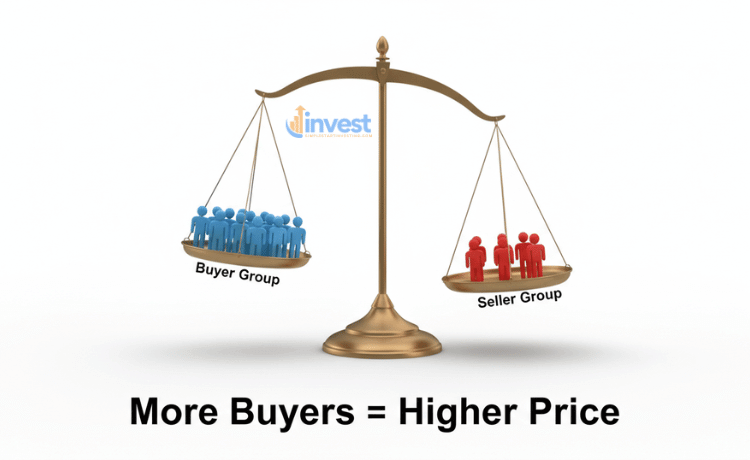
When a company like Apple (AAPL) or Amazon (AMZN) releases a revolutionary new product, thousands of investors might decide they want to own a piece of that company. If there are more buyers than sellers, the price goes up because buyers are willing to pay a premium to get their hands on the shares. Conversely, if bad news breaks and everyone wants to sell at the same time, the price drops because sellers must lower their “asking price” to find someone willing to buy.
A Real-World Example Imagine a popular holiday toy that every child wants. In November, the store has 100 toys, but 500 parents want to buy them. Because the demand is high and the supply is low, the price of that toy might double on websites like Craigslist. However, by January, those same parents no longer need the toy. Now there are 500 toys on the shelves and only 10 buyers. To get rid of the stock, the store slashes the price by 50 percent. The stock market works exactly the same way.
The Beginner’s Mistake Many new investors see a price drop and assume the company is “failing.” They think a lower price means the business is broken.
The Mindset Shift A price drop often just means there are temporarily more sellers than buyers. It is a reflection of the “market mood,” not necessarily the actual health of the company. If the business is still making great products and earning money, a lower price might actually be a “sale” for you to buy more.
2. Corporate Earnings: The Business Scorecard
Why do buyers and sellers change their minds so often? Usually, it is because of Corporate Earnings. Every three months, public companies in the U.S. are required to report how much money they made and how much they spent. This is known as “Earnings Season.”
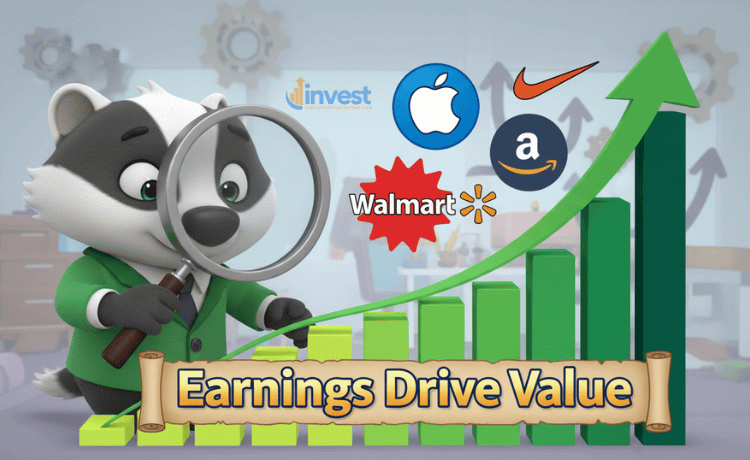
Investors look at these reports to see if the company is growing. If Walmart reports that they sold more groceries than expected and their profits are up, investors feel confident and buy more shares. If a company like Tesla (TSLA) reports that they are spending too much money and not selling enough cars, investors might get nervous and sell.
A Simple Numbers Example Let’s say a company earns 4 dollars for every share of stock you own. If they announce next year that they expect to earn 5 dollars per share, the stock price will likely rise because the “value” of what you own has increased. But if they say they will only earn 3 dollars, the stock price will likely fall to reflect that lower value.
The Beginner’s Mistake New investors often focus only on the “stock price” on their app. They forget that behind that ticker symbol is a real business with buildings, employees, and customers.
The Mindset Shift Think of yourself as a part-owner of the business. If you owned a local pizza shop and had one slow Tuesday, you wouldn’t sell the whole shop on Wednesday. You would look at the long-term profits. Treat your stocks the same way.
3. The Federal Reserve and Interest Rates
In the United States, one of the biggest drivers of stock market volatility is an organization called the Federal Reserve (often just called “the Fed”). The Fed’s job is to keep the U.S. economy stable by adjusting interest rates.
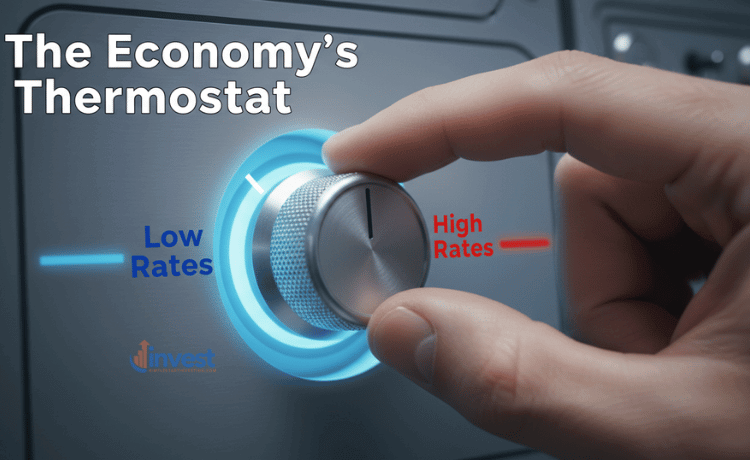
Think of interest rates as the “cost of money.” When interest rates are low, it is cheap for businesses to borrow money to expand and for people to borrow money to buy houses or cars. This usually makes the stock market go up. When interest rates are high, borrowing becomes expensive, which slows down spending and can cause stock prices to fluctuate or drop.
A Real-World Example Imagine Home Depot. When interest rates are low, people take out cheap loans to renovate their kitchens. This means Home Depot sells more lumber and appliances, and their stock goes up. If the Fed raises interest rates, those same people might decide a new kitchen is too expensive. Home Depot sells less, and investors might sell the stock, causing the price to go down.
The Beginner’s Mistake Beginners often ignore the “macro” news, like what the Fed is saying, and get confused when the whole market drops on the same day for no apparent reason.
The Mindset Shift The Fed uses interest rates like a thermostat. They turn the “heat” up (raise rates) when the economy is too hot and inflation is high. They turn the “cool” on (lower rates) when things are sluggish. Understanding this helps you realize that some market drops are just the economy “cooling off” to prevent a bigger crash later.
4. Economic Health: Jobs and Inflation
The stock market loves certainty and hates surprises. This is why “Economic Indicators” cause so much stock market volatility. Every month, the government releases reports on how many people have jobs and how much the price of goods is rising (inflation).
If a jobs report shows that more Americans are working than expected, it usually means people have more money to spend at stores like Costco or Target. This is “good news” that can drive prices up. However, if inflation is too high, it means your dollar doesn’t buy as much as it used to. This makes investors worry that the Fed will have to raise interest rates, which can cause prices to fall.
A Simple Explanation If you have 100 dollars and a loaf of bread costs 2 dollars, you can buy 50 loaves. If inflation causes that bread to cost 4 dollars, you can now only buy 25 loaves. This “shrinking” power of money makes investors nervous about the future profits of companies.
The Beginner’s Mistake Many newcomers think “good news for the economy” is always “good news for the stock market.” Sometimes, a very strong jobs report makes the market drop because investors fear it will cause more inflation.
The Mindset Shift Economic data is like weather for the market. It might be rainy today, but that doesn’t mean the climate has changed forever. Long-term investors look past the monthly “weather reports” and focus on the years ahead.
5. Investor Psychology: Fear and Greed
The stock market isn’t just a collection of computers; it is a collection of humans. And humans are emotional. Two main emotions drive stock market volatility: Fear and Greed.
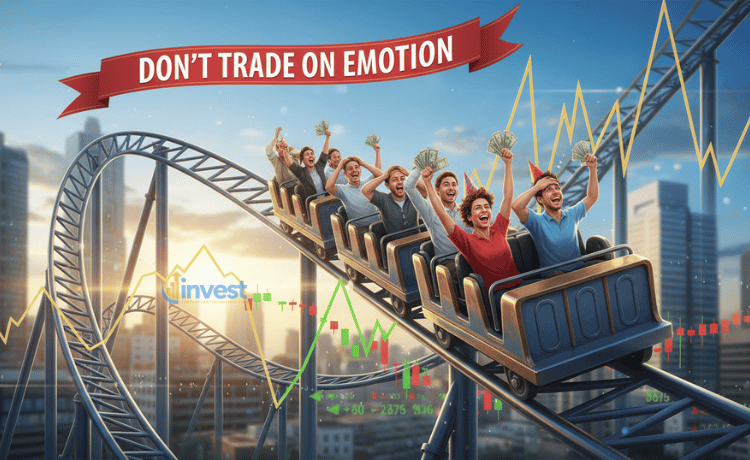
- Greed (FOMO): When prices are going up fast, people feel the “Fear Of Missing Out.” They jump in and buy, pushing prices even higher than they should be.
- Fear (Panic): When prices start to dip, people get scared they will lose everything. They sell their stocks quickly, which causes the price to plummet even further.
A Real-World Example Think of a crowded movie theater. If one person stands up and points toward the exit, a few people might look. If ten people start running and screaming “Fire!”, everyone else will run for the door without even checking if there is a fire. In the stock market, “panic selling” is just like that theater rush—everyone is running because everyone else is running.
The Beginner’s Mistake New investors often buy when everyone is “greedy” (at high prices) and sell when everyone is “fearful” (at low prices). This is the exact opposite of how you build wealth.
The Mindset Shift As the famous investor Warren Buffett says, “Be fearful when others are greedy, and greedy when others are fearful.” When the market is dropping because of panic, it is often the best time to look for high-quality companies at a discount.
6. Geopolitics and “Black Swan” Events
Sometimes, stock market volatility is caused by things completely outside of the business world. This includes things like wars, elections, or global health crises. These are often called “Black Swan” events because they are rare and hard to predict.
When a major global event happens, it creates uncertainty. Big investment firms don’t like uncertainty, so they often sell stocks and move their money into “safer” things like gold or government bonds until the situation clears up.
A Recent Example If a conflict breaks out in a part of the world that produces a lot of oil, the price of gas at your local station might go up. This means it costs more for FedEx to deliver packages and more for Delta Air Lines to fly planes. Investors see these rising costs and sell those stocks, causing the market to dip.
The Beginner’s Mistake Trying to “time the market” based on the news. By the time you hear the news on TV, the professional investors have already moved their money, and the price has already changed.
The Mindset Shift You cannot control world events. What you can control is your “Asset Allocation”—making sure you have a mix of different types of investments so that one single event doesn’t ruin your entire portfolio.
Why Volatility Can Be Your Best Friend
It might seem strange, but without stock market volatility, it would be very hard to make a lot of money in stocks. Volatility is what creates “low prices” that allow you to buy in. If the market only ever went up in a perfectly straight line, stocks would always be expensive.
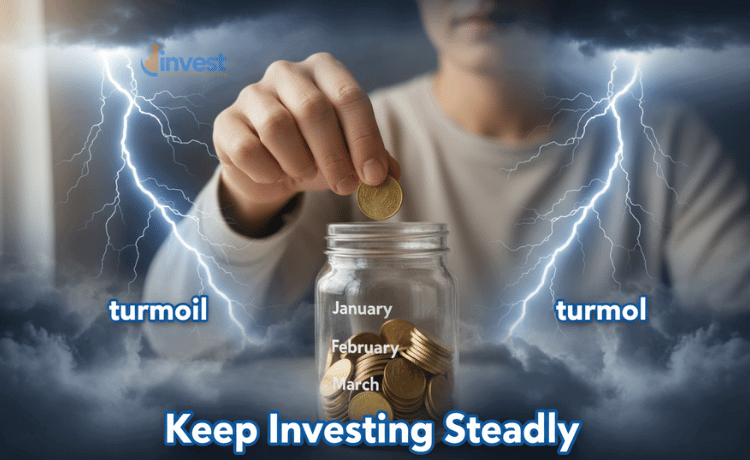
One way to use volatility to your advantage is a strategy called Dollar-Cost Averaging. This sounds complicated, but it is very simple. It just means you invest the same amount of money every month, no matter what the price is.
How it works in words Imagine you decide to invest 100 dollars every month into a stock.
- In Month 1, the price is 10 dollars, so your 100 dollars buys you 10 shares.
- In Month 2, the market is “volatile” and the price drops to 5 dollars. Your 100 dollars now buys you 20 shares!
- In Month 3, the price goes back up to 10 dollars.
Because you kept investing during the “bad” month, you now own more shares at a lower average cost than if the price had stayed at 10 dollars the whole time.
Summary for the Simple Start Investor
Stock market volatility is just the market’s way of breathing. It inhales (goes up) and exhales (goes down). As a beginner in the U.S. market, your goal isn’t to avoid the swings, but to stay on the ride.
- Prices move because of supply and demand.
- Earnings and the Fed provide the logic behind the moves.
- Human emotion often makes the moves bigger than they should be.
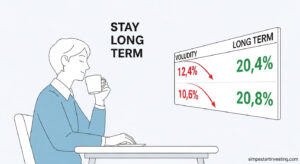
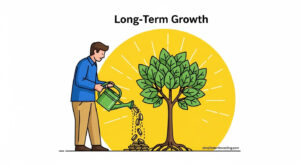
- Time is your superpower. Over long periods (10, 20, or 30 years), the U.S. stock market has historically moved upward, despite the thousands of tiny “ups and downs” along the way.
Please note: Regulations and market conditions can change; please check current guidelines or consult with a professional for your specific situation.
Disclaimer: This content is for educational purposes only and does not constitute financial advice. Investing involves risk, including the potential loss of principal.