Most new investors start their journey by buying the biggest companies they know. You might own some Apple, a little bit of Amazon, or perhaps a broad index fund that tracks the five hundred largest companies in the United States. This is a fantastic start. It’s safe, reliable, and has built wealth for millions. However, as you get more comfortable, you might hear seasoned investors talking about “tilting” their portfolio. Specifically, they talk about small-cap value stocks.
But what does that actually mean? Is it a secret club for Wall Street pros, or is it something a regular person can use to help their retirement fund grow a bit faster? Adding a small-cap value tilt is essentially a way of saying you want to own a slightly higher percentage of small, “undervalued” companies than the average investor does.
In this guide, we are going to break down exactly what small-cap value stocks are, why they have historically performed so well, and the common traps that beginners fall into when they try to use this strategy. By the end, you’ll know if this “tilt” is the right move for your long-term goals.
Understanding the Basics: What is a Small-Cap Value Tilt?
To understand a “tilt,” we first have to understand the two main ingredients: Small-Cap and Value.
What are Small-Cap Stocks?
In the investing world, “Cap” is short for Market Capitalization. This is just a fancy way of saying how much a company is worth if you bought every single share of its stock. To find this number, you would take the total number of shares and multiply it by the current stock price. For example, if a company has one million shares and each share costs 50 dollars, the market cap is 50 million dollars.

In the U.S. market, we generally group companies into three buckets:
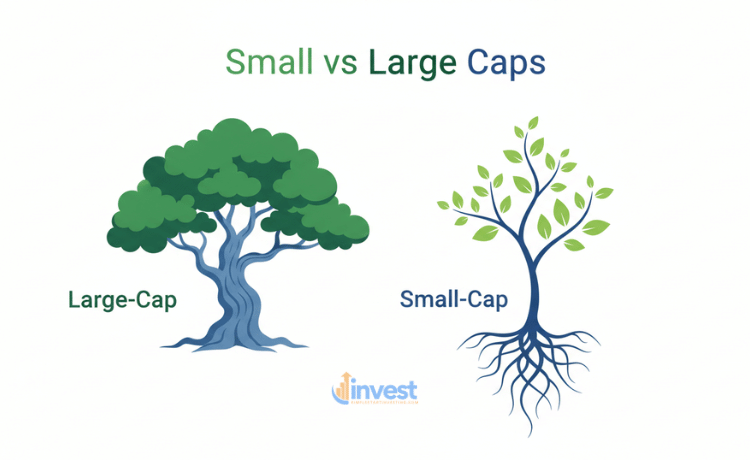
- Large-Cap: The giants like Walmart or Microsoft.
- Mid-Cap: Medium-sized companies that are established but still growing.
- Small-Cap: Smaller companies, often valued between 300 million dollars and 2 billion dollars.
Small-cap value stocks are the smaller players. They aren’t household names yet, but they are often the engines of innovation and local commerce.
What are Value Stocks?
The second part of the equation is “Value.” In investing, stocks are usually divided into “Growth” and “Value.”
Growth stocks are the superstars. Everyone expects them to grow rapidly, so investors are willing to pay a high price for them today, hoping for even higher prices tomorrow. Think of a trendy tech company that everyone is talking about.
Value stocks, on the other hand, are like the items in the clearance section of your favorite store. These are companies that are currently trading for a price that is lower than what their actual business worth suggests. Maybe the company is in a “boring” industry like regional banking or manufacturing. Maybe they had a bad quarter and investors panicked. For whatever reason, the stock is “on sale.”
Putting It Together: The Tilt
When you add a small-cap value stocks tilt, you are intentionally choosing to hold more of these “small and cheap” companies than a standard total market fund would give you. If a standard fund is 80 percent large companies and only 3 percent small-value companies, a “tilted” portfolio might increase that small-value portion to 10 percent or 15 percent.
Why Investors Love Small-Cap Value Stocks
You might be wondering: “If these companies are small and currently undervalued, why would I want more of them?” The answer lies in decades of financial history.
The Historical “Premium”
Historically, small-cap value stocks have provided higher returns over long periods than large-cap growth stocks. Finance professors have studied this for years and found that “Size” and “Value” are two factors that tend to reward investors for their patience.
Think of it this way: It is much easier for a small company worth 500 million dollars to double its size to 1 billion dollars than it is for a massive 3 trillion dollar company to double to 6 trillion dollars. Small companies have more “room to run.”

When you combine that growth potential with a “Value” price—meaning you bought the stock while it was cheap—you create a powerful recipe for long-term wealth.
An Everyday Example
Imagine two houses in your neighborhood.
- House A is a massive, brand-new mansion that everyone wants. It is priced at a premium because it’s perfect.
- House B is a smaller, older home that needs a little bit of paint but has a very solid foundation. Because it isn’t “trendy,” the price is very low.
If the neighborhood improves over ten years, House A will likely increase in value. However, House B—because you bought it so cheaply and because it had more room to improve—might actually give you a much higher percentage of profit on your initial investment. That “House B” is the essence of small-cap value stocks.
Common Misconceptions: Where Beginners Get It Wrong
Because the term “small-cap” sounds a bit risky, many beginners make mistakes when trying to implement this strategy.
Misconception 1: Small-Cap Means “Penny Stocks”
Many new investors think small-cap stocks are those tiny, 1-dollar stocks they see on social media that might go to the moon or go to zero overnight.
The Reality: There is a huge difference between a “Penny Stock” and a “Small-Cap Stock.” Penny stocks are often unregulated, highly speculative, and frequently part of scams. A legitimate small-cap value stock is a real company—often listed on the New York Stock Exchange or the Nasdaq—with real employees, real profits, and real buildings. They are just smaller compared to the giants.
Misconception 2: Value Stocks are “Failing” Companies
It’s easy to assume that if a stock is “cheap,” there must be something wrong with it. Beginners often think they are buying “junk” when they buy value.
The Reality: Value stocks are often just “out of favor.” For example, during a time when everyone is obsessed with Artificial Intelligence, a company that makes high-quality bricks or manages a chain of grocery stores might be ignored. Their business is perfectly healthy and making money, but because they aren’t “exciting,” their stock price stays low. You are looking for “unloved” gems, not broken businesses.
The Hidden Trap: Why a Tilt Isn’t Free Money
If small-cap value stocks have such high potential, why doesn’t everyone just put all their money there? The answer is simple: Volatility and Patience.
The “Bumpy Ride” Risk
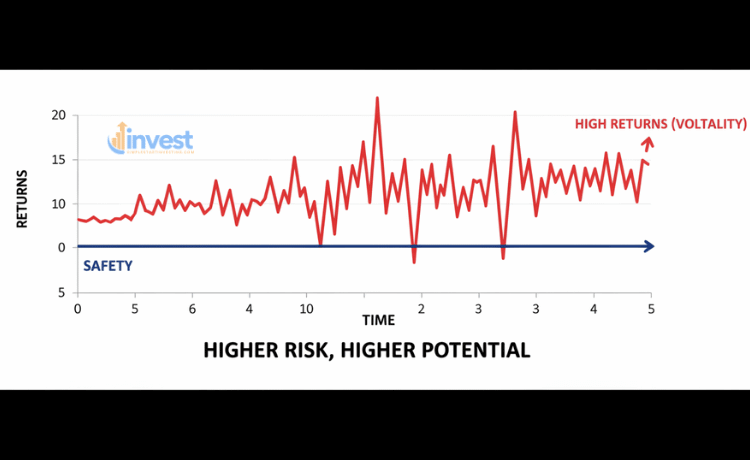
Small companies are more sensitive to the economy. If interest rates go up or there is a recession, a small company might struggle more than a giant like Apple, which has billions of dollars in the bank. This means the price of small-cap value stocks can swing up and down much more violently.
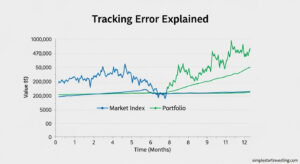
If you start a tilt today, you have to be prepared for your portfolio to look worse than the S&P 500 for months or even years at a time.
Tracking Error Regret
Most beginners feel like they are “losing” and sell their small-cap stocks right before they start to perform well. This is called “tracking error regret.” To succeed with small-cap value stocks, you need the discipline to stay the course even when you look “wrong” in the short term.
Correcting the Mindset
Instead of looking at a tilt as a way to “get rich quick,” you should view it as a way to diversify. You are essentially betting that over the next 20 or 30 years, the historical trend of small, cheap companies outperforming will continue. It’s a marathon, not a sprint.
How to Calculate the Impact of a Tilt (The Simple Way)
You don’t need complex math to see how a small change affects your outcome. Let’s look at a simple scenario.
Suppose you have 1,000 dollars to invest. If you put it all in a standard Large-Cap fund and it earns a 7 percent return over many years, your money grows steadily.

Now, imagine you “tilt” your portfolio. You put 900 dollars in that Large-Cap fund and 100 dollars into a small-cap value stocks fund. If that small-cap portion earns a slightly higher return—say 9 percent—because of the historical “size and value premium,” that extra 2 percent on just a portion of your money starts to add up.
Over 30 years, that small “tilt” of just 10 percent can lead to thousands of dollars of extra wealth because of how compound interest works. You aren’t changing your whole strategy; you are just “turning the dial” slightly toward higher potential growth.
Practical Steps: How to Add a Small-Cap Value Tilt
Ready to try it? You don’t need to pick individual stocks (which is very risky for beginners). Instead, you can use low-cost Exchange-Traded Funds (ETFs).
1. Identify Your Core
Most of your money (perhaps 80 to 90 percent) should stay in a “Total Stock Market” or “S&P 500” fund. This is your foundation. Examples of these often include tickers like VTI or VOO.
2. Choose Your Tilt Fund
Look for an ETF that specifically targets small-cap value stocks
3. Decide on the Percentage
For most beginners, a “tilt” of 5 percent to 10 percent is plenty. This gives you exposure to the potential gains without making your portfolio so volatile that you can’t sleep at night.
4. Set It and Forget It
Once you’ve added your tilt, don’t check it every day. Remember, the “value premium” can disappear for a decade and then show up all at once. Patience is your best friend here.
Is a Small-Cap Value Tilt Right for You?
Before you jump in, ask yourself these three questions:
- Is my timeline longer than 10 years? If you need the money in 3 years for a house down payment, stay away from tilting. It’s too volatile.
- Can I handle seeing my friends make more money than me some years? If your neighbor is bragging about their Tesla stock gains while your small-cap value fund is flat, will you feel the urge to sell? If yes, a tilt might not be for you.
- Do I already have a solid foundation? Don’t tilt until you have your high-interest debt paid off and an emergency fund in place.
The Bottom Line
Adding small-cap value stocks to your portfolio is one of the most researched ways to potentially increase your long-term returns. It isn’t magic, and it isn’t a guarantee, but it is a logical way to diversify away from just owning the “big guys.”
By focusing on companies that are small and undervalued, you are positioning yourself to capture growth that most people miss. Just remember to keep your costs low, your diversification high, and your patience infinite.
Note on Regulations: Market trends and tax treatments for different types of funds can change. Always check the current IRS guidelines or consult with a qualified financial professional before making significant changes to your investment strategy.
Disclaimer: This content is for educational purposes only and does not constitute financial advice. Investing involves risk, including the potential loss of principal. Past performance is not indicative of future results.