Let’s be honest: nobody is perfect. Even the most seasoned professionals on Wall Street make mistakes. They miscalculate growth, they overlook new competitors, and sometimes, they just get swept up in the excitement of a “hot” market. If the experts get it wrong, where does that leave the rest of us?
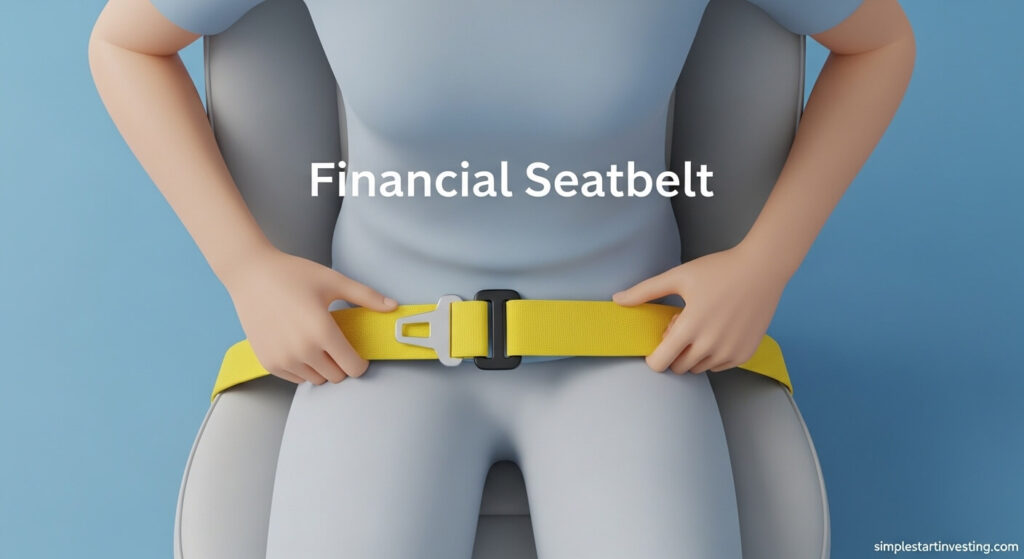
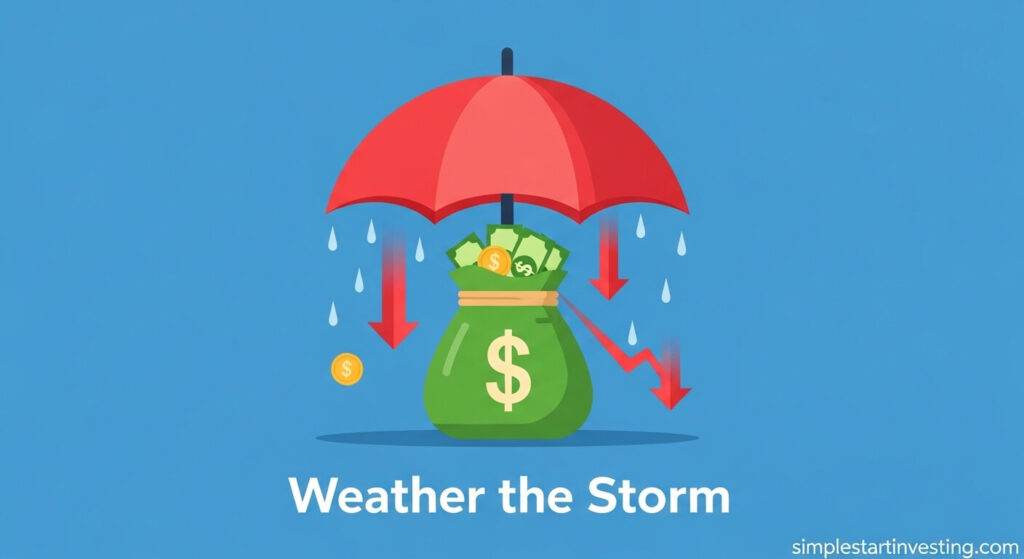
The truth is, you don’t need to be a genius to succeed in investing, but you do need a plan for when things don’t go according to plan. This is where the Margin of Safety comes in. Think of it as your financial seatbelt. You don’t put it on because you plan to get into a car accident; you put it on because the world is unpredictable, and you want to walk away if something goes wrong.
In the world of investing, this concept is the difference between a minor setback and a total financial disaster. Whether you are looking at stocks, real estate, or even just managing your personal budget, understanding the Margin of Safety is the single most important step you can take to protect your hard-earned money.
What Exactly Is a Margin of Safety?
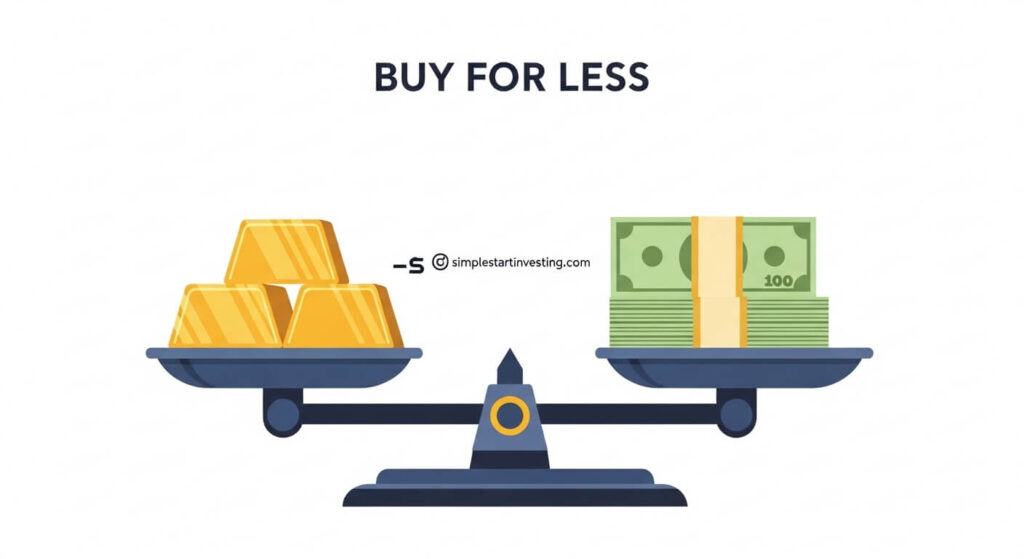
At its simplest level, a Margin of Safety is the gap between the actual value of something and the price you pay for it. Imagine you are looking at a house that you are certain is worth 400,000 dollars. If you manage to buy that house for 300,000 dollars, you have a 100,000-dollar “cushion.”
That cushion is your safety net. If the housing market drops by 10 percent, you are still “in the green” because you bought it so far below its true value. If you discover the roof needs a 20,000-dollar repair that you didn’t see coming, you still have a massive buffer of value left.
In the stock market, this means buying shares of a company for significantly less than what the business is actually worth. If a company is “worth” 100 dollars per share based on its buildings, cash in the bank, and future profits, but the market is panicking and selling it for 70 dollars, that 30-dollar difference is your Margin of Safety.
The Famous Bridge Analogy
One of the best ways to visualize this is to think about how engineers build bridges. If an engineer calculates that a bridge will mostly carry cars and small vans, they don’t build it to hold exactly that weight. They know that one day, a massive truck carrying heavy machinery might drive across it. They also know that over time, the materials might weaken or the weather might be harsher than expected.
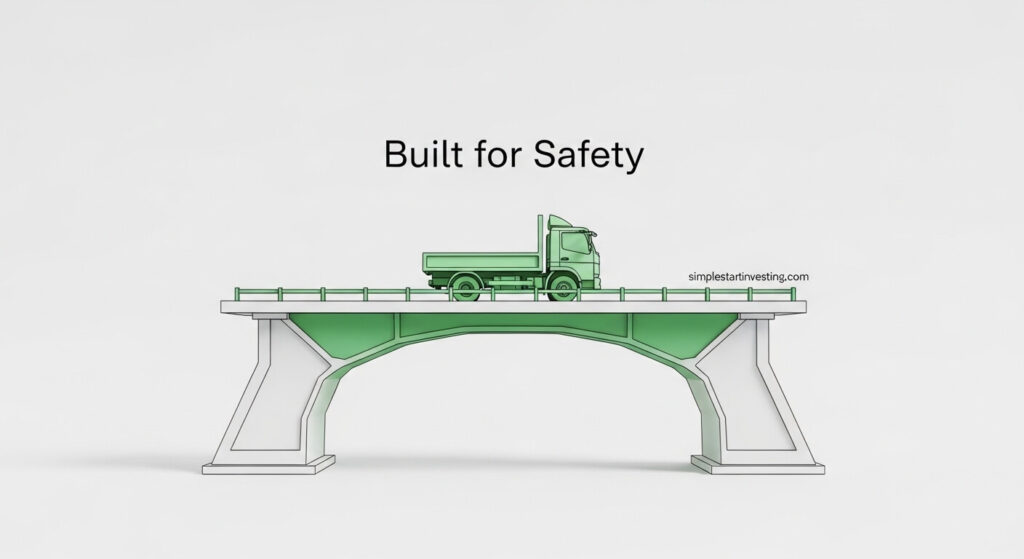
So, if the expected load is 10,000 pounds, they might build the bridge to support 30,000 pounds. They have built in a Margin of Safety. This way, if a 15,000-pound truck drives over it, the bridge doesn’t collapse.
As an investor, you are the engineer of your own portfolio. You shouldn’t buy an investment where everything has to go “perfectly” for you to make money. You want to buy investments where you can be a little bit wrong—or the world can be a little bit crazy—and you still come out okay.
Why Beginners Often Get This Wrong
Many people starting out in the US market confuse “cheap price” with “safety.” This is a dangerous mistake. Just because a stock is trading for 5 dollars doesn’t mean it has a Margin of Safety. In fact, that 5-dollar stock might actually be worth only 2 dollars, meaning you are overpaying.
Another common misunderstanding is thinking that a Margin of Safety is only for “value investors” like Warren Buffett. In reality, it applies to every part of your financial life. People often assume that if a company is famous—think of big names like Amazon or Apple—it is automatically safe.
But safety isn’t just about the quality of the company; it’s about the price you pay. If you pay 200 dollars for something that is only worth 150 dollars, it doesn’t matter how great the company is; you have no Margin of Safety. You have left yourself no room for error.
The Risks You Are Protecting Yourself Against
Why do we need this cushion anyway? Why can’t we just figure out exactly what a stock is worth and pay that? The problem is that the future is invisible. When you invest, you are essentially making a bet on what will happen next year, five years from now, or even a decade away.
Here are a few things that the Margin of Safety helps protect you from:
- Calculated Errors: You might think a company will grow its profits by 10 percent this year, but maybe they only grow by 2 percent because of a new law or a change in management.
- Market Volatility: Sometimes the entire stock market drops because of events that have nothing to do with your specific company. A safety margin keeps you from panicking when prices dip.
- Economic Downturns: If we enter a recession, almost every business will feel the pinch. A company bought at a steep discount is much more likely to survive your portfolio’s “stress test.”
- The “Unknown Unknowns”: These are the things we can’t see coming at all—global health crises, sudden shifts in technology, or natural disasters.
How to Apply This to Your Stock Portfolio
When you’re looking at stocks, the goal isn’t just to find a good business; it’s to find a good business at a great price. Let’s look at how this works in practice without getting bogged down in complicated math.
Imagine there is a large retail company, let’s call it “BigBox Co.” You’ve done your research and realized that if BigBox Co. closed its doors today and sold everything it owned—all its land, its inventory, and its trucks—it would be worth about 50 dollars per share.
If the stock market is currently pricing BigBox Co. at 48 dollars, you have almost no Margin of Safety. If the retail industry has a bad holiday season, the stock could easily drop to 40 dollars, and you’d be losing money.
However, if the market has a bad week and people start selling their shares in a panic, you might see BigBox Co. drop to 35 dollars. Now, you are buying 50 dollars’ worth of “stuff” for only 35 dollars. You have a 15-dollar cushion. Even if the company’s business slows down a little, you bought it so cheaply that your risk of losing money in the long run is significantly lower.
Applying the Margin of Safety to Real Estate
This concept is just as powerful in real estate as it is in stocks. Many new investors in the US get excited about “flipping” houses or buying rental properties, but they often cut their margins too thin.
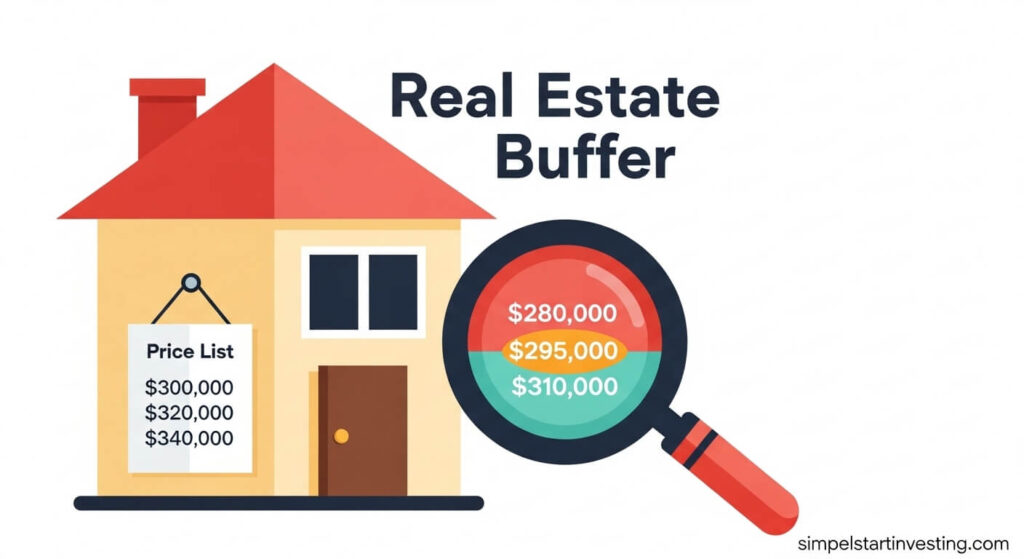
Let’s say you find a house for 250,000 dollars. You think you can spend 30,000 dollars on repairs and sell it for 320,000 dollars. On paper, that looks like a 40,000-dollar profit. But where is the Margin of Safety?
What if you pull up the carpet and find out the foundation is cracked? That could cost an extra 15,000 dollars. What if it takes six months to sell instead of two, and you have to pay the mortgage and taxes for that whole time? Suddenly, that 40,000-dollar profit disappears.
A smart investor would look for a property where the numbers work even if repairs cost twice as much as expected and the house sells for 10 percent less than planned. If you still make money in that “worst-case” scenario, you have a solid Margin of Safety.
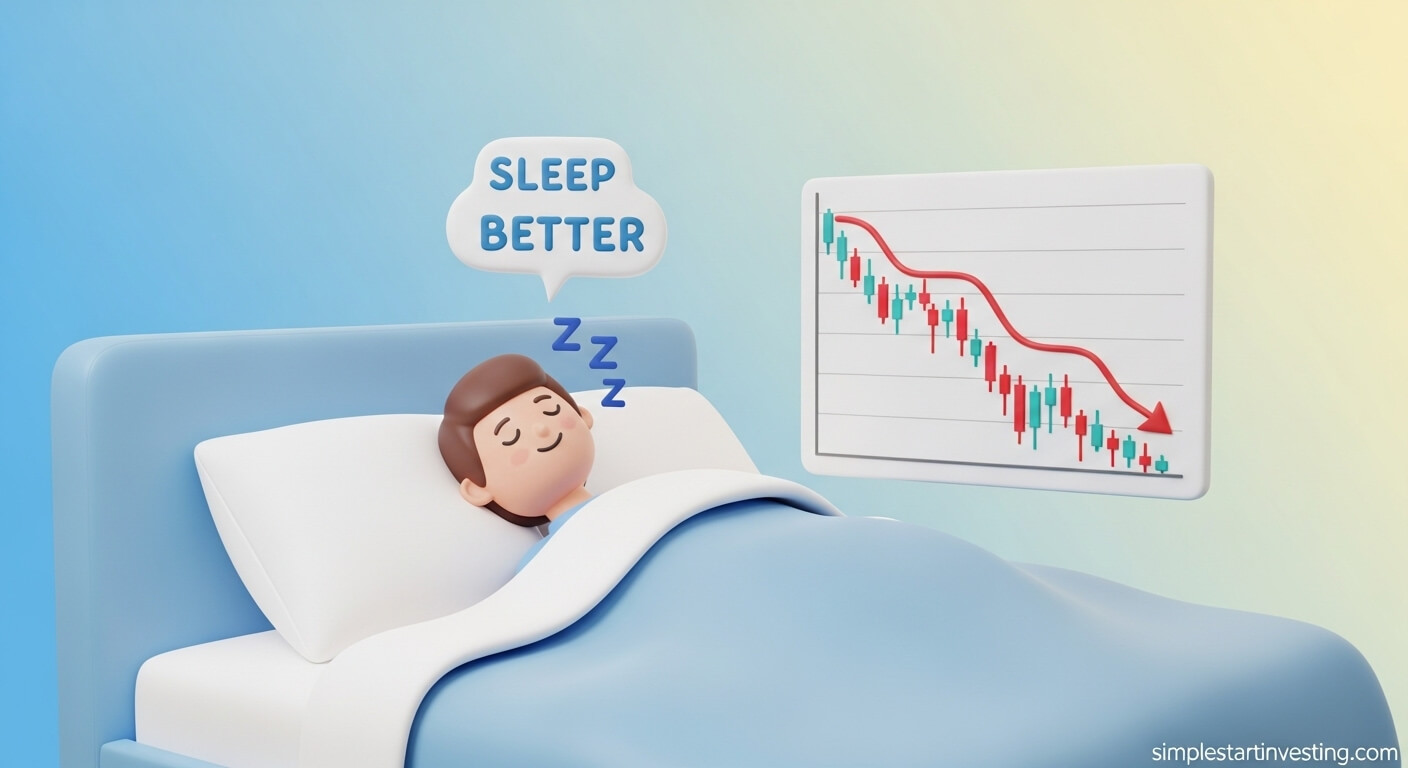
Psychological Benefits: Sleeping Better at Night
One of the most overlooked parts of the Margin of Safety is how it makes you feel. Investing can be stressful. Watching the numbers on your screen go up and down every day can lead to bad decisions. People often sell their investments at the worst possible time because they are scared.
When you know you bought an asset for much less than it is worth, you don’t fear market drops as much. In fact, you might even welcome them. If you bought that 50-dollar stock for 35 dollars, and it drops to 30 dollars, you don’t panic. You know the value is still there. You might even decide to buy more.

This “psychological buffer” prevents you from making emotional mistakes. It allows you to stay invested for the long term, which is where the real wealth is built.
How Much of a Margin Do You Need?
There is no “perfect” number, but most experienced investors look for a discount of at least 20 percent to 30 percent below what they think the value is.
If you are looking at a very stable, predictable business—like a utility company or a massive food producer—you might be okay with a smaller margin because there are fewer surprises. But if you are looking at a newer tech company or a volatile industry, you want a much larger Margin of Safety—perhaps 50 percent—to account for the higher risk.
Think of it like buying clothes on sale. If you buy a shirt at a 10 percent discount, it’s nice. If you buy it at a 50 percent discount, you feel great because even if it shrinks a little in the wash, you still got an incredible deal for the price.
Common Traps to Avoid
Even with the best intentions, it’s easy to fall into a few traps when trying to find your safety cushion.
1. The Value Trap
Sometimes a stock is “cheap” for a very good reason. Maybe the company’s product is becoming obsolete, or they have too much debt. If a company is dying, it doesn’t matter how much of a discount you think you’re getting; the “true value” is actually dropping every day. Don’t confuse a failing business with a discounted one.
2. Being Too Greedy
If you wait for a 50 percent Margin of Safety on every single investment, you might find yourself never buying anything. The market isn’t always going to give you “steal of a century” deals. You have to balance your need for safety with the reality of the market. This year, for example, many high-quality US stocks have stayed relatively expensive, making it harder to find huge margins.
3. Overestimating Your Skills
The biggest risk to a Margin of Safety is your own ego. If you think you are 100 percent sure about what a house or a stock is worth, you are likely being too optimistic. Always assume your “valuation” is a little bit off and add an extra layer of safety to compensate.
The Margin of Safety in Daily Life
You can start practicing this mindset today without even opening a brokerage account. Look at your monthly budget. If you earn 4,000 dollars a month and your bills are exactly 4,000 dollars, you have zero Margin of Safety. If your car breaks down or you have a medical bill, you are in trouble.
If you can lower your expenses to 3,200 dollars, you now have an 800-dollar Margin of Safety every single month. That buffer protects you from life’s “market volatility.” This is the foundation of all good personal finance.
Moving Toward Your First Safe Investment
As you start your journey, remember that the goal isn’t to be right all the time. The goal is to make sure that when you are wrong, it doesn’t ruin you.
Before you click “buy” on a stock or sign a contract on a property, ask yourself: “What is the most I think this is worth? And how much of a discount am I getting?” If the answer is “not much,” you might want to keep looking. There is always another opportunity around the corner.
The Margin of Safety is more than just a technique; it is a philosophy of humility. It is admitting that we don’t know everything and choosing to protect ourselves against that uncertainty. By insisting on this cushion, you aren’t being “scared”—you are being smart. You are ensuring that you stay in the game long enough to see your wealth grow.
Investing is a marathon, not a sprint. The people who reach the finish line aren’t necessarily the ones who ran the fastest; they are the ones who didn’t trip and fall out of the race because they ignored the obstacles in their path.
Disclaimer: This content is for educational purposes only and does not constitute financial advice. Market conditions change frequently, and you should always perform your own due diligence or consult with a certified professional before making any investment decisions.