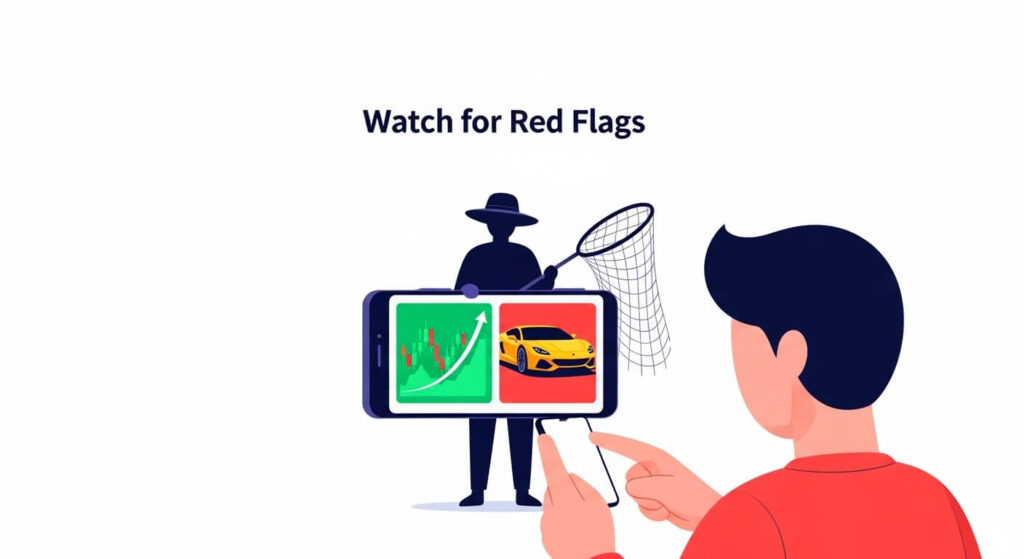
Scrolling through your social media feed this year, it is almost impossible to avoid them. You see a young person standing in front of a private jet or a neon-colored sports car, claiming they made millions by following a “secret” strategy. They tell you that you can do it too, and all you need is their specialized course or to join their private chat group. It looks exciting, and when you are just starting your journey to build wealth, it feels like a shortcut you cannot afford to miss.
However, behind the flashy lifestyle and the high-energy music, a dangerous trend is growing. The rise of “finfluencers”—financial influencers—has brought a wave of financial scams and questionable advice that targets beginners specifically. While some creators genuinely want to help, others are simply looking to profit from your lack of experience. Understanding how to distinguish a legitimate educator from a scammer is the first and most important investment you will ever make.
When you are new to the world of money, it is easy to feel overwhelmed by technical terms and market movements. Scammers count on that confusion. They use your desire for financial freedom to lead you into traps that can wipe out your savings in days. This guide will walk you through the psychology of these schemes, the red flags to watch for, and how you can find trustworthy information to grow your money safely.
What is a “Finfluencer” and Why Should You Be Careful?
The term finfluencer describes anyone who uses social media platforms like TikTok, Instagram, or YouTube to share financial advice. In many ways, this has been a positive shift. It has made topics like the stock market and retirement planning more accessible to people who felt ignored by traditional banks. You no longer need to sit in a stuffy office to learn about a Roth IRA or how to buy your first share of a company like Apple or Amazon.
The problem arises because social media rewards attention, not accuracy. A professional financial advisor is held to strict legal standards by the Securities and Exchange Commission (SEC). A finfluencer, on the other hand, is often just an individual with a camera and a high-speed internet connection. They do not necessarily need a degree, a license, or even a successful track record to tell you what to do with your money.
Many of these creators are paid by companies to promote specific apps or cryptocurrencies. If they do not clearly tell you they are being paid, they are violating federal rules. This year, the SEC has been cracking down on “paid endorsements,” but many scammers still operate in the shadows, hoping you won’t notice the difference between a helpful tip and a paid advertisement.
The Psychology of the “Get Rich Quick” Trap
Scammers are often better psychologists than they are investors. They know that most people feel a mix of two powerful emotions: fear and greed. You might fear that you are “falling behind” your peers or that you will never be able to afford a home. At the same time, you might feel a sense of greed or excitement when you see someone else making a lot of money very quickly.
To exploit these feelings, scammers use a tactic called “lifestyle marketing.” Instead of showing you a boring chart of long-term stock market growth, they show you the results of wealth: luxury watches, tropical vacations, and stacks of cash. They want you to associate their “advice” with that lifestyle.
They also create a sense of “false urgency.” You will hear phrases like “don’t miss out” or “only 10 spots left in my inner circle.” By making you feel like you have to act immediately, they prevent you from taking the time to do your own research or talk to a trusted professional. Real, sustainable investing is almost never an emergency. In fact, if someone is rushing you to move your money, that is your first sign to walk away.
Identifying the Red Flags of Financial Scams
If you want to protect your hard-earned money, you need to develop a “scam-detecting” radar. Most financial scams follow a predictable pattern. If you see even one of these red flags, you should proceed with extreme caution.
Guaranteed High Returns with No Risk
This is the biggest lie in the financial world. There is a fundamental rule in investing: risk and return are always linked. If you want a chance at a higher profit, you must accept a higher risk that you could lose your money.

If someone tells you that you can earn 10% every single month with “zero risk,” they are lying. For perspective, the historical average return of the US stock market is roughly 10% per year, not per month. To explain this simply, if you invested 1,000 dollars and someone promised you 10% every month, you would have over 3,000 dollars by the end of one year. If that were possible and safe, everyone in the world would be doing it, and the person telling you wouldn’t need to sell you a 50-dollar course to make a living.
Vague or Secret “Proprietary” Strategies
Legitimate investing is actually quite simple and transparent. It involves buying pieces of companies, lending money to the government (bonds), or owning real estate. When a finfluencer claims they have a “secret algorithm” or a “hidden loophole” that the banks don’t want you to know about, they are usually just using buzzwords to sound smart.
If an expert cannot explain how they make money in a way that a teenager could understand, they probably aren’t making money the way they say they are. Real experts are happy to explain the “why” and “how” behind their moves. Scammers hide behind complexity to make you feel like you need them to navigate the market.
Pay-to-Play Community Groups
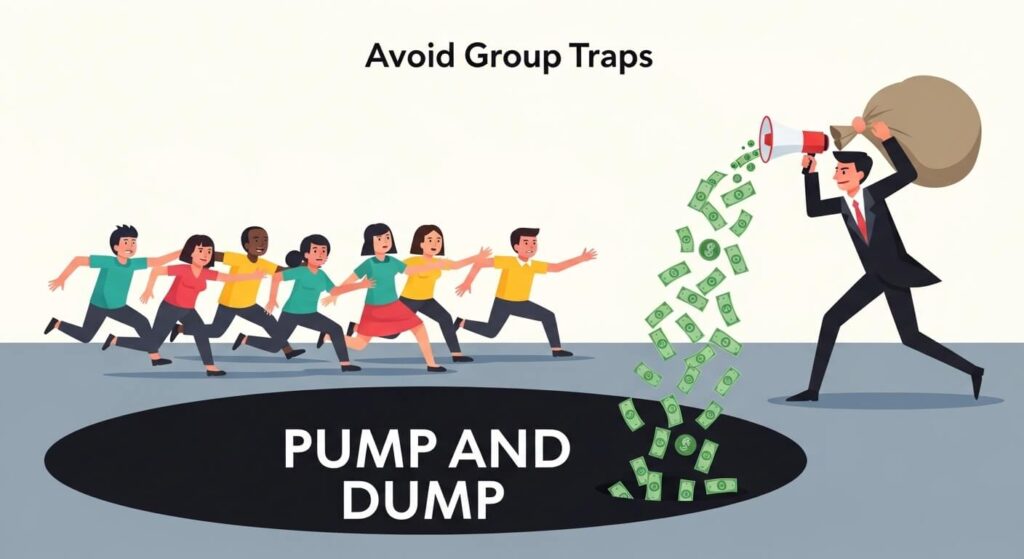
Have you ever seen an invitation to a private Discord or Telegram group where “trade alerts” are shared? These are often breeding grounds for scams. You pay a monthly fee (sometimes hundreds of dollars) to receive signals on when to buy or sell a specific stock or crypto coin.
The danger here is that the person running the group often buys the asset first. Once they tell their thousands of followers to buy, the price goes up because of the sudden demand. The leader then sells their shares for a profit, the price crashes, and the followers are left holding an asset that is worth much less than they paid for it. This is a classic “pump and dump” scheme, and it is highly illegal.
Common Types of Online Schemes to Watch For
The internet has given old scams a new, digital makeover. This year, we are seeing three main types of schemes targeting beginners on social media.
The “Guru” Course Trap
Not all courses are bad, but many are “hollow.” A creator will show off a fake bank balance and promise to teach you their “millionaire secrets” for a one-time payment of 997 dollars. Usually, the information in these courses is basic stuff you could find for free on a library website or a government portal like SEC.gov.
The real business of these “gurus” isn’t investing; it is selling the course. They make their money from your tuition, not from the stock market. If a person’s primary source of income is telling other people how to be rich, you should ask yourself why they aren’t busy actually being rich using their own “secrets.”
Crypto “Rug Pulls” and Fake Giveaways
The world of cryptocurrency is especially vulnerable to financial scams because it is less regulated than the traditional stock market. You might see a “celebrity” (often a hacked account or an AI-generated deepfake) promoting a new coin or a “giveaway” where if you send them one Bitcoin, they will send you two back.
Let’s be clear: nobody is giving away free money on the internet. In a “rug pull,” developers create a new digital coin, build up massive hype, and once enough people have invested their money, the developers disappear with all the funds, leaving the investors with a coin worth zero.
Fake Trading Apps and Websites
Scammers can now build professional-looking websites and apps that look just like Fidelity or Vanguard. They will encourage you to “deposit” your money to start trading. The app might even show fake profits to encourage you to add more money. However, when you try to withdraw your funds, the app will suddenly “malfunction,” or the company will demand a “withdrawal tax” that you must pay first. Once you pay that tax, they disappear. Always ensure you are using a well-known, regulated brokerage that has been around for decades.
How to Verify a Source and Find Real Advice
Now that you know what to avoid, how do you find information you can actually trust? The good news is that the best information is often the most boring—and it is usually free.
Check for a “Fiduciary” Duty
In the United States, a fiduciary is a financial professional who is legally required to act in your best interest. Not all financial advisors are fiduciaries. Some are just “brokers” who get a commission for selling you specific products. If you are going to pay someone for advice, ask them directly: “Are you a fiduciary?” If they hesitate or say “no,” keep looking.
Use Official Government Resources
If you want to know about taxes, go to IRS.gov. If you want to learn about how the stock market works, visit Investor.gov, which is run by the SEC. These sites are designed to protect you. They have lists of common scams, tools to check if an advisor is registered, and clear explanations of financial terms without the “hype.”
Look for Real Credentials
While a degree isn’t everything, certain certifications carry weight because they require hundreds of hours of study and strict ethical standards. Look for titles like Certified Financial Planner (CFP) or Chartered Financial Analyst (CFA). If a finfluencer’s only credential is “I have 1 million followers,” they are not a financial expert; they are an entertainer.
What to Do if You Suspect a Scam
If you encounter something that feels wrong, or if you have already lost money, do not be ashamed. Scammers are professionals at what they do, and even smart people can get caught. Taking action quickly is the best way to protect yourself and others.
- Stop sending money immediately. Scammers will often try to “double down” by telling you that you need to pay more to “unlock” your previous investment. This is a lie. Cut your losses and stop all communication.
- Contact your bank. If you used a credit card or a bank transfer, tell them the transaction was fraudulent. They may be able to freeze the funds or prevent further unauthorized charges.
- Report it to the authorities. In the US, you should report financial fraud to the Federal Trade Commission (FTC) at ReportFraud.ftc.gov and to the SEC. Reporting helps these agencies track down the scammers and shut down their websites before they hurt more people.
- Change your passwords. If you gave a suspicious website any personal information or logged in with a common password, change your security settings on all your important accounts (email, bank, social media) right away.
Building Wealth the Right Way (No Shortcuts Required)
The most important lesson for any beginner is this: building wealth is a marathon, not a sprint. The “boring” way—saving a portion of your income, investing in a diversified set of low-cost index funds, and letting time do the work—is the most proven path to financial success.
It doesn’t happen overnight. If you start with 100 dollars and it grows by a steady 7% or 8% each year, it will take time to see massive results. But that growth is based on the real earnings of real companies like Walmart or Costco, not on a “secret” or a “scheme.”

When you see a finfluencer promising a shortcut, remember that if a shortcut actually worked, it would eventually become the “main road.” The reason these schemes stay on the fringes of the internet is that they are designed to benefit the person at the top, not you. Stay curious, stay skeptical, and always prioritize the safety of your principal investment over the dream of an impossible return.
Disclaimer: This content is for educational purposes only and does not constitute financial, legal, or tax advice. Market conditions change frequently, and you should always verify current regulations with official sources like the SEC or IRS before making financial decisions.