If you have been keeping an eye on your bank account lately, you might have noticed a frustrating trend. Traditional savings accounts often pay very little interest, while the “high-yield” options sometimes come with hoops to jump through. You know there are better ways to grow your money, like Certificates of Deposit (CDs), but there is a major catch that stops most beginners in their tracks: liquidity.
The idea of locking your hard-earned cash away for three, four, or five years just to get a slightly better interest rate can feel claustrophobic. What if your car breaks down? What if you find a better investment opportunity next year? This is where the CD Ladders strategy comes into play. It is a classic financial move that allows you to capture those higher interest rates while ensuring a portion of your money becomes available to you at regular intervals.
In this guide, we are going to break down exactly how CD ladders work, why they are a favorite for conservative investors, and how you can build one yourself without needing a degree in finance.
What Exactly is a CD Anyway?
Before we climb the ladder, we need to understand the rungs. A Certificate of Deposit, or CD, is a type of savings account that holds a fixed amount of money for a fixed period of time—such as six months, one year, or five years. In exchange for promising to leave your money alone, the bank agrees to pay you a higher interest rate than a standard savings account.
Think of it like a “patience premium.” The longer you promise to stay, the more the bank usually pays. When the time is up, known as the “maturity date,” you get your initial deposit back plus all the interest you earned. However, if you try to take the money out before that date, the bank will hit you with an early withdrawal penalty, which can sometimes eat up all the interest you earned and even a tiny bit of your original deposit.
For a beginner, this “all-or-nothing” approach is the biggest barrier. If you put 10,000 dollars into a five-year CD, that money is effectively behind glass for half a decade. CD Ladders solve this by breaking that big chunk of money into smaller pieces with different “release dates.”
The Logic Behind the CD Ladder
Imagine you have a physical ladder. Each rung represents a point in time when a portion of your money becomes available. Instead of putting all your money into one long-term CD, you spread it across several CDs that mature at different times.
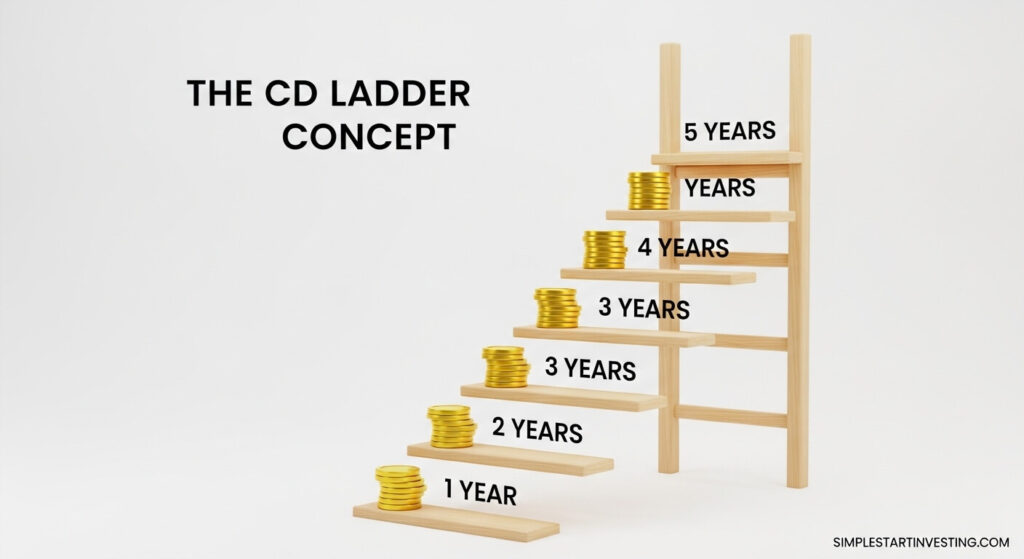
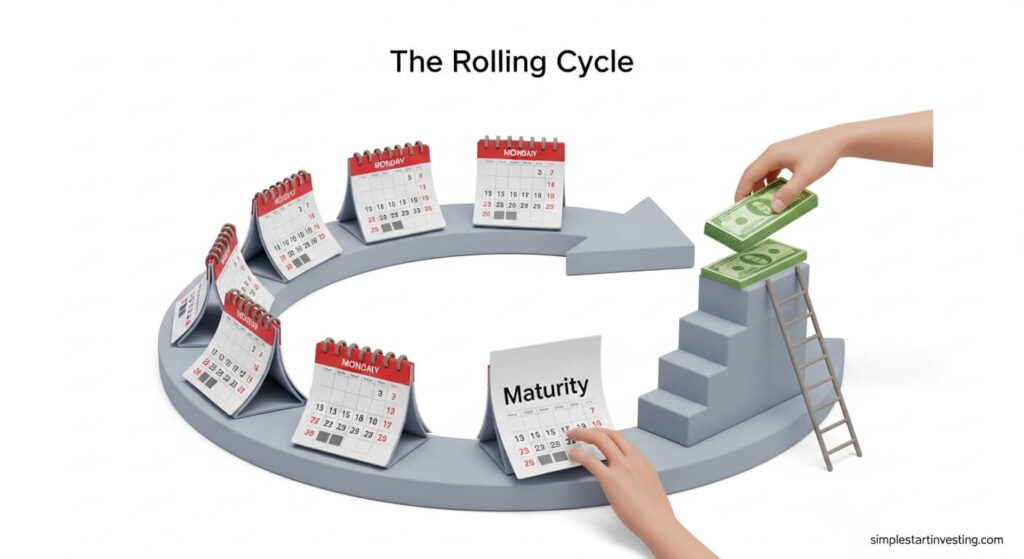
By doing this, you aren’t waiting five years for everything to unlock. Instead, you might have money becoming available every year. This creates a “rolling” effect. As each “rung” matures, you have a choice: you can take the cash if you need it, or you can reinvest it into a new long-term CD at the top of the ladder to keep the cycle going.
This strategy is about balance. You get the higher rates associated with long-term CDs, but you maintain the flexibility of a short-term saver. It is one of the most effective ways to manage “interest rate risk”—the danger that you lock your money in at a low rate just before rates start to go up.
Why Beginners Often Get It Wrong
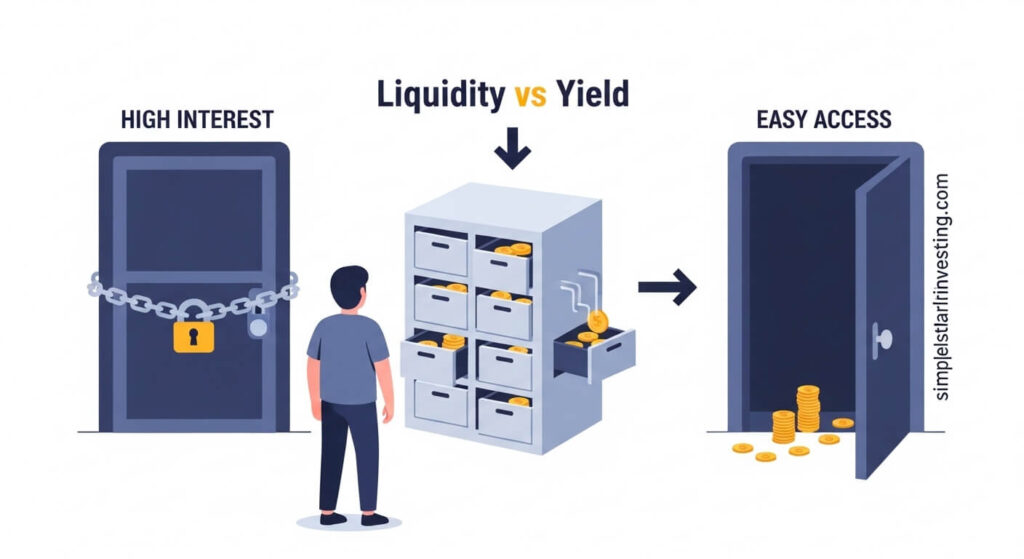
One of the most common mistakes beginners make is thinking they have to choose between “fast access” and “high rates.” They often park all their cash in a basic savings account earning 0.10% because they are afraid of the commitment. On the flip side, some beginners dive headfirst into a single 5-year CD because the rate looks amazing, only to realize six months later that they need that money for an emergency.
Another misconception is that you need a massive amount of wealth to start. Many people believe CD Ladders are for “rich people” or retirees. The truth is, you can start a ladder with a few thousand dollars—or even less, depending on the minimum deposit requirements of your bank.
Finally, there is the “market timing” trap. Beginners often wait for interest rates to “hit the ceiling” before they open a CD. The problem is, no one actually knows when that will happen. By waiting, you are earning zero interest on the sidelines. A ladder removes the need to guess the future because you are always buying into the current rate environment.
How to Build Your First CD Ladder: A Step-by-Step Breakdown
Let’s walk through a simple example of building a 5-year ladder. We will use a total of 5,000 dollars to make the math easy to follow.

Instead of putting all 5,000 dollars into one account, you would open five separate CDs of 1,000 dollars each:
- CD Number 1: 1,000 dollars for a 1-year term.
- CD Number 2: 1,000 dollars for a 2-year term.
- CD Number 3: 1,000 dollars for a 3-year term.
- CD Number 4: 1,000 dollars for a 4-year term.
- CD Number 5: 1,000 dollars for a 5-year term.
At the end of the first year, your 1-year CD matures. You now have your 1,000 dollars back plus whatever interest it earned. If you don’t need the cash, you take that 1,000 dollars and open a new 5-year CD.
Why a 5-year one? Because now, your original 2-year CD only has one year left. Your 3-year CD has two years left, and so on. By always reinvesting the maturing CD into a new 5-year term, you eventually reach a point where you have a 5-year CD maturing every single year. You are essentially getting 5-year interest rates with 1-year liquidity.
The Secret Benefit: Protection Against Interest Rate Changes
The economy is constantly moving. Sometimes the Federal Reserve raises interest rates to fight inflation; other times, they lower them to stimulate the economy. If you put all your money into one CD today and rates double next month, you are stuck with your lower rate.
With CD Ladders, you are hedged. If rates go up, you have a CD maturing soon that you can reinvest at those newer, higher rates. If rates go down, you don’t have to worry as much because you already have several long-term CDs locked in at the older, higher rates.
It is a “win-win” for your peace of mind. You stop worrying about what the news says about interest rates because you know you are covered regardless of which direction the wind blows.
Is My Money Safe in a CD?
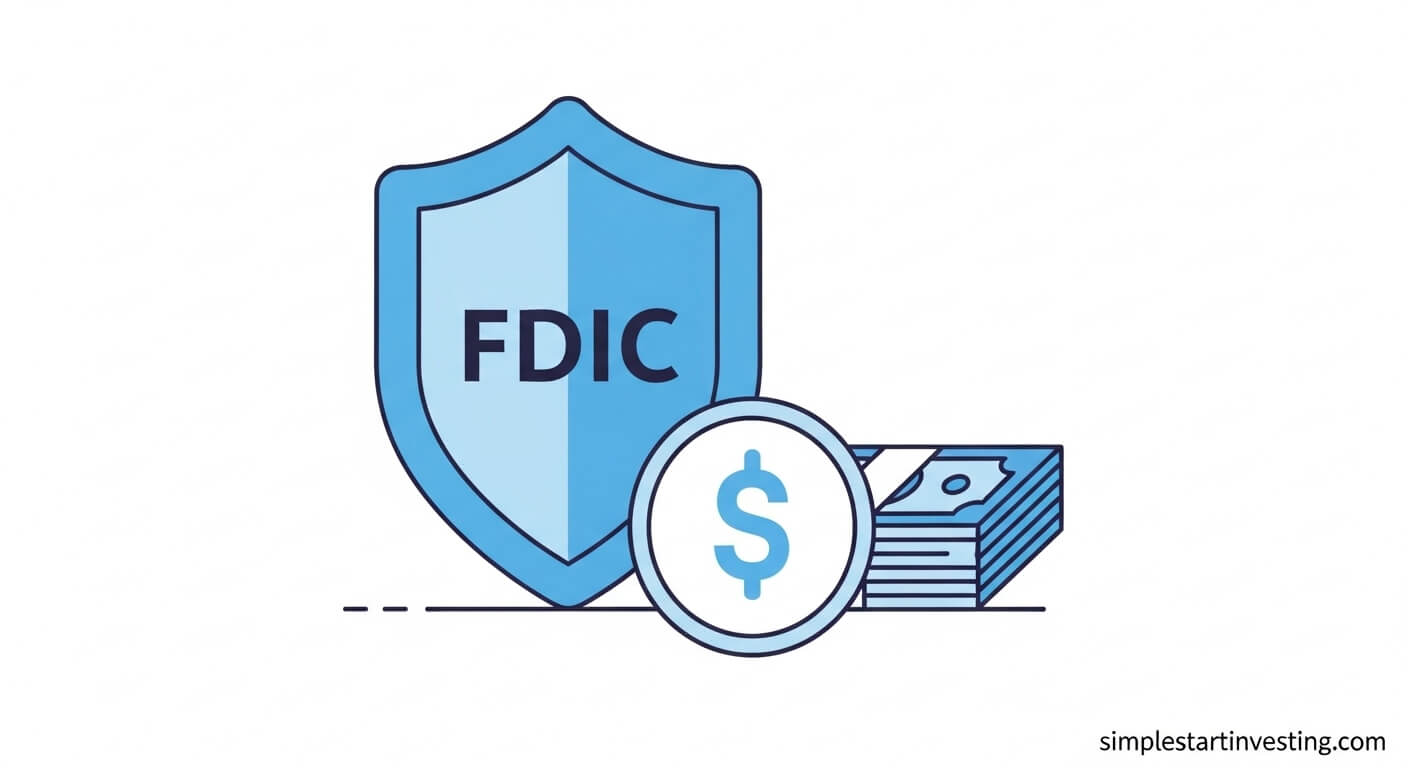
For a beginner, safety is usually the number one priority. The great news is that CDs are among the safest investments on the planet. As long as you open your CD at a bank insured by the Federal Deposit Insurance Corporation (FDIC) or a credit union insured by the National Credit Union Administration (NCUA), your money is protected.
In the United States, the standard insurance amount is 250,000 dollars per depositor, per insured bank, for each account ownership category. This means that even if the bank goes out of business, the government ensures you get your money back, up to that limit. This is why many people use CD Ladders for their “sleep at night” money—cash they absolutely cannot afford to lose, like a house down payment or a portion of their retirement fund.
Comparing CDs to Other Options
You might be wondering: “Why not just use a High-Yield Savings Account (HYSA)?”
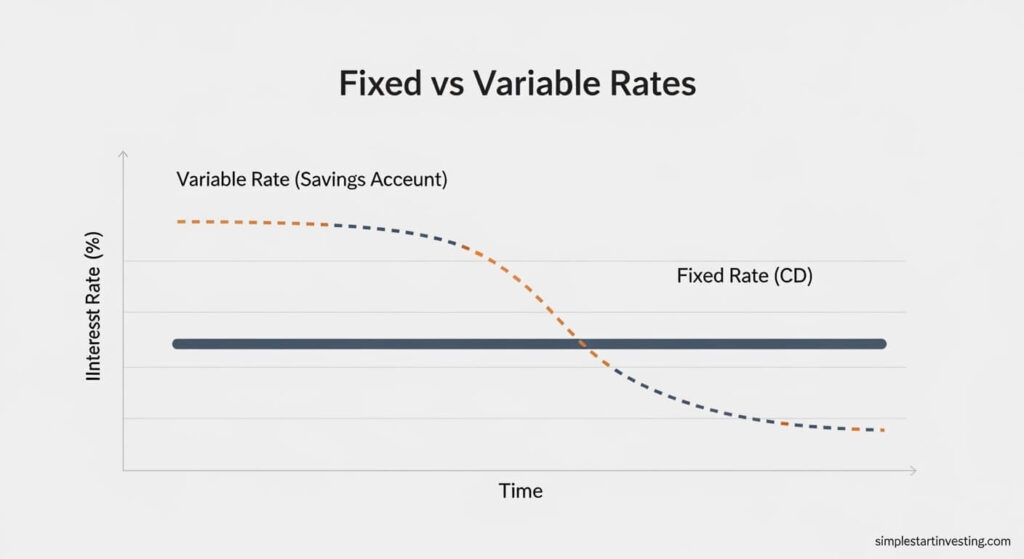
An HYSA is great because you can take your money out at any time. However, the interest rate on an HYSA is “variable.” The bank can change it tomorrow without warning. If the economy shifts and rates drop, your HYSA earnings will drop instantly.
A CD, however, gives you a “fixed” rate. When you sign the paperwork for CD Ladders, the bank is making a legal promise to pay you that specific rate for the entire term, no matter what happens to the economy. This predictability is a massive advantage for people who like to plan their future budget down to the cent.
There are also Treasury Bills (T-Bills). These are similar to CDs but are issued by the U.S. Treasury. They are also very safe and often exempt from state and local taxes. However, for a total beginner, opening a CD at your local bank or an online bank is often much simpler and more accessible.
When a CD Ladder Might NOT Be Right for You
Despite all the benefits, this strategy isn’t a magic wand. There are three main scenarios where you might want to look elsewhere:
- Your Emergency Fund: Your “in case of emergency” money—the cash you need if you lose your job or have a medical bill—should generally stay in a liquid savings account. While a ladder provides regular access, it doesn’t provide instant access to all your funds without a penalty.
- Hyper-Growth Goals: If you are in your 20s and looking to turn 1,000 dollars into 100,000 dollars, a CD isn’t going to get you there. CDs are for wealth preservation and steady growth, not aggressive wealth building. For long-term growth over decades, the stock market is usually the primary engine.
- High Inflation Environments: If inflation is running at 7% and your CD is paying 4%, you are technically losing “purchasing power.” Your balance is going up, but the stuff you want to buy is getting expensive even faster.
The Psychology of the “Locked” Account
There is a hidden psychological benefit to CD Ladders that financial experts don’t talk about enough: it protects you from yourself.
In a standard savings account, it is very easy to “borrow” 200 dollars for a new pair of shoes or a fancy dinner, promising yourself you will pay it back later. With a CD, the threat of that early withdrawal penalty acts as a mental barrier. It forces you to treat that money as “unavailable,” which helps your savings grow undisturbed. For many beginners, this discipline is exactly what they need to finally build a substantial nest egg.
Customizing Your Rungs
You don’t have to follow the 5-year rule. You can build a ladder that fits your specific life goals.
- The “Short Ladder”: Use 3-month, 6-month, 9-month, and 12-month CDs. This is great if you think you might need the money for a house down payment in a year.
- The “Long Ladder”: Use 2-year, 4-year, 6-year, 8-year, and 10-year CDs. This is more common for retirees who want a guaranteed “paycheck” every two years.
- The “Mini Ladder”: If you only have 500 dollars, look for banks with low minimums and maybe just start with two rungs: a 6-month and a 1-year CD.
The beauty of CD Ladders is that they are modular. You can start small and add more rungs as you save more money.
Dealing with Taxes
It is important to remember that the IRS views the interest you earn from your CDs as “taxable income.” Even if you don’t withdraw the money and let it compound inside the CD, the bank will send you a form (usually a 1099-INT) at the end of the year showing how much interest you earned.
You will typically owe federal income tax on that interest at your normal tax rate. Make sure you set aside a small amount of your earnings to cover this, so you aren’t surprised during tax season. If you hold your CDs inside a retirement account like an IRA, the tax rules are different, but for a standard taxable brokerage or bank account, uncle sam will want his cut of the interest.
Finding the Best Rates
Don’t just walk into the bank on the corner and open a CD. Big “brick-and-mortar” banks often have very low rates because they have high costs (like paying for thousands of physical buildings).
Online banks often offer significantly higher rates for CD Ladders. Because they don’t have the overhead of physical branches, they pass those savings on to you in the form of better interest. Before you commit, spend twenty minutes using a comparison tool to see which FDIC-insured banks are offering the top rates for the terms you want. A difference of 1% might not sound like much, but on a 10,000 dollar deposit over five years, it adds up to hundreds of dollars in “free” money.
Summary of the Strategy
Building a CD ladder is one of those rare financial strategies that is both simple and incredibly effective. It removes the stress of “locking” your money away by ensuring that a fresh batch of cash is always just around the corner. It protects you from the volatility of interest rates and provides a guaranteed return that is backed by the full faith of the U.S. government.
If you are a beginner who is tired of earning pennies in a basic savings account but isn’t ready to gamble in the stock market, CD Ladders provide the perfect middle ground. It is a way to tell the bank, “I’ll give you my patience, and you give me a better rate,” all while keeping the keys to your financial house within reach.
Start by looking at your total savings. Take a small portion—perhaps 20%—and try building a simple 1-year mini-ladder. Once you see the interest hitting your account and realize how easy it is to manage, you can decide if you want to climb higher.
Disclaimer: This content is for educational purposes only and does not constitute financial advice. Interest rates and banking regulations are subject to change, and you should always verify the current terms with your financial institution before opening an account.