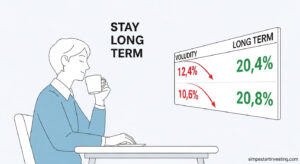

Imagine you just received a tax refund, a work bonus, or perhaps a small inheritance of 10,000 dollars. You know that leaving it in a standard savings account might mean losing purchasing power to inflation, so you decide it is time to put that money into the stock market. But then, a wave of hesitation hits you.
The market has been moving up and down lately. You start wondering if you should put all 10,000 dollars into an index fund today, or if you should break it up into smaller chunks of 1,000 dollars over the next ten months. This is the classic debate between Lump Sum Investing and Dollar-Cost Averaging (DCA).
Choosing between these two paths is one of the first major hurdles every new investor faces. It is not just a question of math; it is a question of your nerves, your goals, and how you handle the “what if” scenarios that keep you up at night. In this guide, we will break down both strategies so you can decide which one fits your life right now.

What Exactly is Lump Sum Investing?
Lump Sum Investing is exactly what it sounds like. You take all the money you have available for investment and put it into the market at once. If you have 5,000 dollars, you buy your shares on Monday morning, and you are done. Your money is now fully “at work.”
The logic behind this approach is based on a simple truth of the stock market: historically, markets tend to go up more often than they go down. By putting your money in immediately, you are maximizing the amount of time your money spends in the market. In the world of finance, we often say that “time in the market beats timing the market.”
However, for a beginner, this can feel like jumping into the deep end of a pool without knowing how cold the water is. If you invest your entire 10,000 dollars on Tuesday and the market drops by 5% on Wednesday, you might feel an immediate sense of “buyer’s remorse.” Even though the market might recover and grow over the next decade, that initial sting is what stops many people from choosing this method.
What is Dollar-Cost Averaging (DCA)?
Dollar-Cost Averaging (DCA) is a more gradual approach. Instead of throwing all your money in at once, you divide your total sum into equal amounts and invest them at regular intervals—such as once a week or once a month—regardless of what the stock price is doing.
For example, if you have 1,200 dollars to invest, you might decide to invest 100 dollars on the first day of every month for a full year. Some months the stock price will be high, so your 100 dollars will buy fewer shares. Other months the price will be low, so your 100 dollars will buy more shares.
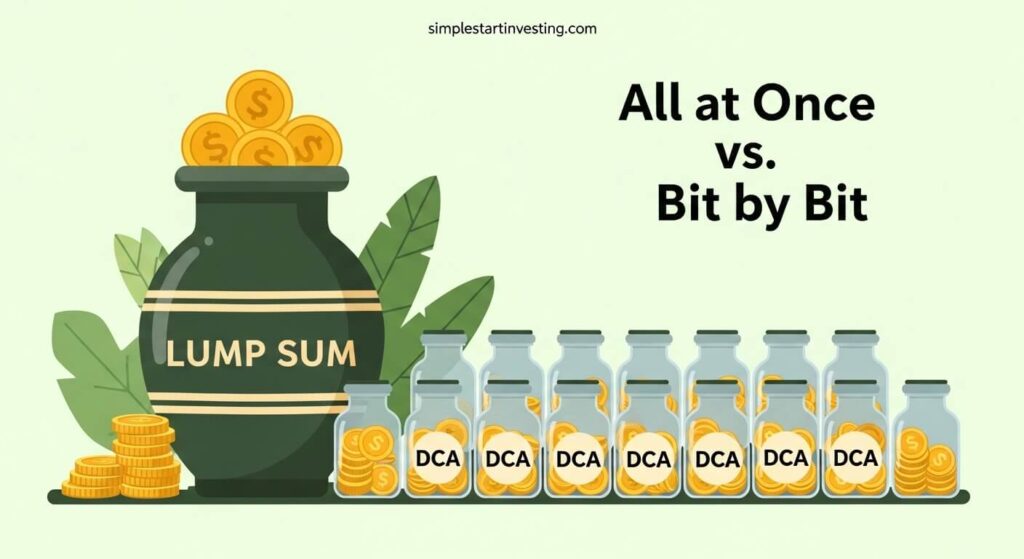
Over time, this strategy “averages out” the price you pay. It takes the pressure off trying to find the “perfect” time to buy. For many beginners, DCA acts like a psychological safety net. It allows you to get started without the fear of making a massive mistake on day one.
The Psychological Battle: Fear vs. Logic
When we look at historical data, Lump Sum Investing often comes out on top. Studies by major financial institutions like Vanguard have shown that about two-thirds of the time, investing all at once results in higher returns than spreading it out. This is because, as we mentioned, the market trends upward over the long term. The longer your money is invested, the more it can grow.
But here is the catch: we are humans, not calculators.
If you are a beginner, the biggest risk you face isn’t necessarily a 2% difference in returns over twenty years. The biggest risk is emotional panic. If you invest a large lump sum and the market immediately crashes, you might get scared and sell everything to “save” what is left. That is the worst possible outcome because it turns a “paper loss” into a real, permanent loss.

DCA helps prevent this panic. If the market drops after you make your first small monthly investment, you might actually feel happy because your next 100 dollars will buy even more shares at a “discount.” It turns a scary market drop into a buying opportunity.
Breaking Down the Pros and Cons of Each Strategy
To truly understand which method is right for you, we need to look at the trade-offs. Neither strategy is “perfect” for everyone, but one is usually “better” for your specific personality and financial situation.
The Benefits of Going All-In (Lump Sum)
The primary advantage of Lump Sum investing is efficiency. You aren’t leaving your cash sitting on the sidelines in a low-interest bank account. You are giving your money the maximum possible time to benefit from compound growth and dividends.
Another benefit is simplicity. You do the research, you make the purchase, and you move on with your life. You don’t have to remember to log into your account every month to make a new trade. It is a “one and done” approach that appeals to people who want to simplify their financial tasks.
The Risks of the Lump Sum Approach
The main risk is timing. If you happen to invest your entire life savings right before a major market downturn, it could take months or even years just to get back to your starting point. While the math says you should stay the course, the emotional toll of seeing a “minus 20%” on your account balance can be devastating for someone who is just starting out.
The Benefits of the Slow and Steady Path (DCA)
DCA is the king of risk mitigation. It protects you against “Sequence of Returns Risk”—the danger of the market performing poorly right at the beginning of your investment journey. By spreading out your buys, you ensure that you didn’t accidentally put all your money in at the absolute peak of a market bubble.
DCA also builds a habit. For most people, DCA isn’t just a strategy for a windfall; it is how they invest their paycheck. By setting up an automatic transfer of 200 dollars every payday into an investment account, you are practicing DCA without even thinking about it. This builds the “investing muscle” and makes wealth creation an automatic part of your life.
The Risks of the DCA Approach
The main downside of DCA is opportunity cost. If the market goes on a “bull run” (meaning prices keep going up and up) while you are slowly drip-feeding your money in, you will end up buying shares at higher and higher prices. In this scenario, you would have been much better off buying everything at the start when prices were lower.
Furthermore, if you are doing DCA manually and the market gets very volatile, you might be tempted to “skip” a month because you are scared. This defeats the whole purpose of the strategy, which relies on consistency regardless of market conditions.
A Real-World Example: Buying Costco (COST)
Let’s look at a hypothetical scenario to see how this works in real life. Imagine you want to invest in a stable, well-known company like Costco.

Scenario A (Lump Sum): You have 1,200 dollars. On January 1st, the price of one share is 100 dollars. You spend all 1,200 dollars and buy 12 shares. You now own 12 shares of Costco, and you are finished for the year.
Scenario B (DCA): You have the same 1,200 dollars, but you decide to invest 400 dollars every three months.
- In January, the price is 100 dollars. You spend 400 dollars and buy 4 shares.
- In April, the market has dipped, and the price is now 80 dollars. You spend 400 dollars and buy 5 shares.
- In July, the market has recovered slightly, and the price is 100 dollars again. You spend 400 dollars and buy 4 shares.
In this DCA example, you ended up with 13 shares total (4 + 5 + 4) for your 1,200 dollars. Because the price dropped in the middle of the year, your DCA strategy actually allowed you to buy more shares than the Lump Sum strategy did.
However, if the price had gone from 100 dollars to 120 dollars to 140 dollars, the DCA person would have ended up with fewer than 12 shares. You cannot predict the future, so you have to choose the strategy that makes you feel most comfortable with the uncertainty.
Common Misconceptions for Beginners
Many new investors think DCA is a “magic shield” that prevents losses. It is not. If the stock you buy goes to zero, it doesn’t matter if you bought it all at once or over ten years—you still lost your money. DCA is a strategy for how you buy, not what you buy. You still need to choose high-quality investments like broad-market index funds or stable companies.
Another misconception is that you have to choose one or the other. In reality, many people use a hybrid approach. If you have a large amount of money, you might put 50% in right now as a lump sum, and then spread the remaining 50% out over the next six months. This gives you a “foot in the door” while still keeping some cash on hand to take advantage of potential price drops.
How to Decide: Which One Are You?
Choosing between these two comes down to your current financial health and your personality.
Choose Lump Sum if:
- You have a long time horizon (10+ years) before you need the money.
- You are comfortable with market swings and won’t panic if your balance drops next week.
- The money is currently sitting in a bank account earning almost nothing.
- You want the highest statistical probability of the best return.
Choose DCA if:
- You are nervous about the current state of the economy or the market.
- You have a “low risk tolerance” and want to sleep better at night.
- You don’t have a big pile of cash yet and are investing out of your monthly paycheck (this is the most common form of DCA).
- You are prone to “Analysis Paralysis” and need a system that forces you to take action without overthinking.
The Role of Automation
Regardless of which strategy you choose, automation is your best friend. Most modern brokerage accounts in the U.S. allow you to set up recurring investments.
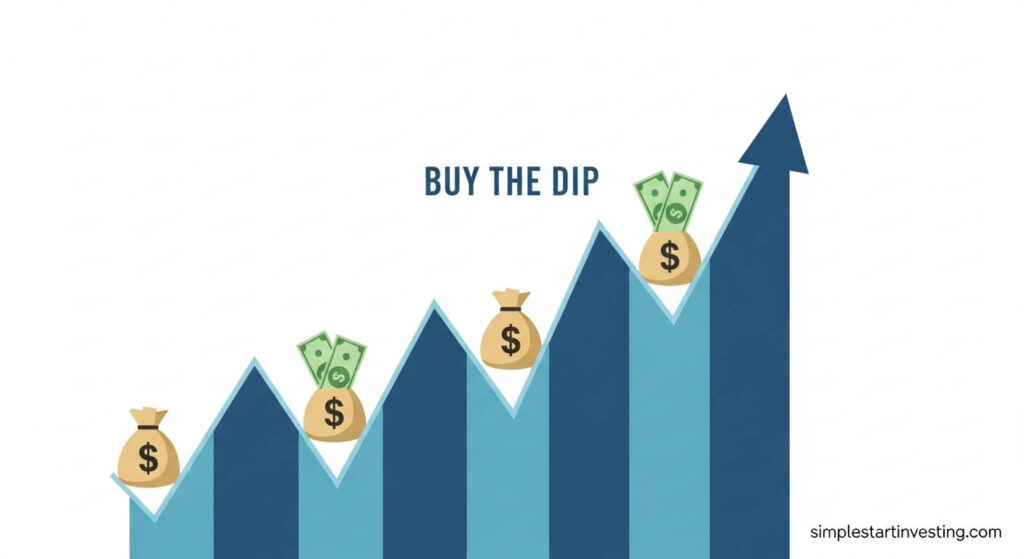
If you choose DCA, set it to “auto-pilot.” This removes the “human element.” If you have to manually click “Buy” every month, you might hesitate when the news headlines are scary. If the computer does it for you at 9:00 AM on the 1st of every month, the plan succeeds because your emotions are kept out of the equation.
The Cost of Waiting Too Long
The biggest mistake you can make isn’t choosing DCA over Lump Sum or vice-versa. The biggest mistake is waiting on the sidelines because you are too afraid to pick a strategy.
If you spend two years trying to figure out if you should do a Lump Sum or DCA, you have lost two years of potential growth. In the long run, being “in” the market is far more important than the specific method you used to get there.
Think of it like getting into a cold lake. Some people like to run and dive in all at once (Lump Sum). It is a shock to the system, but they are swimming and having fun within seconds. Others prefer to walk in slowly, letting their toes, then ankles, then knees get used to the temperature (DCA). It takes longer to get fully submerged, but it is much less of a shock.
Neither way is “wrong”—the only wrong way is to stay on the hot sand and never get in the water at all.
Summary of the “All at Once vs. Bit by Bit” Debate
For most people starting out, Dollar-Cost Averaging is the path of least resistance. It turns investing into a boring, routine habit rather than a high-stakes gamble. It teaches you that market drops are not things to be feared, but opportunities to buy more of the things you want at a lower price.
On the other hand, if you are mathematically minded and can stomach the volatility, Lump Sum investing is the “power move.” It puts your capital to work immediately and historically offers a slight edge in total returns.

Assess your own heart and your own bank account. If that 10,000 dollars represents every penny you have, DCA might give you the peace of mind you need. If it is just a small portion of your wealth, a Lump Sum might be the most efficient way to grow it.
Start small if you must, but start. The power of compounding works best for those who show up early and stay for the long haul.
Disclaimer: This content is for educational purposes only and does not constitute financial, legal, or tax advice. Market conditions change frequently; please consult with a qualified professional or perform your own due diligence before making any investment decisions.