Have you ever noticed that the entire financial world seems to hold its breath a few times a year? News anchors start talking about “FOMC meetings,” and stock prices on your phone screen start flickering wildly. This happens because of one powerful entity: the Federal Reserve, often simply called “the Fed.”
If you are new to investing, understanding what the Fed is might feel like trying to learn a secret language. But here is the truth: the Fed is the most important player in the U.S. economy. Their decisions on interest rates act like a thermostat for the entire stock market, turning the heat up or cooling things down.
In this guide, we will break down exactly what the Fed does, how their decisions impact companies like Apple or Amazon, and why you don’t need a finance degree to understand how interest rates affect your wallet.
Who Exactly is the Federal Reserve?
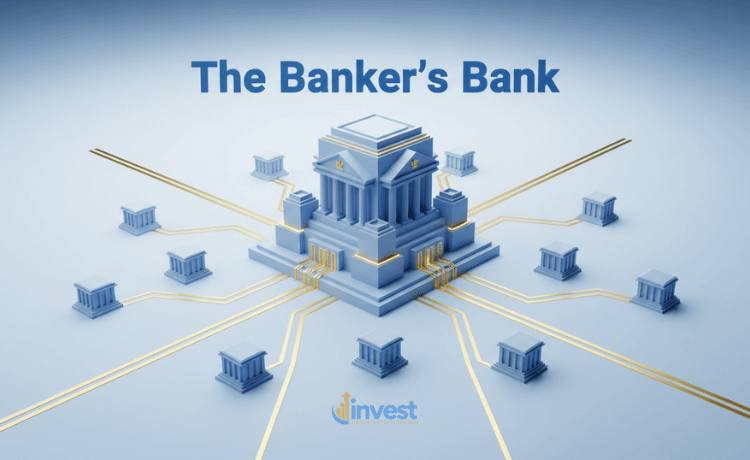
At its simplest level, the Federal Reserve is the central bank of the United States. Think of it as the “bank for banks.” While you have a checking account at a place like Chase or Bank of America, those banks have their own “bank accounts” at the Fed.
The Fed was created to keep the U.S. economy stable. They have what experts call a “dual mandate,” which is just a fancy way of saying they have two main jobs. First, they want to make sure as many people as possible have jobs (maximum employment). Second, they want to keep prices from rising too fast (stable prices, or low inflation).
To do these jobs, the Fed uses several tools, but the most famous one is moving interest rates up or down. When the Fed moves these rates, it creates a ripple effect that touches everything from the car loan you applied for to the price of a single share of Tesla stock.
The Fed Explained for Beginners
The Fed is not a part of the government like the White House or Congress, but it is “independent within the government.” This means they can make decisions based on data and math, not on who is trying to get elected next year. This independence is crucial because sometimes the right thing for the economy is painful in the short term.
Real-World Example
Imagine you are driving a car on a long highway. The Fed is the driver. If the car is going too slow (the economy is weak and people are losing jobs), the Fed steps on the gas by lowering interest rates. If the car starts speeding dangerously out of control (prices are rising too fast), the Fed hits the brakes by raising interest rates.
Common Mistake
Many beginners believe the Fed “prints money” whenever they want to make the stock market go up. This is a massive oversimplification. The Fed manages the “supply” of money and the “cost” of borrowing it. They don’t just hand out cash to make people rich; they try to balance the economy so it doesn’t crash or overheat.
The Right Mindset
Instead of seeing the Fed as a market manipulator, view them as the “Economic Referee.” Their goal isn’t to make your stocks go up every day; it’s to make sure the stadium (the economy) stays standing so the game can continue for decades.
The “Magic Lever”: Understanding Interest Rates
When people say “the Fed changed rates,” they are talking about the Federal Funds Rate. This is the interest rate banks charge each other to lend money overnight. You might think, “Why should I care what two banks charge each other?”
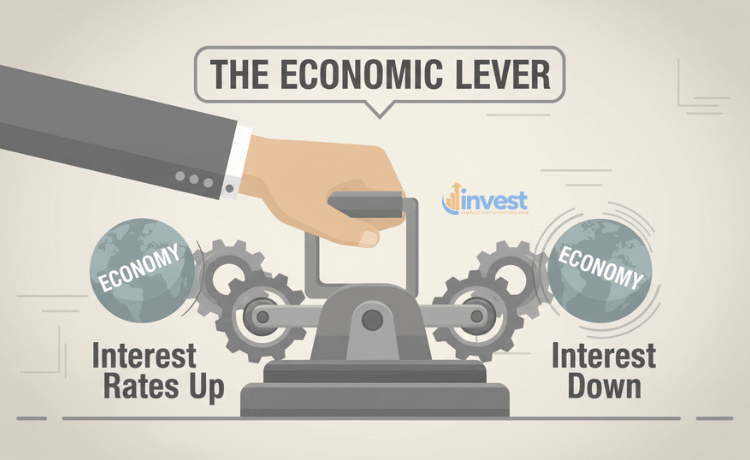
You should care because that rate is the “base price” for all other money. When the Fed raises that base price, banks raise the price they charge you for a mortgage, a credit card, or a business loan. Conversely, when the Fed lowers the base price, borrowing becomes “cheap.”
How Interest Rates Move Money
When rates are low, money is easy to get. Businesses borrow money to build new warehouses, hire more staff, and create new products. People borrow money to buy houses and cars. This spending makes the economy grow.
When rates are high, the opposite happens. Borrowing becomes expensive. A company might decide NOT to build that new factory because the loan would cost too much. You might decide NOT to buy a new car because the monthly payment is too high. This slows down the economy.
Real-World Example
Let’s look at a company like Amazon (AMZN). Amazon is constantly growing. To build those massive delivery hubs, they often borrow hundreds of millions of dollars. If interest rates are at 1%, Amazon pays a relatively small amount in interest. But if the Fed raises rates to 5%, Amazon’s “cost of doing business” suddenly jumps. That extra money spent on interest is money that cannot be recorded as profit.
Common Mistake
A common error is thinking that interest rates only matter to people with debt. Beginners often ignore rates if they “only buy stocks with cash.” However, the entire value of the stock market is tied to these rates. Even if you don’t have a loan, the companies you own do, and their stock price will react to the Fed’s moves.
The Right Mindset
Understand that interest rates are the “gravity” of the financial world. When rates are low, gravity is weak, and stock prices can float higher easily. When rates are high, gravity is strong, and it takes a lot more “fuel” (profit) for a stock to stay up.
Why the Fed Cares About Inflation
To understand the Fed, you must understand their greatest enemy: Inflation. Inflation is when the things you buy—milk, gas, rent—get more expensive over time. A little bit of inflation (around 2% per year) is actually considered healthy. It means the economy is growing and people are spending.
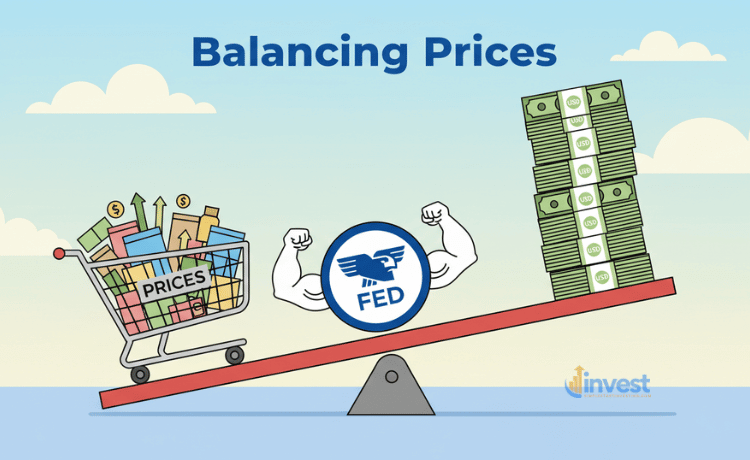
However, if inflation gets too high (like 7%, 8%, or 9%), it destroys the economy. People can’t afford groceries, and businesses can’t plan for the future. This is when the Fed steps in. To fight inflation, the Fed raises interest rates to “cool down” the economy. They want people to spend a little less so that prices stop rising so fast.
The Balancing Act
The Fed is always performing a high-wire act. If they raise rates too much to stop inflation, they might cause a recession (where the economy shrinks and people lose jobs). If they don’t raise rates enough, inflation could spiral out of control.
Real-World Example
Think about your local grocery store, or a giant like Walmart (WMT). If the price of transporting goods rises because gas is expensive, and the price of the goods themselves rises, Walmart eventually has to charge you more. If you find that 100 dollars only buys half the groceries it used to, you will stop buying extra things like electronics or toys. This drop in spending is what the Fed tries to manage before it becomes a crisis.
Common Mistake
Many new investors think inflation is “good for stocks” because companies can just raise their prices. While some companies can, many cannot. High inflation usually leads to higher interest rates, which, as we discussed, usually hurts stock prices.
The Right Mindset
Respect the Fed’s inflation target. When inflation is high, expect the Fed to be “hawkish” (aggressive about raising rates). When inflation is low or the economy is struggling, expect them to be “dovish” (gentle and likely to lower rates).
How Interest Rates Control Your Stock Portfolio
Now, let’s get to the part you care about most: your portfolio. Why does a single sentence from the Fed Chairman cause your stocks to drop 2% in ten minutes? It comes down to two main factors: Corporate Profits and Investor Alternatives.
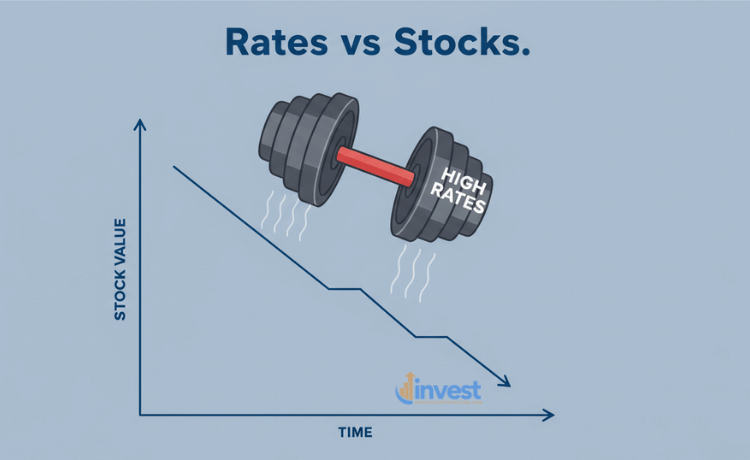
1. The Profit Squeeze
As we mentioned with Amazon, most companies borrow money. When the Fed raises rates, the “interest expense” for these companies goes up. Imagine a company makes 1,000 dollars in profit but has to pay 100 dollars in interest. They are left with 900 dollars. If the Fed raises rates and that interest jump to 300 dollars, the company only has 700 dollars left. Even though the company didn’t change how it operates, it is now “worth less” to investors because its take-home profit is smaller.
2. The Competition for Your Money
This is the part many beginners miss. Investors are always looking for the best place to put their money.
- When rates are 0%: A savings account or a government bond pays you almost nothing. You are “forced” to buy stocks to try and make a profit. This drives stock prices up.
- When rates are 5%: Suddenly, a “safe” government bond or a High-Yield Savings Account looks very attractive. Why risk your money in a volatile stock like Nvidia (NVDA) when you can get a guaranteed 5% return from the bank? Large investors move their money out of stocks and into these safer options, causing stock prices to fall.
Real-World Example
Consider “Growth Stocks” like Tesla (TSLA) or small tech startups. These companies often promise big profits far in the future. When interest rates are high, investors aren’t willing to wait ten years for a payoff because they can get a good return right now in a savings account. This is why tech stocks often crash harder than “Value Stocks” (like Coca-Cola or Proctor & Gamble) when rates rise.
Common Mistake
New investors often think, “The Fed raised rates by 0.25%, that’s tiny! Why did my stock drop 5%?” The market is forward-looking. It isn’t reacting to the 0.25% today; it is reacting to the fear that the Fed will keep raising rates for the next year.
The Right Mindset
When interest rates are rising, be prepared for “valuation compression.” This means even if a company is doing well, investors might not be willing to pay a “premium price” for it because money is no longer “free.”
The FOMC Meeting: The Most Important Dates on Your Calendar
The group within the Fed that actually decides on interest rates is the Federal Open Market Committee (FOMC). They meet eight times a year. After each meeting, they release a statement, and the Fed Chair (currently Jerome Powell) holds a press conference.
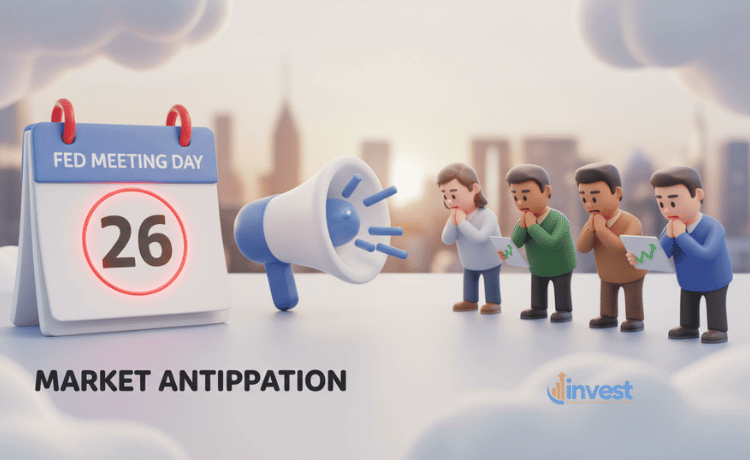
Investors watch these meetings like sports fans watch the Super Bowl. They look for specific words.
- If the Fed says they will be “patient,” the market usually goes up.
- If they say they are “concerned about inflation,” the market usually goes down.
Reading the “Dot Plot”
A few times a year, the Fed releases a chart called the “Dot Plot.” It doesn’t use complex math; it’s literally just a chart where each Fed member puts a dot on where they think interest rates will be in one year, two years, and three years. It is a roadmap for where they think the economy is going.
Real-World Example
Suppose the Fed meets this Wednesday. The market expects them to keep rates the same. If the Fed suddenly raises rates unexpectedly, it’s like a jump-scare in a movie. The market hates surprises. Stock prices will likely plummet because they hadn’t planned for that “extra cost” of money.
Common Mistake
Beginners often try to “trade” the Fed meeting—buying right before the announcement and trying to sell right after. This is incredibly risky. The market often swings wildly in both directions within seconds as algorithms digest the news faster than any human can.
The Right Mindset
Don’t try to outguess the Fed. Instead, use their meetings to understand the “macro environment.” If the Fed says they are going to keep rates high for a long time, it might not be the best time to take massive risks with speculative stocks.
Winners and Losers: Who Benefits from High Rates?
While high interest rates generally make the stock market grumpy, not everyone loses. In fact, some sectors of the economy actually thrive when the Fed hits the brakes.
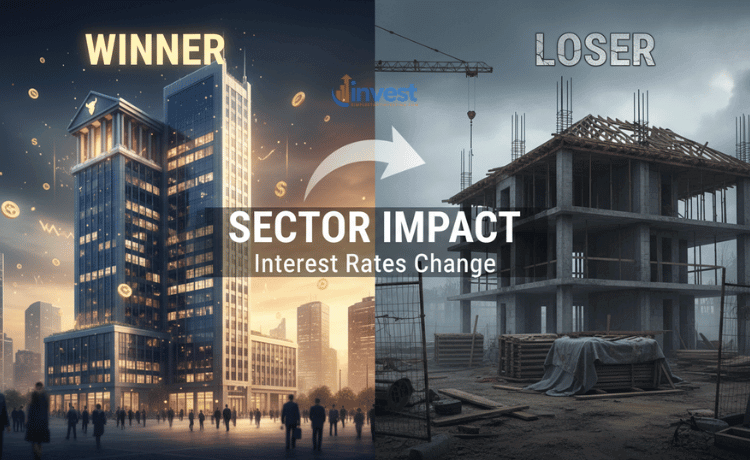
The Winners: Banks and Cash-Rich Companies
Banks like JPMorgan Chase (JPM) or Bank of America (BAC) often benefit from higher rates. Why? Because they can charge more for loans. As long as people keep borrowing, the bank’s profit margins (the difference between what they pay you in interest and what they charge borrowers) tend to grow.
Also, companies with massive piles of cash, like Apple (AAPL) or Google (GOOGL), can actually make a lot of money just by letting their cash sit in high-interest accounts.
The Losers: Real Estate and Tech
Real Estate is the most interest-rate-sensitive sector. When rates go up, mortgages become expensive. Fewer people buy houses. This hurts homebuilders and companies like Zillow (Z) or Redfin (RDFN).
As mentioned, high-growth tech companies that are not yet profitable also suffer because they rely on cheap debt to survive until they become big.
Real-World Example
Think of a small biotech company trying to cure a disease. They aren’t making money yet; they are spending it on research. They need to borrow 50 million dollars to keep their labs open. If the interest on that 50 million dollars goes from 1 million dollars a year to 4 million dollars a year, that company might go bankrupt before they ever find a cure. That is why these “risky” stocks drop when the Fed gets aggressive.
Common Mistake
Assuming all stocks go down when rates rise. Investing is about balance. A diversified portfolio often has some “defensive” stocks (like utilities or healthcare) that hold steady even when the Fed is raising rates.
The Right Mindset
Look at your portfolio like a garden. Some plants love the sun (low rates/growth stocks), and some plants are hardy and can survive a cold snap (high rates/value stocks). You want a mix of both so your garden survives any weather the Fed brings.
How to Invest When the Fed is Active
If you are a beginner, the constant news about the Fed can be overwhelming. You might feel like you should wait until they stop raising rates before you start investing. This is usually a mistake.
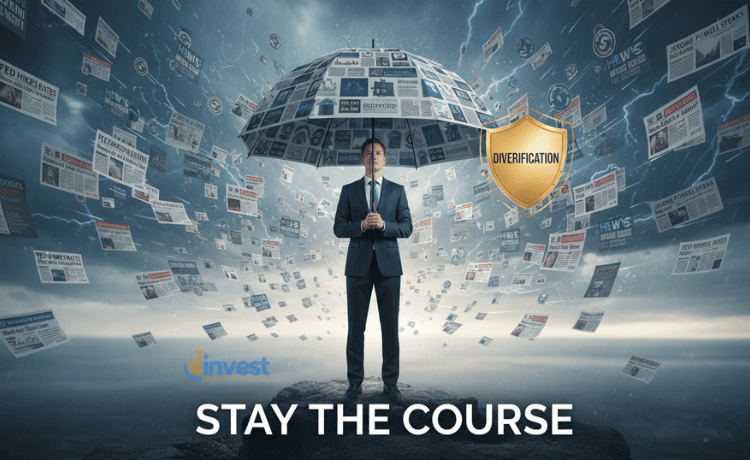
The goal of a “Simple Start” investor is not to time the Fed, but to build a portfolio that can withstand any environment. Here is a simple strategy for handling the Fed:
- Don’t Panic Sell: Markets usually recover from rate-hike cycles. If you own high-quality companies or index funds (like those that track the S&P 500), the best move is often to stay the course.
- Keep Some Cash in a High-Yield Savings Account: When the Fed raises rates, these accounts finally start paying you real money! If you have cash for an emergency fund, make sure it’s in an account that is passing those Fed rate hikes on to you.
- Focus on “Quality”: Companies with low debt and high profits are less bothered by the Fed. Look for companies that provide things people need (like groceries or medicine) rather than things people want (like luxury vacations).
- Think Long-Term: Over a 10 or 20-year period, the “noise” from individual Fed meetings fades away. What matters is the overall growth of the U.S. economy.
Real-World Example
Consider someone who invested in a basic S&P 500 index fund. Over the last several decades, the Fed has raised rates to double digits and lowered them to zero. There have been wars, recessions, and booms. Despite all those Fed meetings, the long-term trend of the market has historically been upward for those who stayed patient.
Common Mistake
Waiting for “the perfect time” to buy. Many people waited all through a rate-hiking cycle for a crash that never came, only to watch stocks take off when the Fed finally hinted they might stop.
The Right Mindset
The Fed’s decisions are like the weather. You can’t control them, and you shouldn’t cancel your life because of a rainy day. Just make sure your portfolio has an “umbrella” (diversification) and keep walking toward your long-term goals.
Summary: The Fed and You
Understanding the Federal Reserve is the first step toward becoming a sophisticated investor. By controlling interest rates, the Fed manages the “cost of money.” This cost affects how much profit companies make and where investors choose to put their savings.
When the Fed raises rates, they are trying to fight inflation by slowing things down. This usually causes stock prices to dip in the short term. When they lower rates, they are trying to stimulate the economy, which often acts as rocket fuel for stocks.
As a beginner, you don’t need to be an expert on monetary policy. You just need to know that the Fed exists to keep the economy stable, and that their “interest rate lever” is the most important force acting on your investments.
Regulations and economic conditions can change; please check current guidelines or consult with a professional.