If you are new to the world of investing, you might feel like a kid in a candy store. There are so many famous companies to choose from. You see Apple everywhere, you use Amazon every day, and you probably see Tesla cars on every corner. It is tempting to take all your savings and put them into the one or two companies you know and love. However, experienced investors will tell you that this is one of the riskiest ways to start. To build wealth that lasts, you need to understand stock market sectors and how they help you manage your risk.
Think of the stock market as a massive department store. Instead of just buying shoes, you want to make sure you have something from the grocery section, the electronics section, and the pharmacy. This is because, in the world of finance, different sections (or sectors) perform differently depending on what is happening in the world. When electronics are expensive, maybe groceries are cheap. By owning a little bit of everything, you protect yourself from a “sale” in just one department ruining your entire budget.
Understanding stock market sectors is the first step to moving from a “gambler” mindset to a “strategist” mindset. In this guide, we will break down the major sectors like Tech, Health, and Energy, and show you exactly how to spread your money so you can sleep better at night.
What are Stock Market Sectors Exactly?
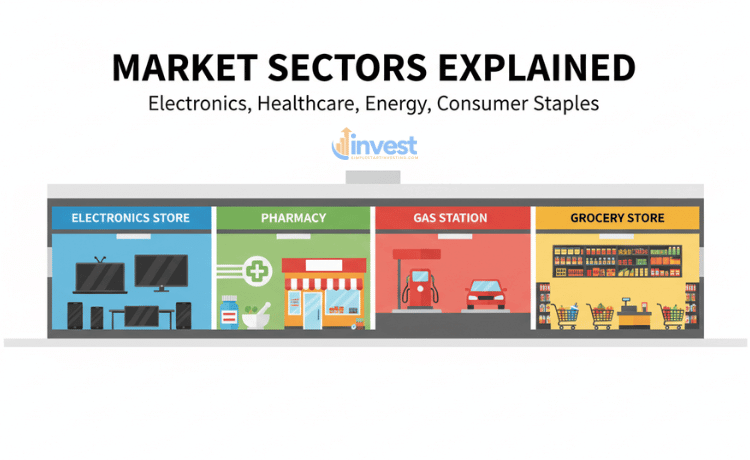
The reason we care about these groups is that companies in the same sector often move together. If the government passes a new law about medicine, almost every company in the Healthcare sector will feel the impact. If the price of gas goes up, Energy companies might see their profits rise. If you only own stocks in one group, you are essentially “betting” that nothing bad will ever happen to that specific industry.
- Simple Explanation: A sector is a category of business. Just like a mall has a food court, a movie theater, and clothing stores, the stock market has different categories.
- Real-Life Example: Imagine you only owned shares in airline companies like Delta or United. If a massive storm hits the entire country and cancels all flights for a week, all your stocks would likely drop at the same time. But if you also owned shares in a streaming service like Netflix (Communication Services), that stock might stay steady because people are staying home and watching movies instead.
- Common Beginner Mistake: Many beginners think they are “diversified” because they own five different stocks. However, if those five stocks are all in the Tech sector (like Apple, Microsoft, NVIDIA, Meta, and Alphabet), they aren’t truly diversified. They are still tied to the health of one single industry.
- The Right Mindset: You should aim to be a “collection owner.” You want to own pieces of the companies that power our homes, provide our medicine, and build our phones. This way, no matter which industry is having a bad month, the other parts of your portfolio can help keep you steady.
The Technology Sector: The Engine of Growth
The Technology sector is often the most exciting part of the stock market. This is where you find the “innovators”—the companies creating artificial intelligence, smartphones, and cloud computing. Because these companies are often growing very fast, their stock prices can go up very quickly.
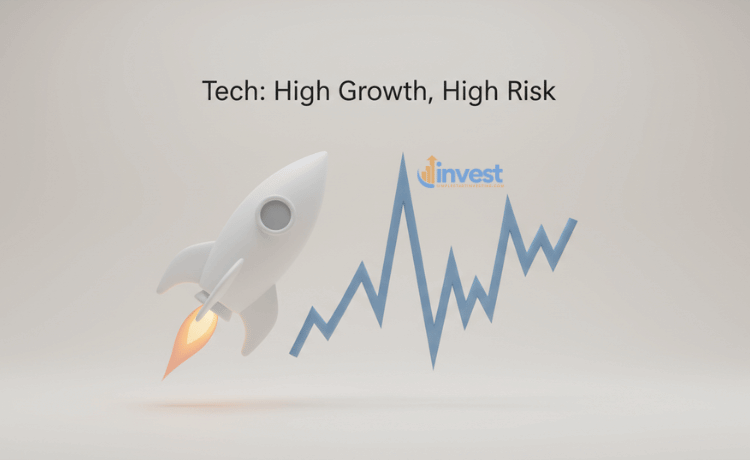
However, Tech is also known for being “volatile.” This is a fancy word for “it moves up and down a lot.” When investors are worried about the economy, they often sell their Tech stocks first because these companies are seen as “expensive.”
- Simple Explanation: Tech companies make the tools and software we use to live our digital lives. They are focused on the future and high growth.
- Real-Life Example: Think of Apple (AAPL) or NVIDIA (NVDA). These companies have seen massive growth because everyone wants their iPhones or their powerful computer chips. If you had invested 1,000 dollars in a high-growth tech stock ten years ago, it might be worth 10,000 dollars today. But, it could also drop from 1,000 dollars to 700 dollars in just a few weeks if there is bad news about the economy.
- Common Beginner Mistake: Beginners often “chase the hype.” They see a stock like Tesla (TSLA) or an AI company going up and put 100 percent of their money into it at the very top.
- The Right Mindset: View Tech as the “turbocharger” of your portfolio. It provides the speed and growth you need to build wealth over decades, but you shouldn’t rely on it as your only source of stability. You need other sectors to act as the “brakes” and “steering” when things get bumpy.
The Healthcare Sector: The Steady Performer
No matter what is happening with the economy, people still need to see the doctor, take their medicine, and go to the hospital. This makes the Healthcare sector very “defensive.” This means it tends to hold its value better than Tech when the stock market is crashing.
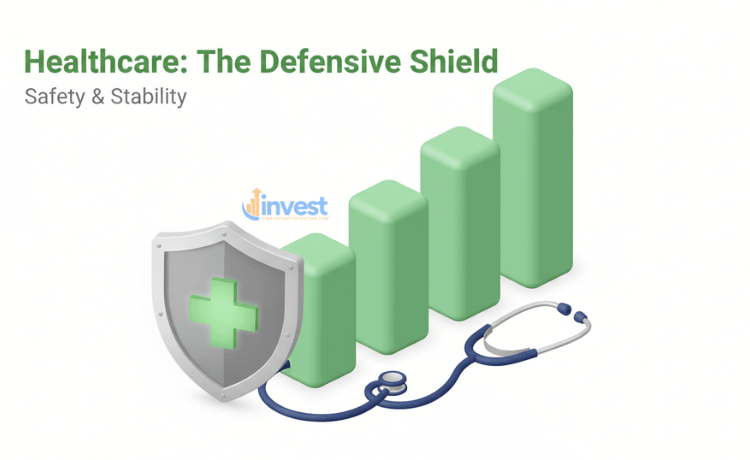
Healthcare includes everything from giant drug makers to health insurance companies and medical device manufacturers. While these companies might not grow as fast as a new AI startup, they provide a level of consistency that is very valuable for a beginner.
- Simple Explanation: Healthcare companies provide the essential services and products we need to stay healthy. Because people can’t “skip” their medicine like they might skip buying a new iPhone, these companies stay profitable even in tough times.
- Real-Life Example: Consider a company like UnitedHealth Group (UNH) or Johnson & Johnson (JNJ). During a year where the economy is slow, people might wait to buy a new car, but they will still pay their health insurance premiums and buy their prescriptions.
- Common Beginner Mistake: New investors often find Healthcare “boring.” They don’t see the stock price moving 5 percent every day, so they think it is a “bad” investment.
- The Right Mindset: Think of Healthcare as your “insurance policy” within your portfolio. It might not make you a millionaire overnight, but it is often the part of your portfolio that stays “green” when everything else is “red.” It provides a solid foundation.
The Energy Sector: Tapping into the World’s Power
The Energy sector is unique because it is heavily tied to the price of raw materials, like oil, natural gas, and even solar power. When gas prices at the pump go up, Energy companies usually make more money. When gas prices fall, their profits can take a hit.
This sector is often “cyclical.” This means it goes through long periods of doing very well followed by periods of doing poorly. Including Energy in your portfolio gives you exposure to the physical world—the fuel that moves trucks, ships, and airplanes.
- Simple Explanation: Energy companies find, produce, and distribute the power the world needs to function.
- Real-Life Example: ExxonMobil (XOM) and Chevron (CVX) are massive companies in this space. If there is a shortage of oil globally, the price of oil might go from 70 dollars a barrel to 100 dollars a barrel. This sudden increase means these companies make much more profit for every gallon they sell, often leading to higher stock prices and dividends (cash payments to shareholders).
- Common Beginner Mistake: Beginners often buy Energy stocks when gas prices are already at record highs. By then, the stock price has usually already gone up.
- The Right Mindset: Use the Energy sector to balance out your other investments. For example, if you own a lot of Tech stocks, a rise in energy costs might hurt those companies (because it’s more expensive to run their offices). Having Energy stocks helps offset that “pain” because the Energy side of your portfolio will be doing well.
The Consumer Staples Sector: The “Must-Haves”
Think about the things you buy every single week: toothpaste, toilet paper, milk, and soap. These are “staples.” The companies that sell these items, like big-box retailers and food manufacturers, belong to the Consumer Staples sector.
This is perhaps the most reliable sector for a beginner. Even in a recession (a period where the economy shrinks), people still need to eat and clean their homes. These stocks are known for paying steady dividends, which is money they send back to you just for owning the stock.
- Simple Explanation: This sector represents companies that sell things people need regardless of how much money they have.
- Real-Life Example: Walmart (WMT) and Costco (COST) are perfect examples. Even when people are worried about losing their jobs, they still shop at Walmart for groceries. In fact, they might shop there more to save money compared to eating at expensive restaurants.
- Common Beginner Mistake: Many beginners ignore these stocks because they aren’t “cool.” They would rather talk about robots than talk about soap.
- The Right Mindset: These are your “ballast.” On a ship, the ballast is the heavy weight at the bottom that keeps the boat from tipping over in a storm. Consumer staples keep your portfolio upright when the “winds” of the stock market are blowing hard.
How to Spread Your Risk (The “Rule of Thumbs”)
Now that you know some of the major stock market sectors, how do you actually put them together? You don’t need a PhD in finance to do this. You just need to follow a few simple rules of logic.
1. The “Ten Percent” Safety Limit
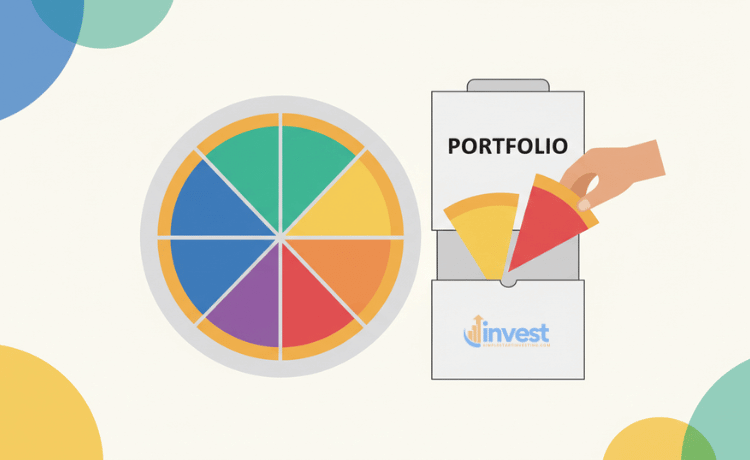
Try not to let any single sector take up more than a certain portion of your portfolio. For many beginners, a good target is to keep any one sector under 20 or 25 percent of their total money.
If you have 1,000 dollars to invest, and you put 800 dollars into Tech, you are “over-concentrated.” If Tech has a bad year and drops 20 percent, your 800 dollars becomes 640 dollars. That is a loss of 160 dollars.
However, if you only had 200 dollars in Tech and it dropped 20 percent, your 200 dollars would become 160 dollars. That is only a loss of 40 dollars. Because you had the other 800 dollars in different sectors like Health or Staples (which might have stayed flat or gone up), your total portfolio stays much safer.
2. Look for “Low Correlation”
This is a fancy way of saying “find sectors that don’t act like each other.”
- Tech and Communication Services often move together (if people are buying less software, they are probably spending less on streaming too).
- Healthcare and Consumer Staples often move together because they are both “defensive.”
- The Goal: Try to have a mix of “Growth” (like Tech) and “Defensive” (like Staples) so that no matter what the weather is like in the economy, part of your portfolio is thriving.
The Secret Shortcut: Sector ETFs
If picking individual stocks in 11 different sectors sounds like too much work, there is an easier way. You can use something called an Exchange-Traded Fund (ETF).
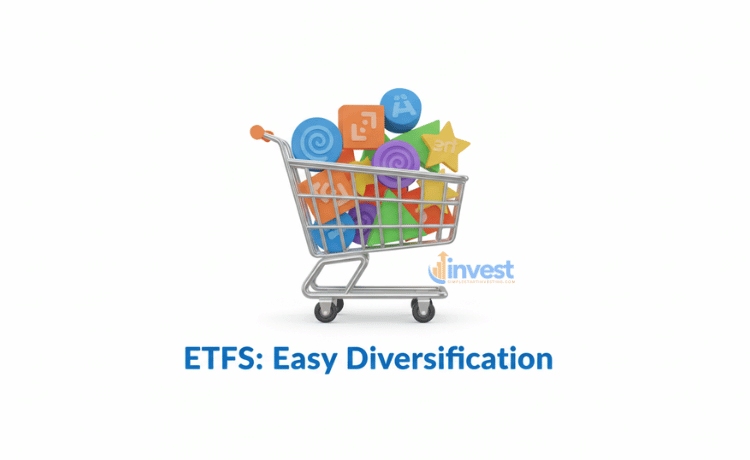
An ETF is like a “pre-packaged basket.” You can buy one single “share” of a Tech ETF, and inside that basket, you automatically own a little bit of Apple, Microsoft, and hundreds of others. There are specific ETFs for every sector.
- Technology ETF: Often called “XLK.”
- Healthcare ETF: Often called “XLV.”
- Energy ETF: Often called “XLE.”
By buying these baskets, you don’t have to worry if one single company (like a specific drug maker) fails. You only care that the entire industry of Healthcare continues to exist, which is a much safer bet.
Why This Matters for Your Long-Term Success
The stock market is a marathon, not a sprint. The people who “lose” in the stock market are usually the ones who put all their money into a single “hot” sector, panicked when it dropped, and sold everything at a loss.
By spreading your risk across stock market sectors, you are giving yourself the gift of time. You won’t be tempted to check your phone every five minutes because you know that even if Tech is having a bad day, your Health and Energy stocks are likely doing just fine.
Quick Summary for the New Investor:
- Don’t Be a Specialist: Unless you work in the industry, don’t try to “win” by only owning one sector.
- Embrace the Boring: Make sure you own some Healthcare and Consumer Staples. They aren’t exciting at parties, but they are great for your bank account.
- Think in Baskets: Consider using ETFs to get instant access to hundreds of companies in each sector.
- Stay the Course: Regulations and market conditions can change. It is always a good idea to check current guidelines or talk to a professional to make sure your mix still makes sense for your goals.
Investing is about balance. Just like a healthy diet requires more than just dessert, a healthy portfolio requires more than just high-growth Tech stocks. Start small, spread your risk, and watch your wealth grow steadily over time.
Disclaimer: This content is for educational purposes only and does not constitute financial advice. Market conditions and regulations can change over time; please consult with a qualified financial advisor or check current IRS and SEC guidelines before making investment decisions.