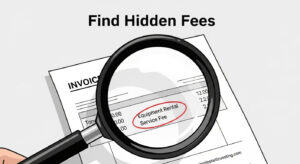
Imagine working a long week at a company like Amazon or Walmart. You did the math in your head: forty hours of work at twenty dollars an hour should equal 800 dollars. You are already planning how to spend it. But when Friday arrives and you look at your bank account, you only see 620 dollars.
Where did those 180 dollars go? Did the company make a mistake? Did someone steal your hard-earned cash? This feeling of “paycheck shock” is something almost every worker in the United States experiences. The answer to this mystery is hidden inside a document called a pay stub.
Reading your pay stub is one of the most important financial skills you can learn. It is the roadmap of your earnings, showing exactly how much you made, how much the government took, and how much you saved for your future. In this guide, we will break down every line so you never have to wonder where your money went again.
What Exactly Is a Pay Stub?
A pay stub is a piece of paper or a digital document that explains the gap between what you earned and what you actually received. Even if you get paid through direct deposit, your employer is required to provide this breakdown.
Think of it like a receipt for your labor. When you buy a laptop at Apple, the receipt shows the price of the laptop, the sales tax, and any protection plans you added. Your pay stub does the same for your time.
Why reading your pay stub matters
If you don’t check your pay stub, you might miss a mistake that costs you thousands of dollars over a year. Maybe you are being taxed in the wrong state, or perhaps you are paying for health insurance you never signed up for. By the end of this article, you will be able to spot these issues instantly.
The Starting Point: Understanding Gross Pay
The first large number you will see on your pay stub is your Gross Pay. This is the “raw” amount of money you earned during the pay period before any taxes or deductions are taken out.
The Simple Explanation Gross pay is the total value of your work. If you are an hourly worker at Starbucks, this is your hourly wage multiplied by the number of hours you worked. If you are a salaried manager at JPMorgan Chase, this is your annual salary divided by the number of paychecks you get in a year.
A Real-World Example Let’s say you work at a Costco warehouse. Your hourly pay is 25 dollars. This week, you worked 40 hours. To find your gross pay, you simply count 25 dollars for every hour worked.
- 40 hours multiplied by 25 dollars equals 1,000 dollars. Your gross pay is 1,000 dollars. This is the starting point for every other calculation on your check.
A Common Misconception Many beginners think that gross pay is the money they can use to pay rent or buy groceries. They sign a job offer for 60,000 dollars a year and assume they will have 5,000 dollars to spend every month.
The Mindset Shift In the United States, your “sticker price” salary is never what you actually get to keep. You should always treat your gross pay as a “theoretical” number. Your real budget should be based only on your Net Pay, which we will discuss later.
The Mandatory Deductions: Meeting the Tax Man
This is usually the section where people get frustrated. You will see several lines of money being taken away. These are not optional. Your employer is legally required to send this money to the government on your behalf.

1. Federal Income Tax Withholding
This is money sent to the IRS to pay your share of the national budget. It pays for things like the military, national parks, and federal highways.
The Simple Explanation The U.S. uses a progressive tax system. This means the more you earn, the higher the percentage you pay. The amount taken from your check is an “estimate.” When you file your taxes at the beginning of next year, the government will check if you paid too much or too little.
A Real-World Example Imagine an entry-level software engineer at Tesla. If they earn a high salary, they might see 20 percent of their check go to federal taxes. However, a part-time worker at a local grocery store might only see 10 percent taken out. The system tries to take a fair share based on how much you earn.
A Common Misconception New workers often think that if they get a raise and move into a higher “tax bracket,” they might actually take home less money because the higher tax rate applies to all their money.
The Mindset Shift This is a myth. Moving into a higher bracket only means the extra money you earn is taxed at the higher rate. You will always take home more money if you earn a higher gross salary.
2. FICA: Social Security and Medicare
You will often see the letters FICA on your stub. This stands for the Federal Insurance Contributions Act. This money doesn’t go toward the general government budget; it goes into specific funds for when you get older.

The Simple Explanation FICA is divided into two parts. One part is Social Security, which provides income for retirees. The other part is Medicare, which provides health insurance for people over age 65. You are essentially paying into a giant “safety net” that you will use later in life.
The Calculation Logic
- Social Security: This year, the rate is 6.2 percent of your gross pay. However, there is a limit. Once you earn more than 184,500 dollars in a year, the government stops taking this tax for the rest of that year.
- Medicare: This rate is 1.45 percent of your gross pay. Unlike Social Security, there is no limit on how much of your income can be taxed for Medicare.
A Real-World Example If you earn 1,000 dollars this week at Walmart, the government will take 62 dollars for Social Security and about 14 dollars and 50 cents for Medicare. That is a total of 76 dollars and 50 cents leaving your check just for FICA.
A Common Misconception People often think this is a “lost” tax. They see it as a fee for working.
The Mindset Shift Think of FICA as a mandatory savings plan. Also, here is a secret: your employer, like Apple or Target, actually has to pay the exact same amount to the government for you. If 76 dollars is taken from your check, your boss also has to pay 76 dollars out of their own pocket for your future.
State and Local Taxes: Where You Live Matters
Depending on where you live, you might see even more taxes. This is why a paycheck in Florida looks very different from a paycheck in New York.
The Simple Explanation Most states have their own income tax to pay for state-level services like schools and local roads. Some cities, like New York City or Philadelphia, even have their own “local tax.”
A Real-World Example If you work at a JPMorgan Chase office in Miami, Florida, you will notice something great: there is no state income tax. Your check will be higher. But if you transfer to their office in California, you will see a significant chunk of your pay taken out for the state government.
A Common Misconception Beginners often move for a “higher-paying job” without checking the state tax rules. A 100,000 dollar salary in a high-tax state might actually provide less spending money than an 85,000 dollar salary in a state with no income tax.
The Mindset Shift Always look at the “after-tax” value of a job offer. Use your pay stub to see exactly how much your specific state is charging you for the privilege of living there.
New for 2026: Overtime and Tip Deductions
The rules for pay stubs can change based on new laws. This year, thanks to the One Big Beautiful Bill (OBBBA), there are new rules that might make your pay stub look a little different if you work extra hours or receive tips.
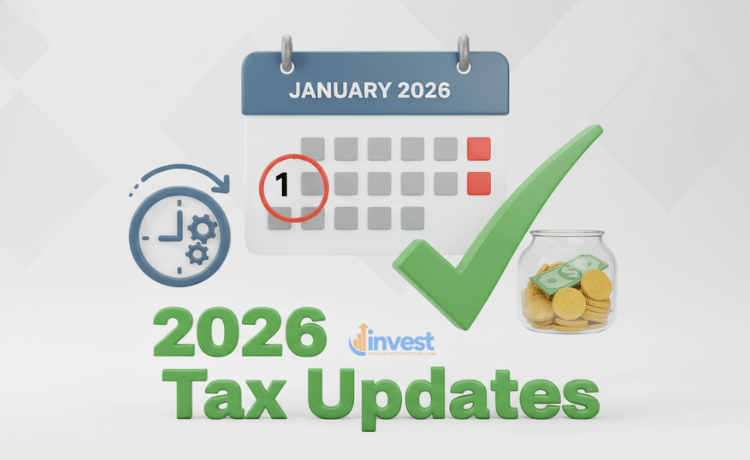
The Simple Explanation The government has introduced new ways to help workers keep more of their money. There is now a special deduction for “qualified overtime” and “qualified tips.” This means a portion of that extra money might not be hit by federal income tax.
A Real-World Example If you are a server at a restaurant and earn 200 dollars in tips, or if you work 10 hours of overtime at FedEx, you might see a new line on your stub. This line shows that a portion of that extra income is being “deducted” from your taxable total, meaning you pay less tax overall.
A Common Misconception Workers sometimes worry that these new lines mean they are being charged a new fee.
The Mindset Shift These new deductions are actually good news. They are designed to put more money back in your pocket. If you see “Overtime Deduction” or “Tip Deduction,” it usually means you are getting a tax break.
Note: Tax laws and regulations can change every year. Always check the current IRS guidelines or speak with a tax professional to see how these rules apply to your specific situation.
Voluntary Deductions: Investing in Yourself
Not everything taken out of your check goes to the government. Some of it goes toward things you chose. These are called voluntary deductions.
1. Health and Dental Insurance
Most large companies, like General Motors or Amazon, offer health insurance. They pay part of the cost, and you pay the rest.
The Calculation Logic If the total cost of your insurance is 500 dollars a month, your company might pay 400 dollars, and they will take the remaining 100 dollars directly from your paychecks.
2. Retirement Savings (401k)
If you are smart, you are likely putting money into a retirement account like a 401(k).
The Simple Explanation This is money you are sending to an investment account before the government can tax it. If you earn 1,000 dollars and put 100 dollars into your 401(k), the government only taxes you as if you earned 900 dollars.

A Real-World Example If you work at Microsoft and contribute to your 401(k), you are “hiding” that money from the tax man today so it can grow for your future. Plus, many companies will “match” your contribution, which is essentially free money.
A Common Misconception Beginners often stop their retirement contributions because they want a “bigger paycheck” today.
The Mindset Shift Taking home 20 dollars more today by stopping your retirement contribution might cost you 2,000 dollars in future wealth. Your pay stub is a tool to track how fast you are building your future “wealth bucket.”
Year-to-Date (YTD): The Big Picture
Somewhere on your pay stub, usually near the bottom, you will see a column labeled YTD. This stands for Year-to-Date.
The Simple Explanation This column shows the total amount of money you have earned and the total taxes you have paid from January 1st until today. It is a running total for the entire calendar year.
A Real-World Example If it is July and your YTD Gross Pay says 30,000 dollars, that means you have earned exactly 30,000 dollars so far this year. If your YTD Federal Tax says 3,000 dollars, that is the total amount the IRS has received from you this year.
A Common Misconception Many people ignore the YTD column because they think only the “Current” column matters for their daily life.
The Mindset Shift The YTD column is vital for financial planning. It helps you see if you are on track to earn more than last year. It also helps you spot if your tax withholdings are too high or too low before the end of the year. If you wait until December to check, it might be too late to fix a mistake.
The Grand Finale: Net Pay
Finally, we reach the most important number on the entire document: Net Pay.
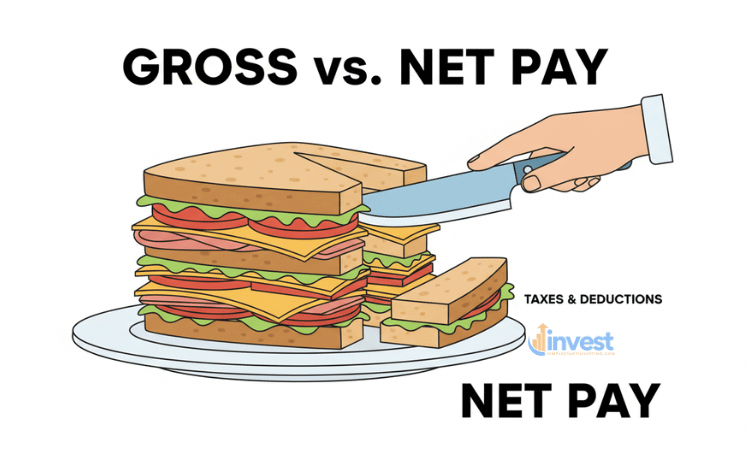
The Simple Explanation Net pay is your “take-home pay.” It is what is left over after every tax, every insurance premium, and every retirement contribution has been subtracted from your gross pay. This is the actual amount that lands in your bank account.
A Real-World Example Let’s look at a typical worker’s logic:
- Start with Gross Pay: 1,200 dollars.
- Subtract Federal Tax: 120 dollars.
- Subtract FICA: 90 dollars.
- Subtract Health Insurance: 50 dollars.
- Subtract 401(k) Contribution: 40 dollars.
- The remaining amount is 900 dollars.
- Your Net Pay is 900 dollars.
A Common Misconception People often feel “poor” when they see how much lower their net pay is than their gross pay. They feel like they are losing money.
The Mindset Shift Your net pay is your real “spending power.” However, don’t forget that the money in your 401(k) and the money you paid into Social Security is still yours—it’s just working for you in a different way. Your pay stub isn’t showing you what you lost; it’s showing you how your money is being distributed.
3 Things to Check on Every Pay Stub
Before you file your pay stub away, do a quick “thirty-second check” of these three items:
- Tax Filing Status: Does it say “Single” or “Married”? If this is wrong, the government might take too much or too little tax.
- Pay Rate: Ensure your hourly wage or salary matches what you were promised in your contract.
- Hours Worked: If you worked overtime, make sure those extra hours are listed correctly. Mistakes happen, and it is much easier to fix them the same week than six months later.

Summary of the Paycheck Journey
Understanding your pay stub is the first step to mastering your personal finances. It moves you from a “passive” worker who just waits for a deposit to an “active” earner who knows exactly where every cent is going.
Whether you are working at Tesla, Amazon, or a small local business, the logic remains the same. Your gross pay is the potential, your deductions are the obligations and investments, and your net pay is the reality. By reading your pay stub carefully, you ensure that you are being paid fairly and building a secure financial future.
Disclaimer: This content is for educational purposes only and does not constitute financial, legal, or tax advice. Tax laws and regulations are subject to change. Please consult with a qualified professional regarding your specific financial situation.