Imagine coming home after a long day at work, only to find that a pipe burst in the apartment above yours. Water is dripping from your ceiling, soaking your laptop, your velvet sofa, and that expensive mattress you just bought. You call your landlord, assuming they will pay for the damage. But then comes the shock: they tell you their insurance only covers the walls and the roof—not a single item you own.
This is the moment most people realize they need renters insurance basics. In the world of personal finance, renters insurance is often the most overlooked yet most affordable safety net you can buy. For about the same price as a large pepperoni pizza delivered to your door once a month, you can protect thousands of dollars worth of your belongings and shield yourself from legal disasters.
If you are new to renting or just realized your “stuff” is worth more than you thought, this guide is for you. We are going to break down exactly how renters insurance works, why your landlord isn’t your safety net, and how to get covered without breaking the bank.
What Exactly is Renters Insurance?
At its core, renters insurance basics involve a contract between you and an insurance company. You pay a small monthly fee, called a premium, and in exchange, the company promises to pay for your losses if something bad happens, like a fire, theft, or certain types of water damage.

Think of it as a three-layered shield. Most people think it only covers their “stuff,” but a standard policy actually does three very different things:
- Personal Property Coverage: This pays to repair or replace your belongings if they are stolen or damaged by a “covered peril” (a fancy insurance word for a disaster like fire or wind).
- Liability Protection: This covers you if someone gets hurt in your apartment and sues you, or if you accidentally damage someone else’s property.
- Additional Living Expenses (ALE): If a fire makes your apartment unlivable, this part pays for your hotel stays and extra food costs while you wait for repairs.
A Real-World Example
Let’s say you own a MacBook worth 1,500 dollars and a Sony 4K TV worth 800 dollars. If a thief breaks into your apartment while you’re at work and steals both, your renters insurance policy would step in. After you pay your deductible (the small portion you agree to pay first), the insurance company sends you a check to buy a new laptop and TV. Without insurance, that 2,300 dollar loss comes directly out of your savings.
The “Landlord Myth” That Costs Renters Thousands
One of the biggest mistakes beginners make is assuming the landlord’s insurance covers them. This is a dangerous misunderstanding of how real estate insurance works in the U.S.
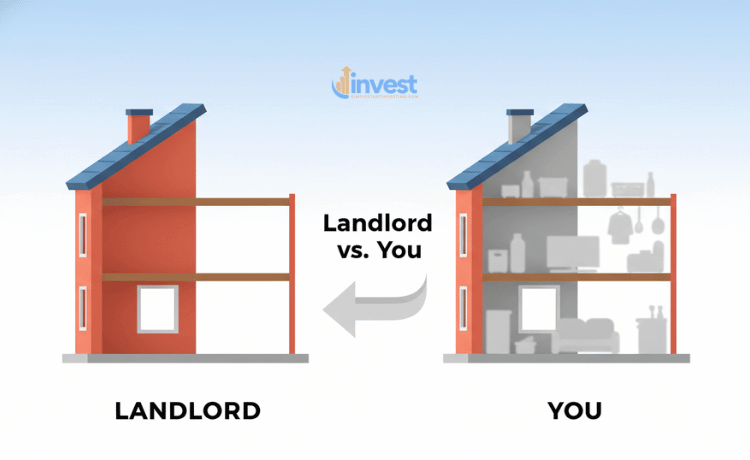
Your landlord has a policy, but it is designed to protect their investment—the building structure. If the building burns down, the landlord’s insurance pays the landlord to rebuild the walls, the floor, and the roof. It does absolutely nothing for your clothes, your furniture, or your electronics.
The Beginner’s Mistake: Thinking “My landlord is a millionaire/big company, surely they are responsible if the pipes burst.”
The Financial Reality: Unless the landlord was extremely negligent (like ignoring a leak for months), they are generally not legally responsible for your personal items. In the eyes of the law, your belongings are your responsibility. By understanding renters insurance basics, you move that responsibility from your bank account to the insurance company.
Understanding the “Big Three” Coverages
To truly master renters insurance basics, you need to understand what you are actually paying for. It isn’t just a single “protection” button; it is a bundle of three distinct safety nets.
1. Personal Property: Protecting Your “Stuff”
This covers almost everything you own. Clothes, shoes, books, furniture, electronics, and even your kitchen appliances. A common surprise for beginners is that this coverage often follows you outside your home.
If your luggage is stolen from a hotel room in Europe or your laptop is swiped while you’re at a Starbucks in Chicago, your renters insurance often covers it.
2. Liability: Protecting Your Future Earnings
This is arguably the most important part of the policy. Liability coverage protects you if you are found legally responsible for someone else’s injury or property damage.
Example: You are hosting a dinner party and a guest trips over a loose rug, falls, and breaks their arm. They face 10,000 dollars in medical bills and decide to sue you. A standard renters insurance policy with 100,000 dollars in liability coverage would pay for your lawyer and the medical settlement.
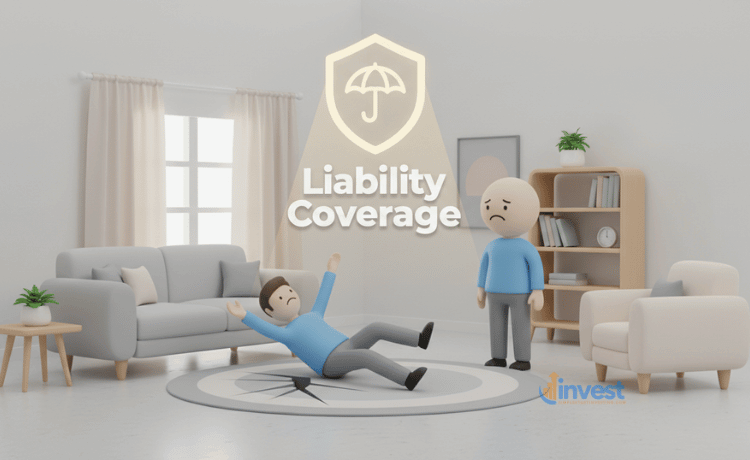
Without this, a single accident could lead to “wage garnishment,” where the court takes a piece of your future paychecks to pay off the debt.
3. Loss of Use: A Place to Sleep
If a fire or major leak makes your apartment “uninhabitable,” where do you go? Staying in a hotel in a major U.S. city can easily cost 200 dollars per night. After just five nights, you’ve spent 1,000 dollars.
Loss of Use coverage (also called Additional Living Expenses) pays for these hotel bills and the extra cost of eating out because you don’t have a kitchen. It ensures that a disaster doesn’t leave you homeless and broke at the same time.
The Choice That Matters: ACV vs. RCV
When you sign up for renters insurance basics, you will face one major choice that determines how much money you get after a claim. This is where many people get confused by the lingo.
Actual Cash Value (ACV)
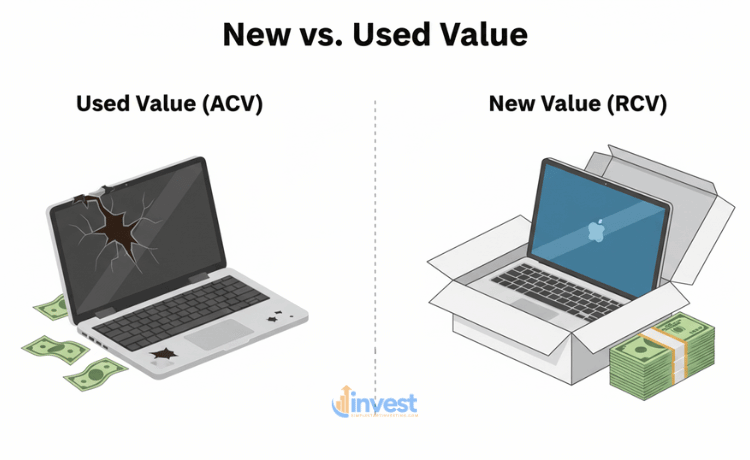
This is the “Garage Sale” price. If you bought a laptop for 1,000 dollars three years ago, the insurance company will look at it and say, “Well, it’s old and used now, so it’s only worth 300 dollars.” They will give you 300 dollars.
The Problem: You can’t buy a new laptop for 300 dollars. You’ll have to dig into your own pocket for the other 700 dollars.
Replacement Cost Value (RCV)
This is the “Amazon Price.” If that same three-year-old laptop is destroyed, the insurance company looks at what a similar new laptop costs today. If the new version costs 1,100 dollars, they give you 1,100 dollars (minus your deductible).
The Better Move: Always choose Replacement Cost Value. It usually only costs a couple of dollars more per month, but it ensures you can actually replace your life if everything is lost.
How Much Does It Actually Cost?
Many beginners avoid insurance because they think it will cost 50 dollars or 100 dollars a month. In reality, the cost of renters insurance basics is incredibly low.

According to major insurance providers like State Farm and Lemonade, the national average for renters insurance in the U.S. is about 15 dollars to 20 dollars per month.
Let’s look at the logic:
- Monthly Premium: 15 dollars
- Annual Total: 180 dollars
- Potential Protection: 30,000 dollars for your stuff and 100,000 dollars for liability.
If you skip the insurance to save 15 dollars a month, you are essentially “betting” 180 dollars that you won’t have a theft or fire. If you lose that bet, the cost isn’t 15 dollars—it’s thousands. This is why financial experts call renters insurance a “no-brainer” for beginners.
Common Mistakes Beginners Make
When you are just starting out with renters insurance basics, it is easy to fall into these traps:
- Underestimating the Value of Their Stuff: Beginners often say, “I just have old furniture and a few clothes.” But if you had to go to the store today and buy every single sock, towel, plate, and book you own, the bill would likely top 10,000 dollars or 20,000 dollars very quickly.
- Assuming Roommates are Covered: Most policies only cover the person named on the document. If you have a roommate, they usually need their own separate policy. Don’t assume your 15 dollar a month plan protects their 2,000 dollar gaming rig.
- Choosing a Deductible That is Too High: If you choose a 1,000 dollar deductible to save 2 dollars a month on your bill, you are saying you can afford to pay 1,000 dollars out of pocket before the insurance helps. If you don’t have 1,000 dollars in savings, choose a lower deductible like 250 dollars or 500 dollars.
5 Steps to Buying Your First Policy
Getting started with renters insurance basics is faster than ordering a pizza. Here is the path to protection:
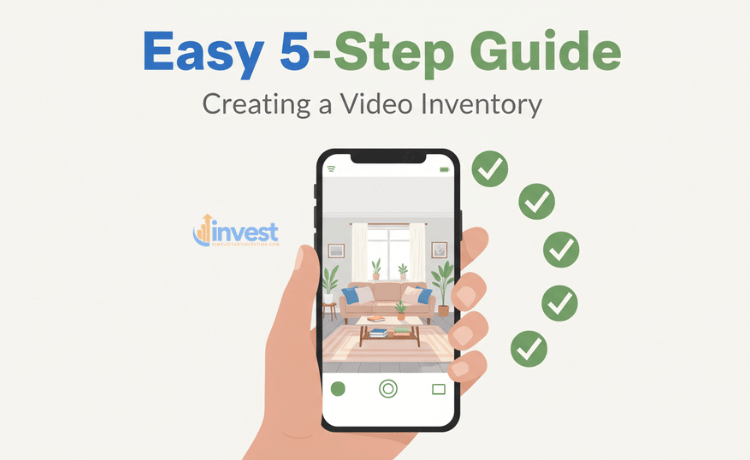
Step 1: The “Video Inventory”
Walk through your apartment with your phone and record a video of everything you own. Open closets, look inside drawers, and show the brand names of your electronics. Save this video to the cloud (like Google Drive or iCloud). If your place burns down, this video is your proof of what you owned.
Step 2: Estimate Your Total Value
Look at your video and estimate what it would cost to buy everything new. For most one-bedroom apartments, 20,000 dollars to 30,000 dollars is a safe starting point for coverage.
Step 3: Get Three Quotes
Visit websites for major companies like Geico, Progressive, or specialized apps like Lemonade. It takes about five minutes per quote.
Step 4: Look for the “Bundle”
If you already have car insurance, call that company first. They will often give you a “bundling discount.” Sometimes, adding renters insurance actually makes your car insurance cheaper, meaning the renters policy is effectively free!
Step 5: Sign and Send to Your Landlord
Once you pay your first month’s premium, you will get a “COI” (Certificate of Insurance). Many modern landlords require this before they even give you the keys to your new home.
Final Thoughts for the Smart Renter
Investing isn’t just about buying stocks like AAPL or AMZN; it is also about protecting the money you already have. By spending 15 dollars a month on renters insurance basics, you are ensuring that a single bad day doesn’t wipe out your entire savings account.
It is the cheapest way to buy peace of mind. Whether you are in a tiny studio in New York City or a suburban townhome in Texas, don’t leave your future to chance. Get covered today.
Disclaimer: This content is for educational purposes only and does not constitute financial, legal, or insurance advice. Regulations and insurance costs vary by state and provider; please consult with a licensed insurance professional or check current state guidelines for specific coverage details.