Have you ever looked at your bank account after getting a significant pay raise and wondered where all that extra money went? You worked hard, secured that promotion at work, and saw your paycheck increase by hundreds or even thousands of dollars. Yet, somehow, you still feel like you are living paycheck to paycheck. You aren’t alone. This is a classic case of lifestyle inflation, a silent wealth-killer that affects millions of Americans every year.
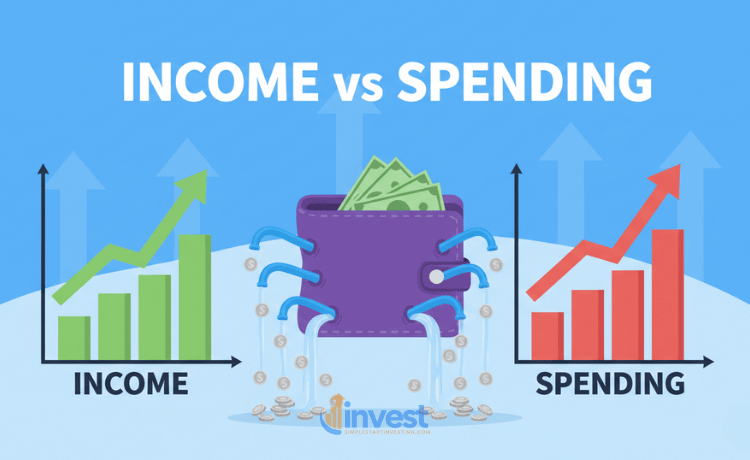
Lifestyle inflation happens when your spending expands right along with your income. It is the reason why a person making 100,000 dollars a year can be just as broke as someone making 50,000 dollars. If you want to build true financial freedom, you have to understand why this happens and how to stop it from draining your future.
What Exactly Is Lifestyle Inflation?
To understand this concept, we need to look at how we behave when we get more money. In simple terms, lifestyle inflation (often called “lifestyle creep”) is the tendency to increase your standard of living as your income rises. What used to be “luxuries” suddenly feel like “necessities.”
Step 1: Plain English Explanation
Think of your lifestyle like a gas that fills a container. If you get a bigger container (a bigger paycheck), the gas (your spending) will naturally expand to fill every corner of it unless you intentionally put a lid on it. It’s the process of upgrading your life—nicer car, bigger house, more expensive groceries—every time you earn a bit more.
Step 2: A Real-World Example
Imagine you are a young professional in the U.S. driving a reliable, used Toyota. You get a big promotion at a tech company, and suddenly you feel that a “manager” should drive something flashier. You head to a Tesla (TSLA) dealership and trade in your paid-off car for a 60,000 dollar Model 3 with a 800 dollar monthly payment. You also decide that since you’re making more, you should upgrade your Amazon (AMZN) Prime usage, ordering more convenience items and high-end organic groceries from Whole Foods.
By the end of the month, your new 1,000 dollar monthly raise is completely gone. You have a nicer car and better snacks, but your bank balance hasn’t grown by a single cent.
Step 3: Common Beginner Error
Most beginners believe that “making more money” is the primary solution to all financial problems. They think, “If I just made 20,000 dollars more a year, I could finally start saving.” They view income as the only variable that matters in the wealth equation.
Step 4: The Correct Financial Logic
The truth is that wealth is not what you earn; it is what you keep. If you earn 10,000 dollars and spend 10,000 dollars, you are broke. If you earn 5,000 dollars and spend 4,000 dollars, you are on the path to becoming wealthy. Controlling the “gap” between your income and your expenses is the only way to build a portfolio of assets like stocks or real estate.
The Psychology Behind the “I Deserve It” Trap
Why do we do this to ourselves? It’s rarely about being “bad” with money. Instead, it’s often about psychological triggers that are deeply embedded in American culture.
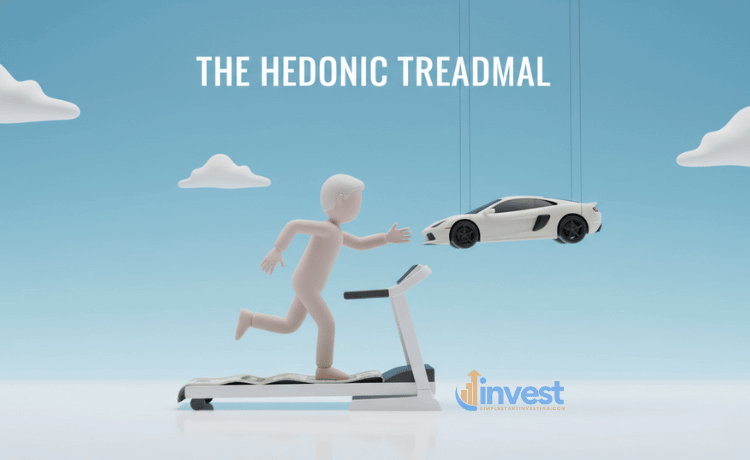
One of the biggest drivers is the Hedonic Treadmill. This is a psychological theory suggesting that humans quickly return to a stable level of happiness despite major positive or negative changes. When you buy that brand-new iPhone (AAPL), you feel a rush of excitement. But after two weeks, it’s just a phone. To get that feeling back, you look for the next thing to buy.
Another factor is Social Comparison. We live in a world of “Keeping up with the Joneses,” which has now shifted to “Keeping up with Instagram.” When you see your peers going on lavish vacations or posting about their new homes, you feel a subconscious pressure to match their standard. You feel like you “deserve” those things because you work just as hard as they do.
How Lifestyle Inflation Stealthily Attacks Your Budget
Lifestyle inflation doesn’t always happen with big, flashy purchases like a house or a car. Usually, it’s a death by a thousand cuts. It starts with small choices that feel insignificant at the time.
Small Upgrades, Big Impact
- Convenience Services: You start using DoorDash or Uber Eats three times a week instead of cooking because you can “afford it now.”
- Premium Subscriptions: You upgrade your Netflix, Spotify, and gym memberships to the highest tiers.
- Brand Loyalty: You stop shopping at discount stores like Walmart (WMT) or Costco (COST) and start buying exclusively at high-end boutiques.
- Tech Cycles: You feel the need to have the latest gadget every year, even if your current one works perfectly.
Let’s look at a simple math example. If you spend an extra 10 dollars a day on “small” upgrades—like a premium coffee and a slightly more expensive lunch—that adds up to about 300 dollars a month. Over a year, that is 3,600 dollars. If you had invested that 3,600 dollars in a diversified index fund that earns a 7% average annual return, after 30 years, that small daily habit would have grown to over 340,000 dollars. That is the true cost of lifestyle inflation.
The Hidden Danger: Higher Fixed Costs
The most dangerous form of lifestyle inflation is when you increase your fixed costs. These are the bills you must pay every month, no matter what happens.
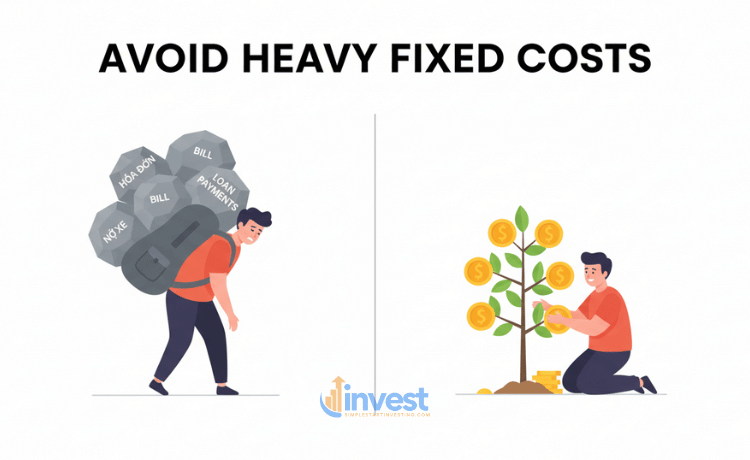
If you use your raise to buy more expensive clothes, you can always stop buying clothes if you lose your job. But if you use your raise to move into a more expensive apartment or take out a large loan for a luxury SUV, you are now locked into those payments.
Step 1: Plain English Explanation
Fixed costs are like a heavy backpack you carry every day. When you get a raise, you might think you’re stronger, so you put more rocks (higher rent, car payments) into the bag. But if your strength suddenly fails (job loss or illness), that heavy bag will crush you because you can’t easily take the rocks out.
Step 2: A Real-World Example
Suppose you earn 4,000 dollars a month and your rent is 1,200 dollars. Your rent is 30% of your income. You get a raise and now earn 6,000 dollars a month. You decide to move into a luxury condo that costs 2,500 dollars a month. Now, your rent is over 40% of your income. Even though you make more money, you actually have less flexibility than you did before. If the economy slows down and your hours are cut, you are in much more trouble than you were with the 1,200 dollar apartment.
Step 3: Common Beginner Error
New investors often think that “investing in yourself” means buying things that make you look successful. They believe that looking the part will lead to more opportunities, so they justify high-interest debt for luxury goods.
Step 4: The Correct Financial Logic
True “investing in yourself” means increasing your skills or buying assets that pay you back. Success is measured by your net worth (what you own minus what you owe), not by your monthly spending. A person with a 10-year-old car and 100,000 dollars in their Vanguard brokerage account is significantly more successful than a person with a brand-new car and zero savings.
Strategies to Defeat Lifestyle Inflation
You don’t have to live like a hermit to be wealthy. The goal is to be intentional about your spending so that your money serves your long-term dreams rather than just your short-term impulses.
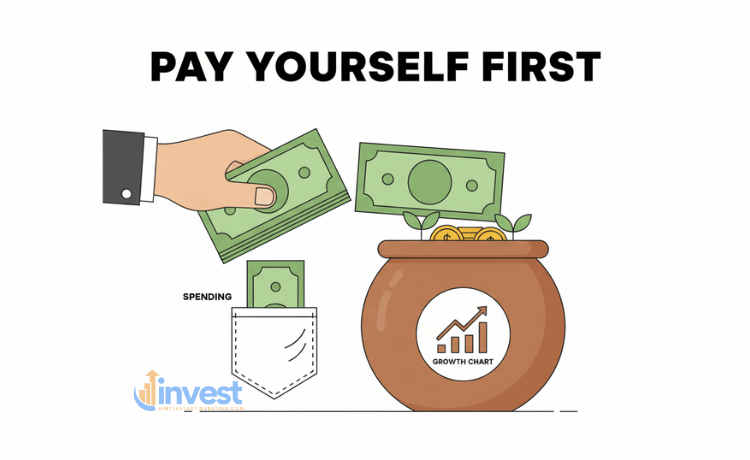
1. The “Save First” Rule (Pay Yourself First)
The most effective way to stop lifestyle inflation is to automate your savings. When you get a raise, immediately go to your HR portal or bank app and increase your automatic transfers.
For example, if you get a 500 dollar monthly raise, set up an automatic transfer of 250 dollars to your savings or investment account. This way, you only “see” 250 dollars of the raise in your checking account. You still get a small boost in your daily life, but you are also boosting your future self.
2. Follow the 50/30/20 Rule
This is a simple framework for managing your income:
- 50% for Needs: Housing, groceries, utilities, and basic transportation.
- 30% for Wants: Dining out, travel, hobbies, and the latest Netflix subscription.
- 20% for Savings and Debt Repayment: Building your emergency fund and investing for retirement.
When your income goes up, maintain these percentages. If your income increases by 1,000 dollars, at least 200 dollars of that must go toward your savings or debt.
3. Practice the 48-Hour Rule
Before making any “upgrade” purchase—whether it’s a new pair of shoes or a new laptop—wait 48 hours. This allows the emotional “high” of the purchase to fade. Often, after two days, you’ll realize you don’t actually need the item as much as you thought you did.
4. Focus on “Big Wins”
Instead of stressing over every 5 dollar latte, focus on the major expenses: housing and transportation. If you can keep your housing and car costs low, you have much more freedom to spend on the things that actually bring you joy without ruining your financial plan.
The 2026 Context: Taxes and Retirement Limits
In the United States, the government actually provides tools that help you fight lifestyle inflation. For this year, the IRS has increased the amount of money you can put into tax-advantaged accounts.
- 401(k) Plans: If you have a workplace retirement plan, the contribution limit for this year is 24,500 dollars. If you are 50 or older, you can contribute even more.
- IRA Plans: For individual retirement accounts, the limit is 7,500 dollars this year.
By increasing your contributions to these accounts every time you get a raise, you are essentially “hiding” the money from your future spending habits. Not only does this stop lifestyle creep, but it also reduces your taxable income, meaning you keep more of your hard-earned money away from the tax man.
Rich vs. Wealthy: Understanding the Difference
To truly conquer lifestyle inflation, you must change how you define success.
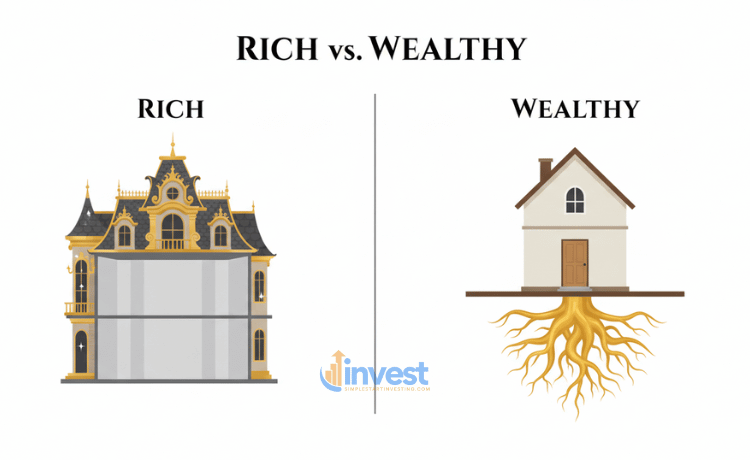
Being Rich is about your current income and your outward display of spending. It is the flashy car, the designer clothes, and the expensive dinners. Being rich is often temporary because it depends entirely on your next paycheck.
Being Wealthy is about your freedom. It is the amount of money you have saved and invested that can support you without you having to work. Wealth is “invisible” to most people. You can’t see someone’s 401(k) balance or their real estate equity.
Step 1: Plain English Explanation
Being rich is like having a beautiful fountain that only flows as long as a pump (your job) is running. If the pump breaks, the fountain goes dry. Being wealthy is like having a natural spring on your property. The water flows regardless of what you do because the source is underground and self-sustaining.
Step 2: A Real-World Example
Consider two neighbors. Neighbor A makes 250,000 dollars a year but spends 245,000 dollars on a massive mortgage, luxury car leases, and private clubs. They look “rich.” Neighbor B makes 80,000 dollars a year, lives in a modest home, drives a 5-year-old car, and invests 20,000 dollars every year into an S&P 500 index fund.
If both people lose their jobs tomorrow, Neighbor A is in a crisis within 30 days. Neighbor B has the “wealth” to survive for years.
Step 3: Common Beginner Error
People often think that wealth is something that happens after they become rich. They think, “Once I make 200,000 dollars, then I’ll start acting like a wealthy person.”
Step 4: The Correct Financial Logic
Wealth is built by acting like a wealthy person while you are making a modest income. It is the habit of saving that creates wealth, not the size of the paycheck. You must build the “muscle” of saving now so that when you do make more money, you have the discipline to keep it.
Conclusion: Take Control of the Treadmill
Lifestyle inflation is not an inevitable part of getting older or more successful. It is a choice. Every time you receive a raise, a tax refund, or a bonus, you are at a crossroads. You can choose to upgrade your current comfort, or you can choose to buy your future freedom.
The best way to enjoy your money is to know that you don’t need to spend it to be happy. By keeping your expenses stable while your income grows, you create a gap. That gap is where your freedom lives. Use it to invest in your future, protect your family, and eventually, reach a point where work is optional.
Don’t let your hard work be stolen by a lifestyle you don’t even truly value. Start today by looking at your last three months of spending. Are you spending more just because you have more? If so, it’s time to step off the treadmill.
Disclaimer: This content is for educational purposes only and does not constitute financial, legal, or tax advice. Please consult with a qualified professional before making any major financial decisions.