When you walk into a bank or open a mortgage application online, you might think your credit score is the only thing that matters. While a high credit score is great, lenders are looking at something even more critical to determine if you can actually afford the monthly payments. That secret number is your Debt-to-Income Ratio, or DTI.
In simple terms, your Debt-to-Income Ratio is a comparison between how much money you earn and how much you owe every month. Lenders use this to measure your financial health and decide if adding a new mortgage to your plate is a safe bet or a recipe for disaster. If your income is a big pie, your DTI tells the lender how much of that pie is already eaten by other bills before you even take a bite.
Understanding your Debt-to-Income Ratio is the first step toward homeownership in the United States. Whether you are looking to buy a cozy condo or a family home, this number will dictate how much a bank is willing to lend you. It is the “magic number” because it balances your dreams with the cold, hard reality of your monthly budget.
What Exactly is a Debt-to-Income Ratio?
The Debt-to-Income Ratio is a percentage that shows how much of your gross monthly income goes toward paying your recurring monthly debts. To find this percentage, you add up all your monthly debt payments and then see what portion that total is of your pre-tax income. It is not about how much total debt you have—like a 50,000 dollar student loan—but rather how much you have to pay toward that debt every single month.
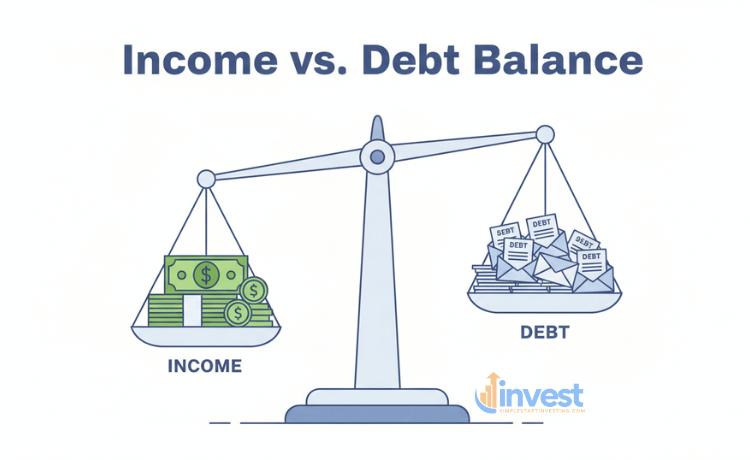
Think of it like a seesaw. On one side is the money coming in, and on the other side is the money going out to creditors. Lenders want to make sure the “money going out” side isn’t so heavy that it tips the seesaw over. If too much of your income is already committed to other banks, you won’t have enough left for food, gas, or that new mortgage payment.
A Real-World Example Imagine a worker named Alex who works at a local Amazon fulfillment center. Alex earns 5,000 dollars every month before taxes are taken out. This is called “gross income.” Every month, Alex pays 400 dollars for a car loan, 200 dollars for student loans, and 100 dollars in minimum credit card payments.
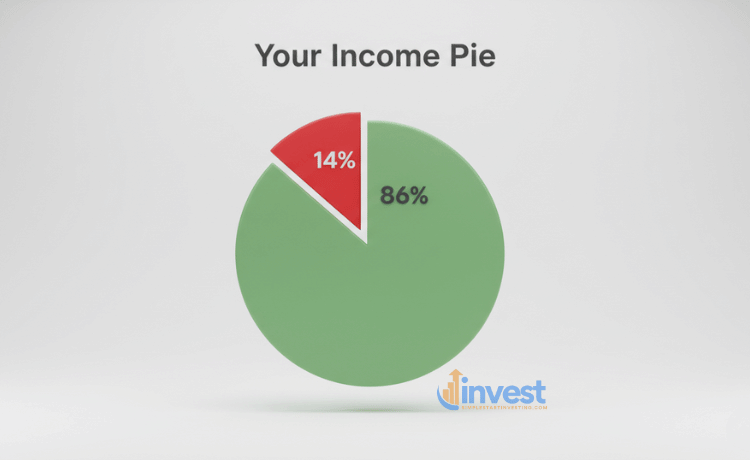
To find the Debt-to-Income Ratio, Alex adds those payments together to get 700 dollars. When we look at that 700 dollars compared to the 5,000 dollar income, the debt takes up 14 percent of the income. That 14 percent is the DTI. If Alex wants a mortgage that costs 1,300 dollars a month, the total debt would become 2,000 dollars, making the new DTI 40 percent.
The Common Mistake Many beginners think they should calculate their DTI using the money that actually hits their bank account after taxes (net income). They look at their “take-home pay” and get worried when the numbers look tight.
The Mindset Shift Lenders always use your “gross income” (pre-tax) because it is a standardized number across all employers. Taxes and insurance deductions can vary wildly, so the bank looks at the total amount you earn before anyone else touches it. When you calculate your own Debt-to-Income Ratio, always start with your gross salary to see what the bank sees.
The Two Flavors of DTI: Front-End vs. Back-End
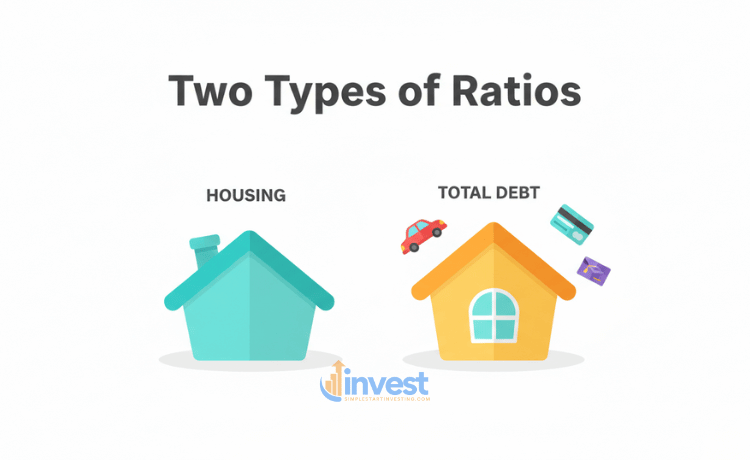
When you dive deeper into the mortgage world, you will hear lenders mention two different types of the Debt-to-Income Ratio. They are often called the “Front-End Ratio” and the “Back-End Ratio.”
The Front-End Ratio (Housing Ratio)
This number focuses strictly on your future housing costs. It includes your potential mortgage principal, interest, property taxes, and homeowners insurance. Lenders want to see how much of your income is dedicated just to keeping a roof over your head. Usually, they like this number to be around 28 percent or lower.
The Back-End Ratio (Total Debt Ratio)
This is the one that really matters for most loan approvals. It includes your housing costs PLUS all your other monthly debts like car notes, student loans, and credit cards. This gives the lender the full picture of your financial obligations. Most standard loans prefer this to be 43 percent or lower, though some programs allow it to go higher.
A Real-World Example Let’s look at Sarah, who works for a large company like Walmart. She earns 6,000 dollars a month. If she applies for a house where the total monthly payment (including taxes) is 1,800 dollars, her Front-End Ratio is 30 percent. However, she also has a 500 dollar car payment and 200 dollars in other loans. Her Back-End Ratio would be calculated by adding the 1,800 dollar house payment to the 700 dollars of other debt, totaling 2,500 dollars. This makes her Back-End DTI roughly 42 percent.
The Common Mistake Beginners often focus only on the mortgage payment. They think, “I can afford 2,000 dollars a month for a house,” but they forget that the bank adds their existing car and credit card payments into the same bucket.
The Mindset Shift You must view your finances as one single pool of obligations. The bank doesn’t care that your car loan is “separate” from your house; they only care that both payments are competing for the same 100 dollar bills in your wallet. To lower your Debt-to-Income Ratio, you can either earn more or pay off your smaller monthly debts before applying.
Why the Number 43% is So Important
In the United States, 43 percent is often called the “magic number” for a Debt-to-Income Ratio. This is largely due to federal guidelines for what is known as a “Qualified Mortgage.” Most lenders want to see that your total monthly debts, including your new mortgage, do not exceed 43 percent of your gross income.
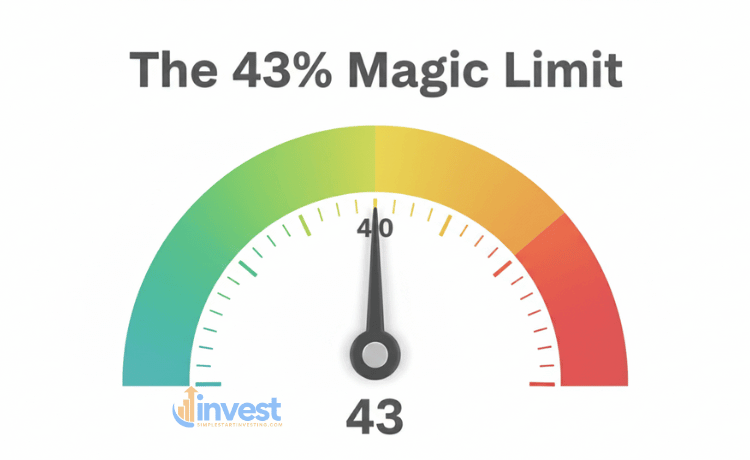
Why 43 percent? Data from years of lending shows that borrowers with a DTI higher than 43 percent are more likely to have trouble making their monthly payments. It is the threshold where “comfortable living” often turns into “paycheck to paycheck” stress. If you stay under this limit, you are considered a lower risk, which can lead to better interest rates.
A Real-World Example Consider a couple earning a combined 10,000 dollars a month. If their total monthly debts—including their new home—reach 4,300 dollars, they are exactly at that 43 percent limit. If they decide to buy a more expensive home that pushes their total debt to 5,000 dollars (50 percent), many traditional banks might turn them down, even if they have great credit. They might be forced to look at FHA loans or other programs that allow for higher ratios but come with more expensive insurance requirements.
The Common Mistake Many people think that if they have a “Gold” credit score (750+), the Debt-to-Income Ratio doesn’t matter. They assume their high score proves they are good for the money.
The Mindset Shift Credit scores prove you are willing to pay; DTI proves you are able to pay. You can be the most honest person in the world with a perfect credit score, but if you only have 100 dollars left at the end of the month after all your bills, a bank cannot legally or responsibly give you a 2,000 dollar mortgage. Focus on lowering your debt as much as raising your score.
What Does (and Doesn’t) Count as Debt?
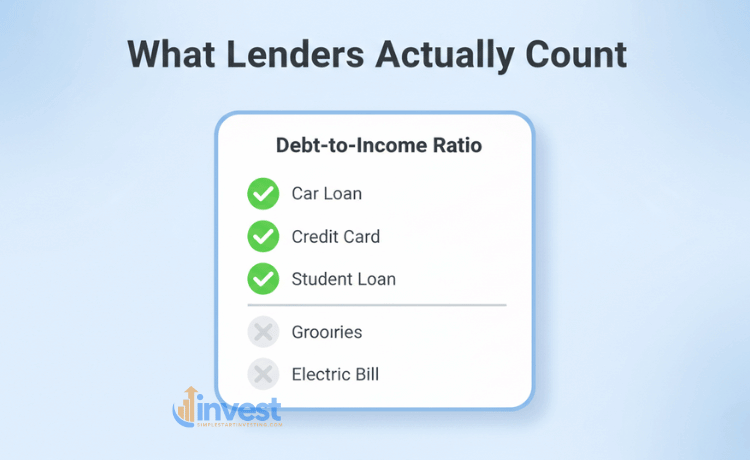
One of the most confusing parts of calculating your Debt-to-Income Ratio is knowing which bills to include. Not everything you pay every month is considered “debt” by a mortgage lender.
What Lenders Include:
- Monthly mortgage or rent payments.
- Car loan payments.
- Student loan payments (even if they are in deferment, lenders often calculate a small percentage).
- Minimum monthly credit card payments (not your full balance).
- Personal loans or “buy now, pay later” installments.
- Child support or alimony payments.
What Lenders Usually Ignore:
- Utility bills (electricity, water, heating).
- Cell phone and internet bills.
- Groceries and dining out.
- Car insurance and health insurance premiums.
- Streaming services like Netflix or Spotify.
- Tax withholdings.
A Real-World Example Imagine Joe is preparing to buy a home. He pays 150 dollars for his phone and 200 dollars for car insurance every month. He also pays 300 dollars for a car loan. When calculating his Debt-to-Income Ratio, Joe only needs to include the 300 dollar car loan. The phone and insurance bills are considered “living expenses,” not “debt obligations.”
The Common Mistake New buyers often try to calculate their “debt” by looking at their entire monthly budget, including their grocery bills and gym memberships. This makes them think their DTI is much higher than what the bank will actually report.
The Mindset Shift Lenders only care about “contractual debt”—money you are legally obligated to pay to a creditor or by a court order. While you should personally budget for groceries and Netflix, the bank only looks at the “hard” debts that show up on your credit report or legal documents. Understanding this distinction can help you realize you might be more qualified for a loan than you thought.
How to Calculate Your DTI in Three Simple Steps
Since we aren’t using complex math or tables, let’s walk through the logic of finding your Debt-to-Income Ratio as if we were chatting over coffee.
Step 1: Add up your monthly “Hard” debts. Grab a piece of paper. List your monthly car payment, your minimum credit card payments (the smallest amount you are allowed to pay each month), any student loan payments, and any other personal loans. Do not include your current rent, as that will be replaced by your new mortgage. Let’s say this total is 800 dollars.
Step 2: Find your Gross Monthly Income. Look at your salary before taxes. If you earn 60,000 dollars a year, you earn 5,000 dollars a month. This is your “top line” number.
Step 3: Compare the two. Now, think about the mortgage payment you want. Let’s say you want a house that costs 1,700 dollars a month. Add that to your 800 dollars of other debt. Your total monthly debt would be 2,500 dollars. Since 2,500 dollars is exactly half of your 5,000 dollar income, your Debt-to-Income Ratio would be 50 percent.
The Adjustment In this scenario, a 50 percent DTI might be too high for a standard loan. To fix this, you would need to either find a cheaper house (maybe a 1,200 dollar payment) or pay off that 800 dollars of other debt to bring the percentage down.
How to Lower Your Debt-to-Income Ratio Fast
If you find that your Debt-to-Income Ratio is sitting too high (above 43 percent), don’t panic. You have two main levers you can pull to fix it: increase your income or decrease your monthly debt payments.

Focus on Monthly Payments, Not Total Balance
To a lender, a 5,000 dollar credit card balance with a 150 dollar minimum payment is “heavier” than a 10,000 dollar loan with a 100 dollar monthly payment. If you want to lower your DTI quickly, focus on paying off the debts with the highest monthly payments first, regardless of the total amount you owe.
Avoid New Debt Before Closing
This is the golden rule of home buying. Do not go to a store like Walmart or Costco and open a new credit card for a discount. Do not lease a new Tesla. Every new monthly payment you add will immediately increase your Debt-to-Income Ratio and could disqualify you from your home loan at the last minute.
A Real-World Example Maria is three weeks away from closing on her first home. Her DTI is 41 percent, which is safe. She decides she needs a new car for her new driveway and takes out a loan with a 450 dollar monthly payment. Suddenly, her DTI jumps to 49 percent. The bank re-checks her credit right before closing, sees the new debt, and cancels her mortgage. Maria loses the house because she added a “small” monthly payment at the wrong time.
The Common Mistake People often think, “I have 20,000 dollars in savings, so I can handle a new car payment.” They don’t realize that the bank’s software doesn’t care about your savings as much as it cares about your monthly debt-to-income balance.
The Mindset Shift When you are in the process of buying a home, your financial life should be “frozen.” No new credit cards, no new loans, and no large purchases on existing cards. Keep your Debt-to-Income Ratio as low and stable as possible until you have the keys in your hand.
Different Loans, Different DTI Rules
Not every loan has the same “magic number.” Depending on the program you choose, you might have more or less wiggle room with your Debt-to-Income Ratio.
- Conventional Loans: These are the standard loans backed by Fannie Mae or Freddie Mac. They generally prefer a DTI of 36 percent but will often go up to 45 or even 50 percent if you have a high credit score and plenty of cash in the bank.
- FHA Loans: These are popular for first-time buyers. They are more flexible and often allow a Debt-to-Income Ratio as high as 43 percent, or even 50 percent or 57 percent in special cases.
- VA Loans: For veterans and service members, there isn’t a strict “maximum” DTI, but lenders usually look for 41 percent or lower. If it’s higher, they look for “residual income” (money left over for living) to make sure the veteran is safe.
The Common Mistake Beginners assume that if one bank says “No” because of their DTI, every bank will say no.
The Mindset Shift Different loan products have different “risk appetites.” If your Debt-to-Income Ratio is a bit high, you might just need to switch from a Conventional loan to an FHA loan. Always ask your loan officer about the specific DTI limits for the different programs they offer.
Your DTI is a Financial Compass
At the end of the day, the Debt-to-Income Ratio is more than just a hurdle to clear for a bank; it is a compass for your own financial life. Even if a bank tells you that you qualify for a 50 percent DTI, you should ask yourself if you want to live that way.
Spending half of your pre-tax income on debt means that after taxes are taken out, you might be spending 60 or 70 percent of your actual take-home pay on bills. This leaves very little for retirement savings, emergency funds, or vacations. A healthy Debt-to-Income Ratio isn’t just about getting a house; it’s about making sure the house doesn’t become a financial prison.
Aim to keep your total debts (including your house) under 36 percent of your income for a truly “stress-free” financial life. Use the rules of the bank as a maximum, but use your own common sense as your true guide.