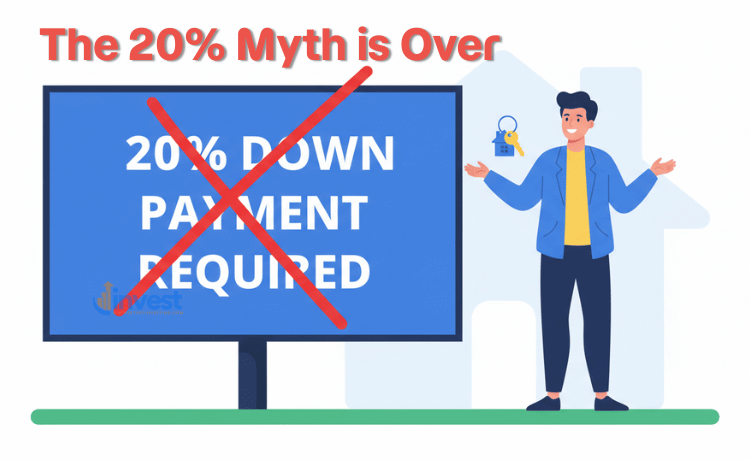
For decades, many people believed that saving 20 percent of a home’s purchase price was the only way to get a mortgage. This “golden rule” of real estate has kept countless families on the sidelines, waiting years to save tens of thousands of dollars while home prices continue to climb.
The truth is that the 20 percent down payment requirement is largely a myth in the modern American housing market. Today, there are numerous low down payment options designed specifically for first-time buyers and those who haven’t saved a massive fortune.
If you have been waiting until you have a huge stack of cash to buy your first home, you might be waiting much longer than necessary. Understanding how these programs work can help you move into your own home years sooner than you originally planned.
Why Does Everyone Think You Need 20 Percent Down?
To understand why the 20 percent myth exists, we have to look at how banks view risk. In the past, lenders felt much safer when a buyer put a large amount of money down. If a buyer invested 20 percent of their own money, they were less likely to walk away from the home if things got tough.
Furthermore, reaching that 20 percent threshold allows a buyer to avoid something called Private Mortgage Insurance or PMI. This is a fee that protects the lender—not you—in case you stop making payments. Because PMI was seen as an extra cost to avoid, the 20 percent goal became the standard advice passed down through generations.
However, the market has changed significantly. Real estate prices in major hubs like Austin, Charlotte, or Phoenix have risen to the point where 20 percent could represent 80,000 dollars or even 100,000 dollars. For a young professional or a growing family, saving that much while paying rent is often nearly impossible.
A Common Beginner Mistake
Many beginners think that if they don’t have 20 percent down, they will be rejected by every bank. They assume that low down payment programs are only for people with “bad” financial situations.
The Financial Logic Shift
In reality, many high-income earners and financially savvy buyers choose low down payment options. They would rather keep their cash in the stock market—buying shares of companies like Amazon or Apple—where it might earn a higher return than the interest rate on their mortgage. Using a low down payment is often a strategic choice to maintain “liquidity,” which just means having cash available for emergencies or other investments.
Exploring FHA Loans: The 3.5 Percent Solution
One of the most popular paths for beginners is the FHA loan. This program is backed by the Federal Housing Administration. Because the government provides a guarantee to the lender, the bank is willing to accept a much smaller down payment.
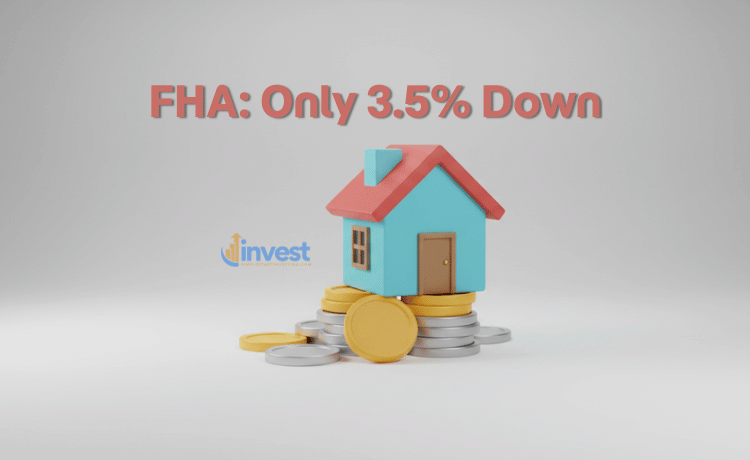
With an FHA loan, you can buy a home with as little as 3.5 percent down. Let’s look at how that looks in real numbers. If you are buying a home for 300,000 dollars, a 20 percent down payment would be 60,000 dollars. That is a lot of money to save. With an FHA loan, that same 300,000 dollar house only requires 10,500 dollars upfront for the down payment.
FHA loans are also famous for being more flexible with credit scores. While a traditional “Conventional” loan might require a very high credit score to get the best rates, FHA programs are designed to help those whose credit history is still a work in progress.
A Common Beginner Mistake
A common mistake is thinking that the FHA actually lends you the money. They do not. You still go to a regular bank or a mortgage company. The FHA simply “insures” the loan so the bank feels safe giving it to you.
The Financial Logic Shift
Instead of viewing the FHA’s required “Mortgage Insurance Premium” as a penalty, think of it as a “convenience fee.” You are paying a little extra every month in exchange for the ability to own a home today instead of ten years from now. By the time you would have saved 60,000 dollars, the price of that 300,000 dollar house might have grown to 400,000 dollars.
Conventional 97: The 3 Percent Down Option
If you have a strong credit score, you might not even need an FHA loan. Many lenders offer Conventional 97 programs. As the name suggests, the bank lends you 97 percent of the home’s value, and you provide the remaining 3 percent.
This is a favorite for first-time buyers who want to avoid some of the stricter appraisal rules that come with FHA loans. For example, if you are buying a 400,000 dollar starter home, 3 percent is only 12,000 dollars. Compare that to the 80,000 dollars you would need for a 20 percent down payment, and you can see why this is a game-changer.
One major benefit of these conventional programs is how they handle mortgage insurance. Unlike FHA loans, where the insurance often stays for the life of the loan, conventional PMI can be cancelled once you eventually reach 20 percent equity in your home through making payments or home value appreciation.
A Common Beginner Mistake
Beginners often think “Conventional” means “Standard 20%.” They don’t realize that “Conventional” simply means the loan isn’t directly insured by a government agency like the FHA or VA.
The Financial Logic Shift
The goal shouldn’t be to avoid PMI at all costs. The goal should be to get into an appreciating asset—the home—as efficiently as possible. If the home value grows by 5 percent in one year, that growth could be worth more than the entire cost of your mortgage insurance for three years.
VA Loans: Zero Percent Down for Heroes
For those who have served in the U.S. Military, the VA loan is perhaps the most powerful wealth-building tool in existence. Provided by the Department of Veterans Affairs, this program allows eligible veterans and active-duty service members to buy a home with zero dollars down.
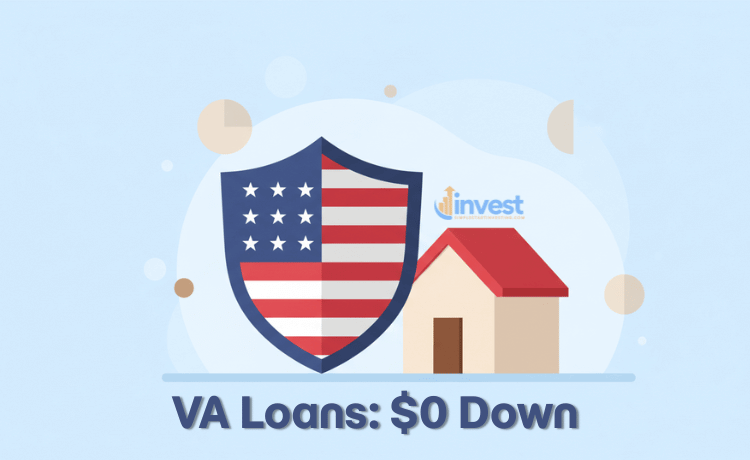
Yes, you read that correctly. On a 500,000 dollar home, a veteran can put zero dollars down and still get a competitive interest rate. Additionally, VA loans do not require any monthly mortgage insurance. This saves the buyer hundreds of dollars every single month compared to other low down payment options.
This program is a way for the country to thank those who served, but it is also a brilliant financial move. It allows veterans to keep their savings for home repairs, furniture, or investments in companies like Walmart or Costco.
A Common Beginner Mistake
Many veterans believe they can only use their VA loan benefit once. In reality, you can use it multiple times throughout your life, and in some cases, you can even have two VA loans at the same time if you have enough “entitlement” left.
The Financial Logic Shift
Don’t feel like you “should” put money down just because you have it. If you qualify for a VA loan, the math often suggests that putting zero down is the smarter move, as long as you can comfortably afford the monthly payment. You can use your cash to build an emergency fund instead.
USDA Loans: Rural Housing for Zero Down
If you aren’t a veteran but still want a zero-down option, the USDA loan might be the answer. These are loans backed by the U.S. Department of Agriculture. They are designed to encourage people to live in “rural” areas.
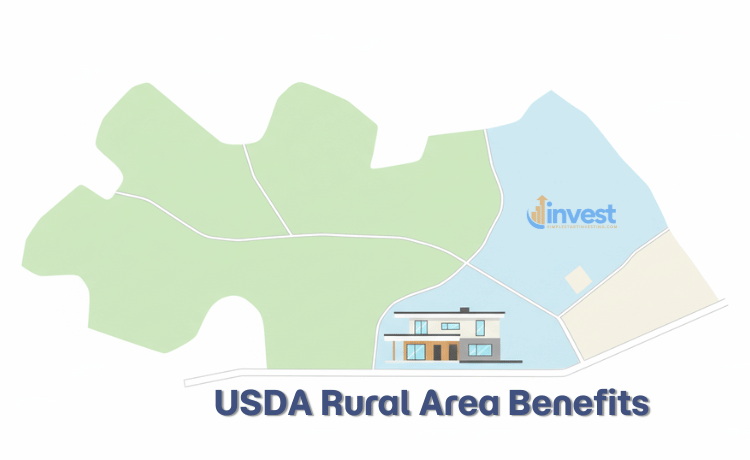
Before you picture a farm in the middle of nowhere, you should know that many suburban areas on the edges of major cities actually qualify as “rural” under USDA maps. These loans offer 100 percent financing, meaning no down payment is required.
There are income limits to this program—it is designed for “low-to-moderate” income households. However, for a young couple starting out, the USDA loan can be the fastest path to homeownership without needing a massive inheritance or years of aggressive saving.
A Common Beginner Mistake
Many people assume their dream neighborhood won’t qualify for a USDA loan. They don’t check the maps. You might be surprised to find that a new development just 20 minutes outside of a city center is eligible.
The Financial Logic Shift
Geography can be a financial strategy. By choosing to live slightly further out in a USDA-eligible zone, you effectively “buy” yourself a 20 percent head start because you didn’t have to spend that cash upfront.
The Reality of Closing Costs
While we are busting the myth of the 20 percent down payment, we must be honest about another cost: Closing Costs. This is a separate bucket of money from your down payment.
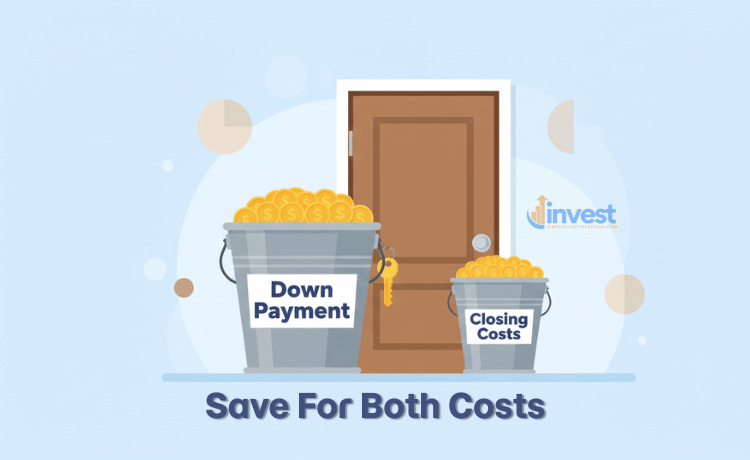
Closing costs usually range from 2 percent to 5 percent of the home’s purchase price. They cover things like the home appraisal, title insurance, and taxes. If you are using a zero-down VA loan to buy a 300,000 dollar home, you might still need 9,000 dollars to cover these closing fees.
A Common Beginner Mistake
The biggest mistake is saving exactly 3.5 percent for an FHA loan and forgetting about closing costs. If you have 10,500 dollars saved for a 300,000 dollar home, you aren’t ready yet because you still need to pay the lawyers and the city for the paperwork.
The Financial Logic Shift
You can often ask the seller of the home to pay your closing costs for you. This is called a “Seller Concession.” In a market where houses aren’t selling instantly, a seller might agree to pay 5,000 dollars of your costs just to get the deal done. This is a classic negotiation tactic that smart buyers use to keep more cash in their pockets.
Understanding Private Mortgage Insurance (PMI)
If you put down less than 20 percent on a conventional loan, you will pay Private Mortgage Insurance (PMI). Beginners often view this as “throwing money away.” Let’s look at the actual logic.
Typically, PMI might cost between 30 dollars and 150 dollars for every 100,000 dollars you borrow, depending on your credit score. If you borrow 300,000 dollars, you might pay 150 dollars a month for PMI.
While no one likes an extra fee, that 150 dollars a month is the “price” of not having to save 60,000 dollars. If you waited five years to save that 60,000 dollars, and the home price went up by 50,000 dollars in that time, you actually lost money by waiting. Paying the PMI would have been much cheaper than paying the higher price of the home later.
A Common Beginner Mistake
Many beginners think PMI is permanent. On conventional loans, once your loan balance drops to 80 percent of the home’s value, you can ask the lender to remove the PMI. If your home value goes up significantly, you can even get a new appraisal to prove you have 20 percent equity and cancel the insurance early.
The Financial Logic Shift
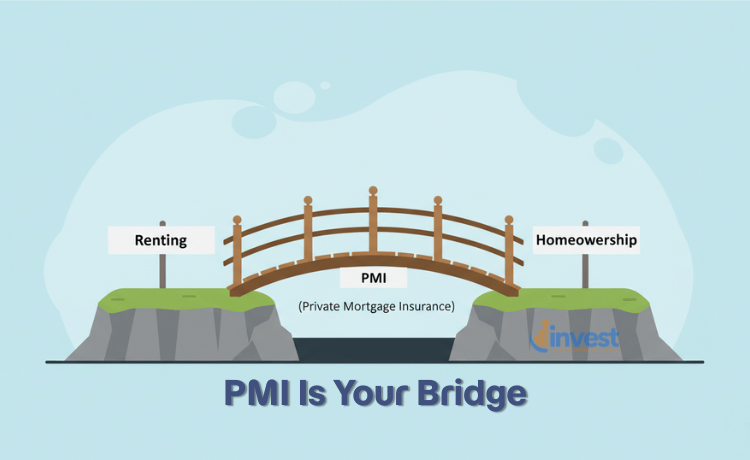
Think of PMI as a bridge. It’s a temporary expense that allows you to cross the gap between “Renter” and “Homeowner.” Once you are across the bridge, you can work on removing the cost, but the most important part is getting to the other side where you are building equity.
Is a Low Down Payment Right for You?
Choosing a low down payment option is a personal financial decision. It isn’t always the right move for everyone, but for many, it is the only realistic way to enter the market.
Pros of a Low Down Payment:
- Get in early: You start building equity and benefit from home price growth sooner.
- Keep your cash: You have money left over for emergencies, furniture, or repairs.
- Investment diversification: You can invest your extra savings in a 401k or an IRA instead of locking it all up in the walls of your house.
Cons of a Low Down Payment:
- Higher monthly payments: Since you are borrowing more money, your monthly mortgage bill will be higher.
- Mortgage Insurance: You will likely have to pay an extra monthly fee (PMI or MIP).
- Less initial equity: If home prices drop slightly, you could owe more than the home is worth (being “underwater”).
A Common Beginner Mistake
New buyers often focus only on the monthly payment. They don’t realize that by putting less money down, they will pay more interest over the life of the 30-year loan.
The Financial Logic Shift
The “best” financial move depends on your “opportunity cost.” If you put 20 percent down, that money is “stuck” in the house. If you put 3 percent down and invest the other 17 percent in a diversified portfolio of stocks like JPMorgan Chase or Tesla, and those stocks grow faster than your mortgage interest rate, you actually come out ahead.
How to Start Preparing Today
If you want to take advantage of these low down payment options, your first step isn’t looking at houses on a website. Your first step is getting your “financial house” in order.
- Check your credit score: Better scores lead to lower PMI costs and lower interest rates.
- Save for the “Total Cost”: Aim for at least 5 percent to 7 percent of a home’s value. This covers a 3 percent down payment plus closing costs and a small “fix-it” fund for when you move in.
- Talk to a local lender: Ask them specifically about “First-time homebuyer programs” and “FHA vs. Conventional 97.”
- Research your area: See if there are any city or state-level “Down Payment Assistance” (DPA) programs. Some local governments actually give you grants of 5,000 dollars or 10,000 dollars to help with your down payment.
The 20 percent myth has been broken. Whether it’s an FHA loan, a VA loan, or a low-down conventional mortgage, the path to homeownership is wider than you think. You don’t need a mountain of gold to buy a home; you just need a clear plan and the right information.
Regulations regarding mortgage limits, interest rates, and insurance requirements change frequently. Please check current guidelines or consult with a qualified mortgage professional before making a purchase.
Disclaimer: This content is for educational purposes only and does not constitute financial or legal advice.