Have you ever felt guilty about buying a five-dollar latte at Starbucks? Maybe you saw a social media post telling you that your morning coffee habit is the reason you cannot afford a house. It is a common narrative in the world of money management, but it is often misleading for those just starting out.
While tracking every penny might feel productive, it often leads to “frugality fatigue.” You spend so much mental energy trying to save five dollars that you miss the opportunities to save five thousand dollars. This is where the concept of personal finance big wins comes into play.
By focusing on a few large areas of your life, you can see a massive impact on your bank account without having to count every cent spent on snacks or caffeine. In this guide, we will explore why focusing on the big stuff matters more and how you can start winning today.
What are Personal Finance Big Wins?
In simple terms, personal finance big wins are the major financial decisions that have a permanent and large-scale impact on your net worth. Instead of cutting back on small, daily pleasures, you focus on optimizing the three or four largest expenses in your life.
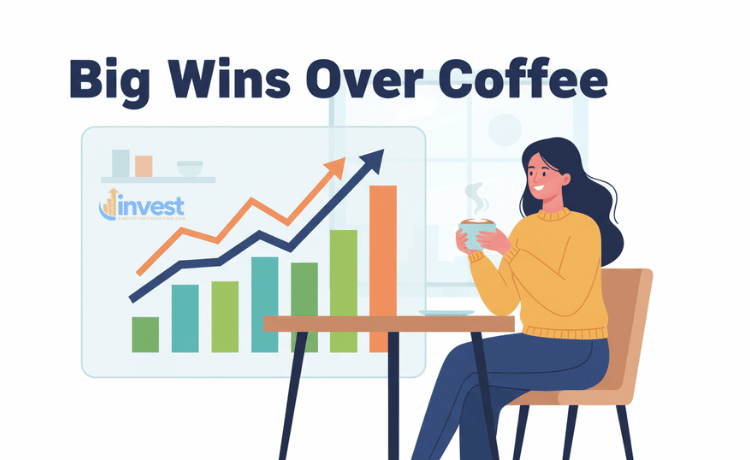
Think of it like training for a marathon. You could spend hours obsessing over the color of your shoelaces, or you could spend that time actually running. The running is the “big win” that gets you to the finish line. In your financial life, these big wins usually involve housing, transportation, and investment fees.
A Real-World Example: Imagine a young professional in Chicago named Sarah. Sarah spends 150 dollars a month on premium coffee. She feels guilty and decides to stop entirely. After a year of “suffering,” she saves 1,800 dollars.
Now, imagine Sarah’s friend, Marcus. Marcus drinks his coffee every day but spends one weekend researching his recurring bills. He negotiates his rent down by 100 dollars a month, switches his car insurance to save 50 dollars a month, and moves his savings to a high-yield account. Marcus saves the same 1,800 dollars without ever giving up his favorite drink.
The Common Beginner Mistake: Most beginners start their financial journey by “shrinking” their life. They cut out everything that brings them joy because those things are easy to see on a daily receipt. They think that being “good with money” means being miserable and restrictive.
The Correct Financial Logic: Being good with money means being efficient. Your mental energy is a limited resource. If you use all your willpower to skip a muffin, you will have no willpower left to negotiate a 5,000-dollar raise at work. Focus on the “macro” (big) decisions so the “micro” (small) ones do not matter as much.
The Silent Killer: Why We Focus on Small Expenses
Why do we obsess over coffee? It is because coffee is a visible, daily choice. It feels like we are in control. Negotiating a mortgage or a car loan feels intimidating and “one-time,” so we ignore it. However, the math tells a different story.
If you save five dollars a day on coffee, you save about 150 dollars a month. That is fine. But if you live in a house that costs 500 dollars more than you can afford every single month, the coffee savings are completely wiped out. You are essentially “treading water” while a giant wave of high fixed costs pulls you under.
To achieve true financial freedom, you must flip the script. You must become a master of the big expenses first. Once the big wins are locked in, your daily spending becomes much less of a threat to your future.
Big Win #1: Negotiating Your Housing Costs
Housing is almost always the largest expense for any American household. Whether you rent an apartment in Seattle or own a home in Florida, this is where the most money “leaks” out of your budget.
The Explanation: Reducing your housing cost by even 5 percent or 10 percent can result in thousands of dollars in savings every year. For renters, this means negotiating your lease. For homeowners, this might mean refinancing a mortgage when interest rates drop or appealing your property tax assessment.
A Real-World Example: Let’s look at a tenant renting a two-bedroom apartment from a large management company like Greystar. The lease renewal comes in with a 200-dollar monthly increase. Instead of just signing, the tenant researches similar apartments nearby and finds they are cheaper. They present this data to the landlord and offer to sign a longer 18-month lease in exchange for keeping the rent the same. The landlord agrees to avoid the cost of finding a new tenant. The tenant just saved 2,400 dollars for the year with one conversation.
The Common Beginner Mistake: Many people believe that rent prices are “set in stone” like a price tag at Walmart. They assume that if the landlord asks for more, they must pay it or leave.
The Correct Financial Logic: Almost everything in real estate is a negotiation. Landlords hate vacancies. A vacant apartment costs them thousands of dollars in lost rent and cleaning fees. You have more leverage than you think, especially if you are a clean, quiet tenant who pays on time.
Big Win #2: Optimizing Transportation and Insurance
The second-largest expense for most Americans is their car. Between the loan payment, gas, maintenance, and insurance, a car can be a massive drain on your ability to invest in stocks like Apple (AAPL) or Amazon (AMZN).

The Explanation: You do not need to walk to work to win here. You just need to avoid “car lifestyle creep.” This means buying a reliable used car instead of a brand-new luxury vehicle and shopping for insurance every six to twelve months.
A Real-World Example: Consider two coworkers. One buys a brand-new SUV with an 800-dollar monthly payment. The other buys a three-year-old certified pre-owned sedan with a 400-dollar monthly payment. Over five years, the person with the used car saves 24,000 dollars in payments alone. If they took that 400-dollar difference and invested it in a low-cost index fund, they would likely have over 30,000 dollars at the end of those five years.
The Common Beginner Mistake: Beginners often focus on the “monthly payment” that the car salesman offers. They do not look at the total cost of the loan or the interest rate. They also tend to stay with the same insurance company for years out of habit, even as rates rise.
The Correct Financial Logic: A car is a tool that loses value (depreciates) every single day. Buying the “minimum viable vehicle” that is safe and reliable allows you to put your money into assets that gain value (appreciate) instead. Also, insurance companies like Geico or State Farm often give better rates to new customers. Spending thirty minutes getting new quotes every year is a high-hourly-rate activity.
Big Win #3: Managing High-Interest Debt and Credit Scores
Debt is the opposite of an investment. While an investment pays you for your money, debt requires you to pay someone else for the privilege of using theirs.
The Explanation: If you have credit card debt with a 20 percent interest rate, that is a financial emergency. No investment in the stock market will consistently return 20 percent. Therefore, paying off that debt is the best “investment” you can make. Furthermore, having a high credit score allows you to get lower interest rates on future loans, which saves you tens of thousands of dollars over a lifetime.
A Real-World Example: Imagine you have 5,000 dollars in credit card debt. If you only pay the minimum, you might pay 1,000 dollars in interest this year alone. However, if you use a “Balance Transfer” card with a 0 percent introductory rate for twelve months, every dollar you pay goes toward the balance, not the interest. You effectively “save” that 1,000 dollars in interest charges.
The Common Beginner Mistake: Newcomers often try to invest in the stock market while they still have high-interest credit card debt. They might earn 8 percent on their investments but are losing 25 percent on their debt.
The Correct Financial Logic: Mathematically, you are losing money in that scenario. You must “plug the leaks” before you start filling the bucket. Your credit score is a financial asset. Treat it with care. A “Good” vs. “Excellent” score can be the difference between a 7 percent mortgage and a 6 percent mortgage. On a 400,000-dollar house, that one percent difference can save you over 100,000 dollars in interest over thirty years.
Big Win #4: Slashing Investment Fees
When you start investing in your 401(k) or IRA, you will encounter “Expense Ratios.” These are the fees you pay to the people managing your funds. They might look small, like 1 percent, but they are incredibly destructive over time.
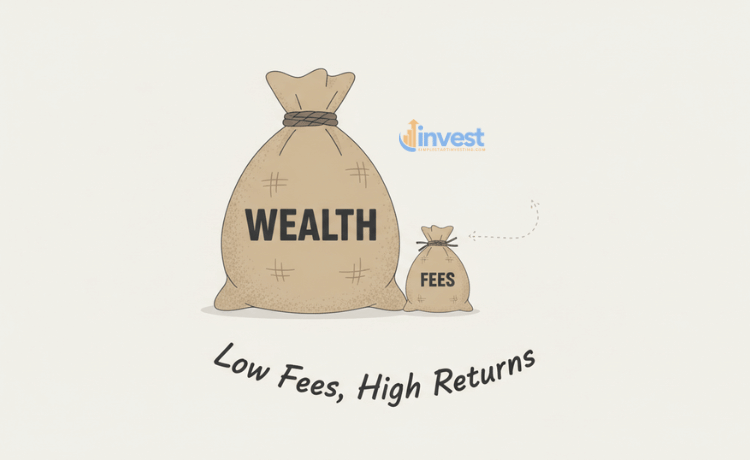
The Explanation: An expense ratio is taken out of your total account balance every year, regardless of whether the market goes up or down. If you choose a fund with a 1 percent fee instead of a fund with a 0.05 percent fee, you are giving away a huge portion of your future wealth.
A Real-World Example: Imagine you start with 100,000 dollars and invest it for 30 years. If the market returns 7 percent and you pay a 1 percent fee, you end up with about 574,000 dollars. But if you pay only a 0.05 percent fee (common for Vanguard or Fidelity index funds), you end up with about 750,000 dollars. That small difference in the fee “percentage” cost you nearly 176,000 dollars of your own money!
The Common Beginner Mistake: Beginners often pick mutual funds based on a “cool name” or because a “financial advisor” at their local bank recommended it. They don’t look at the hidden fees.
The Correct Financial Logic: In investing, you usually get what you don’t pay for. High fees do not guarantee high performance. In fact, low-cost index funds outperform most high-fee actively managed funds over long periods. Check the “Expense Ratio” on your investments today. If it is over 0.50 percent, you might be paying too much.
Big Win #5: Automating Your Savings
The biggest win of all is removing “human error” from your finances. If you have to decide to save money every month, you will eventually fail because of a vacation, a holiday, or a moment of weakness.
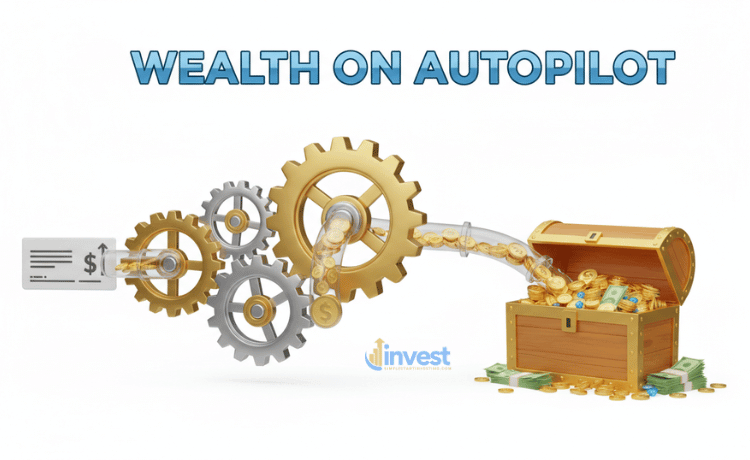
The Explanation: Automation means setting up your payroll or bank account so that money moves to your savings and investments before you ever see it. This is often called “Paying Yourself First.” If the money never hits your checking account, you won’t spend it.
A Real-World Example: John sets up his employer’s 401(k) to take 10 percent of his paycheck automatically. He also sets up an automatic transfer of 200 dollars every payday from his checking account to a brokerage account to buy shares of an S&P 500 ETF. Because this happens automatically, John spends the rest of his paycheck guilt-free on rent, food, and yes—even coffee.
The Common Beginner Mistake: Many people say, “I will save whatever is left at the end of the month.” Usually, there is nothing left. Life has a way of expanding to fill the money available.
The Correct Financial Logic: Treat your savings like a mandatory bill, just like your electricity or internet. By automating, you ensure that your personal finance big wins happen every single month without you having to lift a finger. This creates “wealth momentum” that is very hard to stop.
How to Pivot from “Small Thinking” to “Big Thinking”
It is okay to enjoy your life. If a coffee helps you get through a tough Monday, buy the coffee. But hold yourself to a high standard on the big things.
Start by auditing your fixed expenses. Look at your bank statement from last month. What are the top three largest numbers? Usually, it is your rent/mortgage, your car payment/insurance, and your taxes/withholdings.
If you spend one week optimizing those three areas, you will do more for your financial future than ten years of skipping lattes. This is the secret of the wealthy: they don’t sweat the small stuff; they master the big stuff.

Summary of Actions for Big Wins:
- Audit Your Rent: Research local prices before your next lease renewal.
- Check Your Insurance: Get three new quotes for auto and home insurance this week.
- Review Your Debt: Can you consolidate high-interest credit card debt into a lower-rate personal loan or 0 percent card?
- Look at Investment Fees: Ensure your 401(k) or IRA is in low-cost index funds (aim for fees under 0.10 percent).
- Automate Everything: Make your savings happen while you sleep.
The Path Forward
Focusing on personal finance big wins allows you to live a “rich life” now while building a “wealthy life” for later. It removes the stress of micro-managing every transaction and replaces it with the confidence that the big pieces of the puzzle are already in place.
When you get the big wins right, the five-dollar coffee becomes irrelevant. You can drink your latte, enjoy your hobbies, and still watch your net worth grow year after year. Stop worrying about the small change and start focusing on the big changes that truly move the needle.