Many new investors start their journey with a simple, exciting dream: living off dividends. There is something incredibly satisfying about seeing cash deposited into your brokerage account without you having to sell a single share. It feels like a “paycheck” from the companies you own. This fascination often leads beginners to search for stocks with the highest yield possible, believing that a bigger percentage always equals a better investment.
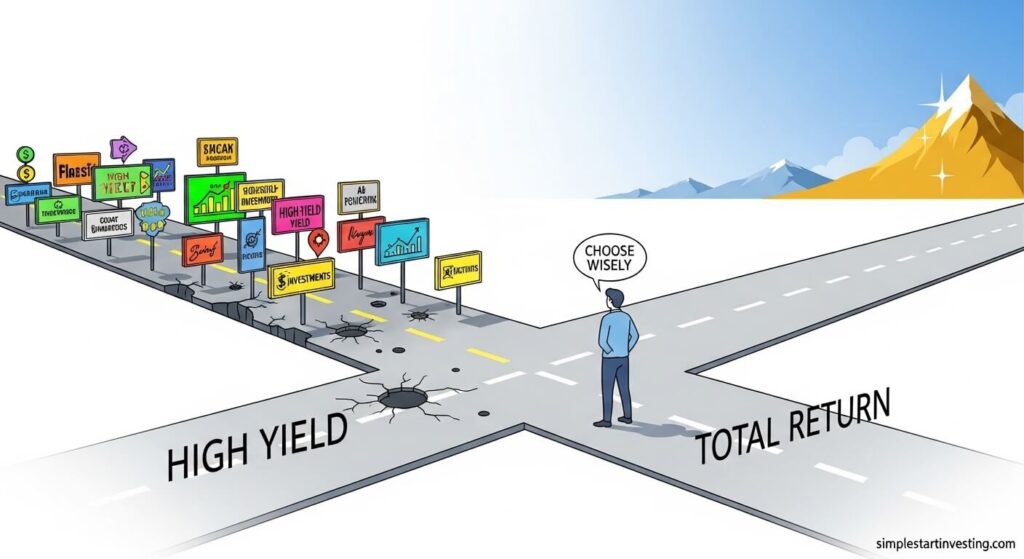
However, focusing purely on yield can be a dangerous path. In the world of investing, there is a massive difference between a “high yield” and a “good investment.” To build lasting wealth, you need to understand the relationship between Total Return vs. Yield. If you only look at the dividend check and ignore what is happening to the stock price, you might find yourself losing more money than you are making.
The Simple Appeal of Dividend Yield
To understand why people get trapped, we first have to understand what they are looking at. The Dividend Yield is essentially a measure of how much cash a company pays out each year relative to its stock price. Think of it like the interest rate on a savings account, but with a lot more moving parts.
If you buy a stock for 100 dollars and that company pays you 5 dollars in dividends over the course of a year, your yield is 5 percent. For many, this 5 percent feels like “safe” money. It is cash in hand. Because of this, beginners often filter their stock searches to find companies offering 7 percent, 8 percent, or even 10 percent yields.
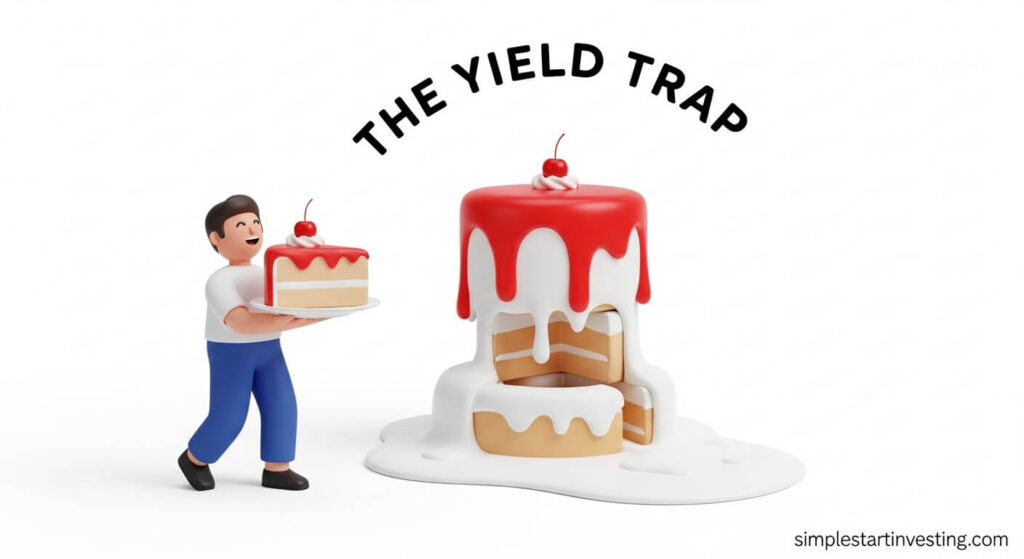
The logic seems sound: why would you buy a stock that pays nothing when you could buy one that pays you 8 percent? But this is where the “yield trap” begins to set its teeth. The yield is not a fixed promise; it is a snapshot in time that can be very misleading if you don’t look at the bigger picture of Total Return.
What is Total Return?
If Dividend Yield is the “slice” of the pie you get to eat today, Total Return is the growth of the entire pie. Total return includes two things: the dividends you receive and the change in the stock’s price.
Imagine you bought a house for 500,000 dollars. You rent it out and make 20,000 dollars in profit after expenses for the year. That is your “yield.” But what if, during that same year, the neighborhood declined and the value of the house dropped to 450,000 dollars?
Even though you collected 20,000 dollars in cash, you lost 50,000 dollars in the value of the house. Your “total return” for the year is actually a loss of 30,000 dollars. This is exactly what happens to investors who focus only on high-yield stocks without considering price stability or growth. In the battle of Total Return vs. Yield, the total return is the only number that actually tells you if you are getting richer or poorer.
Why a High Yield Can Be a Red Flag
In the stock market, a yield that looks “too good to be true” usually is. Because the yield is calculated by dividing the dividend by the stock price, there are two ways for a yield to go up. Either the company increases the dividend payment, or the stock price crashes.
Often, a company with a 10 percent yield has that high number because the market is terrified. Investors might be selling the stock because the company’s profits are shrinking, it has too much debt, or its industry is dying. As the stock price falls, the yield mathematically rises.
If you buy a stock at 100 dollars with a 10 dollar dividend (a 10 percent yield), but the stock price drops to 50 dollars because the business is failing, you haven’t “earned” 10 percent. You have lost 50 dollars in share value while only gaining 10 dollars in cash. You are down 40 dollars. This is the classic “Yield Trap.”
The Life Cycle of a Company
To understand the Total Return vs. Yield debate, it helps to look at how companies grow. Companies generally fall into two stages of life: the growth phase and the mature phase.
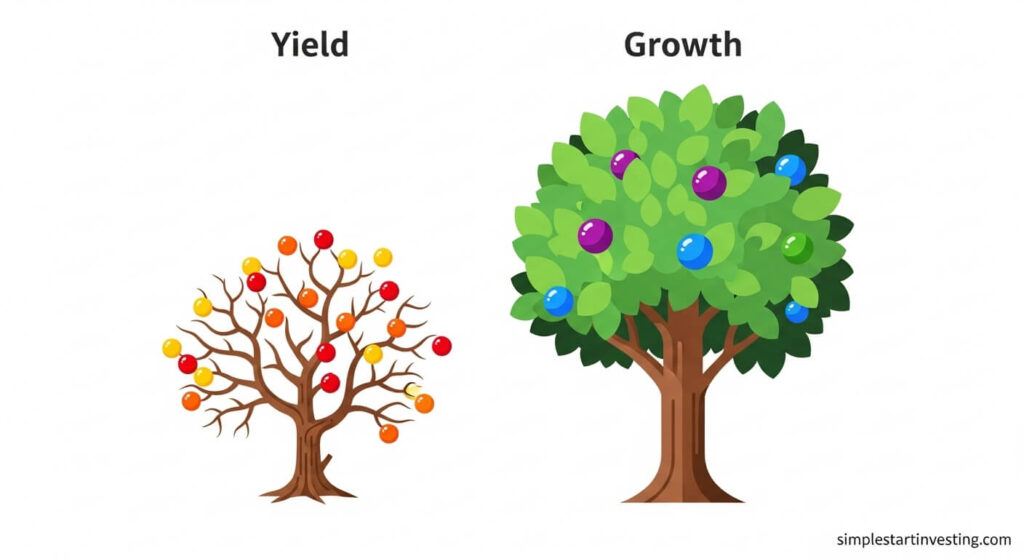
Young, aggressive companies (like many tech giants in their early days) rarely pay dividends. Why? Because they have better things to do with their cash. They want to build new factories, hire more engineers, and acquire competitors. They believe that by reinvesting that dollar back into the business, they can turn it into two dollars. For these stocks, your total return comes almost entirely from the stock price going up.
Mature companies (like utility providers or established consumer goods brands) don’t have as many places to grow. They already dominate their market. Since they can’t effectively reinvest all their profits to grow at 20 percent a year, they return that cash to shareholders as dividends.
The mistake beginners make is thinking that the mature, high-dividend company is “safer” or “better” than the growth company. In reality, a growth stock with a 0 percent yield that grows 15 percent in value per year provides a much better Total Return than a mature stock with a 5 percent yield that stays flat in price.
The Invisible Cost of Dividends
Many people view dividends as a “bonus,” but it is important to realize that a dividend is not free money created out of thin air. When a company pays a dividend, that cash leaves the company’s bank account.
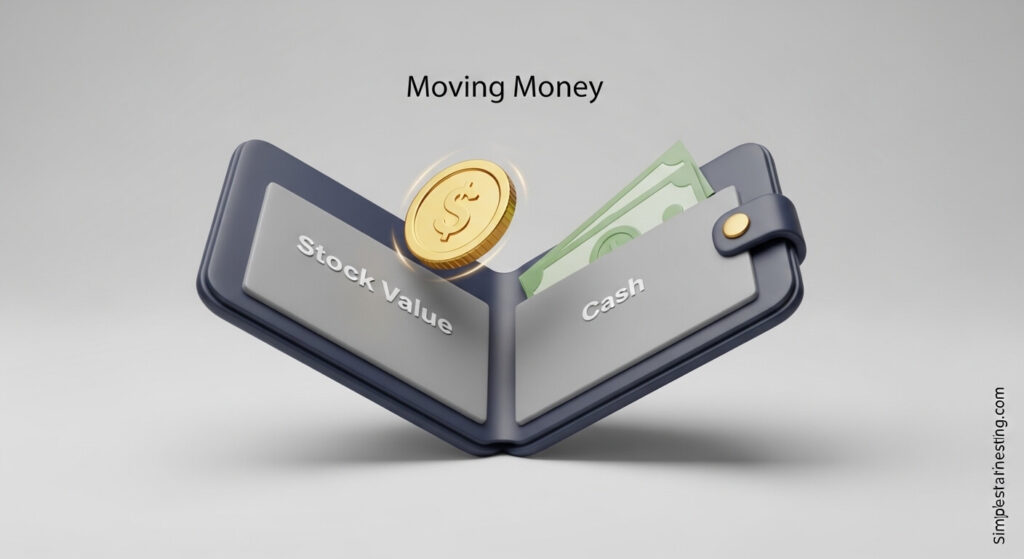
Logically, if a company is worth 1 billion dollars and it sends 100 million dollars in cash to shareholders, the company is now worth 900 million dollars. On the day a stock pays out a dividend (known as the ex-dividend date), the stock price is typically adjusted downward by the amount of the dividend.
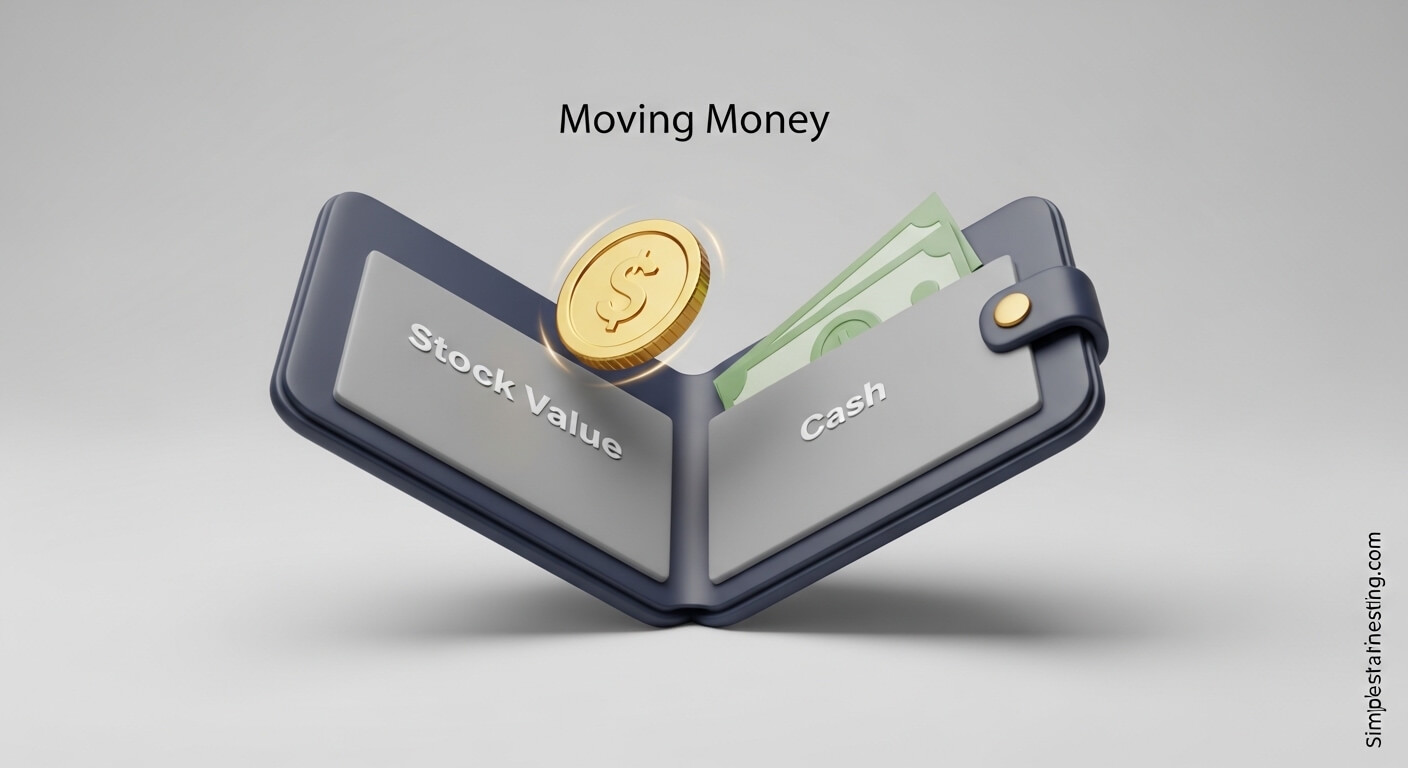
If you have a stock worth 100 dollars and it pays a 2 dollar dividend, you now have a 98 dollar stock and 2 dollars in cash. You still have 100 dollars total. You haven’t actually gained wealth at that exact moment; you have simply moved money from your “left pocket” (the stock value) to your “right pocket” (cash). The real wealth is created by the company’s ability to grow its value over time, which is reflected in the Total Return.
Tax Efficiency: A Silent Wealth Killer
For investors in the United States, taxes are a major reason to favor Total Return over high yield, especially in taxable brokerage accounts. When a company pays you a dividend, you generally owe taxes on that money in the year you receive it.
Even “qualified dividends,” which are taxed at a lower rate, still take a bite out of your money every single year. You have no choice in the matter. The IRS wants its share now.
On the other hand, if a stock doesn’t pay a dividend but grows in value, you don’t owe a single penny in taxes until you decide to sell the stock. This allows your money to compound much faster. You are essentially getting an interest-free loan from the government on your capital gains. Over 20 or 30 years, the difference between paying taxes every year on dividends versus deferring those taxes on growth can amount to hundreds of thousands of dollars.
The Power of Reinvestment
If you don’t actually need the cash right now to pay for groceries or rent, chasing yield is often counterproductive. Most long-term investors use a “Dividend Reinvestment Plan” (DRIP). This means every time they get a dividend, they immediately use it to buy more shares of the stock.
If you are just going to reinvest the dividend anyway, you are essentially trying to create your own growth. In this case, focusing on the Total Return vs. Yield is even more vital. If you reinvest a 5 percent dividend into a stock that is losing 10 percent of its value every year, you are just throwing good money after bad.
It is often much simpler and more tax-efficient to invest in high-quality companies that grow their overall value. If you ever need cash, you can simply sell a small portion of your shares. This “homemade dividend” strategy gives you total control over when you pay taxes and how much cash you receive.
Identifying Quality Over Quantity
So, how should a beginner look at dividends? Instead of looking for the highest yield, look for dividend growth and payout sustainability.
A company paying a 2 percent yield that has increased that payment every year for 25 years (often called “Dividend Aristocrats”) is usually a much better investment than a company paying a 10 percent yield that might be forced to cut it next month.
A sustainable dividend is backed by “Earnings” and “Free Cash Flow.” If a company earns 1 dollar per share but pays out 90 cents in dividends, it has very little “margin of safety.” If their business has one bad year, they will have to cut the dividend, and when a company cuts its dividend, the stock price usually crashes. This is a double whammy for the yield-focused investor.
Looking at Real-World Examples
Let’s look at two hypothetical companies to see how Total Return vs. Yield plays out over time.
Company A: The High-Yield Favorite. This is a traditional telecommunications company. Its stock price has been stuck at 30 dollars for five years. It pays a very high dividend yield of 7 percent. Investors love the “income.” However, because the company has so much debt and is losing customers to newer technologies, its stock price slowly drifts down to 25 dollars over the next year.
- Your yield was 7 percent.
- Your price return was negative 16 percent.
- Your Total Return is a loss of about 9 percent.
Company B: The Balanced Grower. This is a tech-focused retail company. It only pays a 1.5 percent dividend yield. To a beginner, this looks “boring” or “cheap.” However, because the company is innovating and growing its profits, the stock price moves from 100 dollars to 112 dollars over the year.
- Your yield was 1.5 percent.
- Your price return was 12 percent.
- Your Total Return is 13.5 percent.
Even though Company A sent you more “checks” in the mail, Company B made you significantly wealthier. This is why professional investors spend very little time talking about yield and a lot of time talking about total return.
The Retirement Perspective
The only time yield should take a front seat is when you are actually in retirement and need the cash flow to live on. But even then, you shouldn’t ignore total return. If a retiree spends all their dividends but the “principal” (the total value of their account) is shrinking because they bought bad, high-yield stocks, they are eventually going to run out of money.
A healthy retirement strategy usually involves a mix of modest dividends and selling some growth stocks. This “Total Return” approach ensures that the portfolio continues to grow at a rate that stays ahead of inflation, while still providing the necessary cash to pay the bills.
Summary for the Beginner
When you are starting out, your biggest advantage is time. You want your money to grow as much as possible. While dividends are a great component of a successful portfolio, they are only one half of the equation.
Don’t let a high percentage number blind you to a failing business. Always ask yourself: “Is this company becoming more valuable over time?” If the answer is no, the dividend is likely a trap.
Focus on the Total Return vs. Yield balance. Look for companies with strong profits, low debt, and a history of growing their overall value. Whether that value comes to you as a dividend check or an increase in the stock price doesn’t actually change how much wealth you have—but it can certainly change how much you pay in taxes and how fast your “pie” grows.
Wealth isn’t built by collecting the most checks; it’s built by owning the best businesses. Keep your eyes on the total return, and the income will eventually take care of itself.
Disclaimer: This content is for educational purposes only and does not constitute financial advice. The stock market involves risk, and past performance is no guarantee of future results. Always consult with a qualified financial advisor or tax professional before making investment decisions.