
You have probably heard that the best way to invest is to simply buy a fund that tracks the entire stock market. For many people, that is excellent advice. It is simple, low-cost, and effective. But as you spend more time learning about how money grows, you might start to wonder if there is a way to be a bit more intentional about the types of companies you own.
This is where factor investing comes into the picture. Think of the stock market like a giant grocery store. A total market index fund is like buying one of every single item in the store. Factor investing is like realizing that certain items—perhaps the organic produce or the high-quality proteins—tend to provide more nutrition over the long run.
In the investing world, these “nutritious” traits are called factors. While there are many factors out there, two of the most proven and easy-to-understand ones for beginners are Value and Quality. By tilting your portfolio toward these two ideas, you aren’t just guessing which stock will go up tomorrow. Instead, you are following decades of financial research that shows how specific characteristics drive long-term wealth.
What Exactly is Factor Investing?
At its heart, factor investing is a strategy that chooses securities based on specific attributes that are associated with higher returns. If you imagine the stock market as a massive bowl of soup, the factors are the specific ingredients—like salt, pepper, or garlic—that give the soup its flavor.
For a long time, most people thought that the only way to get higher returns was to take more “market risk.” In other words, if you wanted to make more money, you just had to be okay with your portfolio swinging up and down more violently. However, researchers discovered that certain “types” of stocks tended to perform better than the broad market over long periods, often without requiring you to take on wild amounts of extra risk.
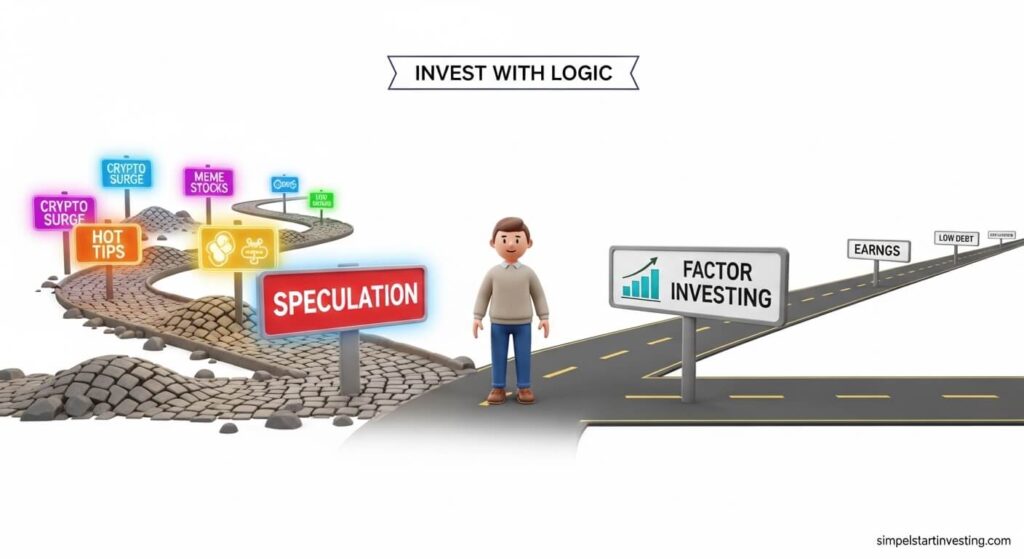
These traits are what we call factors. Today, we are focusing on the two “heavy hitters” that have stood the test of time: Value and Quality. Understanding these can change the way you look at a stock ticker forever. It moves you away from “gambling” and toward “strategic ownership.”
The Value Factor: Finding the Diamonds in the Rough
The Value factor is perhaps the most famous way to invest, made popular by legendary investors like Warren Buffett. The core idea is incredibly simple: buy something for less than it is actually worth.
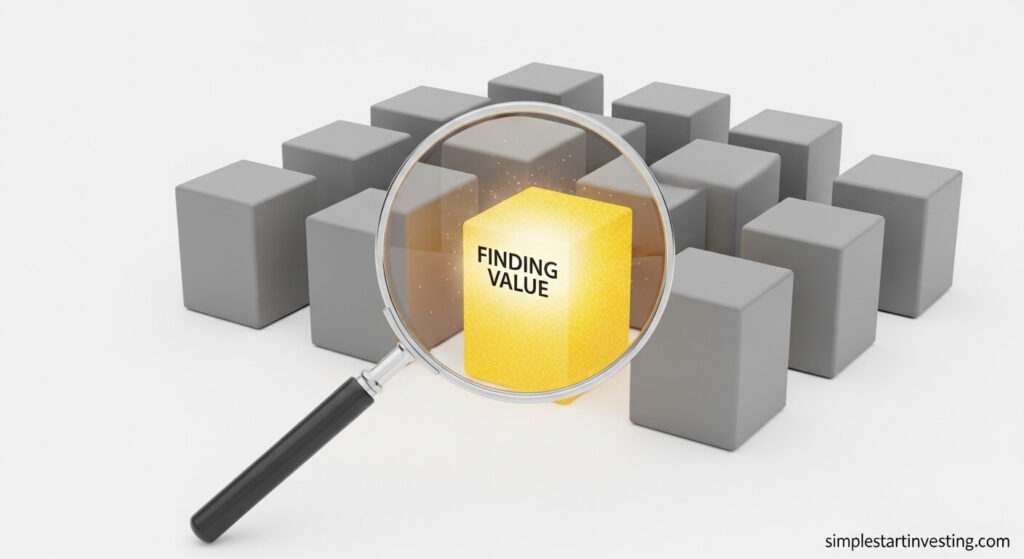
In everyday life, we love value. We wait for Black Friday to buy a television. We look for “buy one, get one free” deals at the supermarket. We feel a sense of victory when we find a high-quality leather jacket at a thrift store for 50 dollars when we know it costs 300 dollars new.
In the stock market, however, people often do the opposite. When a stock’s price drops, people get scared and run away. When a stock’s price is skyrocketing and it becomes expensive, everyone wants to buy it. Value investing is the art of going against that crowd.
Why Do Value Stocks Exist?
You might wonder, “If a company is good, why would it ever be cheap?” This is a great question. The market is usually pretty smart, but it isn’t perfect. Sometimes, investors overreact to bad news.
Imagine a solid company like Walmart or Costco. Imagine they have a single bad quarter because of a temporary supply chain issue. Emotional investors might panic and sell their shares, causing the price to drop. If the company’s underlying business is still strong, that lower price creates a “Value” opportunity. You are buying the same company, but at a discount.
How to Identify Value Without Math Formulas
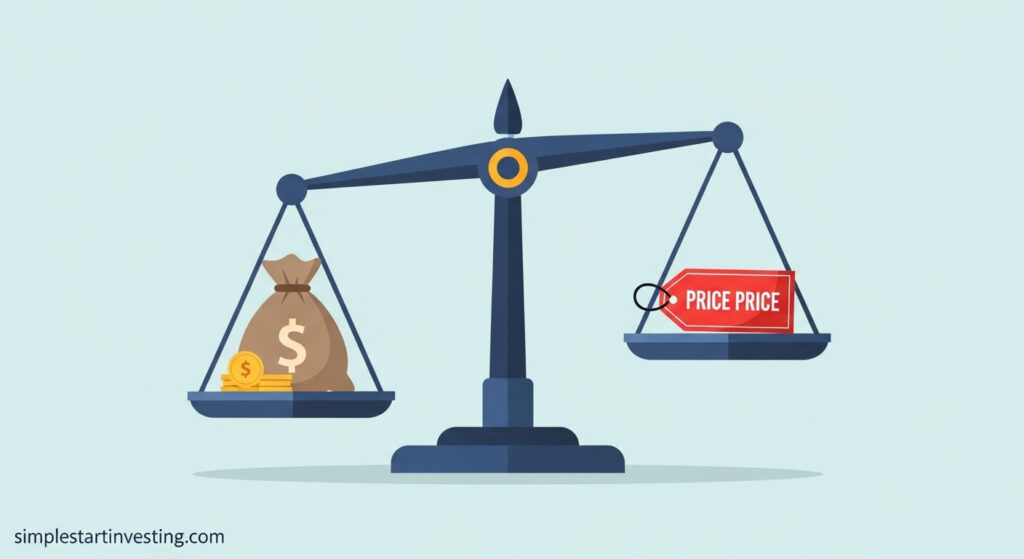
While professionals use complex spreadsheets, you can think of value through the lens of a “Price-to-Something” ratio.
Let’s use a simple example. Imagine two lemonade stands.
- Stand A is flashy, has a neon sign, and everyone is talking about it. It makes 100 dollars a year in profit, but the owner wants 5,000 dollars to sell it to you.
- Stand B is a bit boring, has no neon sign, and people have forgotten about it. It also makes 100 dollars a year in profit, but the owner is willing to sell it for 1,000 dollars.
Stand B is the “Value” investment. You are paying much less for every dollar of profit the business generates. In the stock market, we look for companies where the share price is low compared to the company’s actual earnings or the value of everything the company owns (its assets).
The Quality Factor: Investing in the “A-Students”
While Value is about the price you pay, Quality is about the health of the business you are buying. If Value is about finding a bargain at a thrift store, Quality is about buying a tool from a brand known to last for 50 years. You might pay a bit more, but you know it won’t break.
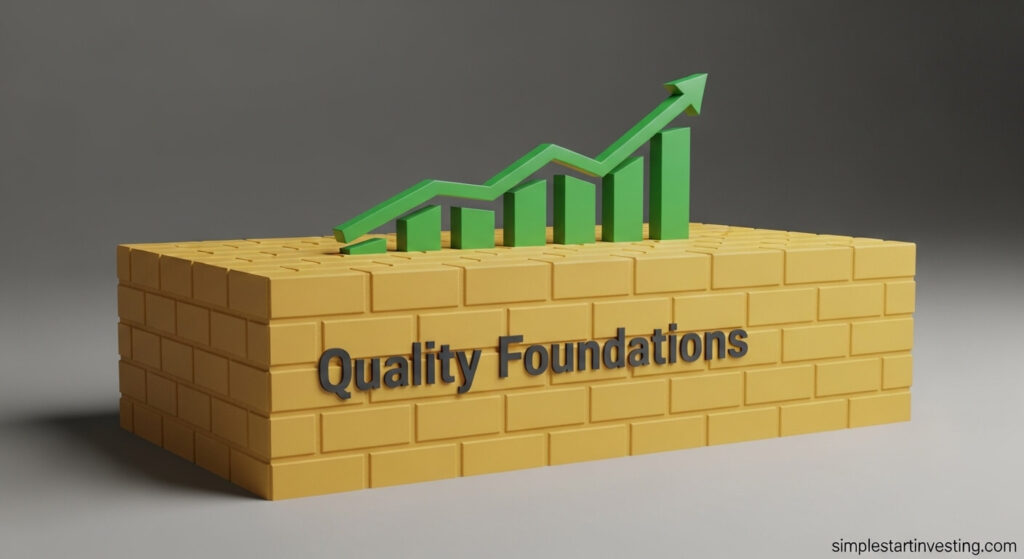
The Quality factor focuses on companies that are exceptionally well-run. These are the businesses that have “clean” balance sheets, meaning they don’t owe too much money to the bank. They also tend to have very high profit margins and consistent earnings year after year.
The Traits of a Quality Company
When we look for quality, we are looking for three main things:
- Profitability: They make a lot of money relative to what they spend.
- Low Debt: They aren’t struggling to pay off loans.
- Earnings Stability: Their profits don’t disappear the moment the economy hits a tiny speed bump.
Think of a company like Apple or Microsoft. These companies have billions of dollars in cash sitting in the bank. Even if the economy has a rough year, they have enough “fuel in the tank” to keep driving. That stability is a hallmark of the Quality factor.
Why Quality Matters for Beginners
For someone just starting, Quality provides a “buffer.” High-quality companies are often less likely to go bankrupt. They are the “adults in the room.” While “trashy” companies might see their stock prices go to zero during a recession, Quality companies usually have the resources to survive and even buy out their smaller competitors.
Investing in Quality means you can sleep a little better at night. You aren’t betting on a “moonshot” tech startup that might fail tomorrow. You are betting on proven winners that have shown they know how to handle money.
The Magic of Combining Value and Quality
This is where factor investing gets really exciting for your portfolio. On their own, Value and Quality are great. But when you put them together, they balance each other out perfectly.

Avoiding the “Value Trap”
One of the biggest mistakes beginners make with Value investing is falling into a “Value Trap.” This happens when you buy a stock because it looks “cheap,” but it’s actually cheap for a very good reason—like the company is about to go out of business or its products are no longer useful.
Think of a company that made VCR tapes in the year 2005. The stock might have looked “cheap” based on its past earnings, but the business was dying. That is a Value Trap.
By adding the Quality factor, you protect yourself. You look for stocks that are cheap (Value) but also have great earnings and low debt (Quality). This helps ensure that you aren’t just buying “trash” at a discount; you are buying “treasure” that the market has temporarily mispriced.
Better “Risk-Adjusted” Returns
If you only invest in high-growth, expensive stocks, your portfolio might go up very fast, but it will also crash very hard. If you only invest in Value, you might have to wait a long time for the market to realize a company is undervalued.
By blending these factors, you create a smoother ride. Quality tends to perform well when the market is crashing because people run toward “safe” companies. Value tends to perform well when the economy is recovering and people are looking for bargains. Together, they help you stay invested for the long run, which is the real secret to building wealth.
Common Misconceptions About Factor Investing
Because this sounds a bit “pro,” many beginners get intimidated. Let’s clear up some common myths.
Myth 1: “I need to pick individual stocks to do this.”
You absolutely do not. In fact, for 99% of beginners, picking individual stocks is a bad idea. Today, there are many low-cost Exchange-Traded Funds (ETFs) that do all the work for you. You can buy a “Value ETF” or a “Quality ETF” with the click of a button. The fund uses a computer program to find all the companies that meet those criteria and puts them into one basket for you.
Myth 2: “Factor investing is just for professionals.”
While the math behind it can get complicated, the concept is for everyone. If you understand the difference between a “sale” at a store and a “well-made” product, you understand Factor Investing. Using these ideas just means you are being more intentional than the person who just buys whatever stock is trending on social media.
Myth 3: “Factors work every single year.”
This is a dangerous misunderstanding. Factors like Value and Quality work over decades, not days. There will be years where “expensive, low-quality” stocks are the only things going up (we saw this in the late 1990s and again in 2020-2021). During those times, factor investors can feel “left behind.” But history shows that, eventually, the fundamentals of price and profit win out.
How a Beginner Can Start Thinking About Factors
If you are ready to move beyond a simple total market index, you don’t need to change everything overnight. Many people use a “Core and Satellite” approach.
- The Core: Keep the majority of your money (perhaps 70% to 80%) in a broad market index fund.
- The Satellite: Put a smaller portion (10% to 20%) into a “Value” or “Quality” tilted fund.
This allows you to keep the safety of the broad market while giving your portfolio a “tilt” toward these proven factors. Over 20 or 30 years, that small tilt can lead to a significant difference in your final nest egg.
A Simple Logic Check
Before you add a factor-based fund to your portfolio, ask yourself these questions:
- Do I believe that, over the long run, buying things at a discount is better than buying them at full price? (If yes, you believe in Value).
- Do I believe that companies with lots of cash and low debt are more likely to survive than companies struggling with bills? (If yes, you believe in Quality).
If those two things make sense to you, then factor investing isn’t some scary “Wall Street” trick. It is simply a logical way to organize your money.
Real-World Examples of These Factors in Action
Let’s look at how this plays out in the real US market without getting bogged down in numbers.
The Value Example
Consider a traditional car company. For years, these companies were considered “Value” stocks. They had huge factories and made billions of dollars, but their stock prices stayed low because everyone was excited about “new” tech companies. An investor who bought those car companies when they were ignored eventually benefited when the companies started making successful electric vehicles and the market realized, “Wait, these companies are actually very valuable!”
The Quality Example
Look at a company like Johnson & Johnson. They sell basic necessities like bandages and baby powder. Even when the world is in a financial crisis, people still need those items. Because the company has been profitable for nearly a century and manages its debt carefully, it is a classic “Quality” stock. It might not double in price in a single week, but it provides the steady growth that builds real wealth over time.
The Importance of Patience
The biggest “risk” with factor investing isn’t the stocks themselves—it’s the investor’s behavior. Because Value and Quality can go through periods of “underperforming” the flashy parts of the market, many beginners quit right before the strategy starts to work.
Imagine you are dieting. You eat healthy and exercise for two weeks, but you don’t see the scale move. If you quit then, you fail. But if you stick with it for six months, the results become obvious. Factor investing is a “financial health” plan. It requires you to trust the process even when the “fast food” stocks (the speculative, expensive ones) are making other people look rich temporarily.
Your Next Steps
You don’t need to be a math genius to start. Your goal as a beginner is to move from “unconscious” investing to “conscious” investing.
- Step 1: Look at your current holdings. Are you just in a total market fund? That’s a great start.
- Step 2: Research “Smart Beta” or “Factor” ETFs on reputable sites like Vanguard, BlackRock (iShares), or Charles Schwab.
- Step 3: Read the descriptions. Look for words like “Value,” “Quality,” “Profitability,” or “Low Multiples.”
- Step 4: Understand that these are long-term plays. If you decide to tilt toward Value and Quality, commit to it for at least 5 to 10 years.
By focusing on these two pillars, you are moving away from the noise of the daily news cycle. You aren’t worrying about what a CEO tweeted or what the “hottest” new trend is. Instead, you are focusing on the two things that have always mattered in business: What is it worth? and How good is the company?
That is the essence of factor investing. It is about being a smarter owner of the businesses that power our world.
Disclaimer: This content is for educational purposes only and does not constitute financial advice. Market conditions change frequently, and you should always perform your own due diligence or consult with a certified financial professional before making investment decisions.