Have you ever felt a rush of excitement when a large tax refund hits your bank account in the spring? It feels like a surprise gift from the government. However, what if I told you that a big refund is actually a sign that you have been mismanaging your W-4 tax withholding all year long?
When you get a three thousand dollar refund, it means you overpaid the government by about 250 dollars every single month. Instead of having that money in your pocket to pay for groceries, rent, or investments, you gave the IRS an interest-free loan. By learning how to master your W-4 tax withholding, you can stop waiting for a yearly “bonus” and start seeing more money in your paycheck every single month.
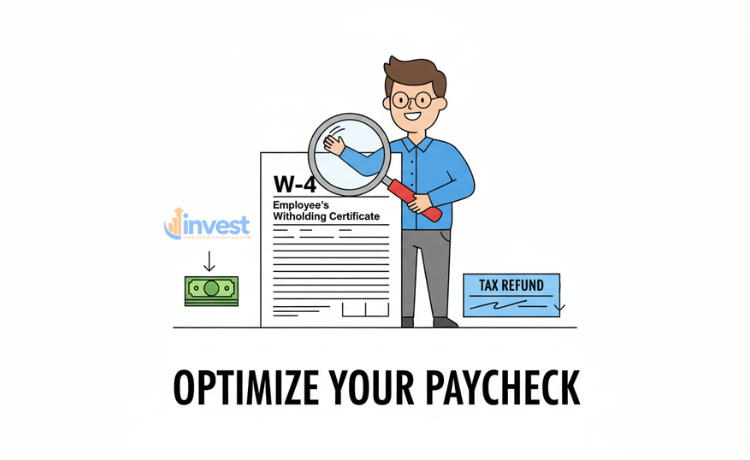
This guide is designed for absolute beginners who want to take control of their cash flow. We will break down what the W-4 form is, why the “big refund” mindset is a trap, and how you can adjust your settings to reflect your true financial needs.
What Exactly is W-4 Tax Withholding?
When you start a new job at a company like Walmart or Amazon, one of the first pieces of paperwork you sign is the Form W-4. This document tells your employer how much federal income tax to take out of your pay. This process is known as W-4 tax withholding.
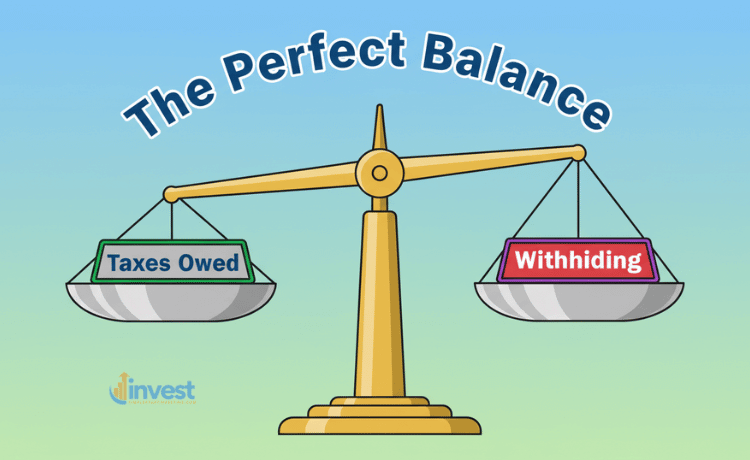
Think of it like a digital scale. On one side, you have the taxes you actually owe based on your salary. On the other side is the money your employer sends to the IRS on your behalf. If the scale is balanced, you owe nothing at the end of the year and get no refund. If you put too much weight on the withholding side, you get a refund. If you put too little, you will owe the IRS money in April.
A Simple Way to Visualize It
Imagine you have a monthly subscription that costs 100 dollars. Instead of paying 100 dollars, you decide to send the company 130 dollars every month. At the end of the year, the company says, “Hey, you overpaid us by 360 dollars. Here is your money back.” You might feel happy to get that 360 dollars, but in reality, you could have used that extra 30 dollars each month to pay for gas or a nice dinner. W-4 tax withholding works exactly the same way with the government.
The Beginner’s Mistake
Many beginners believe that a large tax refund is “free money” or a “forced savings account.” They think that if they don’t have the government take it away, they will just spend it.
The Financial Logic Shift
A refund is just your own money coming back to you late. If you had kept that 250 dollars a month and put it into a high-yield savings account or bought shares of a company like Apple (AAPL), that money could have earned interest or dividends for you. By letting the IRS hold it, you lose the “time value” of your money. You are essentially letting the government grow their wealth with your paycheck.
Why Your Current W-4 Might Be Wrong
The IRS updated the W-4 form significantly a few years ago. They removed the old “allowances” system (where you would claim 0, 1, or 2) and replaced it with a more accurate, dollar-based system. If you haven’t updated your W-4 tax withholding since you started your job years ago, there is a high chance your withholding is inaccurate for your current life.
Life changes. Did you get married? Did you have a child? Did you start a side hustle selling items on Etsy? All of these factors change how much tax you actually owe. If your W-4 doesn’t reflect these changes, you are likely either overpaying or underpaying.
Example: The New Parent
Let’s look at a worker named Sarah who works at Starbucks. Sarah recently had a baby. In the eyes of the IRS, having a dependent usually means she owes less in taxes because of the Child Tax Credit. If Sarah doesn’t update her W-4 tax withholding, her employer will keep taking out the same high amount of tax as if she were single with no kids. She will eventually get that money back a year later, but she could have used it right now for diapers and formula.
The Beginner’s Mistake
Beginners often think the W-4 is a “set it and forget it” form. They fill it out on their first day of work and never look at it again for ten years.
The Financial Logic Shift
The W-4 is a living document. You should treat it like a thermostat for your finances. Whenever your life changes—a raise, a new house, or a new family member—you should walk into your HR office or log into your payroll portal to adjust your W-4 tax withholding.
Understanding the Four Major Steps of the W-4
The modern W-4 is broken down into five steps, but most people only need to worry about the first four. You don’t need a math degree to fill this out; you just need to be honest about your situation.
Step 1: Personal Information
This is the basic stuff: name, address, and filing status (Single, Married Filing Jointly, or Head of Household). Choosing the correct filing status is the most important part of W-4 tax withholding. If you are married but check “Single,” your employer will take out way too much tax because they assume you don’t have a spouse’s lower tax brackets to share.
Step 2: Multiple Jobs or Spouse Works
This is where many people get confused. If you work two jobs, or if you are married and your spouse also works, the IRS needs to know. If you don’t account for this, both employers might assume you are in a lower tax bracket than you actually are when your incomes are combined.
Example: Imagine you work at Tesla and your spouse works at Target. If both of you mark “Married Filing Jointly” but don’t check the box in Step 2 for “multiple jobs,” your payroll systems will under-withhold. This leads to a scary tax bill in April. To fix this, the easiest way for most people is to check the box in Step 2(c) if both jobs have similar pay.
Step 3: Claiming Dependents
This is the “Get More Money Now” section. For every child under age 17, you can generally claim a 2,000 dollar credit. For other dependents, it is 500 dollars.
Instead of waiting until next year to claim this credit on your tax return, the W-4 lets you “pre-claim” it. Your employer will divide that 2,000 dollars by the number of pay periods you have in a year and reduce your tax withholding by that amount. This puts that 2,000 dollars directly into your monthly paychecks.
Step 4: Other Adjustments
This section is for those who have other income (like interest from a bank or dividends from Microsoft (MSFT)) or those who want to take specific deductions. If you know you want an extra 50 dollars taken out because you are worried about owing money, you can write “50” in Step 4(c) for “extra withholding.”
The “Interest-Free Loan” Trap: A Deep Dive
Let’s talk about the psychology of the refund. Many Americans look forward to a 3,000 dollar refund. They use it to buy a new TV or go on a vacation. It feels like “found money.”
But let’s look at the logic. If you had properly adjusted your W-4 tax withholding, you would have received an extra 250 dollars every month.

The Real-World Impact
If you take that 250 dollars and use it to pay off a credit card with a 20 percent interest rate, you are saving yourself a massive amount of money in interest charges. If you wait for the refund, you have been paying interest to the credit card company all year while the IRS held your money for zero interest.
Example: Suppose Mark has 2,000 dollars in credit card debt. He decides to keep his W-4 tax withholding high so he can get a 2,000 dollar refund in April to pay it off. Over the 12 months he waits, the credit card company charges him hundreds of dollars in interest. If Mark had adjusted his W-4 to get an extra 166 dollars a month, he could have paid down the debt month-by-month, drastically reducing the interest he paid.
The Beginner’s Mistake
Beginners often say, “I’m not good at saving, so I like the government doing it for me.”
The Financial Logic Shift
The government is the worst savings account in the world because the interest rate is zero. If you struggle with saving, set up an automatic transfer from your checking account to a savings account on the same day your paycheck hits. This gives you the same “out of sight, out of mind” benefit but keeps the money—and the interest—in your name.
How to Adjust Your W-4 Without Fear
Many people are terrified of the IRS. They worry that if they change their W-4 tax withholding, they will get audited or go to jail. This is a myth. The IRS actually wants you to get your withholding right. They provide a tool called the “IRS Tax Withholding Estimator” on their website to help you.
Step-by-Step Logic for Adjustment:
- Gather your pay stubs: Look at how much federal tax is being taken out right now.
- Look at last year’s return: Did you get a huge refund? If you got a 2,400 dollar refund, you overpaid by 200 dollars a month.
- Use the IRS Estimator: Enter your info, and it will tell you exactly what to put on a new W-4.
- Submit to HR: Most companies use an online portal like Workday or ADP. It takes five minutes.
What if you owe money?
If you found out last year that you owed the IRS 1,200 dollars, that means your W-4 tax withholding was too low. You were underpaying by 100 dollars a month. To fix this, you would go to Step 4(c) and ask your employer to take out an “extra” 100 dollars per month. This prevents a surprise bill and potential penalties next year.
When Should You Check Your W-4?
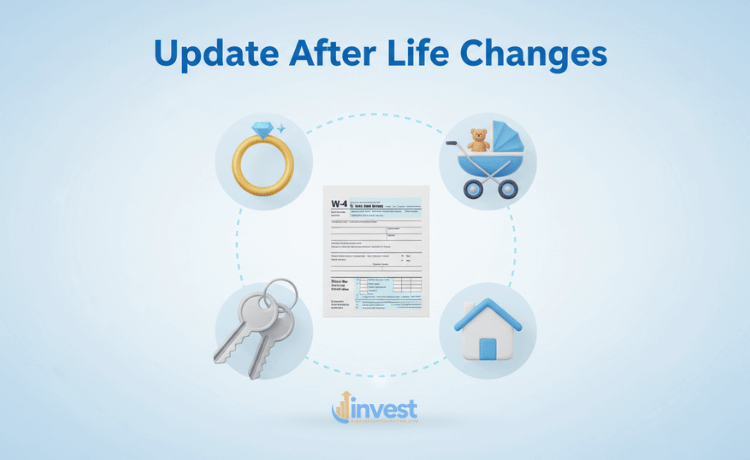
You shouldn’t just think about your W-4 tax withholding once. There are specific “Life Events” that should trigger a review:
- Getting a Marriage License: Your tax bracket usually changes when you combine incomes.
- Having a Baby: You gain a 2,000 dollar credit.
- Buying a Home: Mortgage interest deductions might lower your tax bill.
- A Second Job: Working at DoorDash or Uber on the side means you have income that isn’t taxed at the source. You may need to increase your W-4 withholding at your main job to cover the extra taxes.
- A Large Raise: Moving into a higher tax bracket might require an adjustment to ensure you are paying enough throughout the year.
The Benefits of “Breaking Even”
The ultimate goal of mastering your W-4 tax withholding is to “break even.” This means you owe zero dollars in April and you get zero dollars back. While this sounds boring, it is the most efficient way to handle your money.
- Better Cash Flow: You have more money for daily expenses or emergencies.
- Investment Growth: You can invest in an S&P 500 index fund starting in January rather than waiting for a refund in April.
- Inflation Protection: In a world where prices for eggs and gas are rising, having money today is more valuable than having that same amount of money a year from now.

Summary of the Logic
If you get a refund, you gave a loan. If you owe a lot, you took a loan (and might pay a penalty). If you hit the middle, you kept your money, used it for your needs, and stayed square with the government.
Adjusting your W-4 tax withholding is one of the easiest “wins” in personal finance. It requires no extra work after the initial five minutes of paperwork, yet it impacts every single paycheck you receive for the rest of the year.