Imagine waking up to find that several of the world’s most successful companies have deposited cash directly into your account. Now, imagine those same companies decide to give you even more cash next year, and the year after that, simply because you own a small piece of their business. This isn’t a dream or a complex scheme; it is the core of dividend growth investing.
For many people starting their financial journey, the stock market feels like a giant casino where you only win if you sell a stock for more than you paid. However, dividend growth investing offers a different path. It is a strategy focused on buying high-quality companies that not only pay you a portion of their profits but also have a long-track record of increasing those payments every single year.
This guide will walk you through everything you need to know to start building your own rising stream of passive income. We will break down the complex terms into plain English and show you how to avoid the common traps that catch most beginners.
What Exactly Is Dividend Growth Investing?
At its simplest, dividend growth investing is like planting a fruit tree that grows more fruit every season. When a company makes a profit, it has a few choices. It can keep the money to grow the business, pay off debt, or share that profit with the people who own the stock (you). That shared profit is called a dividend.
While many companies pay dividends, “growth” investors look for a special group. These are companies that are so healthy and well-managed that they can afford to raise their dividend check annually. When you focus on dividend growth investing, you aren’t just looking for a payout today; you are looking for a raise every year without having to ask your boss for one.
The 4-Step Breakdown of Dividend Growth
- The Plain English Explanation: You buy a piece of a company. Every three months, they send you a “thank you” check (a dividend). Next year, because the company grew, they send you a slightly bigger check.
- Real-World Example: Let’s look at a company like PepsiCo. They don’t just sell soda; they own snacks like Frito-Lay too. For decades, PepsiCo has increased the amount of money they send to shareholders every year. If you bought shares ten years ago, your annual “paycheck” from them today would be much higher than it was on day one, even if you didn’t buy a single extra share.
- Common Beginner Mistake: Many beginners think they should only buy stocks with the “highest” dividend percentage. They see a stock paying 10 percent and ignore a stock paying 2 percent.
- The Correct Mindset: A 10 percent yield is often a “red flag” that a company is in trouble. It’s like a store having a 90 percent off sale because they are going out of business. A 2 percent yield that grows by 10 percent every year is much safer and more profitable over the long term.
The Power of the “Raise” Without the Work
One of the hardest things for new investors to grasp is that your income can go up even when the stock market is “boring” or flat. In the traditional way of thinking, if you buy Apple at 200 dollars and it stays at 200 dollars for a year, you made zero money.
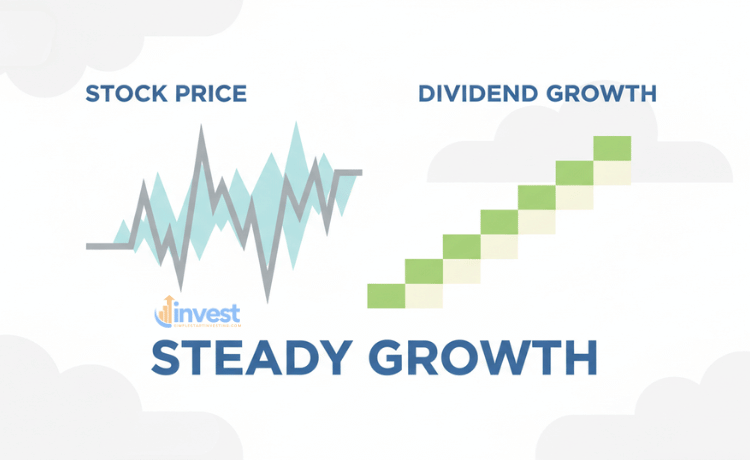
But with dividend growth investing, if Apple pays you a dividend and then increases that dividend, your personal return on that investment goes up. This is the secret to building true wealth in the US market. You are focused on the cash flow entering your pocket, not just the fluctuating price on a screen.
Why Companies Raise Dividends
Companies raise dividends because they are confident in their future. It is a signal to the world that they are making more money than they need to run the business. Think of Costco. Every time they open new warehouses and more people sign up for memberships, their profits grow. Because they are efficient, they can afford to reward you, the owner, with a bigger slice of the pie.
Understanding “Yield” vs. “Growth” (The Trap)
This is where most beginners get confused. You will often see a number called “Dividend Yield.” This is just a way to show how much a company pays in dividends relative to its current stock price.
If a stock costs 100 dollars and pays 3 dollars in dividends per year, the yield is 3 percent.
The Danger of Chasing “High Yield”
Imagine two companies. Company A has a yield of 8 percent. That sounds amazing, right? But Company A is struggling. They are paying out more than they earn just to keep investors from selling. Eventually, they will have to cut the dividend to zero.
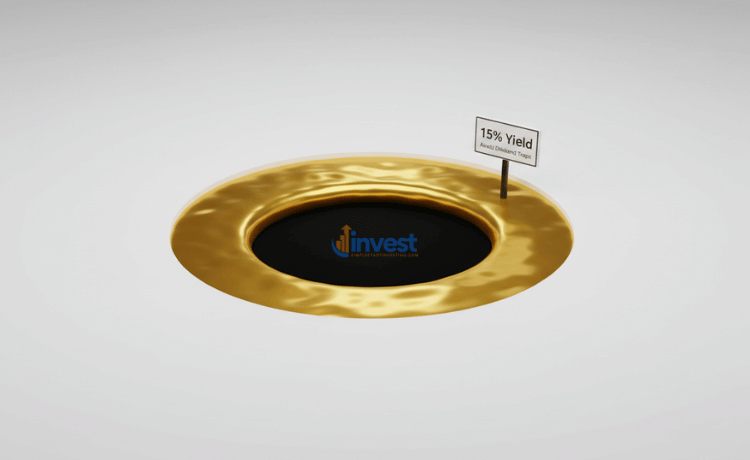
Company B has a yield of 2 percent. It seems small. However, Company B is growing its profits by 15 percent every year. Within a few years, the “tiny” dividend from Company B will actually be larger than the “big” dividend from Company A. Plus, Company B’s stock price is likely to go up because the business is healthy.
Important Note: High yields are often “traps.” If a yield looks too good to be true (like 12 percent or 15 percent), the market is usually signaling that a dividend cut is coming.
The Snowball Effect: Reinvesting Your Dividends
The real “magic” happens when you take the cash a company sends you and use it to buy more shares of that same company. Most US brokerages offer a feature called DRIP (Dividend Reinvestment Plan).
When you use a DRIP, you aren’t just getting a raise from the company; you are also increasing the number of “mini-employees” (shares) working for you.

How the Logic Works
Suppose you own 100 shares of a company. They pay you a dividend. Instead of spending that money on a latte, you tell your broker to automatically buy 2 more shares with that cash. Now you own 102 shares. Next quarter, you get paid dividends on 102 shares. Those 102 shares buy even more shares.
Over 10 or 20 years, this “snowball” gets bigger and faster. You started with a handful of shares, and you ended up with a mountain of them—all without adding more of your own “outside” money.
Identifying Quality: The “Aristocrats” and “Kings”
How do you know which companies are reliable? In the US market, we have special categories for the “best of the best” in dividend growth investing.

Dividend Aristocrats
These are companies in the S&P 500 index that have increased their dividend for at least 25 consecutive years. Think about that: they raised dividends through the 2008 financial crisis, the 2020 pandemic, and every recession in between. Companies like Johnson & Johnson or Procter & Gamble (the makers of Tide and Crest) are classic examples.
Dividend Kings
This is an even more exclusive club. These companies have raised dividends for 50 years or more. When you buy a Dividend King, you are buying a business that has proven it can survive and thrive through half a century of change.
Why This Matters for You
For a beginner, these lists are a great “cheat sheet.” You don’t need to be a Wall Street genius to see that a company that has paid more every year since the 1970s is doing something right. It reduces your risk and gives you peace of mind when the market gets rocky.
Taxes and the IRS: Keeping More of What You Earn
In the United States, not all income is taxed the same way. This is a huge advantage for dividend growth investing.
Most dividends from established US companies are considered “Qualified Dividends.” The IRS often taxes these at a lower rate than the money you earn at your job. While your salary might be taxed at 22 percent or 24 percent, your qualified dividends might be taxed at 15 percent, or even 0 percent depending on your total income.
A Simple Tax Example
If you are a single filer in the US and your total taxable income is below a certain threshold (around 49,000 dollars in the current tax year), your tax rate on qualified dividends could be 0 percent. You essentially get to keep every penny the company sends you.
Even if you earn more, the 15 percent rate is still a “discount” compared to regular income tax. This makes dividends one of the most tax-efficient ways to build wealth.
Note: Tax regulations can change; please check current IRS guidelines or consult a tax professional.
Common Myths and Misunderstandings
When you start talking about dividend growth investing, you will hear a lot of “noise.” Let’s clear up the most common mistakes.
Myth 1: “Dividends are just the company giving you your own money back.”
- The Reality: While a stock’s price does drop by the amount of the dividend on the day it is paid, a growth company earns that money back through its business operations. It’s not a zero-sum game; it’s the distribution of actual profit growth.
- The Adjustment: Think of it as a farm. If the farm produces 100 crates of apples and gives you 10, the farm still exists and will grow more apples next year. You didn’t “lose” value; you gained a harvest.
Myth 2: “Dividend stocks are for old people/retirees.”
- The Reality: This is one of the biggest mistakes young investors make. If you start dividend growth investing in your 20s or 30s, you have decades for that “snowball” to compound. A retiree uses the dividends to pay bills. A young person uses the dividends to buy the entire forest.
- The Adjustment: Time is your greatest ally. The longer you hold these companies, the higher your “yield on cost” becomes. This means you could eventually be earning a 20 percent or 30 percent return on your original investment every single year.
How to Get Started: A Step-by-Step Logic
You don’t need a lot of money to start. Many US brokerages now allow you to buy “fractional shares,” meaning you can start with as little as 5 or 10 dollars.
- Open a Brokerage Account: Use a reputable US provider. Look for one that offers “Automatic Dividend Reinvestment” (DRIP).
- Focus on Quality, Not Yield: Look for companies with a history of growth. Use the Dividend Aristocrats list as a starting point.
- Check the “Payout Ratio”: This sounds fancy, but it’s simple. It’s the percentage of profit a company pays out as dividends. If a company earns 100 dollars and pays out 90 dollars, they don’t have much room for error. If they pay out 40 dollars, they have plenty of room to keep raising the dividend even if they have a bad year.
- Diversify: Don’t put all your money in one company like AT&T or Exxon. Spread your investments across different sectors—tech, healthcare, consumer goods, and utilities.
- Be Patient: This is a “get rich slowly” strategy. You won’t double your money in a week, but you can build a life-changing income stream over a decade.
The Psychological Edge of Dividends
The hardest part of investing is not selling when the market crashes. In a typical market downturn, stock prices might fall by 20 percent or more. This panics most people.
However, dividend growth investing changes your perspective. When the price of Walmart or Microsoft goes down, but they still send you that dividend check (and maybe even raise it), you realize the business is still working.
Instead of seeing a “loss” on your screen, you see a “sale.” You can now use your dividends to buy more shares at a cheaper price, which actually speeds up your journey to financial freedom. This “cash in hand” is a psychological safety net that keeps you invested when others quit.
Summary of the Dividend Growth Strategy
To succeed in dividend growth investing, you must value the “bird in the hand” (the dividend) and the “bird that grows” (the growth). You are looking for companies that are:
- Profitable: They make real money.
- Generous: They share that money with you.
- Consistent: They have done it for years without stopping.
- Growing: They are making more money today than they did yesterday.
By following this path, you move away from the stress of daily price changes and toward the goal of a sustainable, growing, and passive income stream that can support you and your family for generations.
Disclaimer: This content is for educational purposes only and does not constitute financial advice. Investing involves risk, including the potential loss of principal. Always perform your own research or consult with a certified financial advisor before making any investment decisions.