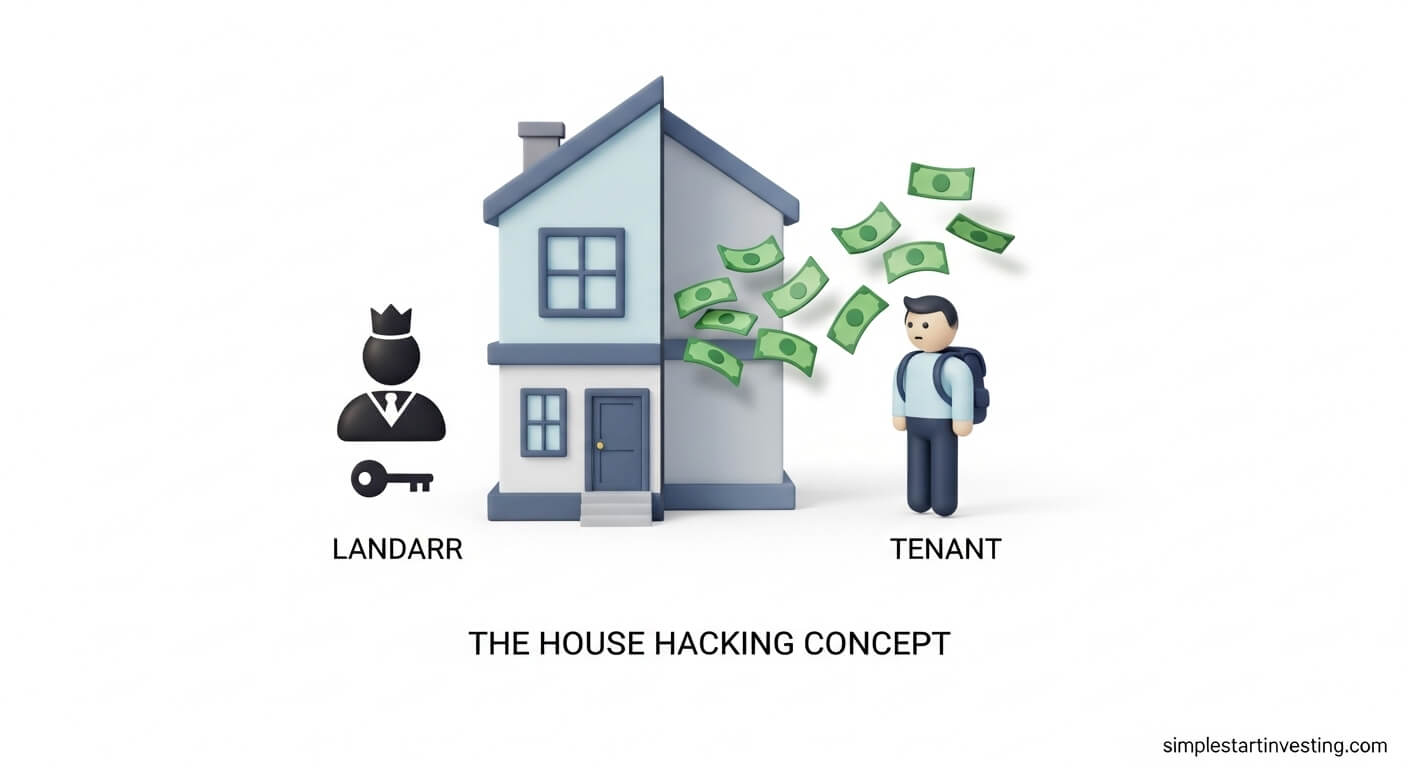
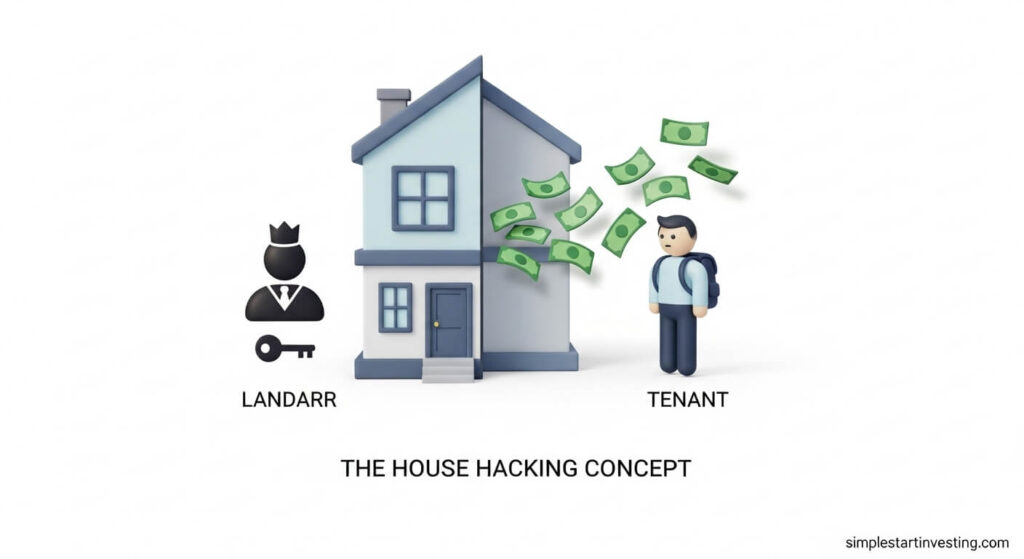
Imagine if your biggest monthly expense simply vanished. For most Americans, housing costs eat up 30% to 50% of their take-home pay. Now, imagine if instead of writing a check to a landlord or a bank every month, you had neighbors or roommates writing checks to you. This isn’t a pipe dream or a get-rich-quick scheme; it is a proven real estate strategy called house hacking.
If you are new to the world of building wealth, house hacking is often the most accessible “cheat code” available. It allows you to enter the real estate market with very little money down, live in a home you own, and have others pay off your mortgage for you. By the time you finish this guide, you will understand exactly how this works, the common traps to avoid, and why this might be the smartest financial move you ever make.
What Exactly Is House Hacking?
At its core, house hacking is the practice of buying a primary residence and renting out portions of it to generate income. The goal is to have the rental income cover most—if not all—of your mortgage, property taxes, and insurance. In some cases, you might even “cash flow,” meaning you actually make a profit every month while living there for free.
Traditionally, people thought you needed to buy a massive apartment complex to be a real estate investor. House hacking flips that script. It’s about using the house you already need to live in as a wealth-generating tool. You aren’t just a homeowner; you are a resident landlord.
The beauty of this strategy lies in how the U.S. financial system treats homeowners. The government wants people to own homes, so they offer incredible loan terms for people who intend to live in the property. By using a house hacking strategy, you leverage these “owner-occupant” benefits to build an investment portfolio that would otherwise require much more capital.
Why Beginners Often Get It Wrong
Many beginners hear the term and immediately think they have to buy a multi-family building, like a duplex or a fourplex. While that is a popular way to do it, it is far from the only way. A common mistake is believing that if you can’t find a duplex in a “good” neighborhood, you can’t hack your house.
Another misconception is that house hacking is entirely passive. It is not. You are managing a property and, more importantly, managing people who live very close to you. If a toilet leaks at 2:00 AM, you are the one who gets the text message. Beginners who expect “mailbox money” without any effort often find themselves stressed and overwhelmed.
Finally, some newcomers think they can do this with any property. They forget to check local zoning laws or Homeowners Association (HOA) rules. Some neighborhoods strictly forbid short-term rentals (like Airbnb) or even long-term room rentals. Understanding the “rules of the game” in your specific city is the first step toward a successful hack.
The Different Flavors of House Hacking
You don’t need a specific type of house to start house hacking. You just need a creative eye and a willingness to share your space. Here are the most common ways people are doing this today.
The Multi-Family Approach
This is the “gold standard.” You buy a property with two, three, or four units (a duplex, triplex, or fourplex). You live in one unit and rent out the others. This is highly effective because you have a clear physical boundary between you and your tenants. You have your own kitchen, your own bathroom, and your own front door.
The “Rent by the Room” Strategy
If you buy a large single-family home with four bedrooms and you only need one, you can rent out the other three. This is common in college towns or high-cost cities. While you sacrifice some privacy because you share common areas like the kitchen, the income can be substantial. In many cases, three roommates paying 800 dollars each can easily cover a 2,000-dollar mortgage.
The ADU or “Granny Flat” Hack
An Accessory Dwelling Unit (ADU) is a secondary tiny house or apartment on your property. It could be a converted garage, a basement apartment, or a standalone cottage in the backyard. You can live in the main house and rent the ADU, or—for maximum savings—live in the tiny ADU and rent out the big house.
The Live-In Flip Hybrid
While not purely about rental income, some hackers buy a “fixer-upper,” live in it while renovating it room-by-room, and rent out the finished parts. After a year or two, they sell the house for a profit or move out and keep it as a full-time rental.
The Power of the Low Down Payment
The biggest hurdle for most new investors is the “20% down payment.” On a 400,000-dollar house, that’s 80,000 dollars—a massive sum for someone just starting out. However, house hacking changes the math entirely because you are an owner-occupant.

Because you plan to live in the house, you can access loans backed by the government, such as FHA (Federal Housing Administration) loans. These often require as little as 3.5% down. On that same 400,000-dollar house, your down payment drops from 80,000 dollars to just 14,000 dollars.
If you are a veteran or active-duty service member, you can use a VA loan, which often requires 0% down. This allows you to acquire a massive, income-producing asset with almost no money out of pocket. This is why house hacking is considered the ultimate entry point for real estate investing this year.
How the Numbers Work in Real Life
Let’s walk through a simple scenario to see how the logic of house hacking plays out. We will use round numbers to keep it clear.
Suppose you find a nice duplex for 450,000 dollars. You use an FHA loan with a 3.5% down payment. After your down payment and some closing costs, let’s say your total monthly payment—which includes the mortgage, interest, property taxes, and insurance—is 3,200 dollars.
Now, you move into Unit A. You list Unit B for rent. Because the neighborhood is desirable, you find a tenant who agrees to pay 2,200 dollars a month.
Instead of paying the full 3,200 dollars yourself, you take the 2,200 dollars from your tenant and add 1,000 dollars of your own money to pay the bank. Your “rent” is now effectively only 1,000 dollars a month. If you were previously paying 1,800 dollars a month to rent an apartment, you are now “saving” 800 dollars every single month.
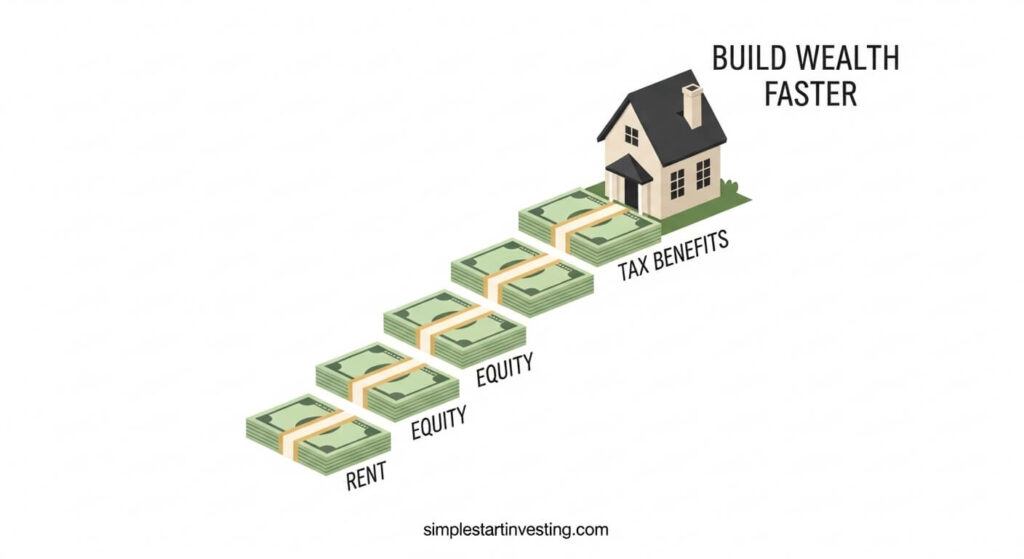
Furthermore, while you are only paying 1,000 dollars out of pocket, the full 3,200-dollar mortgage is being paid down. Your tenant is helping you build equity in an asset that will likely grow in value over time.
Understanding the “One-Year Rule”
A critical piece of the house hacking puzzle is the owner-occupancy requirement. When you get a low-down-payment loan like an FHA loan, you sign a legal document stating that you intend to live in the property as your primary residence for at least one year.
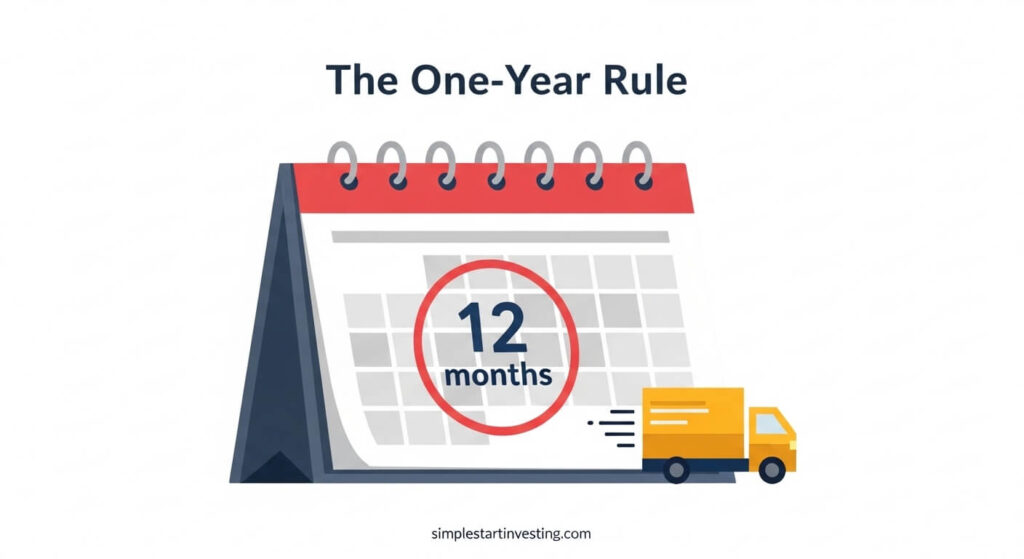
You cannot simply buy the house, put a tenant in your unit, and move out a month later. That is considered mortgage fraud, and the penalties are severe. However, after that one year is up, you are generally free to move out, rent out the unit you were living in, and buy a new property to hack again.
This is how many successful investors build a portfolio of four or five properties in just a few years. They “rinse and repeat” the process annually, moving into a new home, staying for a year, and then turning it into a full-time rental.
Finding the Right Property: What to Look For
Not every house is a good candidate for house hacking. To succeed, you need to look at real estate through a different lens. You aren’t just looking for a “pretty” house; you are looking for a functional one.
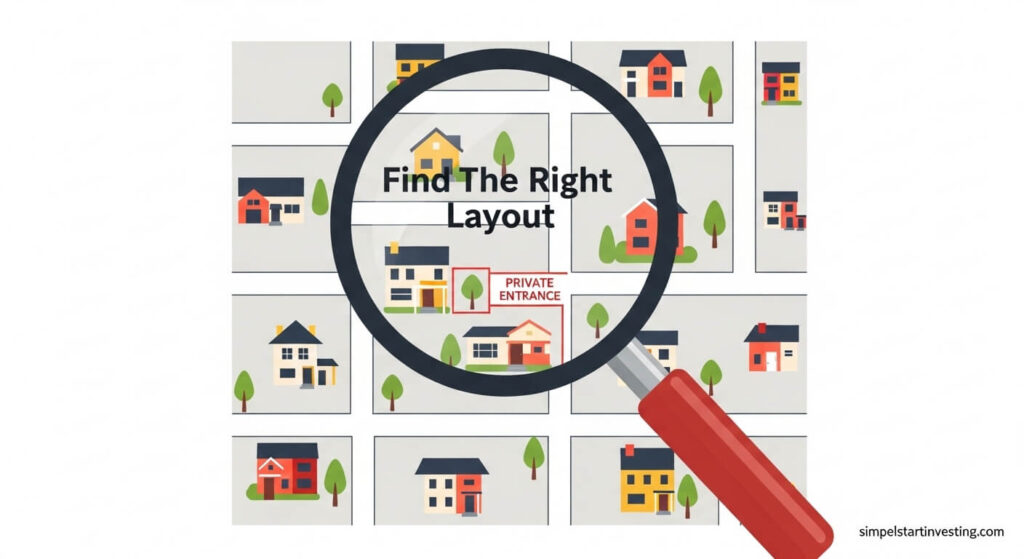
First, consider the “bedroom to bathroom” ratio. If you are renting by the room, having only one bathroom for four people is a recipe for tenant turnover and conflict. Properties with “en-suite” bathrooms (bathrooms attached to bedrooms) are gold mines for house hackers.
Second, look for separate entrances. If you are buying a house with a basement, does it have its own door to the outside? If so, you can easily create a private suite that commands a higher rent because the tenant doesn’t have to walk through your living room.
Third, check the parking situation. If you have three tenants, where will they park their cars? If the street has strict parking permits or if there is only a one-car driveway, you might struggle to keep your rooms filled.
The Reality of Being a Landlord
Being a house hacker means you are a “landlord in pajamas.” This proximity has pros and cons. On the plus side, you can keep a close eye on your property. You will know immediately if there is a water leak or if a tenant is breaking the rules.

On the downside, your tenants know exactly where you live. If they have a problem, they might knock on your door while you are eating dinner. To survive this, you must set very clear boundaries from day one.
Experts recommend using a professional lease agreement and a third-party portal for collecting rent. Do not let tenants pay you via casual apps or cash if you can avoid it. Having a formal system makes it clear that even though you are neighbors, this is still a business relationship.
You should also screen your tenants rigorously. Since you will be sharing a wall or a roof with these people, their lifestyle matters. If you work a 9-to-5 job and sleep early, you probably don’t want to rent to someone who hosts loud parties on Tuesday nights.
The Tax Benefits You Should Know About
The IRS offers some incredible perks for people who own rental property, and house hackers can take advantage of many of them. However, it gets a bit more complex when you live in part of the house.
Essentially, you have to split your house into two parts for tax purposes: the “personal” part and the “business” part. If you live in one half of a duplex and rent the other half, you can typically deduct 50% of the shared expenses. This includes things like roof repairs, landscaping, and even the interest on your mortgage.
One of the most powerful tools is depreciation. The IRS allows you to “deduct” the cost of the building over 27.5 years. Even if your house is increasing in value, the government lets you claim it is “wearing out” on paper. This “paper loss” can often cancel out the taxes you would owe on the rental income you receive.
It is highly recommended to talk to a tax professional who understands real estate this year, as regulations can shift. They can help you figure out exactly what percentage of your utilities and repairs can be written off to lower your tax bill.
Common Risks and How to Handle Them
No investment is without risk, and house hacking is no exception. The most obvious risk is a “vacancy.” If your tenant moves out and it takes you two months to find a new one, you are responsible for the full mortgage payment.
To mitigate this, you should always have a “capital expenditure” and “vacancy” fund. This is a savings account where you set aside a portion of your rent every month to cover repairs and periods when the unit is empty.
Another risk is the “bad tenant.” A tenant who refuses to pay rent or damages the property can be a nightmare, especially when they live right next to you. This is why background checks and credit checks are non-negotiable. It is much better to have an empty room for a month than to have a destructive tenant for a year.
Finally, there is the risk of a market downturn. If home prices drop, you might owe more on the house than it is worth. However, as long as you are “cash-flowing” (the rent covers the bills) and you don’t need to sell the house immediately, you can usually ride out the storm.
Is House Hacking Right for You?
This strategy requires a specific mindset. You have to be okay with a little less privacy. You have to be comfortable being the “boss” and enforcing rules. You have to be willing to spend your weekends occasionally fixing a sink or painting a room.
However, the trade-off is massive. By house hacking your first home, you are essentially getting a free or heavily subsidized education in real estate investing. You are learning how to find deals, how to manage tenants, and how to maintain a property—all while living for a fraction of the cost of your peers.
For many, the sacrifice of sharing a driveway or a wall for a few years is a small price to pay for the financial freedom that comes afterward. When you move out of your first hack, you leave behind a rental property that will continue to pay you for decades.
Taking the First Step
If this sounds like the right path for you, start by looking at your local market. Don’t look for your “forever home” with the perfect kitchen tiles. Look for the “smart home”—the one with the extra bedroom, the walk-out basement, or the zoning that allows for a duplex.
Talk to a mortgage lender who is familiar with FHA and VA loans. Ask them to help you understand how much you can afford based on your current income. You might be surprised to find that the bank will actually count a portion of the future rental income from the house you are buying toward your qualifying income. This can help you afford a slightly better property than you could on your own.
House hacking isn’t just about real estate; it’s about changing your life’s financial trajectory. It’s about turning your biggest liability—your home—into your greatest asset.
Disclaimer: This content is for educational purposes only and does not constitute financial, legal, or tax advice. Real estate investing involves risks, and regulations regarding rentals vary by location. Always consult with a qualified professional before making any investment decisions.