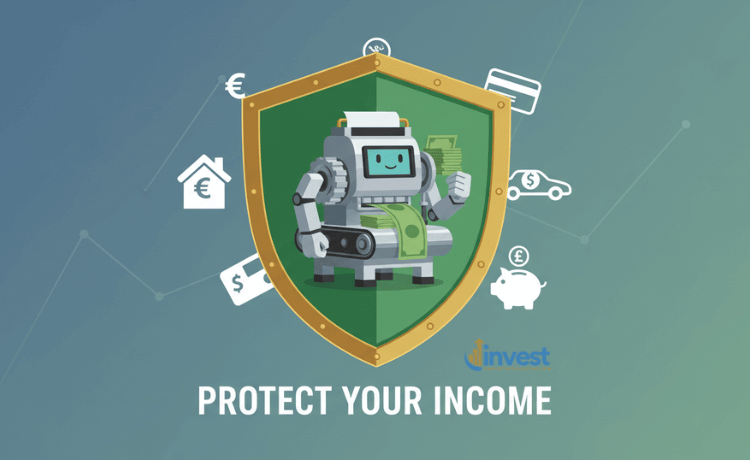
Imagine you had a machine in your garage that printed 5,000 dollars in crisp, legal bills every single month. This machine is reliable, helping you pay your mortgage, buy groceries, and save for your children’s college. If that machine existed, would you insure it? You probably wouldn’t think twice. You would buy the best protection plan available to make sure that if it ever broke down, the money wouldn’t stop flowing.
Here is the reality: You are that machine. Your ability to go to work and earn a paycheck is the single greatest financial asset you own. Over a forty-year career, a person earning a modest salary will bring in millions of dollars. Yet, while most people wouldn’t dream of driving a car without insurance, many leave their “money machine” completely unprotected. This is where disability insurance for beginners becomes the most important part of your financial foundation.
In this guide, we will break down exactly how this safety net works, why the government version often fails, and how you can protect your lifestyle without getting lost in insurance jargon.
What Exactly Is Disability Insurance?
At its core, disability insurance for beginners is a simple concept: it is “income insurance.” If a doctor tells you that you cannot work because of an illness or an injury, the insurance company sends you a check to replace a portion of your lost salary. Usually, this is between 60 percent and 80 percent of what you were making before you got sick or hurt.
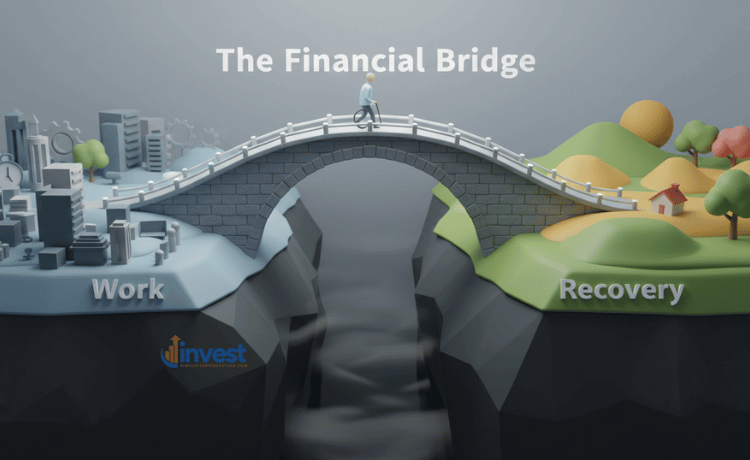
Think of it as a bridge. On one side is your current life—your home, your car, and your daily expenses. On the other side is a future where you are healthy again. If an unexpected health crisis knocks out the road under you, disability insurance is the bridge that allows you to keep moving forward without falling into debt.
A Real-World Example in the American Workforce
Let’s look at Sarah, a marketing manager at a large company like Amazon or Target. She earns 80,000 dollars a year. Sarah is healthy, goes to the gym, and assumes she’s fine. Suddenly, she is diagnosed with a severe autoimmune condition that requires intensive treatment and makes it impossible for her to sit at a desk for more than an hour.
Without insurance, Sarah’s 6,600 dollars monthly income vanishes instantly. With a solid disability policy, the insurance company might pay her 4,000 dollars every month. This money allows her to keep her apartment and focus on recovery instead of worrying about eviction.
The Common Misconception
Many beginners believe that “disability” only refers to “freak accidents”—like falling off a ladder or getting into a massive car crash. They think, “I work in an office at Microsoft, I’m not at risk for a physical injury.”
The Financial Logic Shift
In reality, the vast majority of disability claims are caused by common illnesses, not accidents. According to the Council for Disability Awareness, back injuries, cancer, heart disease, and mental health struggles cause far more lost work time than workplace accidents. You aren’t insuring against a “broken leg”; you are insuring against the human body’s unpredictability.
Short-Term vs. Long-Term: Which One Matters?
When you start looking at disability insurance for beginners, you will see two main categories. Understanding the difference is vital so you don’t buy the wrong kind of protection.
1. Short-Term Disability (STD)
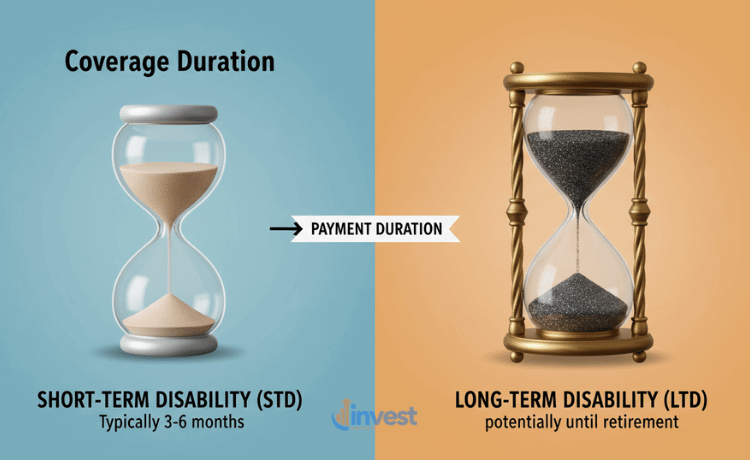
This is designed to cover you for a brief period, usually between three to six months. It often kicks in after you’ve used up your sick leave. Many employers, like Walmart or Costco, offer this as a standard benefit.
- Best for: Recovering from a minor surgery, a broken bone, or a complicated pregnancy.
- The Logic: It keeps you afloat while you are temporarily “out of commission.”
2. Long-Term Disability (LTD)
This is the “heavy hitter” of financial planning. It starts after your short-term coverage ends and can last for five years, ten years, or even until you reach retirement age.
- Best for: Chronic illnesses, serious accidents, or permanent conditions.
- The Logic: This is the policy that prevents bankruptcy. If you can never work again, this is the only thing standing between you and total financial ruin.
Why Beginners Get Confused
New investors often prioritize Short-Term Disability because it feels more “likely” to be used. They worry about being out for a month. However, a one-month loss of income is an inconvenience that an emergency fund can handle. A twenty-year loss of income is a catastrophe that only Long-Term Disability can solve.
The Mindset Adjustment
Focus on the “Catastrophe” first. If you have to choose where to spend your insurance dollars, prioritize a high-quality long-term policy. You can “self-insure” for a few weeks of missed work by saving cash, but you cannot “self-insure” for the loss of a decade of wages.
Own-Occupation vs. Any-Occupation: The Trap in the Fine Print
This is the most critical technical detail in disability insurance for beginners. It determines when the insurance company actually has to pay you.
“Own-Occupation” (The Gold Standard)
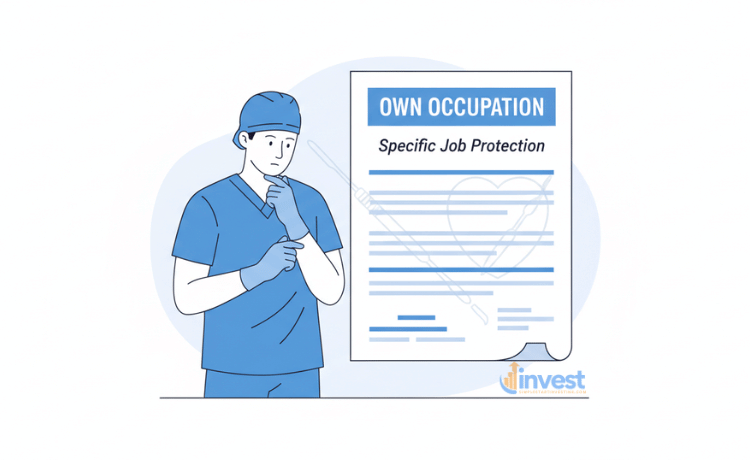
This definition says you are disabled if you cannot perform the specific duties of your job.
- Example: Imagine a surgeon who develops a slight tremor in their hand. They can still walk, talk, and work at a retail store, but they can no longer perform surgery. An “Own-Occupation” policy would pay them their full benefit because they can’t do the job they were trained for.
“Any-Occupation” (The Budget Option)
This definition is much stricter. It says the company only pays you if you cannot work any job that you are reasonably qualified for.
- Example: Using that same surgeon, an “Any-Occupation” policy might refuse to pay. The insurance company could argue, “Sure, you can’t do surgery, but you are highly educated and have a medical degree. You could work as a medical consultant or a teacher.” If you can do any job, you get zero dollars.
The Financial Logic Shift
Many people choose “Any-Occupation” because the monthly cost (premium) is lower. However, this is often a “false saving.” You are paying for a policy that makes it very difficult to actually collect a check when you need it most. If you have a specialized skill—like being a programmer, an engineer, or a nurse—you should always look for “Own-Occupation” coverage.
Why You Can’t Rely on Social Security (SSDI)
A very common mistake for beginners in the US is assuming the government will take care of them. While Social Security Disability Insurance (SSDI) exists, it is not a reliable primary plan.
First, the definition of disability used by the Social Security Administration is incredibly strict. You must be unable to do any work at all, and your condition must be expected to last at least a year or result in death. About 65 percent of initial applications are denied.
Second, the payout is very low. In recent years, the average monthly payment for a disabled worker was around 1,500 to 1,700 dollars. For someone used to a 5,000 dollars monthly salary, trying to survive on 1,500 dollars is a recipe for a lifestyle collapse.
The Real-World Comparison
If you work at a company like JPMorgan Chase and earn a high salary, your private disability insurance is like a custom-fit suit. SSDI is like a one-size-fits-all poncho. It might keep you dry in a light drizzle, but it won’t protect you in a hurricane.
The “Tax Trap”: How You Pay for Your Policy Matters
Most people don’t realize that the IRS cares about how you pay your insurance premiums. This can change the value of your check by thousands of dollars.
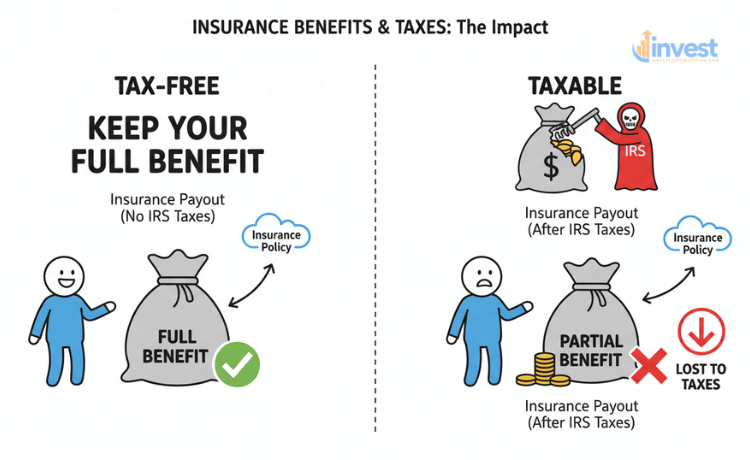
Scenario A: Your Employer Pays (Pre-Tax)
If your company provides the insurance for free as a perk, or if you pay for it with “pre-tax” dollars (taken out of your check before taxes are calculated), the IRS considers the benefits to be taxable income.
- The Result: If your policy is supposed to pay you 4,000 dollars a month, you might only take home 3,000 dollars after Uncle Sam takes his cut.
Scenario B: You Pay (After-Tax)
If you buy your own policy or pay your employer-sponsored premium with “after-tax” dollars, the payout is 100 percent tax-free.
- The Result: Your 4,000 dollars check is actually 4,000 dollars in your pocket.
The Adjustment
Always try to pay for your disability coverage with after-tax dollars. It ensures that when you are at your most vulnerable, you get every penny the policy promised.
Key Terms Every Beginner Should Know
When shopping for disability insurance for beginners, you will run into these three terms constantly. Here is how to understand them without a dictionary.
1. The Elimination Period (The “Wait Time”)
Think of this as a “time deductible.” It is the amount of time you must be disabled before the checks start coming. Common periods are 30, 60, or 90 days.
- Example: If you have a 90-day elimination period and get sick, you must cover your own bills for the first three months. On day 91, the insurance kicks in.
- Logic: A longer wait time makes your monthly premium cheaper. If you have a large emergency fund, choosing a 90-day wait can save you a lot of money.
2. The Benefit Period (The “Duration”)
This is how long the insurance company will keep paying you. You can choose two years, five years, or “to age 65.”
- Advice: For a beginner, “to age 65” is the gold standard. It ensures that even a permanent disability won’t stop you from reaching retirement age with your finances intact.
3. Cost-of-Living Adjustment (COLA)
Inflation makes things more expensive every year. A 3,000 dollars check might be great today, but in twenty years, it might only buy half as much. A COLA rider ensures your monthly check increases slightly every year to keep up with the price of milk and gas.
How Much Does It Cost?
A common fear is that protecting your income will be too expensive. In the US market, a high-quality long-term disability policy usually costs between 1 percent and 3 percent of your annual income.
Let’s use simple numbers to see the value:
- If you earn 50,000 dollars a year, your insurance might cost around 500 to 1,500 dollars per year.
- That breaks down to about 40 to 125 dollars per month.
- In exchange for the price of a couple of nice dinners or a few streaming subscriptions, you are protecting a multi-million dollar lifetime earnings potential.
When you look at it that way, the cost of not having insurance is much higher than the premium itself.
Common Mistakes to Avoid
As a beginner, it is easy to fall into these three traps:
1. Waiting too long to buy: Insurance companies base their prices on your health and age. Every year you wait, the price goes up. If you develop even a minor health issue (like high blood pressure), the insurance company might exclude that condition from your coverage or charge you much more.
2. Over-relying on group coverage: Many people think, “My job at FedEx provides disability insurance, so I’m fine.” But group policies often have “Any-Occupation” definitions and aren’t portable. If you leave your job or get laid off, you lose your protection exactly when you might need it most.
3. Ignoring the “Partial Disability” clause: Sometimes you aren’t 100 percent disabled, but you can only work 20 hours a week instead of 40. A good policy will pay a “residual” or “partial” benefit to make up the difference in your income. Make sure your policy has this!
Final Thoughts: Protecting the Foundation
In the world of investing, we talk a lot about buying stocks like Tesla (TSLA) or Apple (AAPL). We talk about real estate and compound interest. But all of those things require one thing: Capital. And for most of us, that capital comes from our jobs.
Disability insurance for beginners is the foundation that holds up the rest of your financial house. Without it, one bad diagnosis can wipe out years of savings and investment. By securing a policy now, you aren’t just buying insurance; you are buying the peace of mind that your “money machine” will never stop working for you and your family.
Regulations regarding insurance and taxes can change; please check current guidelines or consult with a qualified professional before making a final decision.
Disclaimer: This content is for educational purposes only and does not constitute financial, legal, or tax advice.