Imagine opening your mobile banking app to check your balance before a grocery run. You know you should have exactly 100 dollars left, but the screen shows 88 dollars. Where did those 12 dollars go? You didn’t buy lunch, and you didn’t pay a bill. You look at your transaction history and see a cryptic line item: “Monthly Service Fee.”
This is the reality of hidden banking fees. For many people starting their financial journey in the U.S., these small charges feel like a “tax” on being a customer. While 12 dollars might not seem like a fortune, it adds up to 144 dollars a year. That is money that could have gone into your savings, a nice dinner, or your first investment.
In this guide, we are going to pull back the curtain on how banks make money from your accounts. We will identify the most common “invisible” fees and, more importantly, give you a step-by-step plan to stop paying them forever.
What Are Hidden Banking Fees and Why Do They Exist?
When you put your money in a bank, you might think you are doing them a favor by giving them capital to lend out. While that is true, banks also view your account as a product that requires maintenance. They have to pay for the app you use, the electricity in the branches, and the staff who help you. To cover these costs—and to boost their profits—they charge fees.
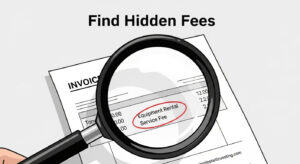
Hidden banking fees are charges that aren’t always obvious when you sign up for an account. They are often buried in a 40-page document called a “Fee Schedule” or “Account Disclosure.” Most people never read these, which is exactly what the banks count on.
Understanding these fees is the first step toward financial independence. You wouldn’t let a stranger walk up and take 10 dollars out of your wallet, so why let a multi-billion dollar bank do it every month?
The Monthly Maintenance Fee: The Cost of “Existing”
The most common “invisible” charge is the monthly maintenance fee. This is a flat rate the bank charges just for keeping your account open. Usually, this ranges from 5 dollars to 15 dollars depending on the bank and the type of account.
A common misunderstanding is that these fees are mandatory. Many beginners believe that if you have a bank account at a big national branch, you just have to pay the fee. This is a mistake. Almost every bank offers ways to “waive” or cancel this fee, but they don’t always make the requirements easy to find.
How to Kill the Maintenance Fee
Most banks will stop charging you this fee if you meet one of a few criteria:
- Direct Deposit: If you have your paycheck automatically deposited into the account, many banks will waive the fee. Usually, this requires a total of 250 dollars to 500 dollars in deposits per month.
- Minimum Balance: If you keep a certain amount of money in the account at all times—for example, 1,500 dollars—the bank sees you as a “valuable” customer and removes the fee.
- Student Status: If you are under a certain age (usually 24) or enrolled in college, many banks offer “Student Checking” which is naturally fee-free.
If you aren’t meeting these requirements, you are essentially paying for a service you could get elsewhere for free.
Overdraft Fees: The Most Expensive Latte You’ll Ever Buy
We have all been there. You have 5 dollars in your account, you forget about an automated bill that processed this morning, and you swipe your card for a 6-dollar coffee. Instead of the card being declined, the transaction goes through.
A few hours later, you see a 35-dollar overdraft fee on your statement. That 6-dollar coffee just cost you 41 dollars.
The bank calls this “Overdraft Protection,” making it sound like a helpful feature that saves you from the embarrassment of a declined card. In reality, it is a high-interest “micro-loan” with a massive flat fee. For the bank, this is pure profit.
The Overdraft Misconception
Many people think they have to have overdraft protection. In the U.S., you actually have the right to “opt-out.” If you opt-out, and you try to buy something without enough money, your card will simply be declined at the register. It might be slightly embarrassing for a second, but it saves you 35 dollars.
If you find yourself getting hit with these fees often, look into “Overdraft Protection Transfers.” This is where the bank links your savings account to your checking account. If you run out of money in checking, they move money from savings automatically. Some banks charge a small fee for this (maybe 10 dollars), which is still much better than 35 dollars.
ATM Fees: The Double-Dipping Trap
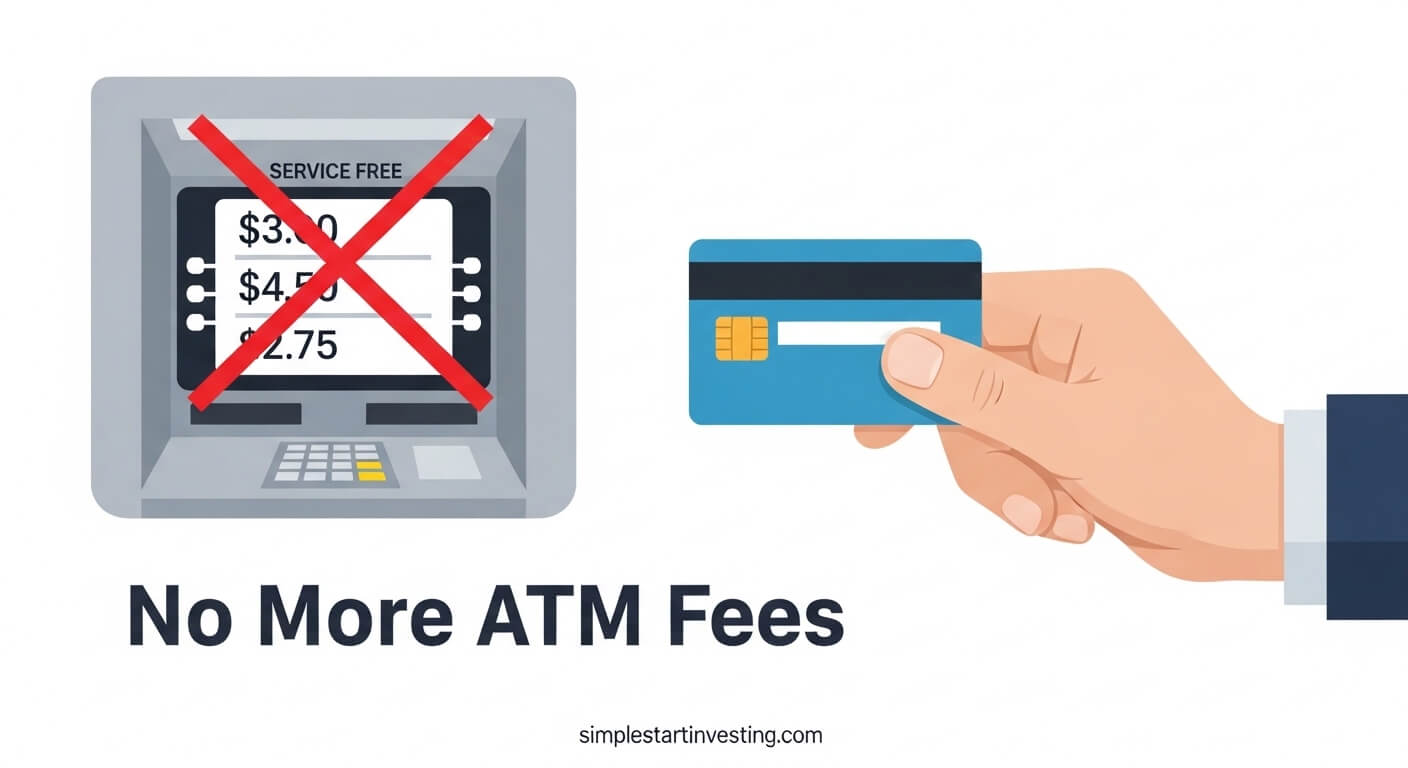
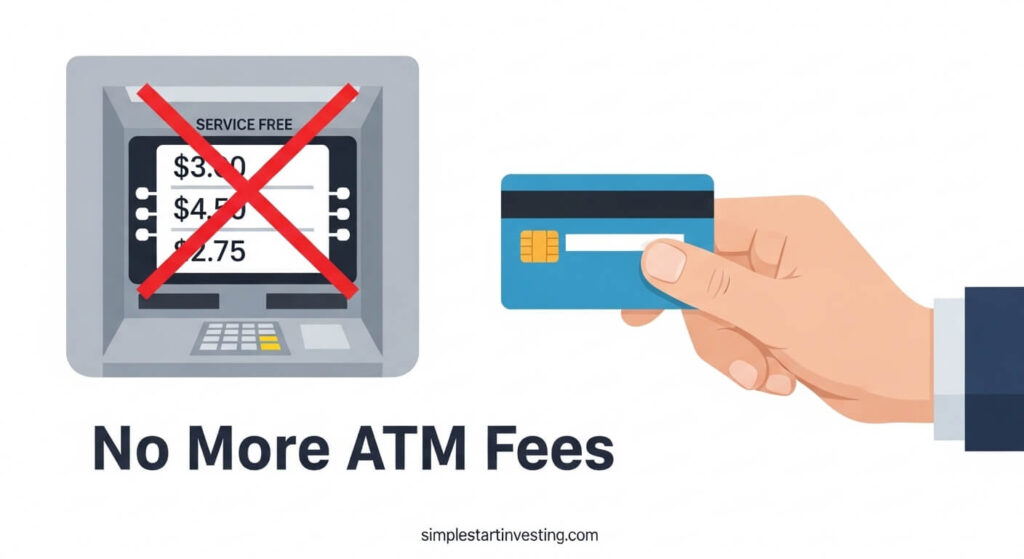
When you use an ATM that doesn’t belong to your bank, you often get hit twice.
- The owner of the ATM (like a gas station or a different bank) charges you 3 dollars for using their machine.
- Your own bank charges you an “Out-of-Network” fee, usually around 2.50 dollars, for the “service” of communicating with that other machine.
Suddenly, taking out 20 dollars for a cash-only taco stand costs you 25.50 dollars. If you do this once a week, you are losing over 260 dollars a year just to access your own money.
How to Avoid ATM Charges
The simplest way is to stay within your bank’s network. Most banking apps have a map showing “Fee-Free” ATMs near you.
Another “pro tip” for beginners: use the “Cash Back” feature at grocery stores or pharmacies. If you buy a pack of gum for 1 dollar and ask for 20 dollars cash back, it counts as a standard debit card purchase. No ATM fees, and you got a pack of gum for less than what the fee would have been.
Paper Statement Fees: Paying for Mail You Don’t Want
In the digital age, many banks have started charging a paper statement fee. This is usually between 2 dollars and 5 dollars every month. They claim it is for “environmental reasons,” but it’s also a way to reduce their postage and printing costs while making a little extra money from you.
Check your “Account Settings” online. There is almost always a toggle for “Go Paperless” or “Electronic Statements.” Switching this on is one of the easiest “wins” in personal finance. It takes 30 seconds and saves you up to 60 dollars a year.

Foreign Transaction Fees: The Hidden Travel Tax
If you travel outside the U.S. or even buy something online from a company based in Europe or Asia, you might see a foreign transaction fee. This is typically 3% of the total purchase price.
If you spend 1,000 dollars on a trip to Mexico, the bank might take an extra 30 dollars just for processing the currency conversion. While 3% sounds small, it adds up on large purchases.
If you plan to travel or shop internationally, look for a “No Foreign Transaction Fee” debit or credit card. Many online-only banks offer this as a standard feature to attract new customers.
How to Spot These Fees Before They Hit
Banks are required by law to provide a document called a Schedule of Fees. You can usually find this by searching your bank’s name + “fee schedule” on Google.
When you look at this document, don’t get overwhelmed by the legal jargon. Look for these specific keywords:
- Monthly Service Charge
- Non-Bank ATM Fee
- Insufficient Funds (NSF)
- Stop Payment Fee
- Inactivity Fee (Yes, some banks charge you for not using your account!)
If you see a fee on your statement that you don’t recognize, call the bank. As a beginner, you have a powerful tool: the “One-Time Courtesy” request. You can say: “Hi, I noticed a monthly maintenance fee on my account. I’m a new customer and I wasn’t aware of the requirements. Could you waive this as a one-time courtesy and help me understand how to avoid it in the future?”
More often than not, the representative will reverse the charge. They would rather lose 12 dollars than lose you as a customer.
The Rise of “Fee-Free” Banking
One of the best things about the modern financial landscape is the rise of online banks and credit unions. Because online banks don’t have to pay for thousands of physical buildings, they pass those savings on to you in the form of zero fees.
Many of these banks have:
- No monthly maintenance fees (no matter your balance).
- No overdraft fees.
- ATM fee reimbursement (they actually pay you back for the fees other ATMs charge you).
If your current bank is constantly “nickeling and diming” you, it might be time to move. Switching banks can feel like a hassle, but for a beginner, it is one of the most impactful moves you can make to protect your cash flow.
Why Keeping This Money Matters for Your Future
You might be thinking, “Is it really worth all this effort for a few dollars here and there?” Let’s look at the math using simple logic. If you save 20 dollars a month by avoiding a maintenance fee and two ATM visits, that is 240 dollars a year. If you take that 240 dollars and put it into a basic investment account every year, after 10 years, you won’t just have 2,400 dollars. Because of how money grows over time, you could easily have over 3,000 dollars.
Every dollar you give to a bank in fees is a dollar that isn’t working for you. By killing these hidden fees, you are effectively giving yourself a small raise without having to work a single extra hour.
Summary of Action Steps
If you want to stop the “invisible” drain on your wallet, follow these steps this week:
- Audit your statement: Look at your last three months of transactions. Highlight anything that says “Fee,” “Service Charge,” or “Adjustment.”
- Check your direct deposit: Ensure your paycheck is going to the account that requires it to waive fees.
- Go paperless: Log in to your app and turn off paper statements.
- Opt-out of overdraft: Call your bank or use the app to decline “Overdraft Protection.”
- Evaluate your bank: If you paid more than 0 dollars in fees last month, search for a “Fee-Free Checking Account” or a local Credit Union.
Banking should be a tool that helps you grow, not a trap that keeps you small. Take control of your accounts today, and keep your hard-earned money where it belongs—in your pocket.
Disclaimer: This content is for educational purposes only and does not constitute financial advice. Regulations and bank policies can change, so always verify current terms with your financial institution.