You have probably had that moment where you look at your bank account and feel a mix of pride and confusion. You have saved some money, which is great. But then the questions start creeping in. Is this enough for a rainy day? Can I afford that vacation next summer? Should I be putting more into the stock market, or is that too risky right now?
When all your money sits in one big “pile,” it is hard to know what that money is actually supposed to do. This mental fog often leads to one of two mistakes: being too scared to invest and losing money to inflation, or investing money you actually need next month and being forced to sell when the market is down.
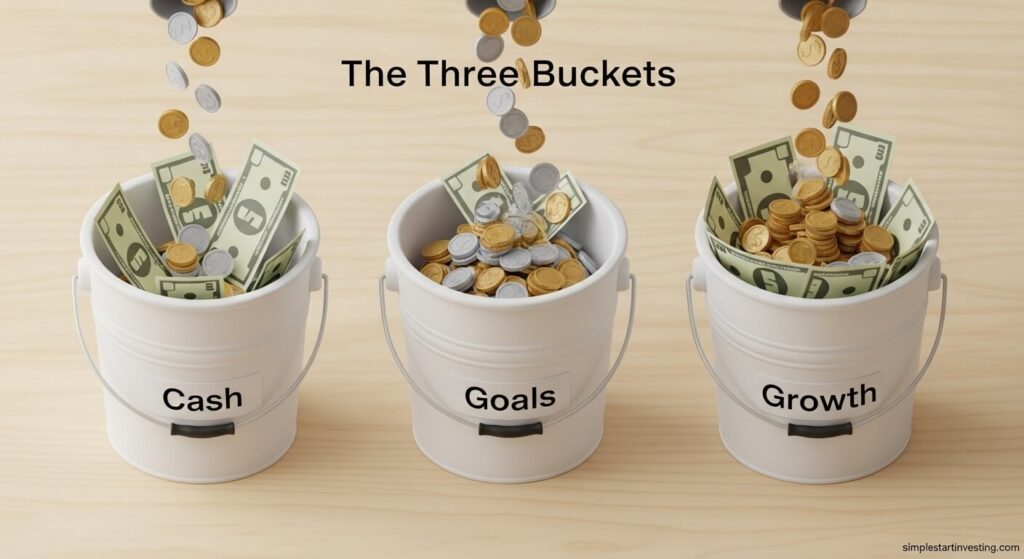
That is where The Bucket Strategy comes in. Think of it as a simple filing system for your financial life. Instead of one confusing pile, we are going to mentally—and sometimes physically—divide your money into three distinct “buckets” based on when you need to spend it.
This approach isn’t just about math; it is about sleep-at-night insurance. When you know exactly which dollars are for groceries and which are for a retirement thirty years away, the daily swings of the stock market don’t feel so scary anymore.
What Exactly is the Bucket Strategy?
At its core, The Bucket Strategy is a method of asset allocation that prioritizes your “time horizon.” In plain English, that just means we care more about when you need the money than how much profit you can make in the next week.
Most people try to chase the highest returns everywhere. The problem is that the investments with the highest potential returns (like stocks) are also the most volatile. If you put your rent money into a “hot stock” and it drops 20% right before the first of the month, you are in trouble.
By using three buckets, you create a buffer. You use safe, boring accounts for the near future and aggressive, exciting accounts for the far future. This way, you never have to panic-sell your long-term investments to cover a short-term bill.
Bucket 1: The Liquidity Bucket (The “Now” Money)
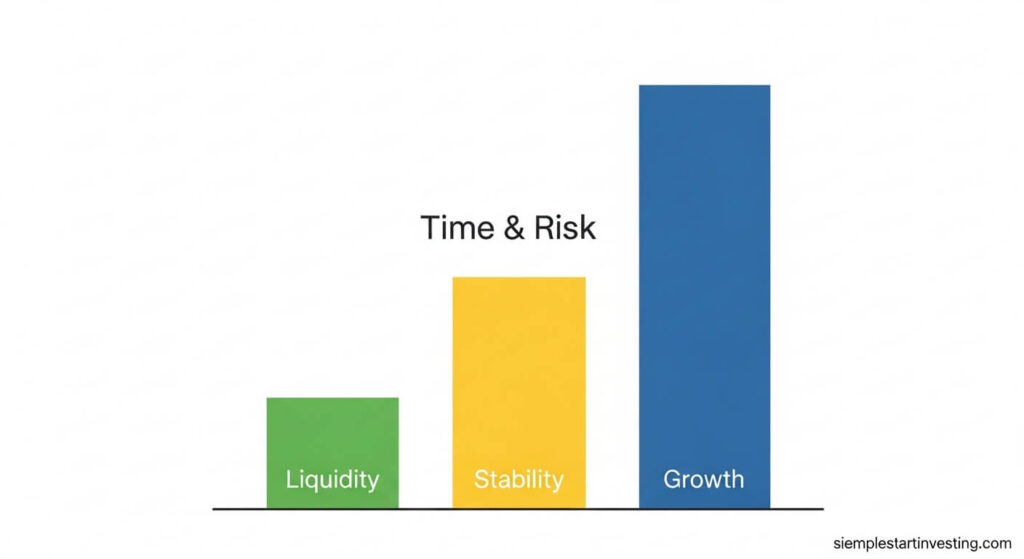
The first bucket is your foundation. This is the money you plan to spend within the next 0 to 2 years. It is designed for stability and “liquidity,” which is just a fancy way of saying you can get to the cash immediately without any penalties or losses.
What goes in here?
This bucket covers your monthly bills, your “fun money” for the weekend, and most importantly, your Emergency Fund. If your car breaks down or you have an unexpected medical bill, this is where you turn.
In the U.S. market today, this money usually lives in a standard Checking Account for daily spending and a High-Yield Savings Account (HYSA) for your emergency reserves. While traditional big banks might offer almost zero interest, many online banks currently offer much higher rates, allowing your “idle” cash to at least keep up with some of the rising costs of living.
The goal of Bucket 1
The goal here is not growth. If you earn a little bit of interest, that is a bonus. The real goal is certainty. You need to know that if you put 1,000 dollars in today, there will still be 1,000 dollars there in six months, regardless of what the news says about the economy.
A common mistake with Bucket 1
Many beginners keep too much or too little here. If you keep 50,000 dollars in a checking account earning nothing while inflation is high, your “purchasing power” is actually shrinking. You can buy fewer groceries with that same money next year.
On the flip side, if you only keep 500 dollars here and invest everything else, one flat tire could force you to put a repair on a high-interest credit card, which defeats the whole purpose of investing.
Bucket 2: The Stability Bucket (The “Soon” Money)
The second bucket is for goals that are 3 to 10 years away. This is the “middle ground.” It is for the money you don’t need tomorrow, but you also aren’t willing to lock away until you are 65.

What goes in here?
Think about your big life milestones. Are you saving for a down payment on a house? A wedding? A dream car? Or maybe you want to start a business in five years? This is where that money lives.
Because you have a few years to wait, you can afford to take a little more risk than Bucket 1, but you still need to be careful. You might look at things like Certificates of Deposit (CDs), which lock your money away for a set time (like 3 or 5 years) in exchange for a higher interest rate than a savings account.
Another option often used in the U.S. is Short-Term Bonds or Balanced Funds. These are investments that hold a mix of stocks and bonds. They might grow more than a savings account, but they won’t drop as sharply as the stock market does during a crash.
The goal of Bucket 2
The goal here is preservation and modest growth. You want this money to grow faster than inflation so your house down payment keeps getting bigger, but you don’t want it to vanish if the stock market has a bad year.
Why beginners get this wrong
Beginners often skip Bucket 2 entirely. They either keep everything in a savings account (Bucket 1) and get frustrated that it isn’t growing, or they throw it all into the stock market (Bucket 3) and then cry when the market dips right when they were ready to buy a house. Bucket 2 acts as a bridge that prevents those two extremes.
Bucket 3: The Growth Bucket (The “Later” Money)
This is the “wealth-building” bucket. This money is for your long-term future, usually 10 or more years away. For most of us, this is primarily for retirement.

What goes in here?
Since you don’t need this money for a decade or more, you can ignore the “noise” of the daily news. This is where you put money into the stock market. In the U.S., this usually happens through accounts like a 401(k) provided by an employer or an Individual Retirement Account (IRA).
Inside these accounts, you might buy Index Funds or ETFs (Exchange Traded Funds). For example, many people choose funds that track the S&P 500, which is a collection of the 500 largest companies in America. History shows that while the stock market goes up and down every week, it has generally trended upward over long periods of 10, 20, or 30 years.
The goal of Bucket 3
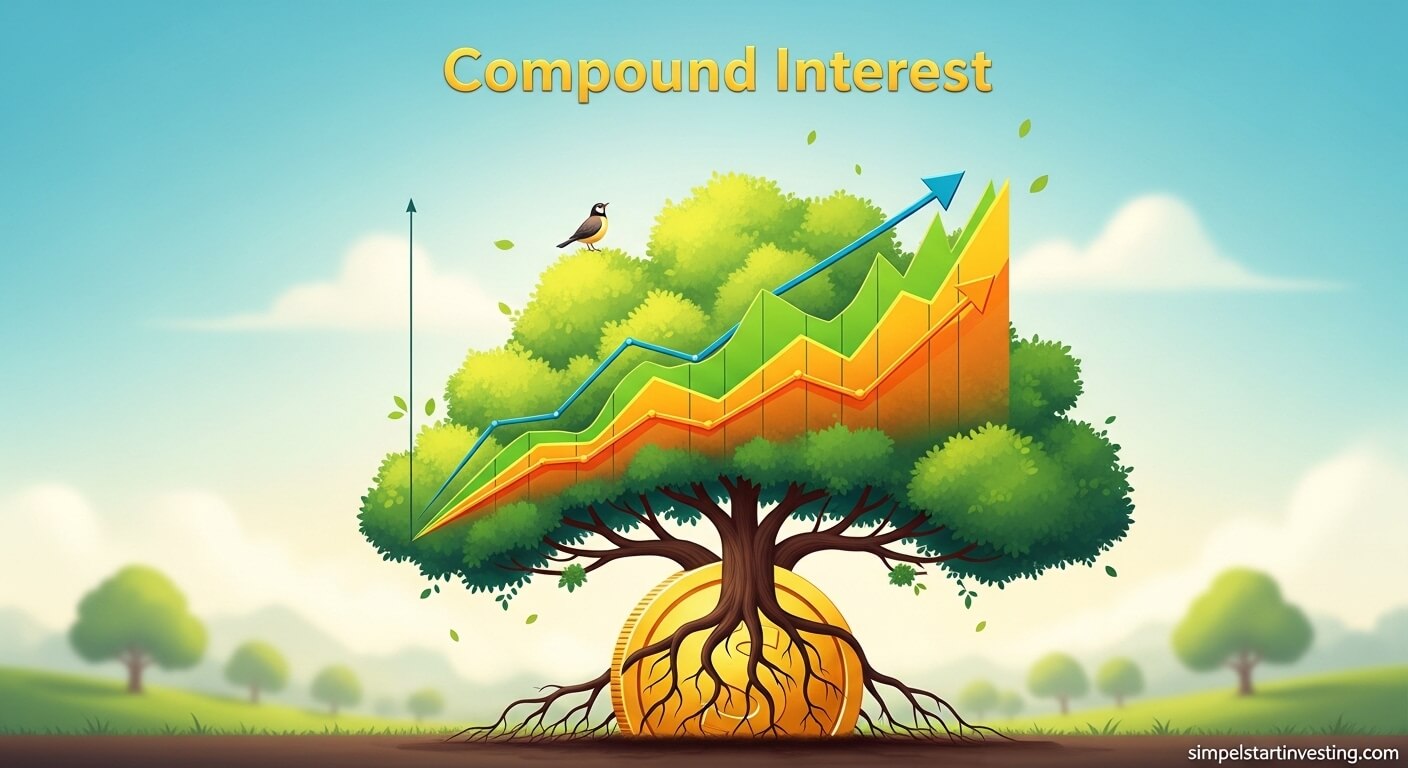
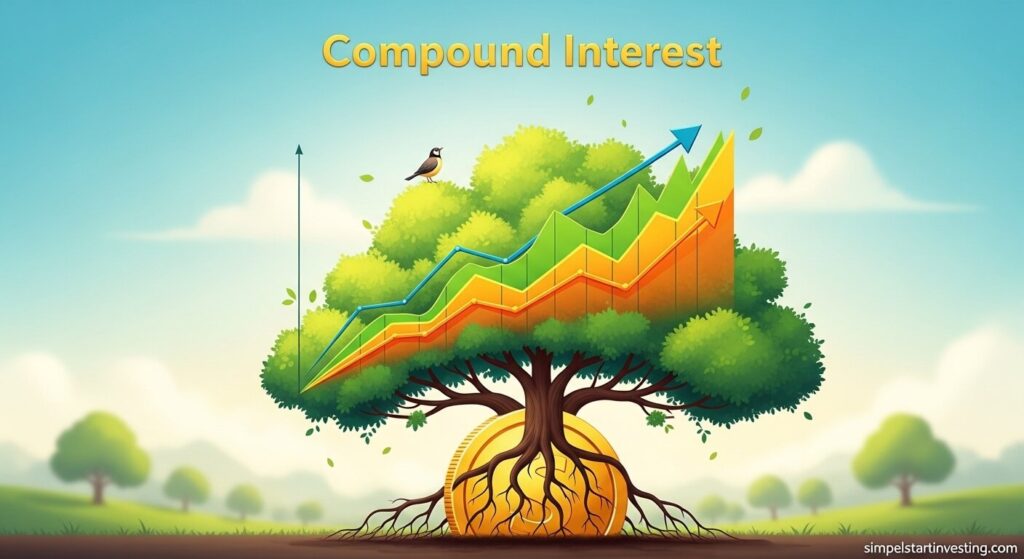
The goal here is Maximum Growth. You want your money to work for you. Through the power of “compounding,” the earnings your money makes will eventually start making their own earnings.
Imagine you start with 1,000 dollars. If it grows by 10 percent, you have 1,100 dollars. The next year, that 10 percent growth applies to the full 1,100 dollars, not just your original thousand. Over decades, this “snowball effect” is how modest savings turn into a retirement nest egg.
The psychological challenge
The biggest mistake beginners make in Bucket 3 is panic. Because they see the value of their 401(k) drop during a recession, they get scared and move the money to a “safe” savings account.
By doing that, they “lock in” their losses and miss out on the recovery. If you have Bucket 1 and Bucket 2 properly filled, you can look at a stock market crash and say, “That’s okay. I don’t need that money for 20 years anyway. I have plenty of cash in Bucket 1 to pay my bills today.”
How to Fill Your Buckets Step-by-Step
You don’t have to fill all three buckets to the brim on day one. Most people start at the bottom and work their way up.
Step 1: Secure Bucket 1
Before you buy a single share of stock, make sure you have your “Starter Emergency Fund.” Most experts suggest having at least 1,000 dollars or one month of expenses tucked away in a high-yield savings account. Once you have that, you have a “safety net” that prevents you from going into debt when life happens.
Step 2: Get the “Free Money”
If your job offers a 401(k) match, that is essentially a 100% return on your money. Even if your Bucket 1 isn’t “full” yet, it is usually wise to contribute enough to Bucket 3 just to get that employer match. It is the closest thing to a “free lunch” in the financial world.
Step 3: Expand the Safety Net
Go back to Bucket 1 and try to build it up to cover 3 to 6 months of your basic living expenses. If your monthly rent, food, and bills total 3,000 dollars, aim for 9,000 to 18,000 dollars in your savings account. This might take a year or two to achieve, and that is perfectly okay.
Step 4: Fund Your Dreams (Bucket 2)
Once you are “safe” with your emergency fund, start looking at your medium-term goals. If you want to buy a house in five years and need a 50,000-dollar down payment, start a recurring transfer to a separate account specifically for that goal. This is where you might use a CD or a conservative investment fund.
Step 5: Aggressive Growth (Bucket 3)
Any extra money beyond what you need for safety and near-term goals should go into Bucket 3. This is where you are building the “You” of the future. The more you put here early on, the less work you have to do later because compounding has more time to work its magic.
Why This Method Beats “Mental Math”
Many people think they can just keep a mental note of how much money is for what. “Okay, I have 20,000 dollars in the bank. I’ll use 5,000 for the car, 10,000 for emergencies, and 5,000 for fun.”
The problem is that our brains are wired for “recency bias.” When we see a shiny new gadget or a great travel deal, we tend to “borrow” from our future selves. We tell ourselves we will “pay it back later.”
The Bucket Strategy creates physical or digital boundaries. Many modern banks allow you to create “vaults” or “sub-accounts.” When you label an account “Emergency Fund: DO NOT TOUCH,” you are much less likely to spend it on a spontaneous weekend trip to Vegas.
Understanding the Risks: What Could Go Wrong?
No strategy is perfect, and the biggest risk with the Bucket Strategy is imbalance.
- The “Scaredy-Cat” Trap: If you put 90% of your money in Bucket 1 because you are afraid of the market, you will likely never have enough to retire. Inflation will slowly eat away at the value of your cash.
- The “Gambler” Trap: If you put 90% of your money in Bucket 3 because you want to “get rich quick,” a simple job loss or medical emergency could force you to sell your stocks at a huge loss just to pay for groceries.
- The Inflation Risk: Especially in the current economy, holding too much cash for too long is a risk. If prices for milk and gas go up by 5 percent but your bank only pays you 1 percent interest, you are effectively losing 4 percent of your wealth every year.
Adjusting Your Buckets Over Time
Your buckets aren’t static. They should change as your life changes.

If you are 22 years old and just starting your first job, your Bucket 3 should probably be your biggest focus after you have a small emergency fund. You have decades for that money to grow, and you can afford to be aggressive.
If you are 60 years old and planning to retire in two years, you need to shift more money into Bucket 1 and Bucket 2. You don’t want to enter retirement with all your money in the stock market, only to have a market crash happen on your first day of freedom.
By moving two or three years’ worth of living expenses into Bucket 1 before you retire, you ensure that even if the stock market crashes, your lifestyle doesn’t have to change. You can just spend from your “Cash Bucket” and wait for the market to recover.
Real-Life Example: Meet Sarah
Sarah is 30 years old. She earns 5,000 dollars a month after taxes. She has 15,000 dollars in total savings.
Before using the Bucket Strategy, she just had one savings account. She felt rich, so she spent 3,000 dollars on a fancy designer bag. Two weeks later, her car transmission failed, costing 4,000 dollars. Suddenly, her “big pile” of money looked a lot smaller, and she felt stressed.
After applying the Bucket Strategy, Sarah reorganized:
- Bucket 1 (Emergency): She moved 10,000 dollars into a High-Yield Savings Account. This is her “peace of mind” money. She never touches it.
- Bucket 2 (New Car Fund): She moved 3,000 dollars into a 2-year CD. She knows she will need a new car in a couple of years, and this keeps the money out of sight.
- Bucket 3 (Retirement): She kept 2,000 dollars in her Roth IRA and set up an automatic 500-dollar-a-month contribution from her paycheck.
Now, when Sarah looks at her checking account and sees “only” 1,000 dollars left after her bills, she knows exactly what she can spend. She doesn’t feel “fake rich,” and she doesn’t panic when the car makes a weird noise because she knows Bucket 1 is ready.
Final Thoughts for the Beginner
The Bucket Strategy is about taking control of the “why” behind your money. It turns an overwhelming mountain of financial decisions into three simple questions:
- Do I need this money now?
- Do I need it soon?
- Do I need it later?
Once you answer those, the “where” (the bank or the stock market) becomes obvious. You don’t need to be a math genius or a Wall Street pro to do this. You just need a little bit of organization and the discipline to let each bucket do its specific job.
Start small. Open that high-yield savings account today. Set up that first 50-dollar transfer to your retirement account. Your future self—the one who is sitting on a beach or a porch thirty years from now—will thank you for it.
Disclaimer: This content is for educational purposes only and does not constitute financial advice. Financial regulations and market conditions can change frequently; please consult with a qualified professional or check current IRS and SEC guidelines before making major investment decisions.