You just bought your first investment property, or perhaps you are looking at a listing and dreaming of the possibilities. You see the gleaming photos of Airbnbs in your area charging 200 dollars a night. Then, you look at local apartment listings where similar places rent for 1,800 dollars a month. The math seems simple at first glance. If you book that Airbnb for just ten nights, you have already made more than half the monthly rent. If you book it for twenty, you are rich, right?
Not so fast. Choosing between these two rental property strategies is one of the biggest decisions a new investor will make. It is not just about which one brings in a bigger check at the end of the month. It is about how much of your life you are willing to trade for that money. One path is essentially starting a hospitality business, while the other is more like managing a long-term asset.
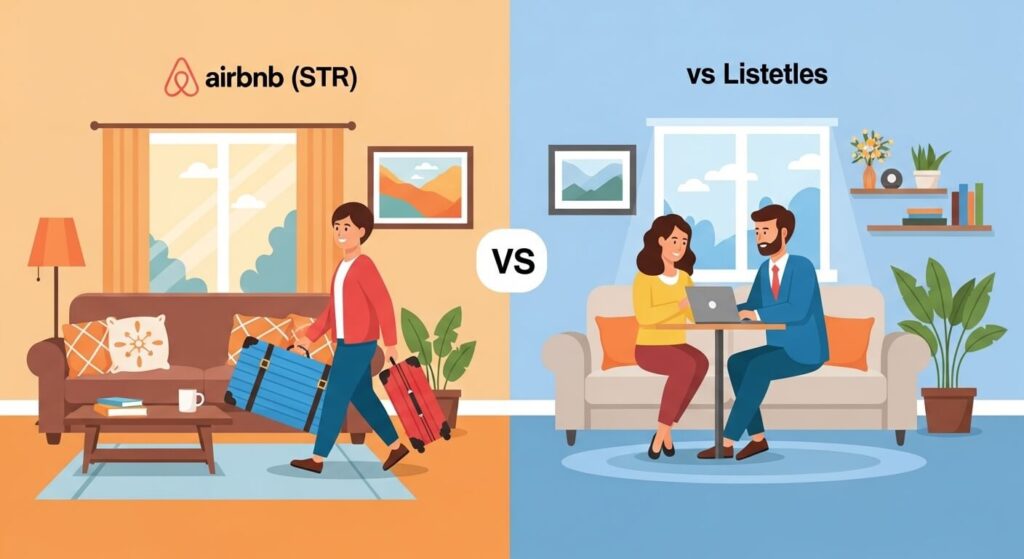
In this guide, we will break down the reality of short-term versus long-term rentals. We will look past the “get rich quick” social media posts and look at the actual costs, the workload, and the legal hurdles you will face in the current US market. By the end, you will have a much clearer picture of which path fits your financial goals and your lifestyle.
Defining the Two Main Paths
Before we dive into the profits, we need to make sure we are talking about the same things. In the world of real estate, how you define your strategy changes how the government taxes you and how the neighbors look at you.
A short-term rental, often called an STR, is typically any stay shorter than 30 days. You are likely familiar with platforms like Airbnb or Vrbo. In this model, you are providing a service. You provide the furniture, the Wi-Fi, the toilet paper, and the “vibe.” Your “tenants” are actually guests, much like people staying at a hotel.
A long-term rental, or LTR, is the traditional way of being a landlord. You find a person or a family to sign a lease, usually for 12 months. They bring their own couch, they pay for their own electricity, and they handle the day-to-day cleaning. You provide the four walls and a roof that works.
Understanding these rental property strategies requires looking at them through three lenses: income, effort, and risk. Beginners often focus only on the income, but that is where the most expensive mistakes happen.
The Income Illusion: Gross vs. Net
This is the area where most new investors get tripped up. They see the “Gross Income,” which is the total amount of money collected from guests, and assume that is what they get to keep.
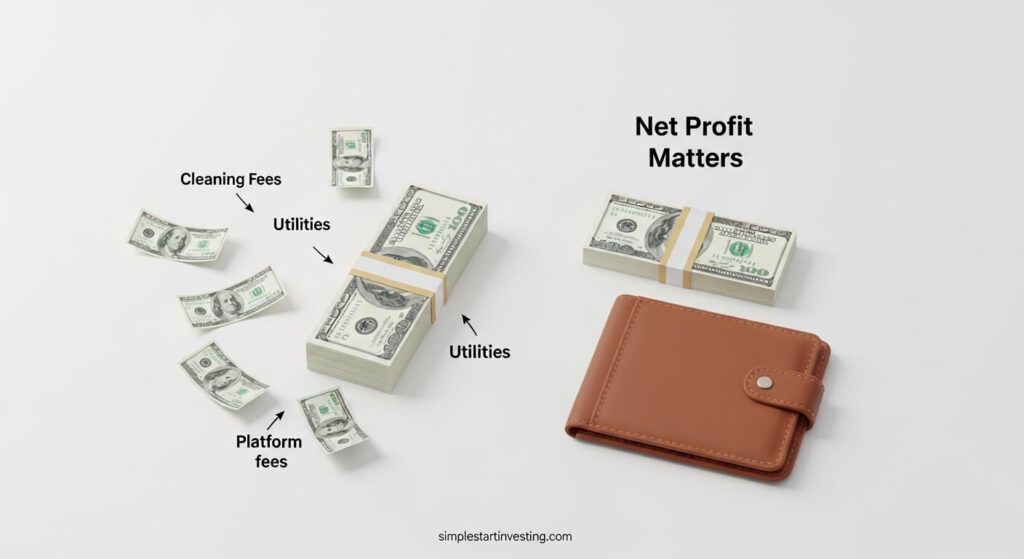
With an Airbnb, your gross income can be double or even triple what a traditional lease offers. If a house in a nice part of Florida rents for 2,500 dollars a month traditionally, it might generate 6,000 dollars a month as a short-term rental during the peak season.
However, the expenses for a short-term rental are massive. You have to pay for high-speed internet, electricity, water, and trash. You have to pay a cleaning crew every time someone leaves, which could be ten times a month. You have to pay platform fees to Airbnb, which usually take a percentage off the top. Then there are the supplies: coffee, linens, towels, and the occasional broken wine glass.
When you subtract all those costs, that 6,000 dollars might dwindle down to 3,000 dollars in actual profit. Now, compare that to the traditional rental. The tenant pays 2,500 dollars. They pay all their own utilities. You might only have a 200-dollar property management fee and a small set-aside for future repairs. You end up keeping 2,200 dollars.
The gap between the two is much smaller than it looked at first. In some markets, after you factor in the “vacancy rate”—the days the house sits empty—the traditional rental can actually come out ahead with much less stress.
The Hidden Cost of “Turnover”
In a long-term rental, “turnover” is your enemy. This is the period when a tenant moves out and you have to paint, clean, and find a new one. It might happen once every two years. During that month of vacancy, you lose money.
In the short-term world, turnover is your daily life. You are constantly “turning” the property. Every time a guest leaves, the property must be perfect for the next one. In the hospitality industry, a single bad review about a stray hair or a dusty shelf can tank your search ranking.
This means you are either spending your weekends scrubbing floors or you are paying a premium for a reliable cleaning service. You also have the “wear and tear” factor. People staying for two nights tend to treat a house differently than people who call it home. Suitcases bang against baseboards, parties might happen despite your rules, and furniture gets used heavily.
If you choose the short-term path among your rental property strategies, you must budget significantly more for maintenance and furniture replacement. A couch in a traditional rental might last ten years. In a busy Airbnb, it might look ragged after three.
Management: Is it Passive or an Extra Job?
One of the biggest myths for beginners is that all real estate is “passive income.” This is rarely true, but it is especially untrue for short-term rentals.

Managing an Airbnb is a customer service job. You will get messages at 10 PM asking how to work the smart TV. You will have guests complaining that the neighbor’s dog is barking. You have to manage a calendar, adjust prices for holidays or local events, and coordinate with cleaners. If you don’t do this yourself, a professional short-term management company will often charge between 20 percent and 30 percent of your total revenue.
Long-term rentals are much closer to the “passive” dream. Once you have a qualified tenant in place, you might not hear from them for months. You collect the rent electronically, and your main job is to ensure the heat works in the winter and the roof doesn’t leak. Traditional property managers usually charge only 8 percent to 10 percent because there is so much less work involved.
If you are a busy professional with a 40-hour-a-week job, the high-intensity nature of short-term rentals might lead to burnout. On the other hand, if you are retired or looking to build a boutique hospitality brand, the extra work might be worth the extra profit.
Navigating the Regulatory Minefield
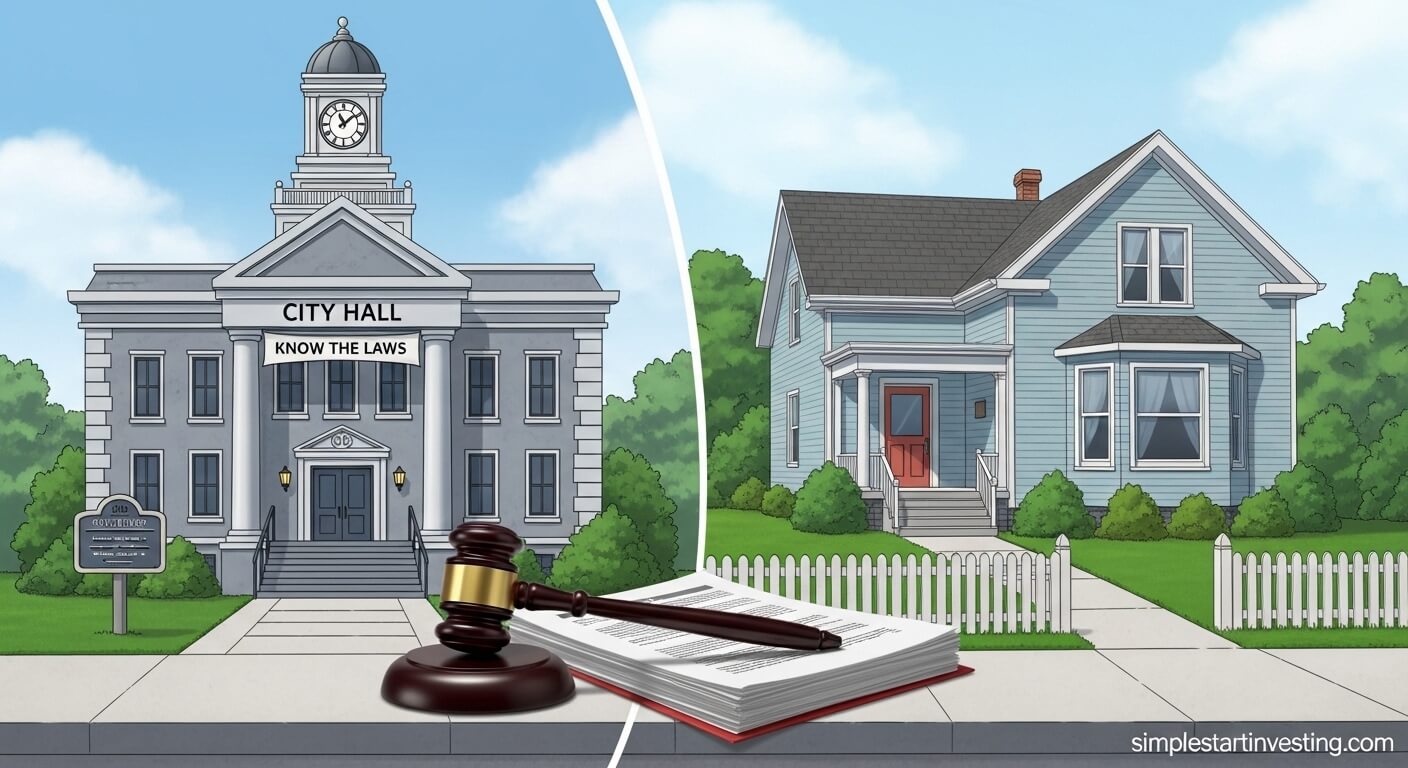
This is perhaps the most critical part of choosing your rental property strategies in today’s environment. The “Wild West” days of Airbnb are largely over. Cities across the US are cracking down on short-term rentals to protect local housing for long-term residents.
Before you buy a property with the intent to Airbnb it, you must check the local zoning laws. Some cities, like New York or parts of New Orleans, have almost entirely banned short-term rentals in certain areas. Others require you to live on the property yourself (primary residence requirement).
Even if the city allows it, a Homeowners Association (HOA) might not. Many HOAs have strict rules against stays shorter than six months or a year. If you buy a condo planning to host tourists and the HOA finds out, they can fine you thousands of dollars or even take legal action to stop you.
Long-term rentals face far fewer regulatory hurdles. While you still need to follow landlord-tenant laws and fair housing regulations, the basic right to lease your property for a year is generally protected. For a beginner, this stability is a huge advantage. You don’t have to worry about a city council vote suddenly making your business model illegal overnight.
Tax Implications You Should Know
The IRS looks at these two strategies differently. Generally, long-term rental income is considered “passive.” This is actually a good thing for many, but it limits how you can use losses to offset your other income (like your salary) unless you qualify as a “Real Estate Professional.”
Short-term rentals can sometimes be treated more like a business (active income). If the average stay in your property is seven days or less, and you provide “substantial services” like daily cleaning or meals, the IRS might view it differently than a standard rental.
There is also a famous rule called the “14-day rule” (or the Augusta Rule). If you rent out your own home for 14 days or fewer during the year, that income is generally tax-free. This is a popular strategy for people who live near major events like the Masters golf tournament or the Super Bowl.
However, once you cross into a full-time rental business, things get complex. You can deduct many expenses, including the “depreciation” of the house and the furniture you bought. Because tax laws change and depend heavily on your total income, you should always consult a professional, but knowing that the “type” of rental changes your tax bucket is a vital first step.
Market Sensitivity and Economic Risk
Think about how you spend your money when things get tight. If the economy slows down, what is the first thing people cut? Usually, it is vacations and travel.
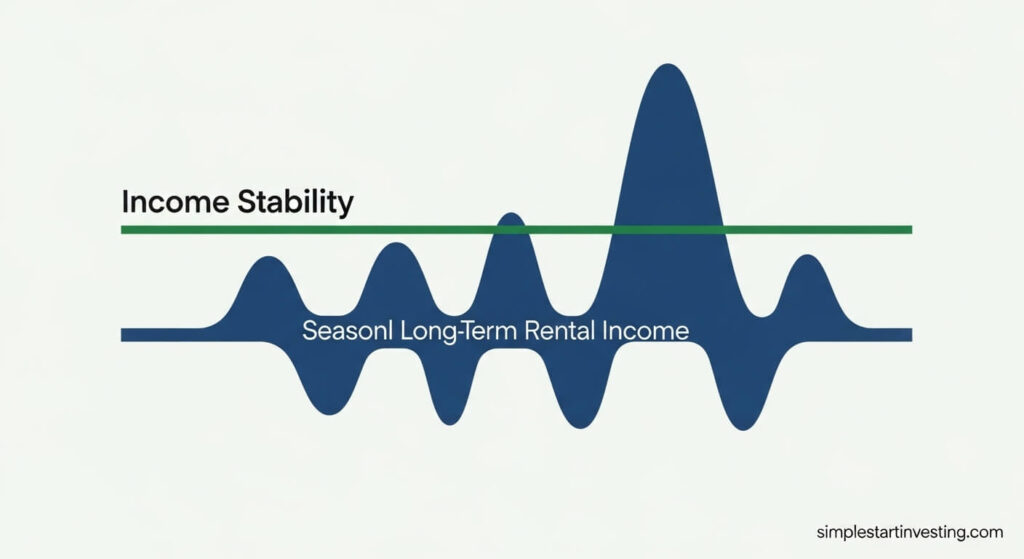
Short-term rentals are highly sensitive to the economy. During a recession, your Airbnb bookings might drop off a cliff. If you have a high mortgage payment that relies on that income, you could find yourself in trouble quickly. Your “customers” are travelers with discretionary income.
Long-term rentals are much more resilient. Everyone needs a place to live. Even in a down economy, people still need to pay rent, though they might move to smaller, more affordable places. A 12-month lease provides a “moat” of safety. You know exactly how much money is coming in for the next year, regardless of whether a new virus or a stock market crash happens.
For a beginner, this “predictability” is often more valuable than the “potential” for a huge month on Airbnb. It allows you to sleep better at night knowing the mortgage is covered.
Which Strategy Fits Your Personality?
Beyond the numbers, you need to be honest about who you are. Successful short-term rental owners are often “people people.” They enjoy interior design, they like leaves a little gift basket for guests, and they don’t mind a text message on a Saturday afternoon. They view their property as a product that needs to be marketed.
Successful long-term landlords are often “process people.” They are good at screening tenants, checking credit scores, and keeping the property’s bones in good shape. They view their property as an investment vehicle that should run quietly in the background.
If you hate the idea of strangers using your towels and potentially throwing a party in your living room, short-term rentals are not for you, no matter how much more they might pay. If you find the idea of a single tenant staying for five years “boring” and you want to maximize every dollar of potential cash flow, then a traditional lease might feel like a missed opportunity.
How to Make the Decision
If you are still on the fence about these rental property strategies, here is a logical way to walk through the choice:
First, check the law. If the city or HOA says “no” to short-term, your decision is made. Don’t try to hide it; you will eventually get caught by neighbors or automated scraping tools used by cities.
Second, run the “Real Math.” Take the expected Airbnb income and subtract 40 percent for expenses and vacancy. Then take the expected long-term rent and subtract 15 percent for maintenance and management. Compare those two final numbers. Is the “bonus” from the Airbnb enough to pay for the 10 to 20 hours of work you will do each month?

Third, consider the “Exit Plan.” A house set up for a long-term rental is easy to sell to another investor or a family. A house set up as a specialized Airbnb might have custom furniture or layouts that are harder to offload if you need to sell quickly.
Finally, remember that you aren’t stuck forever. Many investors start with a long-term lease to get their feet wet and understand the house. Once they feel comfortable, they might try a short-term approach during a busy season to see if the extra effort is worth the reward.
Final Thoughts for the Beginner
Real estate is a marathon, not a sprint. The goal for a beginner should be to stay in the game. Short-term rentals offer the allure of high cash flow, but they come with a steep learning curve and higher risks. Long-term rentals offer a “slow and steady” path that has built wealth for generations of Americans.
Whichever path you choose, focus on the fundamentals: a good location, a property in decent repair, and a clear understanding of your local market. Don’t be swayed by “influencers” showing off huge checks without showing the expenses. The best strategy is the one that allows you to grow your wealth without losing your sanity.
Take your time, do your research, and remember that every successful real estate mogul started with their first “Unit 1,” wondering exactly these same things.
Disclaimer: This content is for educational purposes only and does not constitute financial, legal, or tax advice. Regulations regarding rental properties vary significantly by location and are subject to change; always verify local laws and consult with a professional before investing.