

Buying your first rental property is an incredible milestone. You have the keys in hand, the “For Rent” sign is up, and you are ready to start building wealth. But before you sign that first lease, there is a set of rules you need to master. These aren’t just suggestions; they are the legal backbone of your new business.
Landlord-tenant laws are the federal, state, and local regulations that govern the relationship between you and the people living in your property. While it might seem like a lot of “red tape,” these laws are actually there to protect both sides. For an investor, understanding these rules is the difference between a profitable venture and a legal nightmare that could cost you your entire investment.

Many new investors think of themselves as “owners,” which is true. However, in the eyes of the law, once you rent out a space, you become a “housing provider.” This role comes with specific responsibilities that you cannot ignore, even if they are not written into your specific contract.
What Exactly are Landlord-Tenant Laws?
At their core, these laws define what you can and cannot do as a property owner. They cover everything from how you advertise your home to how you handle a tenant who stops paying rent. Think of these laws as the “rules of engagement” for the rental market.
In the United States, these rules are layered. You have federal laws, like the Fair Housing Act, which apply to everyone. Then, you have state laws that get more specific about things like security deposits. Finally, your local city or county might have even stricter rules, especially regarding rent control or inspections.

The reason these laws exist is to ensure that housing is safe, fair, and accessible. Because a home is a basic human necessity, the government takes a very close interest in how landlords treat tenants. Understanding this “balance of power” is your first step toward becoming a successful professional investor.
Why Beginners Often Get It Wrong
One of the biggest mistakes new landlords make is assuming that “my house means my rules.” It is a natural feeling. You worked hard to save for the down payment, you pay the mortgage, and you pay the taxes. It feels like you should have total control.
However, the moment a tenant signs a lease and moves in, they gain a legal right called quiet enjoyment. This means that even though you own the bricks and mortar, the tenant “owns” the right to live there in peace without you popping in unannounced or dictating their lifestyle.
Another common misunderstanding is the “self-help” eviction. A beginner might think, “If they don’t pay rent, I’ll just change the locks or turn off the water.” In almost every part of the U.S., this is highly illegal. Doing this can result in the court awarding the tenant thousands of dollars, even if they actually owed you rent.
The Foundation: The Fair Housing Act
Before you even meet a potential tenant, you must understand the Fair Housing Act. This federal law prohibits discrimination based on several “protected classes.” These include race, color, national origin, religion, sex, familial status (having children), and disability.
Some states go even further, protecting people based on their source of income (like Section 8 vouchers) or their sexual orientation. As a landlord, your marketing and screening process must be strictly “blind” to these factors.
For example, you cannot write an ad saying “Perfect for a single professional” or “No kids allowed.” This could be seen as discriminating against families. Instead, your focus should always be on “neutral” criteria like credit scores, income levels, and criminal history. By sticking to these data points, you protect yourself from costly discrimination lawsuits.
Screening Tenants the Right Way
Screening is your best defense against future problems, but it is also a legal minefield. You have the right to pick the best tenant, but you must apply the same standards to every single applicant. This is called “consistent screening.”

If you require a credit score of 650 for one person, you must require it for everyone. If you ask for three years of rental history from one applicant, you must ask for it from all of them. Documenting this process is vital. If someone accuses you of being unfair, your written “screening criteria” will be your best friend in court.
Under the Fair Credit Reporting Act, if you reject someone because of their credit report, you are legally required to send them an “adverse action” notice. This is a simple letter explaining that they were denied based on information in their report and giving them the contact info for the credit bureau. Skipping this small step is a common rookie mistake.
The Lease Agreement: More Than Just a Handshake
A lease is a legally binding contract. While you can find templates online, a “one-size-fits-all” approach is dangerous. Your lease needs to comply with your specific state laws. For instance, some states have very specific language that must be included regarding lead-based paint or fire alarms.
A good lease clearly defines:
- The Rent Amount: How much is due and when.
- Late Fees: Exactly how much they are and when they kick in.
- Maintenance: Who is responsible for mowing the lawn or changing light bulbs?
- Occupancy Limits: Exactly who is allowed to live there.
Never rely on a verbal agreement. In the world of landlording, if it isn’t in writing, it didn’t happen. A clear, written lease prevents “he-said, she-said” arguments six months down the road. It sets the professional tone for the entire relationship.
Managing Security Deposits
Security deposits are one of the most litigated areas of landlord-tenant law. Many new investors treat this money as their own as soon as they receive it. This is a major error. In the eyes of the law, that money still belongs to the tenant; you are just holding it as collateral.

Most states have strict rules on where you keep this money. You might be required to put it in a separate, interest-bearing bank account and tell the tenant which bank it is in. You cannot use this money to pay your own mortgage or buy new appliances for another unit.
Calculating Deposit Limits
Laws often limit how much you can charge. Let’s look at a simple example without using formulas. Suppose the law in your state says you can charge a maximum of two times the monthly rent for a security deposit.
If your monthly rent is 2,000 dollars, then the absolute most you could ask for is 4,000 dollars. If you try to charge 5,000 dollars because the tenant has a pet, you could be breaking the law and face penalties. It is always better to check your local limits before you sign the lease.
Returning the Money
When a tenant moves out, the “clock” starts ticking. Most states give you a specific window—usually 14 to 30 days—to either return the full deposit or provide an itemized list of deductions. If you miss this deadline by even one day, some states require you to return the entire amount, even if the tenant actually caused damage.
The Warranty of Habitability
Every rental agreement in the U.S. includes an “implied warranty of habitability.” This is a fancy way of saying that you, as the landlord, are legally obligated to keep the home fit for human life. This isn’t optional, and a tenant cannot “waive” this right in the lease.

This means you must provide:
- A roof that doesn’t leak.
- Working heat during the winter.
- Access to clean water and electricity.
- A home free of pests or mold.
If a heater breaks in January, you cannot wait two weeks to fix it. If you do, the tenant may have the right to “repair and deduct.” This means they pay for the fix themselves and take that cost out of next month’s rent. Or, they might be legally allowed to stop paying rent entirely until the issue is fixed. Understanding your duty to maintain the property is essential for keeping your income steady.
Respecting Privacy: The Right of Entry
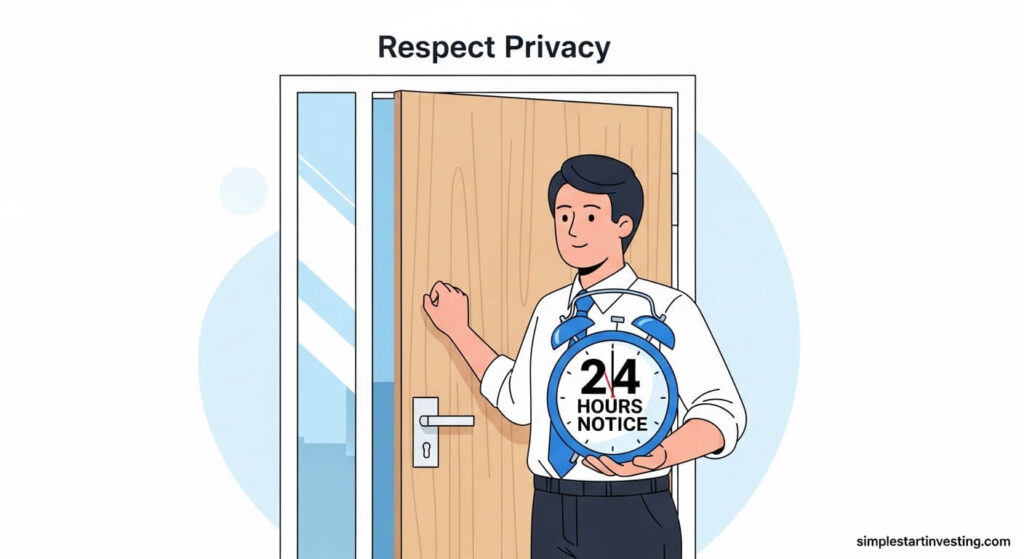
One of the hardest things for new landlords to grasp is that they cannot just go into the house whenever they want. Even though you own it, the tenant has a right to privacy.
Most states require you to give 24 to 48 hours of notice before entering the property for non-emergency reasons, like a routine inspection or a repair. You also have to enter during “reasonable hours”—usually during the day.
The only exception is a true emergency. If a pipe bursts and is flooding the unit, you can enter immediately. But if you just want to see if the tenant is keeping the kitchen clean, you must give notice. Violating this can be considered “landlord harassment,” and a tenant could potentially break their lease because of it.
The Eviction Process: The Last Resort
No one enters a rental agreement hoping for an eviction, but as an investor, you must know how it works. Eviction is a legal process, not a physical one. You cannot shove a tenant out or put their boxes on the sidewalk yourself.
The process usually looks like this:
- The Notice: You serve a formal notice (like a “Pay Rent or Quit” notice).
- The Filing: If they don’t leave or pay, you file a case in housing court.
- The Hearing: A judge listens to both sides.
- The Writ: If you win, the judge issues a “Writ of Possession.”
- The Move: Only a law enforcement officer (like a Sheriff) can physically remove the tenant.
This process can take weeks or even months. During this time, the tenant often stays in the house without paying. This is why screening is so important. Trying to “shortcut” this process by cuting off electricity or changing locks will almost always backfire, leading to heavy fines that far exceed the unpaid rent.
Understanding Small Claims Court
Many landlord-tenant disputes don’t end in eviction; they end in small claims court. This is where you go for things like unpaid utility bills or damage that exceeds the security deposit.
Small claims court is designed for people to represent themselves without expensive lawyers. However, the winner is usually the person with the best “paper trail.” As a landlord, your “protection” is your documentation. Save every email, keep every receipt for repairs, and take hundreds of photos both before a tenant moves in and after they move out.
How Knowledge Leads to Better Decisions
When you understand these laws, you stop reacting out of emotion and start acting like a business owner. A beginner might get angry and yell at a tenant who is late on rent. An educated investor simply sends the state-required “Notice to Pay” the day after the grace period ends.
Knowing the law also helps you price your risk. If you know that evictions in your city take six months, you might decide to be even more strict with your credit score requirements. If you know that your state has high penalties for security deposit errors, you might hire a professional property manager to handle that specific part of the job.
Staying Current in a Changing Market
Laws are not static. During times of economic shifts or public health crises, governments often pass “temporary” measures like eviction moratoriums or rent freezes. Some of these measures eventually become permanent.
As a member of the Simple Start Investing community, you should make it a habit to check your local housing authority website once or twice a year. Joining a local Real Estate Investors Association (REIA) is another great way to stay informed. Other landlords in your specific city will often be the first to know about a new inspection requirement or a change in how late fees are calculated.
Conclusion: Law as a Tool for Success
While the list of rules might seem long, they are manageable. Think of landlord-tenant laws as the “operating manual” for your investment. When you follow the manual, the machine runs smoothly. When you ignore the manual, things break.
By respecting the rights of your tenants and strictly following the legal procedures for your state, you protect your reputation and your wallet. Most legal “horror stories” you hear from other investors come from people who didn’t take the time to learn these basics. You are already ahead of the curve by doing the research now.
Treat your tenants with respect, keep your property in great shape, and always get it in writing. That is the simplest path to long-term success in real estate.
Disclaimer: This content is for educational purposes only and does not constitute financial or legal advice. Landlord-tenant laws vary significantly by state and municipality. You should always consult with a qualified attorney or local housing expert before making decisions regarding rental properties or legal disputes.