Imagine you are in charge of a multi-billion dollar piggy bank for one of the most prestigious universities in the world. Your job is to make sure that money grows enough to pay for scholarships, new buildings, and world-class research, not just for today, but for the next hundred years. This was the daily reality for David Swensen, the legendary Chief Investment Officer of Yale University.
David Swensen didn’t just manage money; he revolutionized how we think about building a “basket” of investments. Before he came along, most people followed a very rigid, old-school rule. They put 60 percent of their money in stocks and 40 percent in bonds. Swensen looked at that and thought we could do much better. He created what we now call the Swensen Portfolio, often referred to as the Yale Model.
The good news is that you don’t need a billion dollars or a Yale degree to use these principles. Swensen was a huge advocate for the “little guy.” He believed that individual investors could achieve incredible results by following a few simple, disciplined rules. In this guide, we are going to break down exactly what the Swensen Portfolio is and how you can apply its logic to your own financial journey.
What Exactly Is the Swensen Portfolio?
At its core, the Swensen Portfolio is a blueprint for asset allocation. That is just a fancy way of saying “how you divide your money among different types of investments.” Swensen’s big breakthrough was realizing that most investors weren’t diversified enough. They were too dependent on just one or two things performing well.
Swensen’s model focuses on five or six specific categories of investments. He believed that by spreading your money across these different areas, you could get higher returns with less “heartburn” when the market gets bumpy. He prioritized “equity-oriented” assets—things that represent ownership, like stocks and real estate—because these are the engines that drive long-term wealth.
For an individual investor, the Swensen Portfolio usually breaks down into a few main buckets. It includes U.S. Stocks, International Stocks, Emerging Markets, Real Estate, U.S. Treasuries, and Inflation-Protected Securities (TIPS). By holding all of these at once, you aren’t just betting on the U.S. economy; you are betting on the growth of the entire world.
Why Beginners Often Get It Wrong
Many people starting their investing journey fall into the trap of “performance chasing.” They see a tech company in the news that is doing great, and they put all their money there. Or, they hear a “hot tip” about a specific cryptocurrency and dive in headfirst. This is the opposite of the Swensen Portfolio philosophy.
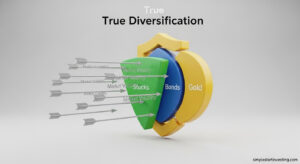
A common misunderstanding is that “diversification” means owning 50 different stocks. In reality, if all 50 of those stocks are in the American tech sector, you aren’t diversified at all. If the tech sector hits a rough patch, your entire portfolio will sink. Swensen taught us that true diversification means owning things that behave differently from one another.
Another mistake is ignoring “boring” investments like bonds or inflation protection. Beginners often think, “I want to grow my money fast, so I only want stocks.” While stocks do grow money over time, they can also drop 30 percent or 50 percent in a single year. Without the “anchors” that Swensen recommended, most beginners panic and sell their investments at the worst possible time.
The Power of Ownership: Why Equities Rule
David Swensen was a firm believer that to build real wealth, you must be an owner, not just a lender. When you buy a bond, you are essentially lending money to a government or a company. They pay you back with a little bit of interest. It’s safe, but it rarely makes you rich. When you buy stocks or real estate, you are an owner.
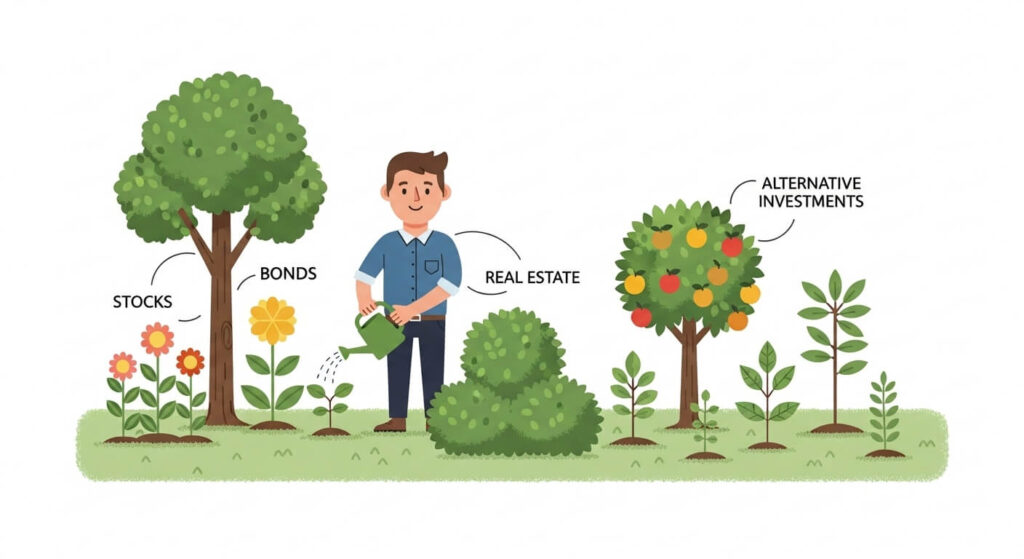
The Swensen Portfolio is heavily weighted toward ownership. In his recommended model for individuals, roughly 70 percent of the money is in “equity-like” assets. This includes 30 percent in Domestic Stocks (companies right here in the U.S.) and another 20 percent in Real Estate.
Think of it like this: If you own a piece of a company like Costco or Walmart, you are participating in their success every time someone buys a gallon of milk or a new TV. Over decades, that participation is far more valuable than the small interest check you would get from a loan. Swensen’s strategy ensures you have a huge stake in that global growth.
Breaking Down the “Six Buckets” of the Swensen Model
To understand the Swensen Portfolio, you have to look at the six specific categories he recommended for the average person. He chose these because they cover almost every corner of the global economy.
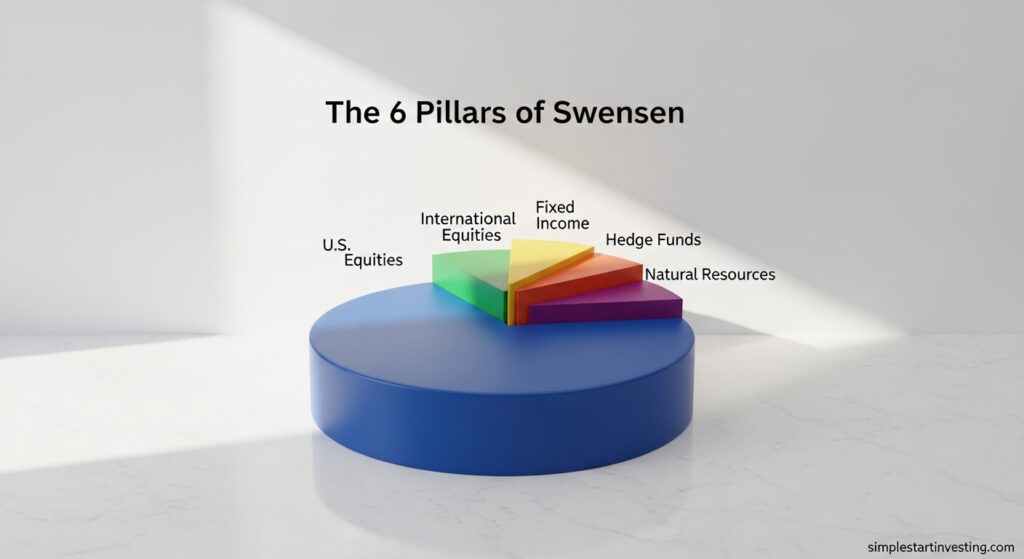
1. Domestic Stocks (30%)
This is the heart of the portfolio. It represents ownership in thousands of American companies. When the U.S. economy grows, this part of your portfolio grows. Swensen recommended using a “Total Market” fund so you own everything from the giant corporations to the small, up-and-coming businesses.
2. International Developed Stocks (15%)
The U.S. is a powerhouse, but it isn’t the whole world. This bucket includes companies in places like the UK, Germany, Japan, and France. Sometimes the U.S. market is flat while international markets are booming. Having this 15 percent ensures you don’t miss out on growth happening across the Atlantic or Pacific.
3. Emerging Markets (5%)
This is a small but mighty piece of the pie. It covers developing economies like Brazil, India, or Mexico. These markets are riskier and “wilder,” but they have the potential for massive growth. Swensen included a small 5 percent slice to catch that “lightning in a bottle” without risking the whole portfolio.
4. Real Estate / REITs (20%)
This is one of the most unique parts of the Swensen Portfolio. Most traditional models ignore real estate, but Swensen loved it. For an individual, this is usually done through REITs (Real Estate Investment Trusts). It’s like being a landlord for malls, apartment complexes, and office buildings without ever having to fix a leaky toilet. Real estate often moves differently than the stock market, providing a great cushion.
5. U.S. Treasuries (15%)
These are your “safety net.” U.S. government bonds are considered some of the safest investments in the world. When the stock market crashes and everyone is panicking, people usually run toward the safety of Treasuries. This 15 percent helps keep your portfolio’s value from dropping too sharply during a crisis.
6. TIPS – Treasury Inflation-Protected Securities (15%)
Inflation is the “silent killer” of wealth. It makes your dollars buy less over time. TIPS are special government bonds that actually increase in value if inflation goes up. Swensen insisted on this because he knew that even a “safe” bond isn’t safe if the price of eggs and gas doubles.
The “Secret Sauce” of Rebalancing
Having the right buckets is only half the battle. The real magic of the Swensen Portfolio happens through a process called rebalancing. This sounds technical, but it’s actually a very simple way to force yourself to “buy low and sell high”—which is the golden rule of investing.
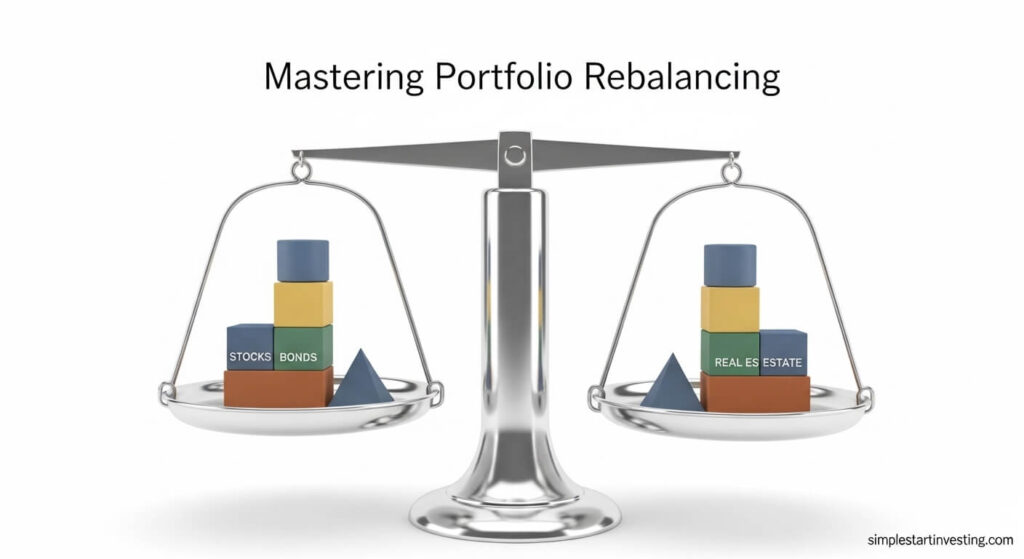
Let’s use a simple example. Suppose you start with 1,000 dollars. According to Swensen’s 20 percent real estate rule, you put 200 dollars into a real estate fund. Over the next year, the stock market does okay, but real estate goes crazy and doubles in value. Now, your real estate portion is worth 400 dollars.
Suddenly, real estate makes up a much bigger slice of your pie than it should. To “rebalance,” you would sell 100 dollars of that real estate (selling while the price is high!) and use that money to buy more of the other categories that didn’t grow as much (buying while their prices are relatively lower). This discipline keeps your risk in check and ensures you are always taking profits from the winners to invest in the next potential winner.
Understanding the Risk: It’s a Marathon, Not a Sprint
One thing a beginner must understand about the Swensen Portfolio is that it is designed for the long haul. Because it is so heavy on stocks and real estate, it can be volatile. In a bad year for the economy, your account balance will go down. This is not a “get rich quick” scheme.
However, Swensen’s research showed that over long periods—like 10, 20, or 30 years—this diversified approach tended to outperform the safer, bond-heavy portfolios. It also tended to be much smoother than a “stocks-only” portfolio.
The biggest risk to a Swensen Portfolio isn’t the market; it’s the investor. If you see your balance drop and you get scared and sell everything, the strategy fails. This model requires the “stomach” to stay the course through the ups and downs of the global economy. It’s about trusting the process of global growth.
Why Real Estate is the “Hidden Gem”
In many “beginner” portfolios, you’ll see a lot of talk about the S&P 500 (the 500 biggest U.S. companies). While that’s great, the Swensen Portfolio gives a massive 20 percent seat at the table to Real Estate. Why?
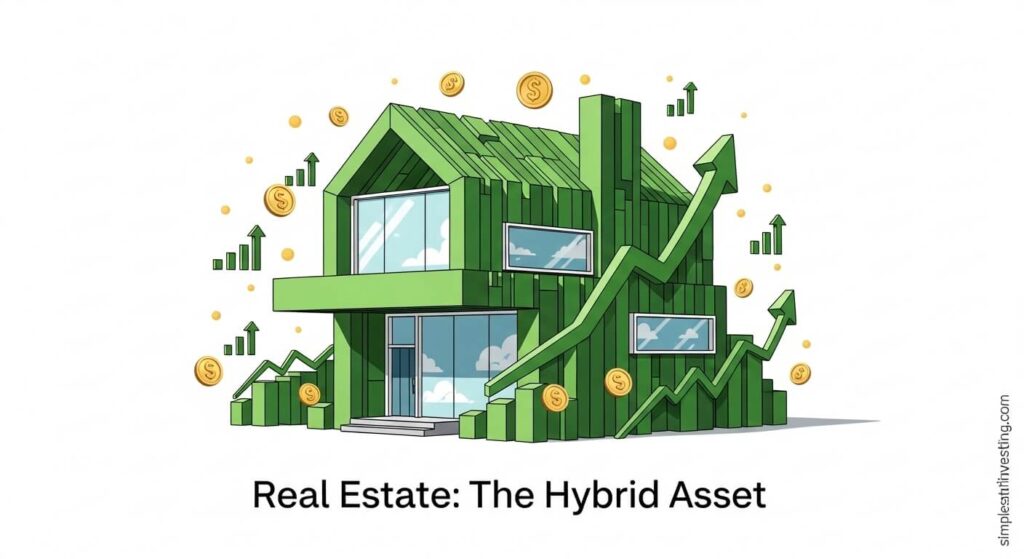
Swensen argued that real estate is a “hybrid” asset. It provides income (like a bond) because tenants pay rent. But it also provides growth (like a stock) because property values tend to go up over time. Most importantly, real estate doesn’t always move in sync with the stock market.
For example, there might be a year where stocks are flat because of a tech slump, but because people still need apartments and warehouses, your real estate investments might be profitable. This “low correlation” is what makes the portfolio so resilient. It ensures that even when one engine of your plane stalls, the others are still humming along.
How to Implement This Without a Financial Advisor
In the past, building a portfolio with six different asset classes would have been a nightmare. You would have had to pay massive commissions to a broker. Today, thanks to the “index fund revolution” that David Swensen helped champion, you can do this yourself for almost no cost.
You can find Exchange-Traded Funds (ETFs) for each of Swensen’s categories. There are specific ETFs that track the “Total US Stock Market,” “International Markets,” “REITs,” and “TIPS.” Most major brokerage firms in the U.S. allow you to buy these with zero transaction fees.
To start, you don’t need a fortune. If you have 100 dollars to invest, you can theoretically put 30 dollars in a U.S. stock fund, 15 dollars in an international fund, and so on. The key is to look for “low-cost” funds. Swensen was famously against high fees. He believed that every dollar you pay to a fund manager is a dollar taken away from your future self. Look for “expense ratios” that are very low—often less than 0.10 percent.
The Importance of Inflation Protection
Most beginners worry about the stock market crashing. While that is scary, the Swensen Portfolio addresses a much more dangerous, invisible threat: Inflation.
If you put all your “safe” money under a mattress or in a basic savings account, you are actually losing money every year. If inflation is 3 percent, and your money is earning zero, you can buy 3 percent less stuff next year. Over 20 years, that “safe” mattress money loses nearly half its value.
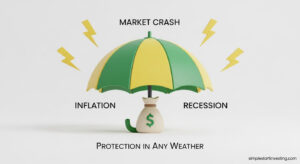
By including 15 percent in TIPS, Swensen built an insurance policy into the portfolio. If the cost of living in the U.S. spikes, the value of your TIPS goes up to match it. It’s one of the few investments where the “real” value (what you can actually buy with the money) is protected by the government. This is a level of sophistication most beginners overlook, but it’s vital for long-term survival.
Common Myths About the Yale Model
One myth is that the Swensen Portfolio is only for young people because it’s “aggressive.” While it does have a lot of stocks, the inclusion of 30 percent in bonds (Treasuries and TIPS) actually makes it more stable than many “growth” portfolios. It’s a balanced approach that can work for many different ages, though someone very close to retirement might choose to slightly increase the bond portion.
Another myth is that you need to be an expert in “alternative investments.” In the actual Yale Endowment, Swensen bought things like timberland, private equity, and hedge funds. For the average person, those are hard to buy and often come with high fees. Swensen himself said that individuals shouldn’t try to copy Yale exactly. Instead, they should use the “liquid” versions—like REITs and low-cost index funds—to get a similar effect without the complexity.
Finally, some people think this portfolio is “boring” because it doesn’t involve picking winning stocks like Apple or Tesla. To David Swensen, “boring” was a compliment. He wanted an investment strategy that worked while you slept, not one that required you to watch financial news all day.
The Psychological Advantage of the Swensen Approach
Investing is 10 percent math and 90 percent temperament. The real reason the Swensen Portfolio works so well for beginners is that it’s easy to understand and hard to “mess up” once it’s set up.
When you own the whole world—U.S. stocks, foreign stocks, emerging markets, and real estate—you no longer have to worry about “missing out” on the next big thing. You already own it! If the next great company starts in India, you have your 5 percent emerging markets bucket. If the U.S. housing market booms, you have your 20 percent real estate bucket.
This “peace of mind” is the ultimate goal of the strategy. Instead of stressing over which stock to buy, you focus on how much you can save and add to your portfolio. You stop being a gambler and start being a systematic accumulator of global wealth.
Final Thoughts for the Simple Start Investor
David Swensen’s gift to the world was proving that you don’t need to be a “Wall Street shark” to succeed. By following the Swensen Portfolio logic, you are standing on the shoulders of a giant. You are using the same principles that grew Yale’s endowment from 1 billion dollars to over 30 billion dollars during his tenure.
The steps are simple:
- Divide your money into the six buckets.
- Use low-cost index funds or ETFs.
- Rebalance once a year to keep your slices the right size.
- Stay the course, even when the news sounds scary.
By doing this, you aren’t just “playing the market.” You are building a robust, institutional-grade financial foundation that is designed to weather any storm the economy throws your way.
Disclaimer: This content is for educational purposes only and does not constitute financial, legal, or tax advice. Investment involves risk, and past performance is no guarantee of future results. Always consult with a qualified professional before making significant financial decisions.