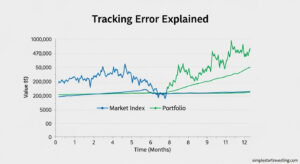
Market volatility is normal. Learn the psychological tricks to avoid panic selling and stay focused on your long-term goals when stocks go down.
Seeing your investment account balance drop can feel like a punch to the stomach. One day everything is green and growing, and the next, you see red numbers everywhere. If you are a new investor, your first instinct might be to panic. You might feel the urge to sell everything immediately to “save” what is left. This reaction is completely natural, but it is often the worst thing you can do for your wealth.
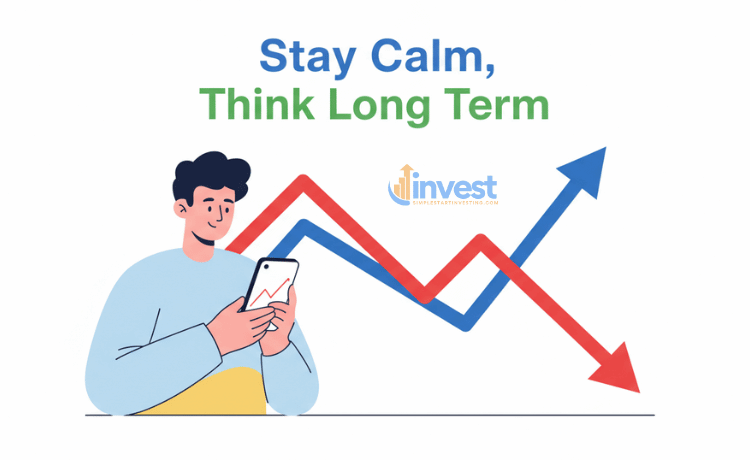
In this guide, we are going to explore the market crash mindset you need to survive and thrive when the stock market gets bumpy. We will break down why markets drop, why our brains trick us into making bad choices, and how you can train yourself to stay calm while others are panicking. By the end of this, you will see a market dip not as a disaster, but as a normal part of your journey toward financial freedom.
What Exactly Is a Market Crash?
Before we talk about staying calm, let’s define what we are actually looking at. In the world of investing, not every drop is a “crash.” There are different levels of market movement that you should recognize.
A market crash is typically a sudden and very sharp drop in stock prices across a large section of the market. It often happens over a few days or weeks. However, you will also hear terms like “correction” or “bear market.”
A correction is usually when the market drops by 10 percent from its recent high. A bear market is a more serious drop of 20 percent or more. Think of these like the weather: a correction is a rainy day, a bear market is a winter season, and a crash is a sudden summer storm.
The 4-Step Deep Dive: Understanding Volatility
1. Simple Explanation Volatility is just a fancy word for “price swings.” Imagine you own a house. If you checked the value of your house every single hour, the price might change slightly based on who is looking to buy that day. The stock market is the same, but it moves much faster. Volatility is the price you pay for the chance to earn higher returns over time.

2. Real-World Example Let’s look at a company almost everyone knows: Amazon (AMZN). Over the last twenty years, Amazon has been one of the most successful stocks in history. However, there were times when its stock price dropped by more than 50 percent in a single year. If you had 1,000 dollars in Amazon and it dropped to 500 dollars, you might have felt like the company was failing. But the company was still shipping packages and growing. The “price” changed, but the “value” was still there.
3. Common Beginner Mistake Many beginners think that a dropping stock price means they are “losing” money in real-time. They see their 5,000 dollar balance turn into 4,000 dollars and think, “I just lost 1,000 dollars!”
4. The Correct Mindset You haven’t lost a single cent until you click the “sell” button. Think of your stocks like a collection of trading cards or pieces of real estate. If the market says your card is worth less today, you still own the same card. You only lose money if you agree to sell it at that lower price. If you hold onto it, you give the price a chance to go back up.
Why Our Brains Want Us to Sell (And Why They Are Wrong)
To master the market crash mindset, you have to understand your own biology. Humans are wired for survival. Thousands of years ago, if you saw a shadow in the grass, your brain told you to run. This “fight or flight” response kept our ancestors alive.
Today, that same part of the brain reacts to a stock market drop the same way it reacts to a tiger. When you see your portfolio “bleeding” red, your brain screams, “Danger! Get out now!”
The 4-Step Deep Dive: Loss Aversion
1. Simple Explanation Psychologists have a term called “loss aversion.” It means that the pain of losing 100 dollars feels twice as strong as the joy of gaining 100 dollars. Because losing hurts so much more, we are willing to do irrational things just to make the pain stop.
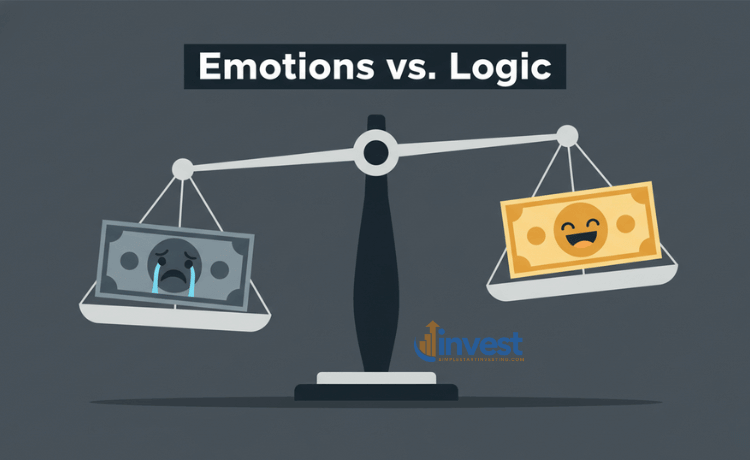
2. Real-World Example Imagine you bought shares of Apple (AAPL) at 150 dollars. Suddenly, news of a trade war or a bad economy breaks, and the price drops to 120 dollars. Even though Apple is still making iPhones and generating billions in profit, the sight of that 30 dollar “loss” creates a physical feeling of stress. You might sell at 120 dollars just so you don’t have to watch it drop to 110 dollars.
3. Common Beginner Mistake Beginners often “sell low and buy high.” They wait until the market is booming and everyone is happy to start buying. Then, when the market crashes, they sell out of fear. This is the exact opposite of how wealth is built.
4. The Correct Mindset A market crash is a test of your plan, not a signal to change it. Instead of following your “gut” (which is just fear), follow your logic. If you liked Apple at 150 dollars because it’s a great company, you should love it even more at 120 dollars because it is now on sale.
The “Zoom Out” Strategy: History Is on Your Side
When you are in the middle of a crash, it feels like the world is ending. The news headlines will use words like “catastrophe,” “meltdown,” and “unprecedented.” But if you look at a long-term chart of the U.S. stock market, you will see a very different story.
Since the early 1900s, the U.S. stock market has survived World Wars, a Great Depression, high inflation, and global pandemics. In every single case, the market eventually recovered and went on to reach new all-time highs.

The 4-Step Deep Dive: The Power of Time
1. Simple Explanation Investing is a marathon, not a sprint. If you look at the market day by day, it looks like a chaotic mess of zig-zags. If you look at it decade by decade, it looks like a steady staircase climbing upward. The “Market crash mindset” requires you to look at the staircase, not the individual steps.
2. Real-World Example Think about the year 2020 during the start of the pandemic. The S&P 500 (an index of the 500 largest U.S. companies) crashed by about 30 percent in just one month. People were terrified. However, by the end of that same year, the market had not only recovered but was hitting new highs. If you had panicked and sold in March, you would have missed the massive recovery in the following months.
3. Common Beginner Mistake New investors spend too much time looking at the “1 Day” or “1 Week” view on their investing apps. This creates a false sense of urgency.
4. The Correct Mindset Change your view to “5 Years” or “Max.” When you see that the current “crash” is just a tiny blip on a long-term upward line, it becomes much easier to stay calm. Your goal isn’t to be rich tomorrow; it’s to be wealthy in ten, twenty, or thirty years.
Turning Fear into Opportunity: The “On Sale” Mindset
Most people love a sale. If you go to Costco or Walmart and see that your favorite high-end TV is suddenly 30 percent off, you don’t run out of the store screaming in fear. You probably think about buying it.
The stock market is the only place where people run away when things go on sale. When prices drop, the “market crash mindset” tells you to look for the opportunities.

The 4-Step Deep Dive: Buying the Dip
1. Simple Explanation When the market crashes, you are getting more “shares” for every dollar you invest. Imagine you invest 100 dollars every month. If a stock costs 10 dollars, you buy 10 shares. If the market crashes and the price drops to 5 dollars, your 100 dollars now buys 20 shares. When the market eventually recovers, you now own twice as many shares that are growing in value.
2. Real-World Example During a market downturn, a company like JPMorgan Chase (JPM) or Microsoft (MSFT) might see its stock price drop significantly simply because investors are scared about the overall economy. These companies are still making money, but their “tags” have been marked down. Investors who kept buying through the 2008 or 2020 crashes saw their wealth multiply much faster because they were “shopping” while prices were low.
3. Common Beginner Mistake Beginners stop their automatic investments when the market is down. They say, “I’ll wait for things to settle down before I put more money in.”
4. The Correct Mindset “Settling down” usually means prices have already gone back up. By waiting, you miss the sale. Successful investors stick to their schedule. If you have an extra 50 dollars, a market crash is often the most productive time to put it to work.
Practical Habits to Stay Calm
Knowing the theory is one thing, but staying calm when your phone is buzzing with “Breaking News” alerts is another. Here are three practical habits to help you maintain your market crash mindset.
1. The “Delete the App” Rule
If seeing the red numbers makes you want to cry or sell, stop looking at them. You don’t need to check your 401k or brokerage account every day. In fact, studies show that the more often people check their accounts, the more likely they are to make a mistake. If you are a long-term investor, checking once a month or even once a quarter is plenty.
2. Build an Emergency Fund First
The biggest reason people panic sell is that they actually need the money. If the market crashes and you lose your job at the same time, you might be forced to sell your stocks at a loss just to pay rent.
- Correction: Always keep 3 to 6 months of living expenses in a simple savings account before you invest heavily. This is your “peace of mind” fund. When the market crashes, you can stay calm because you know your bills are covered.
3. Diversify Your “Eggs”
If you put all your money into one single stock, say Tesla (TSLA), and that stock drops, you have every right to be nervous. But if you own a “Total Market Index Fund,” you own a little piece of thousands of different companies. It is possible for one company to go to zero, but it is virtually impossible for all 500 or 1,000 of the biggest companies in America to go to zero at the same time.

Why You Shouldn’t Try to “Time” the Market
A very common thought during a crash is: “I’ll sell now, wait for it to hit the bottom, and then buy back in.” This is called market timing, and it is a trap.
The 4-Step Deep Dive: Missing the Best Days
1. Simple Explanation No one knows where the “bottom” is until after it has passed. The stock market often has its biggest “up” days right in the middle of a crash. If you sell and miss just a few of those big days, your long-term returns will be much lower.
2. Real-World Example Imagine you have 10,000 dollars invested. Over 20 years, you might earn a very healthy return. But if you were “out of the market” (because you were waiting for the bottom) and you missed the 10 best-performing days of those 20 years, your total profit could be cut in half. Those 10 days often happen when things feel the most hopeless.
3. Common Beginner Mistake Trying to be “smart” by jumping in and out of the market. This usually leads to paying more in taxes and missing the recovery.
4. The Correct Mindset “Time in the market” is more important than “timing the market.” It is better to be a “boring” investor who stays put than a “smart” investor who tries to guess what will happen tomorrow.
Summary of the Market Crash Mindset
To wrap up, let’s look at how your thinking should change.
- Old Thinking: A crash is a disaster where I am losing my hard-earned money.
- New Mindset: A crash is a temporary “price adjustment” that offers me a chance to buy great companies at a discount.
- Old Thinking: I need to watch the news and check my app every hour to see what to do.
- New Mindset: I should turn off the news, trust my long-term plan, and only check my account when I need to rebalance.
- Old Thinking: I’ll sell now and buy back when it’s “safe.”
- New Mindset: It’s never “safe,” but history shows that those who stay invested are rewarded over time.
Investing is 10 percent math and 90 percent temperament. Having a solid market crash mindset doesn’t mean you won’t feel a little nervous when prices drop. It just means you won’t let that nervousness drive your decisions. Stay the course, keep your eyes on the horizon, and remember that every great investor in history had to sit through many crashes to get to where they are today.
A Note on Regulations: Financial rules and tax laws regarding investment losses (like tax-loss harvesting) can change. Always check current IRS guidelines or speak with a qualified professional before making major tax-motivated moves.
Disclaimer: This content is for educational purposes only and does not constitute financial, legal, or tax advice. Stock market investments carry risk, and past performance is not indicative of future results. Please consult with a certified financial advisor or professional before making any investment decisions.