You have probably felt that specific type of stress that comes a few days before payday. You look at your bank account, see a number much lower than you expected, and wonder where all that hard work went. It is a cycle many of us know all too well. We work hard, the money hits the account, and then—poof—it vanishes into a cloud of subscriptions, dinners out, and “essential” Amazon purchases.
The truth is that most of us were never taught the personal finance basics in school. We were taught how to solve for X in algebra, but not how to manage a paycheck or build a safety net that actually lets us sleep at night. If you feel like you are constantly running on a financial treadmill, you are not alone, and more importantly, it is not your fault. But it is your responsibility to change it.

Transitioning from a spender to a saver isn’t about deprivation. It isn’t about never buying a latte again or living a life of extreme frugality. It is about shifting your perspective so that you control your money, rather than your money controlling you. This year is the perfect time to lay down a foundation that will support your future self for decades to come.
The Mental Shift: Seeing Money as a Tool, Not a Reward
Most people view money as something to be traded for “stuff.” You work forty hours, you get a check, and you “reward” yourself with a new gadget or a fancy meal. This is the spender’s mindset. In this world, money is a fleeting guest. It arrives on Friday and leaves by Monday.
To build a real foundation, we have to start seeing money as a tool. Think of every dollar you earn as a little soldier. You can either send that soldier away to go work for someone else (like a big corporation or a landlord), or you can keep that soldier and put them to work for you. When you save and invest, your money starts earning its own money.
The goal of mastering personal finance basics is to reach a point where your soldiers are doing the heavy lifting so you don’t have to work as hard. This shift from “What can I buy?” to “How can this money grow?” is the single most important step in your journey.
Auditing the “Leaks” Without the Headache
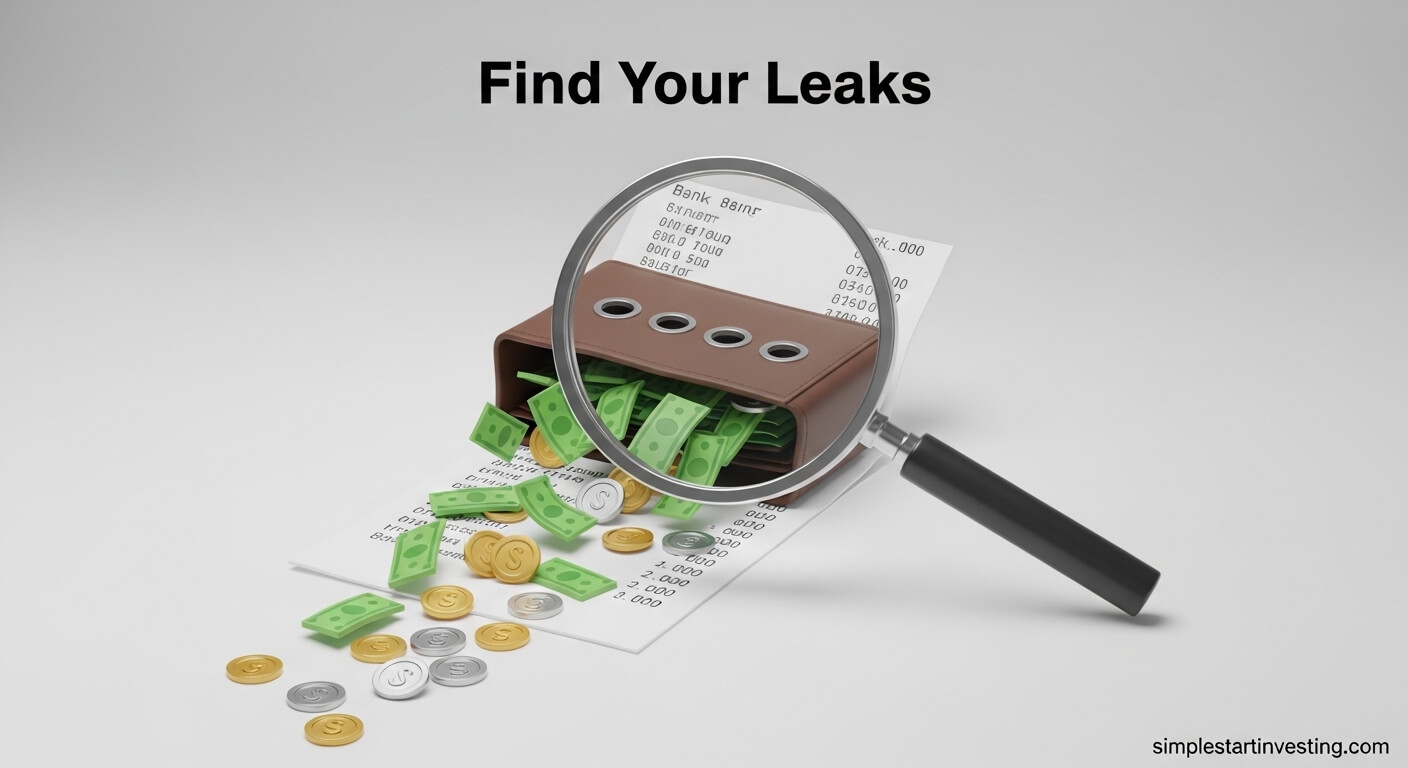
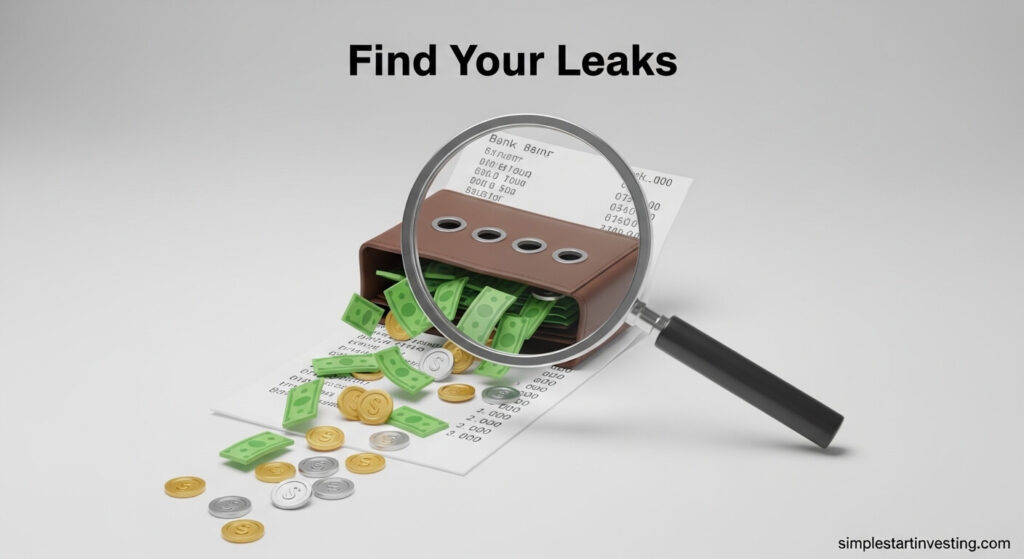
You cannot fix a ship if you don’t know where the holes are. Most people hate the word “budget” because it sounds like a financial diet. Instead, let’s call it a cash flow audit. You need to know exactly how much is coming in and, more importantly, exactly where it is going.
A common mistake beginners make is trying to track every single penny down to the cent using a complicated system. This usually leads to burnout within two weeks. Instead, look at your last three months of bank statements. Group your spending into three simple buckets:
- The Non-Negotiables: Rent or mortgage, utilities, insurance, and minimum debt payments. These are the things you must pay to keep the lights on.
- The Living Costs: Groceries, gas, and basic toiletries. You need these, but you have some control over the cost.
- The Lifestyle Choices: This is the “fun” stuff—streaming services, dining out, hobbies, and that extra pair of shoes.
When you see these numbers laid out, you will often find “leaks.” Maybe you are paying 60 dollars a month for three different streaming services you rarely watch. That is 720 dollars a year. If you found 720 dollars on the sidewalk, you’d be thrilled. Cutting a leak is essentially giving yourself a raise without asking your boss for more money.
Building Your “Sleep Better at Night” Fund
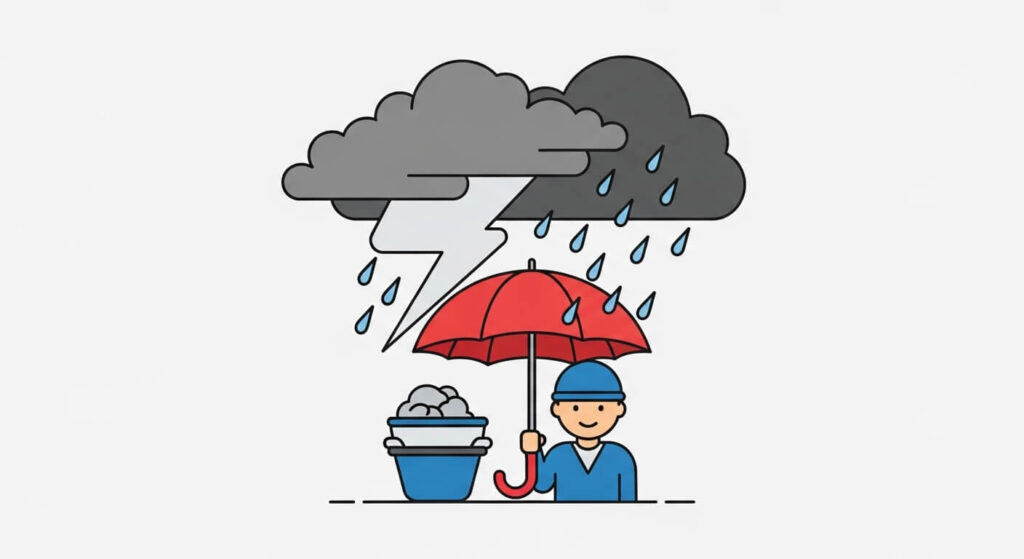
In the world of personal finance basics, the emergency fund is king. Life is unpredictable. Cars break down, dental emergencies happen, or a company might decide to “restructure.” Without a safety net, these events become financial disasters that force you into high-interest credit card debt.
A common misunderstanding is that an emergency fund is a “savings” account for a vacation or a new car. It isn’t. It is an insurance policy. For a beginner, your first goal should be to save 1,000 dollars as fast as possible. This covers the “small” emergencies that usually derail a budget.
Once that 1,000 dollars is set aside, your next step is to build up to three to six months of your essential living expenses. If your rent, food, and bills cost you 3,000 dollars a month, your ultimate goal is to have between 9,000 and 18,000 dollars sitting in a safe place.
Where should you keep this? Ideally, in a High-Yield Savings Account (HYSA). These accounts are usually found at online banks and pay much higher interest than a traditional “big name” street-corner bank. For example, if a standard bank pays you almost nothing, and a high-yield account pays you 4 or 5 percent, your money is actually growing while it sits there waiting to protect you.
Understanding Debt: The Good, The Bad, and The Ugly
Debt is a tool, but it is a sharp one that can easily cut you if you aren’t careful. For a beginner, the most important thing to understand is the “interest rate.” Think of interest as the “rent” you pay to use someone else’s money.
High-interest debt, like credit cards, is the biggest obstacle to wealth. If you have a 5,000-dollar balance on a card with a 25 percent interest rate, you are paying over 1,000 dollars a year just for the “privilege” of carrying that debt. You aren’t even paying off what you bought; you are just feeding the bank. This is “bad” debt, and it should be treated like a house fire—something to be put out immediately.
On the other hand, things like a mortgage or some student loans often have much lower interest rates. While you still want to pay them off, they aren’t as destructive as credit card debt.
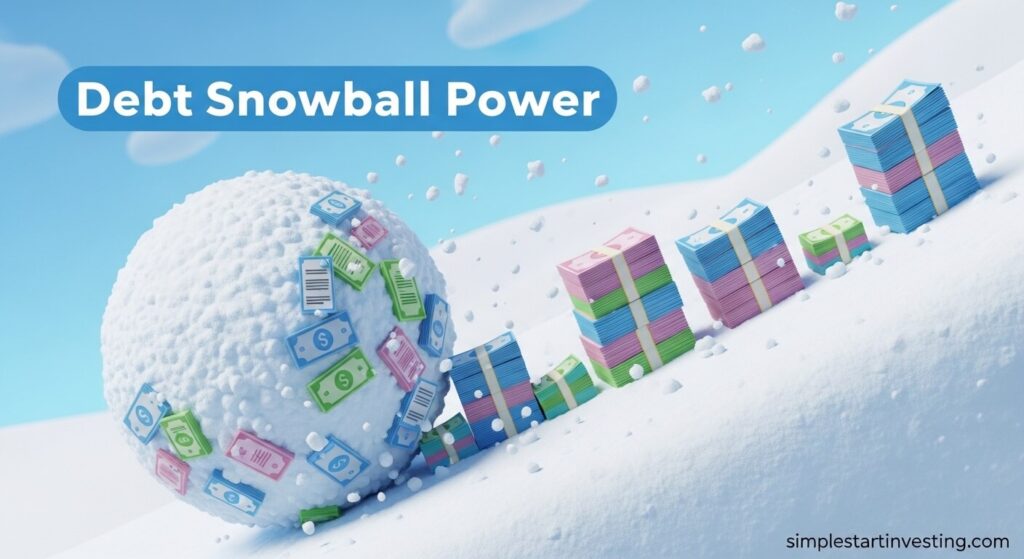
A common strategy for beginners is the Snowball Method. You list your debts from smallest balance to largest. You pay the minimum on everything but the smallest one, and you throw every extra dollar at that tiny debt. Once it’s gone, you take all the money you were paying on it and move it to the next smallest. The psychological “win” of seeing a debt disappear keeps you motivated to finish the journey.
Protecting Your Future Self: Retirement Accounts Simplified
Retirement seems far away when you are just starting, but time is the most powerful ingredient in building wealth. In the US, the government gives us special “buckets” to save for retirement that come with massive tax breaks.
The most common is the 401(k), which is usually offered through an employer. If your company offers a “match,” this is the closest thing to free money you will ever find. For example, if they offer to match up to 3 percent of your salary, and you contribute 3 percent, they effectively double your money instantly before it even gets invested. If you don’t take advantage of this, you are essentially turning down a part of your salary.
If you don’t have a 401(k), or if you want to save more, look into an Individual Retirement Account (IRA). There are two main types: Traditional and Roth.
- In a Traditional IRA, you might get a tax break now, but you pay taxes when you take the money out later.
- In a Roth IRA, you pay taxes on the money now, but it grows and can be taken out completely tax-free when you retire. For many beginners, the Roth IRA is a favorite because “tax-free” is a very hard deal to beat.
Remember to check the current IRS contribution limits every year, as they tend to increase slightly to keep up with the cost of living. For this year, making sure you know the maximum you can put into these accounts is a vital part of your personal finance basics checklist.
The Difference Between Saving and Investing
This is where many people get confused. Saving is for the short term (less than five years). It is for your emergency fund, a down payment on a house, or a new car. This money should be kept safe, where its value won’t drop, like in a savings account or a Certificate of Deposit (CD).
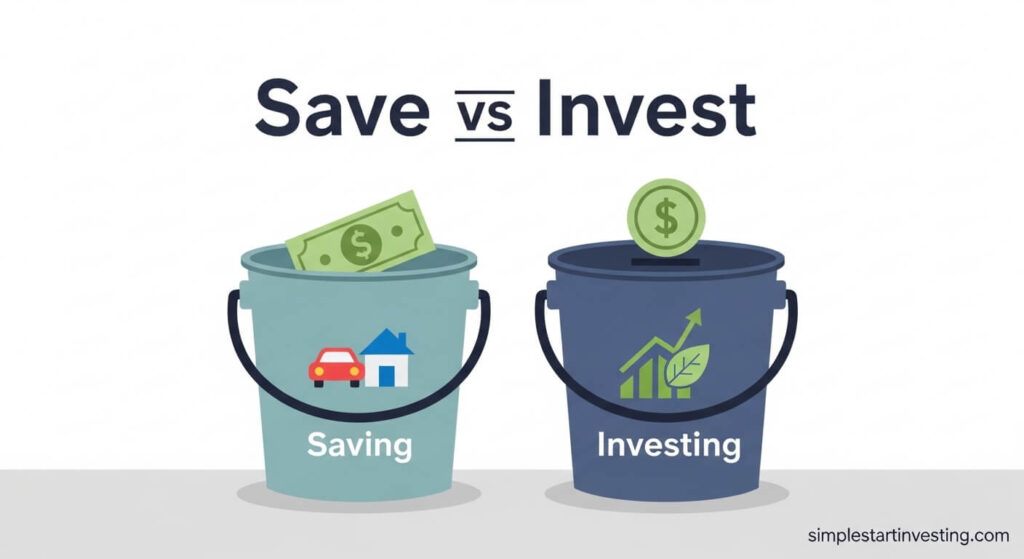
Investing is for the long term (more than five to ten years). This is where you buy assets—like stocks, bonds, or real estate—that have the potential to grow over time. While the value of these things can go up and down in the short term, historically, they have grown significantly over long periods.
Imagine you have 100 dollars. If you “save” it under your mattress, in ten years, you still have 100 dollars, but it buys much less because the price of bread and gas has gone up. If you “invest” it wisely, that 100 dollars might grow into 200 or 300 dollars over those same ten years, helping you stay ahead of rising prices.
Common Pitfalls for Beginners
One of the biggest mistakes is trying to “time the market” or look for “the next big thing.” You might hear a friend talking about a hot new crypto coin or a “secret” stock tip. Avoid the noise.
Building a foundation is about consistency, not luck. It is better to save 200 dollars every month, year after year, than to try and “bet” 2,000 dollars on a single stock and hope for a miracle. Wealth is built through boring, repetitive habits.
Another pitfall is “lifestyle creep.” This happens when you get a raise at work and immediately buy a more expensive car or move into a bigger apartment. If your expenses rise as fast as your income, you will never actually get ahead. The secret to wealth isn’t necessarily making a million dollars; it’s living comfortably on less than you make and investing the difference.
Creating Your 2026 Personal Finance Checklist
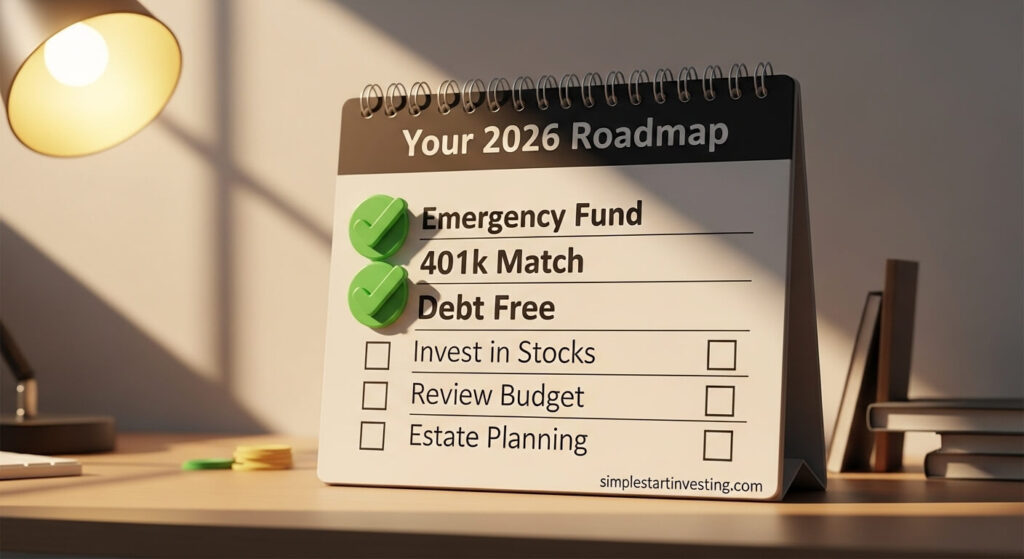
To move from a spender to a saver, you need an actionable plan. Don’t try to do everything at once. Pick one item from this list and master it before moving to the next:
- Step 1: Track everything. Spend one month recording every dollar you spend. No judgment, just data.
- Step 2: Build the Starter Emergency Fund. Aim for 1,000 dollars in a separate High-Yield Savings Account.
- Step 3: Grab the “Free Money.” If your employer offers a 401(k) match, sign up today to contribute at least enough to get the full match.
- Step 4: Attack High-Interest Debt. Use the Snowball Method to start wiping out credit card balances.
- Step 5: Automated Savings. Set up your bank to automatically move a small amount of money (even just 50 dollars) into savings every time you get paid. If you don’t see it, you won’t spend it.
Why This Matters Right Now
The world of finance can feel overwhelming, especially with constant news about inflation, interest rates, and market volatility. But you don’t need to be an economist to succeed. You just need to master the personal finance basics.
By taking these steps, you are doing more than just moving numbers around in a bank account. You are buying your future freedom. You are creating a world where an unexpected car repair is a minor annoyance rather than a life-altering crisis. You are ensuring that “future you” has the resources to live the life you want.
Start where you are. Use what you have. Do what you can. Even if you can only save 10 dollars this week, that is 10 dollars more than you had before. That is one “soldier” added to your army, working for you. Over time, those small wins compound into a foundation that nothing can shake.