Have you ever hit the “buy” button on a stock like Apple or Amazon, only to notice that your account balance dropped by a few cents or even dollars the very second the trade was completed? You didn’t do anything wrong, and the stock price didn’t even have time to move. What you just experienced is the bid-ask spread.
For most beginners, this tiny gap in price feels like a glitch in the system. You see one price on the news, but when you go to buy, the price is slightly higher. When you go to sell, the price is slightly lower. It feels like you are losing money before you even get started.
In the world of investing, the bid-ask spread is often referred to as a “hidden tax.” While it isn’t a tax paid to the government, it is a cost of doing business in the financial markets. Understanding how this works is one of the first steps to becoming a savvy investor who doesn’t overpay for their portfolio.
What Exactly Is the Bid-Ask Spread?
At its simplest level, the bid-ask spread is the difference between the highest price a buyer is willing to pay and the lowest price a seller is willing to accept.
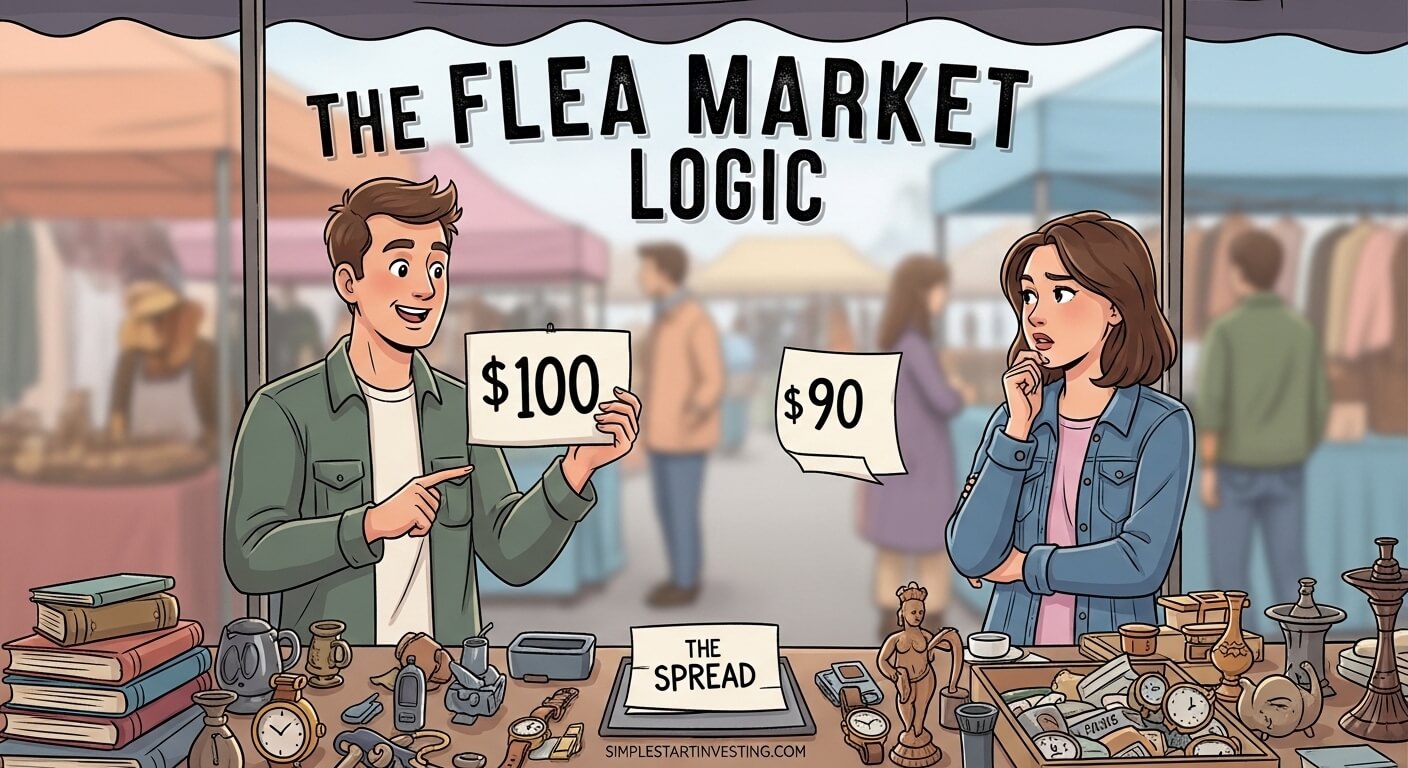
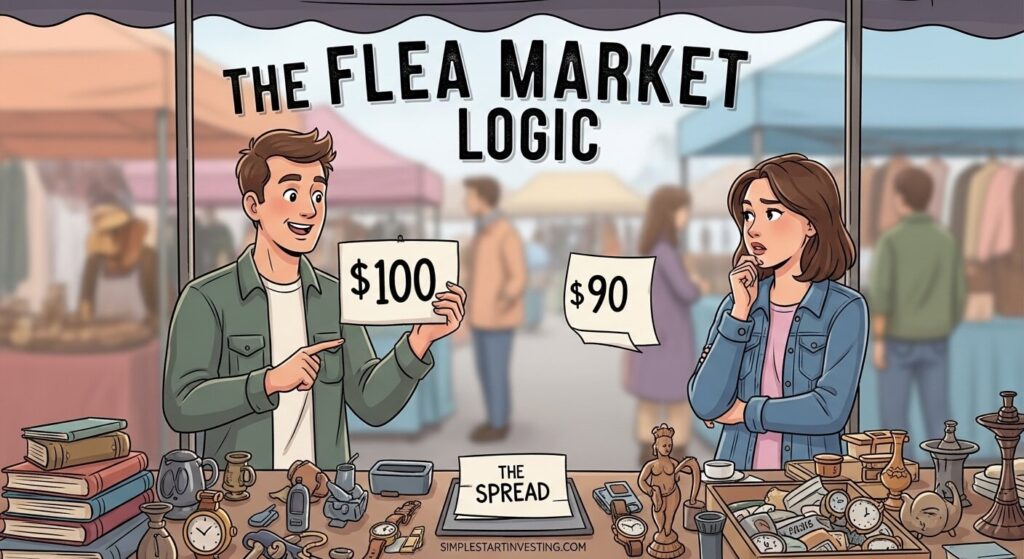
Imagine you are at a local flea market. You see a vintage camera you love.
- The seller has a price tag on it for 100 dollars. This is the Ask.
- You look at your wallet and decide you only want to pay 90 dollars. This is your Bid.
The 10-dollar difference between what the seller wants and what you want to pay is the “spread.” In a flea market, you might negotiate until you meet in the middle at 95 dollars. However, in the stock market, millions of these “negotiations” are happening every second through automated systems.
When you look at a stock quote on your phone, you usually see the “Last Price” (the price of the most recent trade). But if you look closer, you will see two other numbers: the Bid and the Ask.
If you want to buy the stock right this second, you usually have to pay the Ask price. If you want to sell it right this second, you usually have to accept the Bid price. The gap between them goes to the “market makers” who facilitate the trade.
The Role of the Market Maker: The Middleman
You might wonder, “Why can’t I just buy directly from another person?” You can, but it is difficult to find someone who wants to sell the exact number of shares you want at the exact same moment you want to buy them.
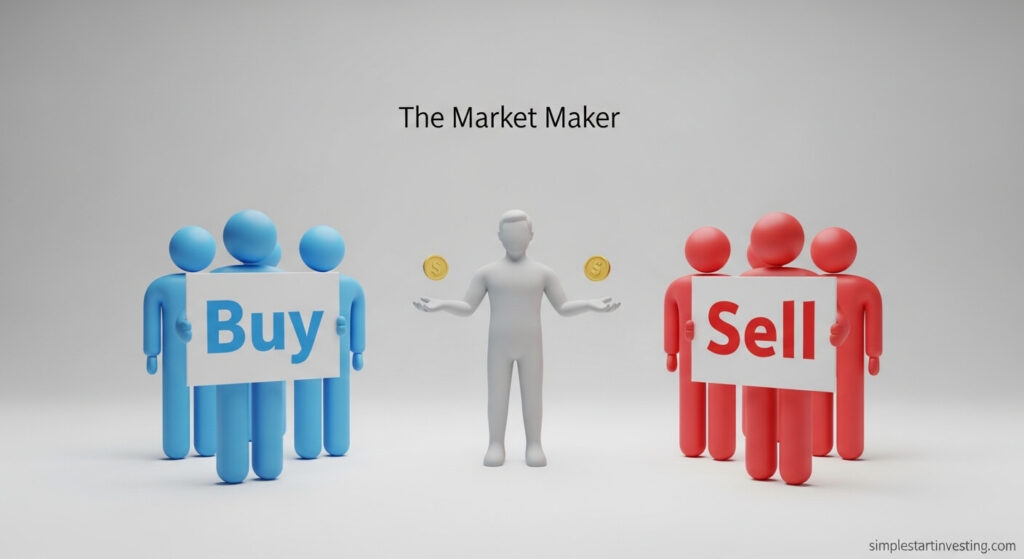
This is where the market maker comes in. Think of a market maker like a specialized “used car dealership” for stocks.
- When you want to sell your car quickly, the dealership buys it from you at a lower price.
- When someone else wants to buy that car, the dealership sells it to them at a higher price.
The dealership takes on the risk of holding that car on their lot until a buyer shows up. To make a profit and cover their costs, they must sell the car for more than they paid for it.
In the stock market, market makers provide “liquidity.” They ensure that you can buy or sell a stock almost instantly. In exchange for providing this convenience, they earn the bid-ask spread. Every time you buy at the higher price and sell at the lower price, a tiny fraction of your money helps pay for the infrastructure that keeps the market running.
Why the Spread Matters to Your Wallet
For a long-term investor who buys a stock and holds it for ten years, a spread of five cents might not seem like a big deal. However, for someone who trades frequently, these costs add up fast.

Let’s look at a simple example. Suppose you buy 100 shares of a company.
- The Bid price is 49 dollars and 95 cents.
- The Ask price is 50 dollars and 5 cents.
- The “spread” is 10 cents per share.
If you buy at the Ask (50 dollars and 5 cents) and then immediately change your mind and sell at the Bid (49 dollars and 95 cents), you have lost 10 cents per share without the stock price ever moving. For 100 shares, that is a 10-dollar loss.
This is why many professionals say you start every trade “in the red.” You have to wait for the stock price to increase enough just to cover the cost of the bid-ask spread before you actually see a profit.
Why Is the Spread Wide for Some Stocks and Narrow for Others?
If you look at a massive company like Microsoft, you will notice the bid-ask spread is usually only one or two cents. This is known as a “tight” spread. But if you look at a small, obscure company, the spread might be 50 cents or even a few dollars. This is a “wide” spread.
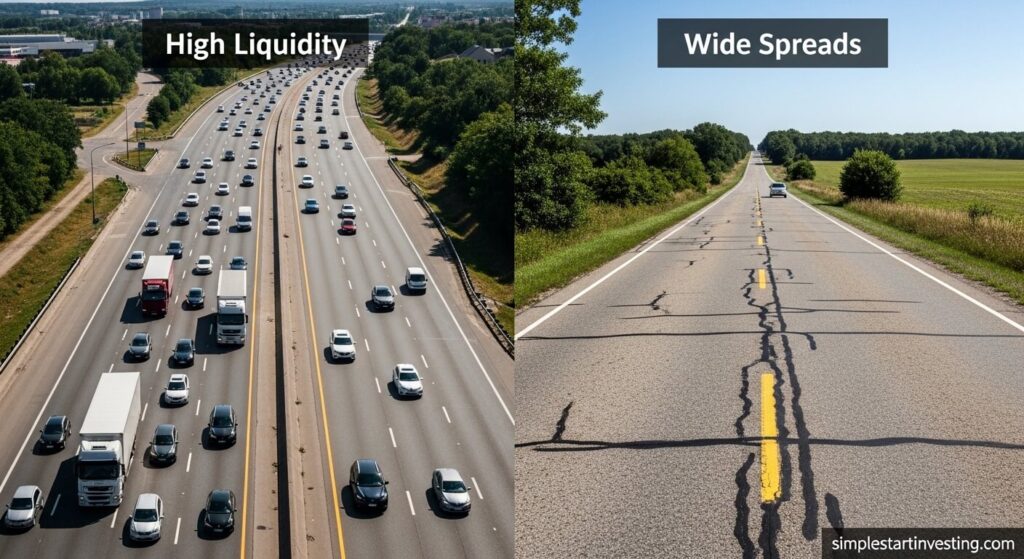
There are three main reasons why these differences exist:
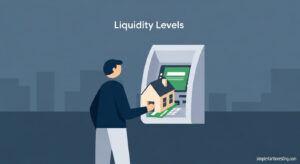
1. Liquidity (The Most Important Factor) Liquidity is just a fancy word for how easy it is to turn an asset into cash. Stocks that millions of people trade every day have high liquidity. Because there are so many buyers and sellers competing, they push the Bid and Ask prices closer together.
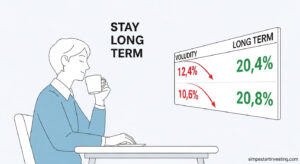
2. Volatility When the market is “crazy” and prices are jumping up and down rapidly, market makers get nervous. They are afraid they might buy a stock from you for 50 dollars and then see the price crash to 40 dollars before they can find a buyer. To protect themselves from this risk, they widen the bid-ask spread.
3. Volume Volume refers to how many shares are being traded. High-volume stocks attract more market makers. More market makers mean more competition. Just like a street with ten coffee shops will likely have lower prices than a town with only one, more competition leads to a tighter spread.
Common Misunderstandings About the Spread
Many beginners make the mistake of thinking the “Last Price” is the price they will actually get. Here are a few ways that misunderstanding can lead to mistakes:
- The “Instant Loss” Panic: A beginner buys a stock and sees their portfolio value drop by 0.5% immediately. They panic and sell, thinking the stock is crashing. In reality, they just paid the spread, and the portfolio value is being calculated based on the Bid price (what they could sell it for right now).
- Chasing “Penny Stocks”: Many people are attracted to stocks that cost only 1 dollar. However, these stocks often have massive spreads. If a stock has a Bid of 0.90 dollars and an Ask of 1.10 dollars, the spread is 20 cents. That is a 20% cost just to enter the trade! The stock has to go up 20% just for you to break even.
- The Weekend Trap: Spreads often widen significantly right before the market closes on Friday or right after it opens on Monday. If you trade during these times, you might pay a much higher “hidden tax” than if you waited for the middle of the trading day.
How to Minimize Your Costs: Market vs. Limit Orders
The best way to handle the bid-ask spread is to change how you place your trades. There are two main types of orders that every beginner should know.
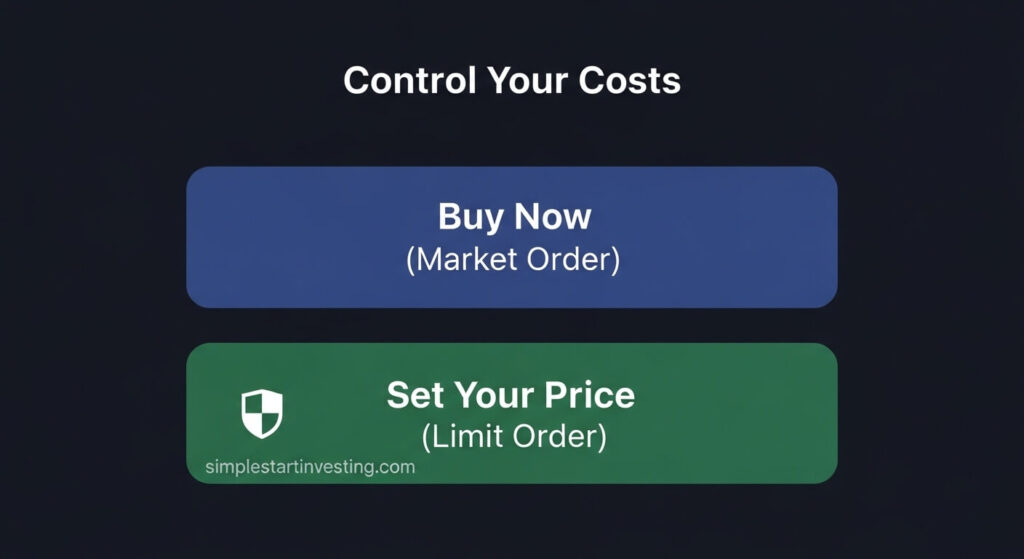
Market Orders: The “Get Me In Now” Strategy A market order tells your broker, “I don’t care about the price, just buy the stock for me as fast as possible.” The broker will execute the trade at the current Ask price.
- Pros: Your trade happens almost instantly.
- Cons: You have no control over the price. In a volatile market, you might end up paying a much wider spread than you expected.
Limit Orders: The “Name Your Price” Strategy A limit order tells your broker, “I only want to buy this stock if I can get it for 50 dollars or less.”
- Pros: You control the price and can essentially “ignore” the spread by waiting for the price to come to you.
- Cons: If the stock price keeps going up and never hits your 50-dollar limit, your trade will never happen. You might miss out on a good investment because you were trying to save a few cents on the spread.
For beginners, using a limit order is often the safer choice, especially for stocks that aren’t traded very heavily. It ensures you never get a “nasty surprise” when you check your trade confirmation.
Real-World Examples of Spreads in Action
Let’s compare two different scenarios to see how the bid-ask spread changes the math of your investment.
Scenario A: The Household Name You decide to buy 10 shares of a famous big-box retailer.
- The Bid is 160.00 dollars.
- The Ask is 160.01 dollars.
- The spread is only 1 cent. If you buy these 10 shares, your total “hidden cost” is only 10 cents. This is negligible for almost any investor.
Scenario B: The Small-Cap Tech Startup You find a small, exciting tech company that isn’t very famous yet.
- The Bid is 10.00 dollars.
- The Ask is 10.50 dollars.
- The spread is 50 cents. If you buy 10 shares here, you are paying 105 dollars total, but your shares are only “worth” 100 dollars on the market the moment you buy them. You have lost 5 dollars (nearly 5%) just by clicking “buy.”
In Scenario B, the bid-ask spread is a major hurdle. You would need that company to grow significantly just to make back the cost of entering the trade. This is why research is so important—you need to know if the “cost of admission” is worth the potential reward.
Why the Spread Exists for Your Protection (Surprisingly)
While it feels like a cost, a healthy bid-ask spread is actually a sign of a functioning market. Without market makers earning that spread, it would be much harder to buy and sell stocks.
Imagine trying to sell your house. It takes months. You have to find a specific buyer who likes your paint colors, your neighborhood, and your price. The “spread” in real estate is massive—often 6% in commissions plus closing costs.
The stock market is much more efficient. Even a “wide” spread in the stock market is usually much cheaper than the costs of selling a house or a used car. The spread is the price we pay for “immediacy”—the ability to turn our investments into cash in a matter of seconds.
Three Tips for Beginners to Manage the Spread
If you are just starting your investing journey, don’t let the bid-ask spread scare you. Just keep these three simple rules in mind:
- Avoid Trading in the First and Last 30 Minutes: The market is most volatile when it first opens and right before it closes. Spreads are often at their widest during these times as market makers adjust to overnight news or prepare for the evening.
- Check the Volume: Before you buy a stock, look at how many shares are traded daily. If the number is in the millions, the spread is likely tiny. If the volume is only a few thousand, be very careful.
- Use Limit Orders for Peace of Mind: You don’t have to be a professional trader to use a limit order. Most brokerage apps make it as simple as toggling a switch. Set your price, and let the market come to you.
Summary: The Price of the Game
The bid-ask spread is a fundamental part of the financial world. It represents the cost of liquidity and the profit for the people who make sure the market never stops moving.
By understanding that the Bid is for sellers and the Ask is for buyers, you can avoid the “instant loss” panic and make smarter decisions about which stocks are worth your money. Remember, the goal of investing is long-term growth. Don’t let a few cents of spread distract you from your bigger financial goals, but don’t let it catch you by surprise either.
As you build your portfolio, keep an eye on these “hidden taxes.” Over a lifetime of investing, being mindful of your entry and exit costs can save you thousands of dollars—money that is much better off staying in your account and compounding for your future.
Disclaimer: This content is for educational purposes only and does not constitute financial advice. Market conditions change rapidly, and you should always perform your own due diligence or consult with a certified professional before making investment decisions.