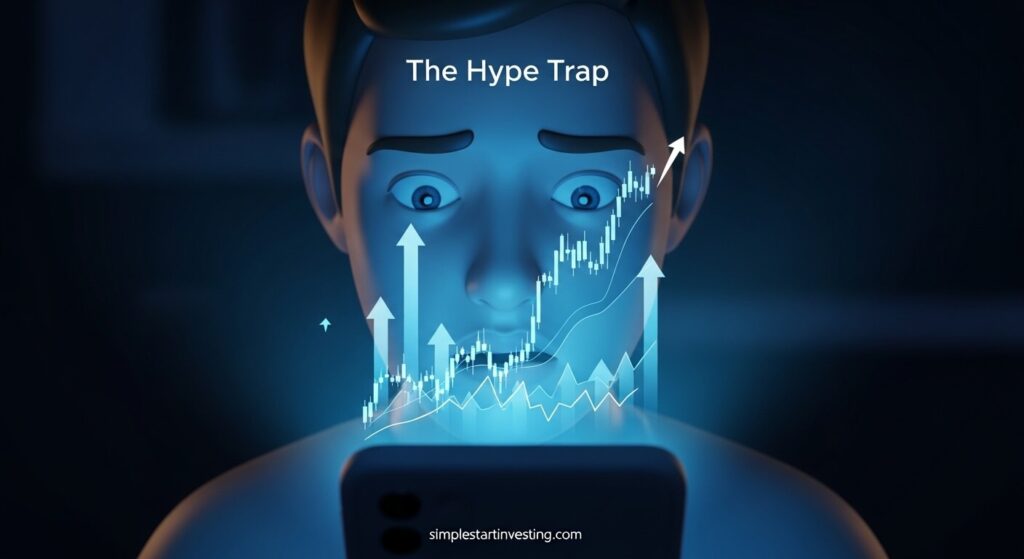
You open your phone, scroll through social media, and there it is again. Another person is posting a screenshot of a massive gain from a stock you’ve never heard of. Or maybe it’s a big name like Tesla or a new AI startup that seems to be going to the moon. You feel a tightness in your chest. You think, “If I had just put 1,000 dollars in last week, I’d be up hundreds by now.”
That feeling has a name: Investing FOMO, or the Fear Of Missing Out. It is one of the most powerful and dangerous emotions a beginner investor can face. It makes smart people do very impulsive things, like buying a stock at its highest price just because they don’t want to be left behind.
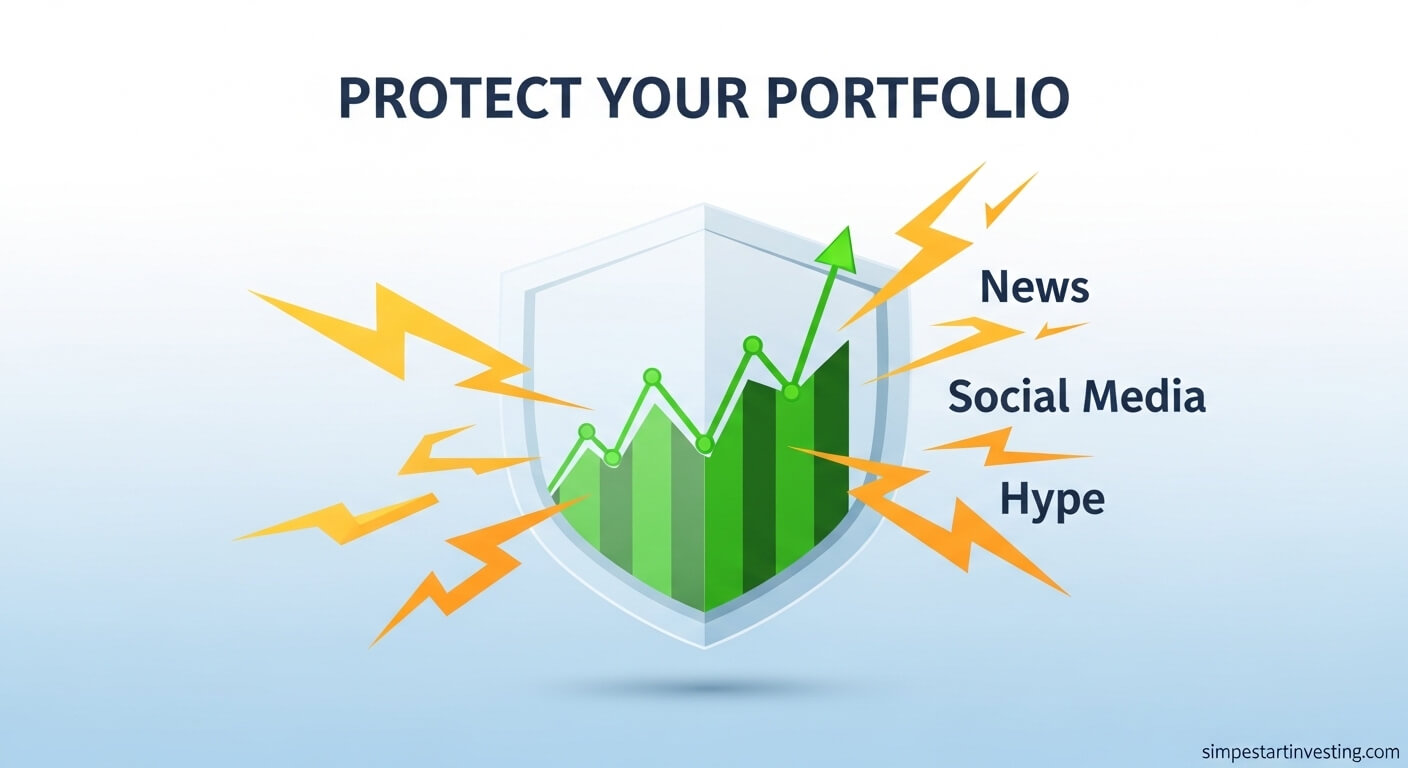
In this guide, we are going to break down exactly what Investing FOMO is, why our brains are wired to fall for it, and how you can build a shield around your portfolio to keep your emotions out of your money decisions.
What Exactly Is Investing FOMO?
At its core, Investing FOMO is the anxiety that other people are getting rich while you are sitting on the sidelines. It’s that nagging voice in your head saying you’re losing a “once-in-a-lifetime” opportunity.
When you see a stock price climbing rapidly, your brain’s reward center lights up. You stop looking at the risks and start focusing only on the potential “easy money.” This usually leads to “chasing the dragon”—buying into an investment after the big gains have already happened.
For example, imagine a popular tech company like Nvidia or Apple announces a breakthrough. The stock price jumps 20 percent in two days. A beginner might see this and rush to buy, fearing that if they wait until tomorrow, it will be up another 20 percent. Often, that is exactly when the professional investors start selling to take their profits, leaving the beginner holding an expensive stock that might soon drop in value.
Why Do We Fall for the Hype?
It is important to understand that you aren’t “bad” at investing if you feel FOMO. You are human. Our ancestors survived by following the tribe. if the whole tribe was running toward a fruit tree, you ran too. If they were running away from a bush, you didn’t stop to ask why—you just ran.

In the modern stock market, this “herd mentality” works against us. Here is why beginners are especially vulnerable:
- Social Media Echo Chambers: TikTok, Reddit, and X (formerly Twitter) are designed to show you the most exciting stories. You rarely see someone post about their 500-dollar loss, but you’ll see a hundred posts about a 5,000-dollar win. This creates a distorted reality where it seems like everyone is winning but you.
- The “Get Rich Quick” Myth: We live in a culture of instant gratification. We want the 10-year return in 10 days. This impatience is the fuel that FOMO burns.
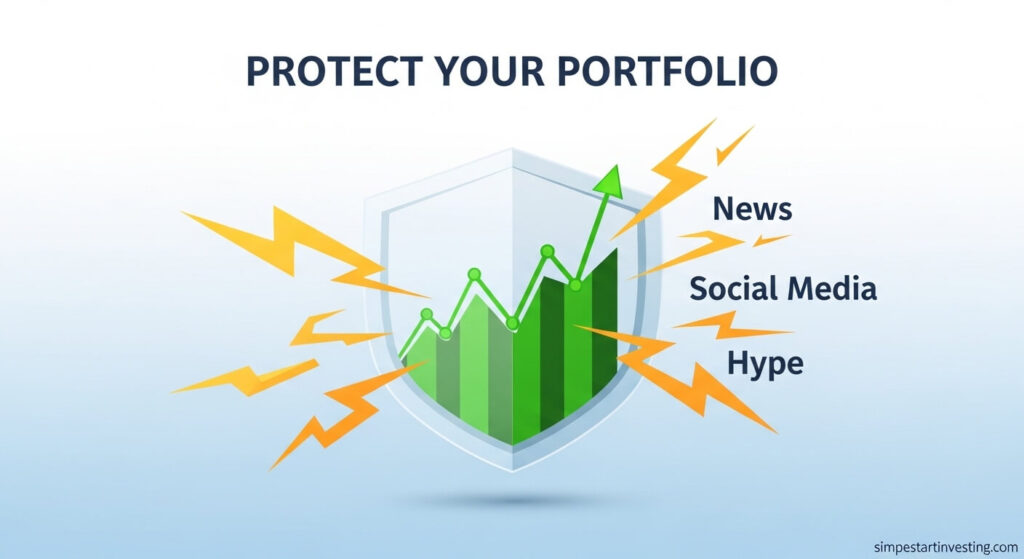
- Lack of a Plan: If you don’t have a written strategy for why you are buying a stock, you are essentially a leaf in the wind. Any news story or social media post can blow you in a new direction.
The High Price of Emotional Investing
When you let Investing FOMO drive the bus, your returns usually suffer. Most people who trade based on emotion end up doing the opposite of the golden rule: “Buy low, sell high.” Instead, they buy high out of excitement and sell low out of fear.
Let’s look at a simple scenario. Imagine you have 1,000 dollars to invest. You see a “meme stock” trending everywhere. You buy in at 100 dollars per share, getting 10 shares. A week later, the hype dies down, and the price drops to 70 dollars. Your 1,000 dollars is now worth 700 dollars.
If you had stayed disciplined and waited for the hype to cool, or invested in a diversified fund, you wouldn’t be staring at a 30 percent loss. The cost of FOMO isn’t just the money you lose; it’s the time you waste and the stress you endure.
Signs You Are Making a FOMO-Based Decision
Before you hit the “buy” button on your brokerage app, ask yourself these questions. If you answer “yes” to more than one, you might be caught in a FOMO trap.
- Am I buying this because of a headline? If your only research is a news article or a viral video, you are reacting, not investing.
- Am I worried about “missing the boat”? Real wealth is built over decades. There is no such thing as a “last chance” in the stock market. There will always be another company and another opportunity.
- Do I understand how this company actually makes money? If you can’t explain the business model to a ten-year-old, you shouldn’t be putting your hard-earned money into it.
- Is my heart racing? Investing should be boring. If you feel a “rush” or high levels of adrenaline, you are gambling, not investing.
How to Protect Your Portfolio from Your Emotions
The good news is that discipline is a muscle you can build. You don’t need to be a math genius to stop FOMO; you just need to set up “guardrails” for your behavior.
1. The 24-Hour Rule
This is the simplest tool in your kit. Whenever you feel an intense urge to buy a specific stock, force yourself to wait 24 hours. Don’t look at the price. Don’t read more comments. Just step away.
Usually, by the next morning, the emotional “fever” has broken. You’ll be able to look at the numbers more clearly. If the investment still makes sense after a day of reflection, it’s much less likely to be a FOMO-driven mistake.
2. Write an “Investment Thesis”
Before you buy anything, write down two or three sentences explaining why. For example: “I am buying Costco because they have a loyal membership base and steady growth, and I plan to hold this for at least five years.”
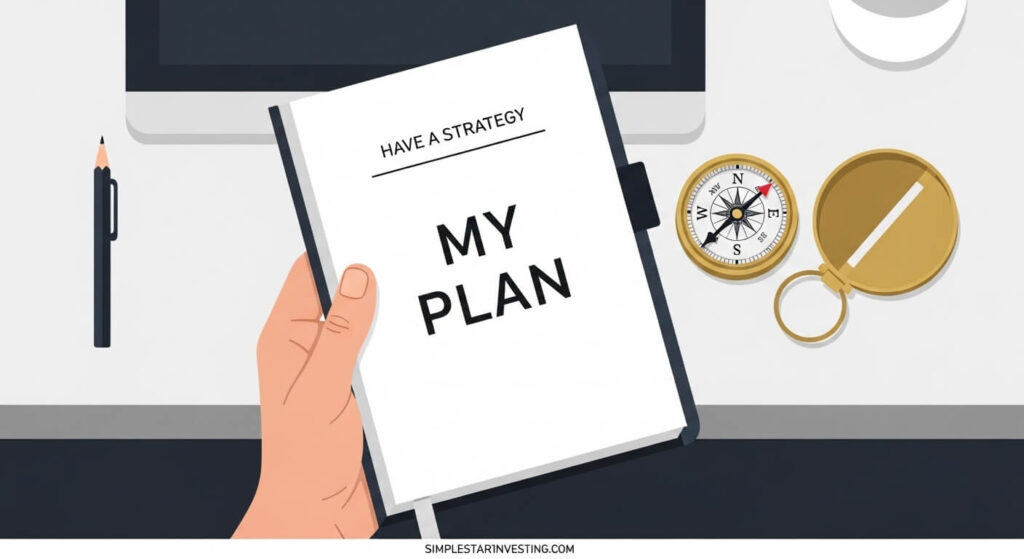
If your reason is “Because everyone on Reddit says it’s going to 1,000 dollars,” you’ll see how silly it looks when written on paper. Having a written reason gives you something to look back on when the market gets volatile.
3. Focus on the “Boring” Path
Professional investors often say that if investing is exciting, you’re probably doing it wrong. Instead of hunting for the next “moonshot,” focus on broad-based index funds or ETFs. These are baskets of hundreds of companies.
When you own a piece of the entire market, you don’t have to worry about missing out on one specific stock because you probably already own a tiny piece of it through the fund. It takes the pressure off your shoulders.
Understanding the Difference Between Price and Value
One major mistake beginners make is thinking that a rising price means a stock is “good.” But price and value are two different things.
Think of it like buying a pair of sneakers. If a pair of shoes usually costs 100 dollars but suddenly everyone wants them and the price jumps to 500 dollars, are the shoes “better”? No, they are the same shoes; they are just more expensive.
In the stock market, Investing FOMO makes us want to buy things precisely when they are the most expensive. A smart investor looks for value—buying quality companies when they are “on sale” or at a fair price, regardless of what the crowd is doing.
Why “Missing Out” Is Actually Okay
One of the hardest things to accept is that you will miss out on some winners. You might see a stock go from 10 dollars to 100 dollars and realize you didn’t own any of it.
That is perfectly fine.
The goal of investing isn’t to catch every single winner. The goal is to grow your wealth steadily over time without losing your shirt. It is better to “miss out” on a 50 percent gain than to lose 50 percent of your savings on a risky bet you didn’t understand.
In the long run, the person who consistently earns a steady, average return every year will almost always end up wealthier than the person who constantly swings for home runs and strikes out half the time.
The Power of Dollar-Cost Averaging (DCA)
If you struggle with the “timing” of the market—feeling like you always buy at the wrong time—then Dollar-Cost Averaging is your best friend.

Instead of trying to guess when a stock is at its lowest, you commit to investing a set amount of money every month, no matter what the price is. For example, you decide to put 200 dollars into a total market fund on the 1st of every month.
- If the price is high this month, your 200 dollars buys fewer shares.
- If the price is low next month, your 200 dollars buys more shares.
Over time, this “averages out” the price you pay. It completely removes the need to watch the news or feel FOMO. You are on autopilot, and your wealth grows quietly in the background while you focus on your life.
Building a Disciplined Mindset
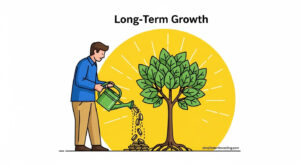
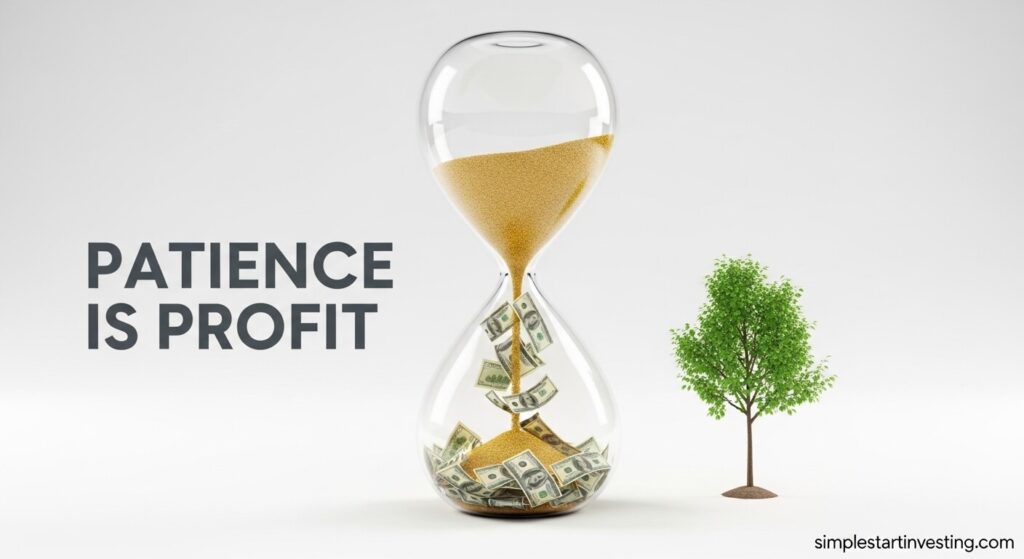
To be a successful long-term investor, you have to stop viewing the stock market as a game or a casino. Treat it like a farm. You plant the seeds (your money), you water them (add more money regularly), and you wait for years for the trees to grow.
You don’t go out to the farm every day and dig up the seeds to see if they are growing. You don’t get angry if your neighbor’s corn is taller than yours this week. You trust the process.
When you see others bragging about their quick wins, remember that for every “winner” you see, there are a thousand silent losers who gambled and lost. Staying disciplined isn’t just about protecting your money; it’s about protecting your peace of mind.
Final Thoughts for the Beginner
The market is designed to provoke your emotions. It will try to make you greedy when prices are high and fearful when prices are low. Your job as an investor is to recognize these feelings and refuse to let them pull the trigger.
By using the 24-hour rule, writing down your reasons for every trade, and sticking to a simple, consistent plan like Dollar-Cost Averaging, you can conquer Investing FOMO. You’ll sleep better at night knowing your financial future is based on a solid plan, not a social media trend.
Remember, the market will always be there tomorrow. There is no rush. Start small, stay consistent, and keep your eyes on your own goals, not someone else’s highlight reel.
Disclaimer: This content is for educational purposes only and does not constitute financial advice. Market conditions change frequently, and you should always perform your own research or consult with a professional before making investment decisions.