Many people dream of owning real estate because they want to build wealth and collect rent checks every month. However, the reality of being a landlord often involves 2:00 AM phone calls about broken toilets, chasing down late payments, and needing hundreds of thousands of dollars just to get started. What if you could skip all those headaches but still get a piece of the real estate pie?
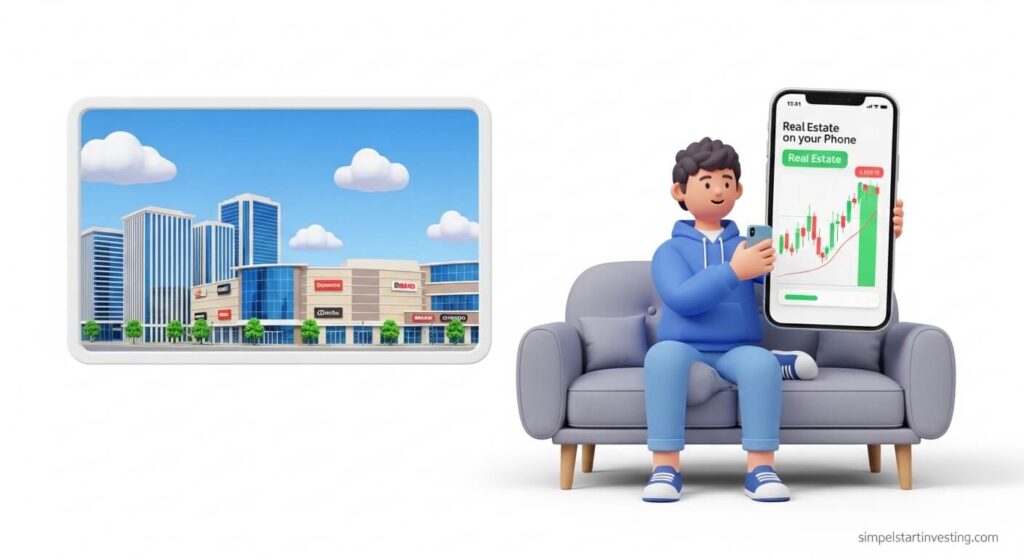
This is where investing in REITs comes into play. If you have ever wanted to own a portion of a massive shopping mall, a high-tech data center, or a luxury apartment complex with just a few hundred dollars, you are in the right place. Investing in REITs allows you to participate in the real estate market through the stock market, making it one of the most accessible ways for beginners to diversify their portfolios.
In this guide, we are going to break down exactly what these “trusts” are, how they pay you, and why they might be the “missing piece” in your financial plan.
What Exactly Is a REIT?
REIT stands for Real Estate Investment Trust. Think of a REIT like a mutual fund, but instead of holding stocks or bonds, the company owns, operates, or finances income-producing real estate. These companies pool the capital of numerous investors to purchase large-scale properties that would be impossible for an individual to buy alone.
When you buy a share of a REIT, you are essentially becoming a “silent partner” in a massive real estate empire. You don’t have to worry about mowing the lawn or paying property taxes. The professional management team at the REIT handles all the “dirty work” while you sit back and receive a portion of the income generated by those properties.
To qualify as a REIT in the United States, a company must meet very specific rules set by the Internal Revenue Service (IRS). The most important rule for you to know is that they must distribute at least 90% of their taxable income to shareholders in the form of dividends. This is why REITs are so popular among people looking for steady cash flow.

The Common Misconception: Is It Just Like Flipping Houses?
One of the biggest mistakes beginners make is thinking that investing in REITs is the same as “flipping” houses or speculative land buying. In the world of physical real estate, people often make money by buying low, fixing up a property, and selling it high.
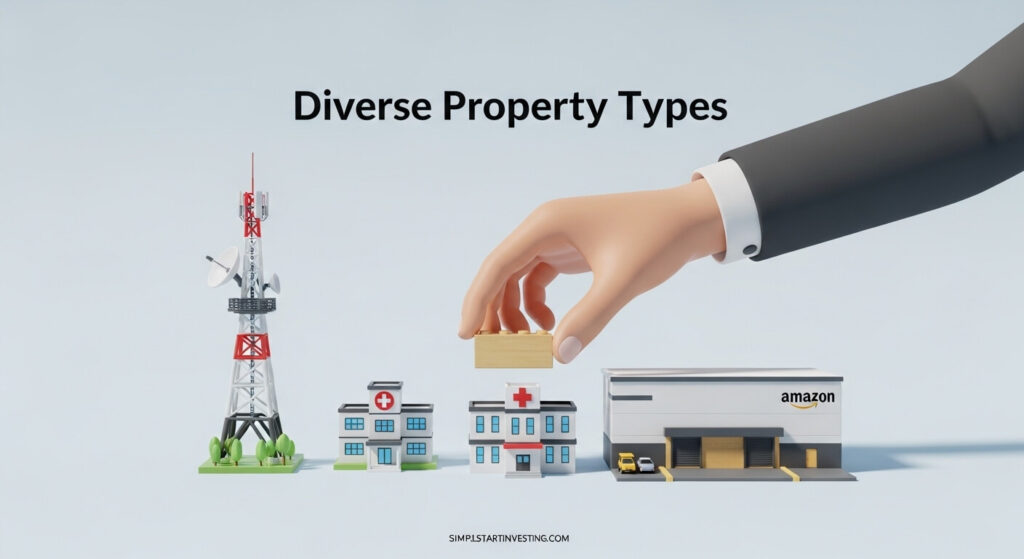
REITs work differently. Most REITs focus on long-term rental income. They want to own properties that have stable, high-paying tenants who sign multi-year leases. For example, a REIT might own a building leased to a major hospital or a warehouse leased to an e-commerce giant like Amazon.
The goal isn’t necessarily to sell the building next week; it is to collect rent year after year and pass that money on to you. If you are looking for a “get rich quick” scheme through property flipping, REITs are likely not the right tool for you. They are built for stability and consistent income.
How REITs Make Money for You
Understanding the “math” behind a REIT is simpler than it looks. Let’s walk through a basic example using logic rather than complex formulas.
Imagine a REIT owns 10 large office buildings. Every month, the businesses renting those offices pay a total of 1 million dollars in rent. Out of that 1 million dollars, the REIT has to pay for building maintenance, security, and the salaries of their employees. Let’s say those costs add up to 400,000 dollars.
That leaves 600,000 dollars in profit. Because of the IRS rules we mentioned earlier, the REIT cannot just keep all that money to buy more buildings. They are legally required to give at least 540,000 dollars—which is 90% of that 600,000—back to the shareholders.

If you own shares in that REIT, you get your “slice” of that 540,000 dollars based on how many shares you own. This is paid out as a dividend, usually every quarter, though some REITs pay every single month.
Why Beginners Love Investing in REITs
If you are just starting out, you might only have 500 dollars or 1,000 dollars to invest. In the physical real estate world, that wouldn’t even cover the inspection fee on a house. However, in the world of REITs, that money can go a long way.
1. Low Barrier to Entry
You can buy a single share of a REIT for the price of a nice dinner. This allows you to start small and “learn as you grow.” You don’t need a massive down payment or a perfect credit score to get started.
2. High Liquidity
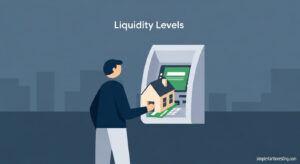
If you own a physical house and suddenly need cash, it could take months to sell that house and get your money. REITs are traded on major stock exchanges. This means if you need your money back, you can sell your shares with a simple click on your phone, and the cash will be in your account in a matter of days. This is called liquidity, and it is a massive advantage for beginners.
3. Professional Management
When you invest in a REIT, you are hiring a team of experts. These professionals spend 40 hours a week researching the best neighborhoods, negotiating leases with billion-dollar companies, and managing property upgrades. You get the benefit of their expertise without having to do the work yourself.
The Different “Flavors” of REITs
Not all real estate is the same. Just like you wouldn’t compare a beachfront condo to a suburban warehouse, you shouldn’t treat all REITs the same way. Investing in REITs gives you access to sectors you might never have considered.
Retail REITs
These companies own shopping malls, strip centers, and big-box retail stores. When you walk into a Walmart or a Target, there is a chance that the building itself is owned by a REIT.
Residential REITs
These focus on places where people live. This includes large apartment complexes, manufactured housing communities, and even “single-family rental” portfolios. In cities where home prices are sky-high, these REITs often see very steady demand.
Healthcare REITs
These are very interesting for long-term investors. They own hospitals, medical office buildings, and senior living facilities. As the population in the U.S. ages, the demand for these types of properties generally stays very strong, regardless of what the rest of the economy is doing.
Data Center and Cell Tower REITs
This is the “modern” side of real estate. Every time you stream a movie or use an app on your phone, that data is traveling through a physical tower or being stored in a giant building filled with servers. These buildings are real estate, and some of the largest REITs in the world specialize in owning this digital infrastructure.
The Risks: It’s Not All Sunshine and Dividends
No investment is perfect. While investing in REITs has many perks, you need to understand the “other side of the coin” before you dive in.
Interest Rate Sensitivity
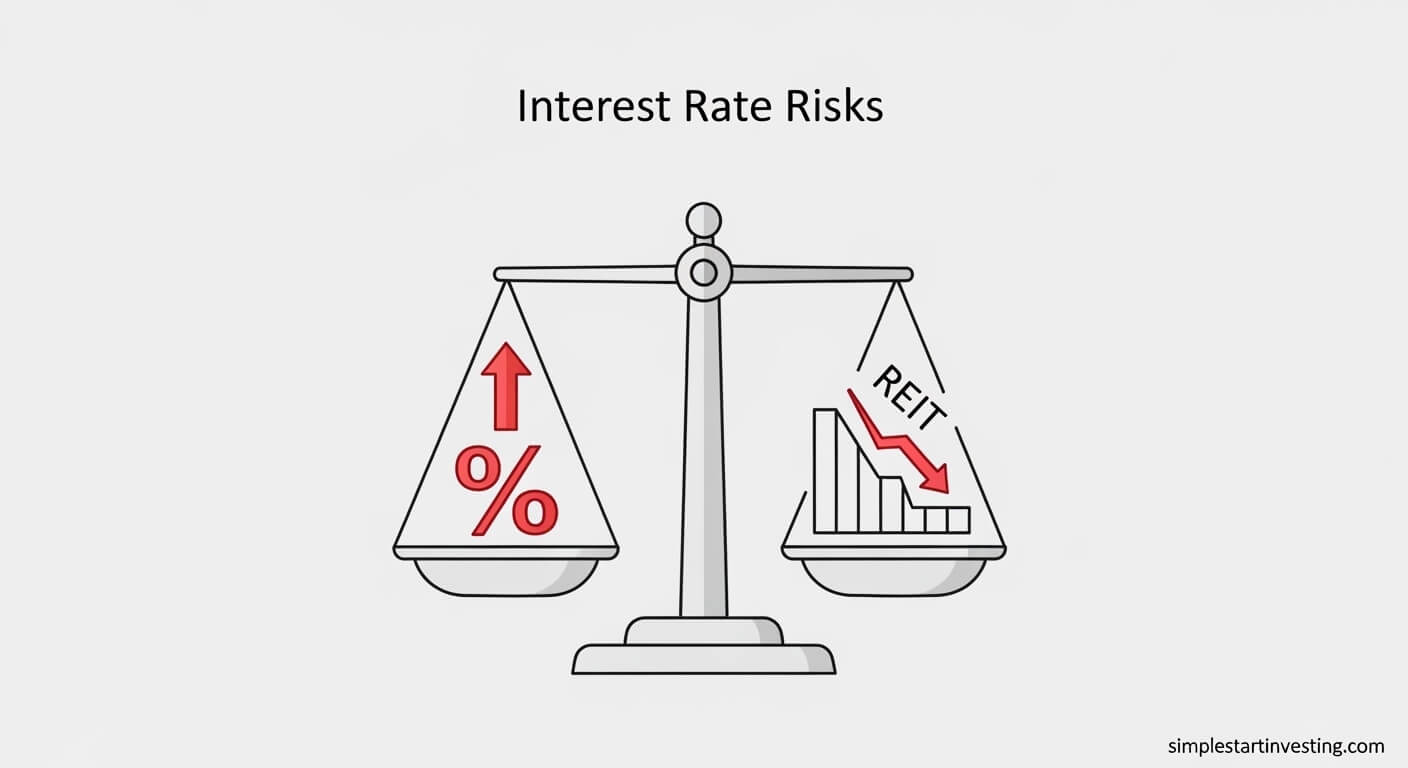
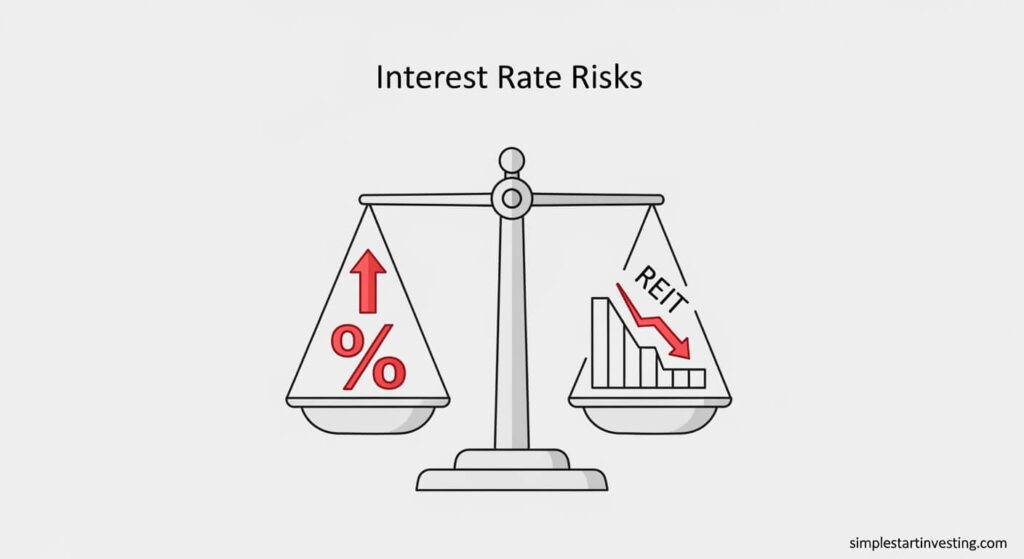
Real estate companies often borrow a lot of money to buy their buildings. When interest rates in the U.S. go up, it becomes more expensive for these companies to borrow. Also, when interest rates on “safe” investments like savings accounts go up, people might sell their REIT shares because they can get a decent return elsewhere without the stock market risk. This often causes REIT share prices to drop when interest rates rise.
Tax Implications
This is a point where beginners often get confused. In the U.S., most dividends from regular stocks (like Apple or Coca-Cola) are taxed at a lower “qualified” rate. However, because REITs don’t pay corporate taxes at the company level, the IRS taxes the dividends you receive as ordinary income. This means they are taxed at the same rate as your paycheck. It is often wise to talk to a tax professional about holding REITs in a tax-advantaged account like a Roth IRA.
Market Volatility
Even though the underlying asset is “hard” real estate, the REIT itself is a stock. This means its price can swing up and down based on market rumors, economic news, or general stock market panic. You have to be prepared to see the value of your investment change daily, even if the buildings themselves are still standing and the tenants are still paying rent.
How to Get Started: Step-by-Step
You don’t need a special “real estate license” to start investing in REITs. You just need a standard brokerage account.
- Open a Brokerage Account: Use a reputable U.S. broker. Many modern apps allow you to buy “fractional shares,” meaning if a REIT share costs 200 dollars but you only have 20 dollars, you can buy 10% of a share.
- Research the “Ticker”: Every REIT has a symbol (like “O” or “PLD”). Look for companies with a long history of paying dividends and “quality” tenants.
- Check the “Funds From Operations” (FFO): In the stock world, we usually look at “Net Income.” But for REITs, that number can be misleading because of how buildings lose value on paper over time (depreciation). Instead, look for a number called FFO. Think of FFO as the “actual cash” the company has left over after its operations. If the FFO is consistently higher than the dividend they pay out, that is a good sign of a healthy company.
- Start Small: Don’t put all your money into one type of REIT. Maybe start with a little bit in a residential REIT and a little bit in a healthcare REIT to spread out your risk.
REITs vs. Physical Real Estate: Which is Better?
There is no “right” answer here; it depends on your lifestyle.
If you love DIY projects, want to use “leverage” (borrowing money from a bank) to buy a big asset, and want full control over your tenants, then physical real estate might be for you. You can often make more money with physical property because you are doing all the work.
However, if you want a “passive” experience where you can invest while you sleep, travel, or work your 9-to-5 job, then investing in REITs is the clear winner. You sacrifice a little bit of control in exchange for professional management and the ability to sell your investment instantly if you ever need the cash.
Final Thoughts for the Beginner Investor
Real estate is one of the oldest and most proven ways to build wealth in America. For a long time, it was a “club” that only the wealthy could join. REITs changed that by bringing the “Main Street” investor to the “Wall Street” table.

When you start investing in REITs, you aren’t just buying a ticker symbol on a screen. You are buying a piece of the infrastructure that makes our country run—from the warehouses that ship our packages to the apartments where our neighbors live.
Take your time, do your research, and remember that real estate is a marathon, not a sprint. By understanding how these trusts work, you are taking a massive step toward building a more diversified and income-producing financial future.
Disclaimer: This content is for educational purposes only and does not constitute financial, legal, or tax advice. Always conduct your own research or consult with a qualified professional before making investment decisions.