Most people believe that when the closing bell rings at 4:00 PM in New York, the stock market takes a nap until the next morning. You might see the final price of Apple or Tesla on the evening news and assume that is the price you will deal with tomorrow. In reality, the stock market never truly sleeps.
There is a whole world of activity known as after-hours trading that happens while you are eating dinner or even while you are fast asleep. For a long time, this “night shift” of the market was reserved for big banks and wealthy institutional investors. Today, thanks to modern apps and digital platforms, you can participate too. But should you?

Understanding after-hours trading is essential because it explains why a stock might be at 100 dollars when you go to bed and suddenly open at 90 dollars the next morning. This guide will pull back the curtain on what happens after dark and help you decide if you should join the late-night action or stay safely on the sidelines.
What Exactly Is After-Hours Trading?
When we talk about the “regular” stock market, we are usually referring to the hours between 9:30 AM and 4:00 PM Eastern Time. This is when the major exchanges like the New York Stock Exchange (NYSE) and the Nasdaq are fully open for business.
After-hours trading refers to the buying and selling of stocks that occurs outside of these standard hours. This period is generally broken into two main parts. The first is the “Pre-market” session, which typically starts as early as 4:00 AM and runs until the opening bell at 9:30 AM. The second is the “After-hours” session, which starts at 4:00 PM and usually lasts until 8:00 PM.
Together, these sessions are known as “extended-hours trading.” Unlike the regular session where human floor traders might still have a role, the extended session is entirely electronic. It relies on systems called Electronic Communication Networks, or ECNs, which automatically match buyers and sellers from around the world.
Why Does the Market Keep Moving After 4:00 PM?
If the “official” trading day is over, why do people keep trading? The simple answer is that news does not follow a schedule. Companies and the government often wait until the market is closed to release big updates.
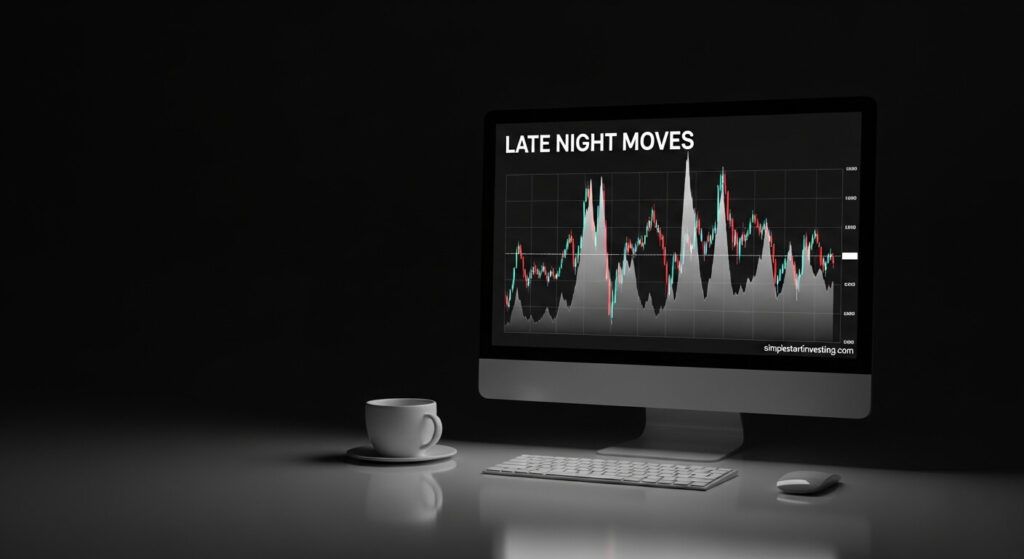
Imagine a major tech company like Amazon. If they released their quarterly earnings report at 2:00 PM, the stock price might go haywire while people are still trying to trade normally. To avoid this chaos, most companies wait until after 4:00 PM to tell the world how much money they made.
Investors who see this news don’t want to wait until the next morning to act. If the news is great, they want to buy immediately before the price climbs too high. If the news is terrible, they might want to sell before the price drops further. This rush to react to new information is what drives most of the volume in after-hours trading.
The Common Misconceptions About the “Closing Price”
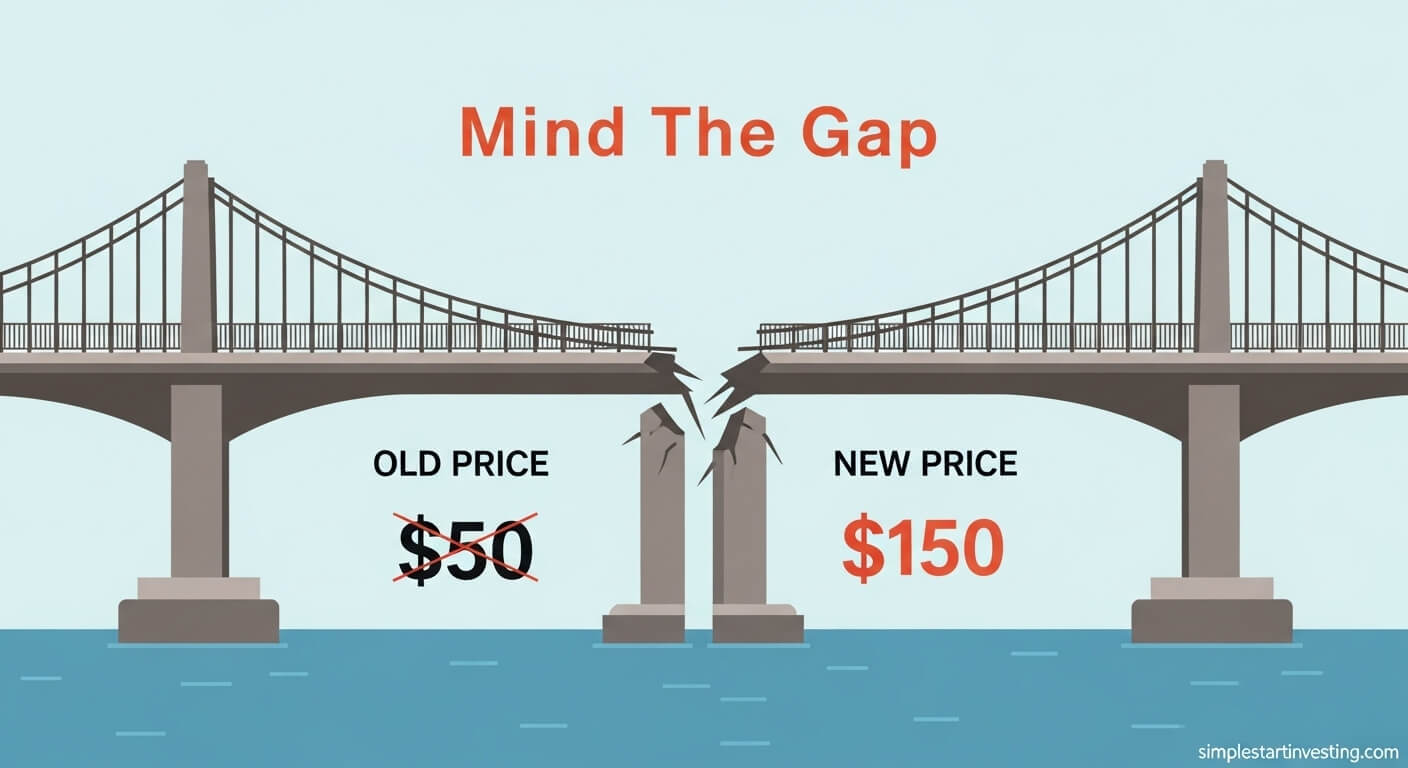
As a beginner, it is easy to fall into the trap of thinking the 4:00 PM price is “locked in.” You might look at your portfolio and see your favorite stock ended the day at 50 dollars. You wake up the next morning, look at the app at 9:00 AM, and see the price is now 45 dollars.
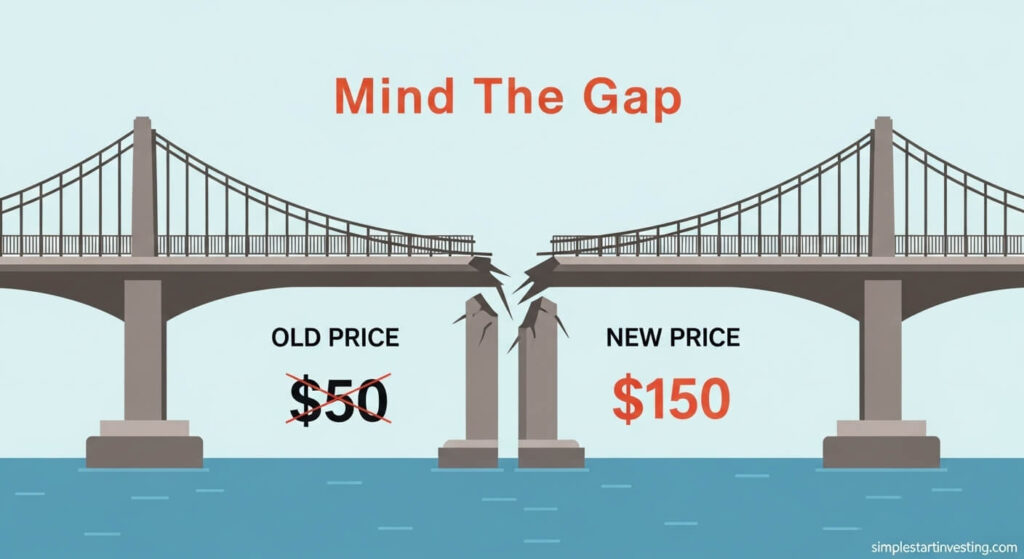
You might feel like you were robbed or that the app is broken. What actually happened is that after-hours trading moved the price while you weren’t looking. The “closing price” is just a snapshot of the last trade made during regular hours. It is not a guarantee of what the stock will be worth five minutes later.
This is why understanding the extended market is so important. It prevents the “sticker shock” that many new investors feel when they see a stock “gap” up or down overnight. The market is a continuous flow of information, and the 4:00 PM bell is more of a shift change than a hard stop.
How After-Hours Trading Differs from the Regular Day
Trading at 6:00 PM is a very different experience than trading at 11:00 AM. In the middle of the day, there are millions of people and thousands of computer programs constantly buying and selling. This creates a “smooth” environment. In the extended hours, that environment changes in three major ways.
1. The Liquidity Problem
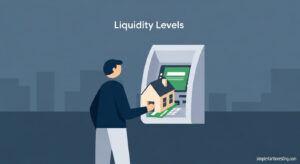
Liquidity is just a fancy word for “how easy it is to buy or sell without changing the price.” During the day, liquidity is high. If you want to sell 10 shares of a popular stock, there are probably a thousand people willing to buy them.
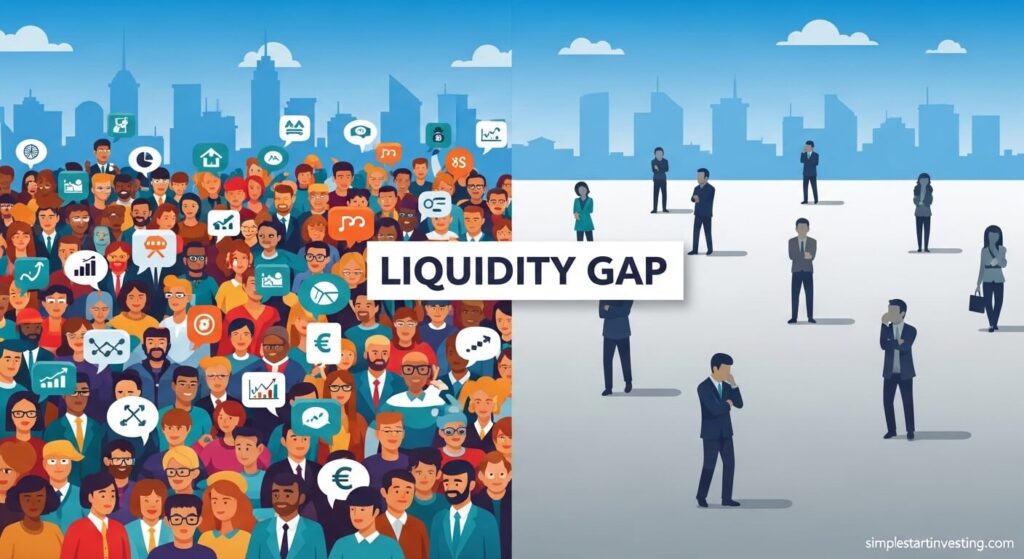
In after-hours trading, the “crowd” is much smaller. Most retail investors are at home, and many professional traders have logged off. With fewer people in the room, it becomes much harder to find a partner for your trade. If you are trying to sell and nobody is buying, you might have to lower your price significantly just to get out.
2. The Danger of “The Spread”
Because there are fewer people trading, the gap between what a buyer wants to pay and what a seller wants to receive becomes much wider. This gap is called the bid-ask spread.
During the day, a stock might have a buyer at 100.00 dollars and a seller at 100.01 dollars. The difference is only a penny. In the after-hours, you might see a buyer at 100.00 dollars and the nearest seller at 102.00 dollars.
If you just click “buy” without looking, you might end up paying 102 dollars for a stock that was just worth 100 dollars a few minutes ago. This “hidden cost” can eat up your profits before you even get started.
3. Intense Volatility
When news hits a thin market with few traders, the price can jump like a startled rabbit. A small amount of buying or selling can move the price of a massive company by several percentage points in seconds. This is known as volatility. For a beginner, this can be terrifying. You might see your investment drop 10% in ten minutes, only to see it bounce back the next morning when the “regular” investors show up and decide the reaction was overblown.
The Tool You Must Use: Limit Orders
If you decide to try after-hours trading, you cannot trade the same way you do during the day. During regular hours, many beginners use “Market Orders,” which basically tell the broker, “Just get me the stock at whatever the current price is.”
In the after-hours, a market order is extremely dangerous. Because the spreads are so wide, a market order could execute at a price far away from what you expected.

Instead, you must use a Limit Order. A limit order allows you to set a specific price. You are essentially saying, “I will buy this stock, but only if it costs 100 dollars or less.” If the price is 101 dollars, the trade won’t happen. This protects you from the wild price swings that happen when the market is “thin.”
Why Beginners Often Get Burned After Dark
The biggest mistake beginners make in after-hours trading is reacting emotionally to news. Let’s say a company you own shares in announces they missed their profit goals. You see the stock price starting to fall in the after-hours session.
Panic sets in. You see it drop from 100 dollars to 95, then to 90. You decide to sell at 90 dollars just to “save what’s left.” Because there are so few buyers, you might actually sell your shares to a professional who is waiting for panicky beginners.
The next morning at 9:30 AM, thousands of investors look at the news and decide it wasn’t that bad. The stock opens at 96 dollars. By selling in the after-hours, you locked in a loss at the worst possible price. Professional traders often use the low liquidity of the after-hours to “hunt” for these emotional trades.
The Role of Institutional Investors
It is important to remember who you are trading against after 4:00 PM. While you might be sitting on your couch with a smartphone, the people on the other side of the trade are often professional hedge fund managers or institutional algorithms.
These players have access to faster data and more sophisticated tools. They are often the ones reacting to the initial “shock” of news. For a beginner, trying to beat these professionals in a market with no rules and low volume is like trying to play a professional basketball game in the dark. You might score a point, but the odds are heavily against you.
How to Check After-Hours Prices Correctly
Not all websites and apps show you the real-time after-hours price. Some will keep showing the 4:00 PM closing price until the next morning. If you want to see what is actually happening, you need to look for a label that says “After Hours” or “Ext. Hours” on your finance app.
Common platforms like Yahoo Finance, Google Finance, and most major brokerage apps (like Fidelity, Schwab, or Robinhood) will show a small secondary number next to the main price. This is the current “live” price in the extended session. If you see “After Hours: 105.00 (+5%),” it means the stock has moved up since the official close.
Is After-Hours Trading Ever a Good Idea?
Despite the risks, there are times when knowing how to use after-hours trading is helpful.
- Immediate Reaction to True Emergencies: If a company you invest in announces something catastrophic (like a legal disaster or a total product failure), you might want to exit the position immediately rather than waiting for the “gap down” the next morning.
- Convenience for Busy People: If you work a job where you cannot check your phone between 9:30 AM and 4:00 PM, the extended hours give you a window to manage your portfolio.
- Capitalizing on Overreactions: Occasionally, the after-hours market overreacts to news. If you are a very disciplined investor, you might find an opportunity to buy a great company at a “discount” because a few people panicked at 5:00 PM.
However, for 95% of beginners, the best strategy is usually to watch, learn, but wait for the regular session to trade. The “sanity” provided by the millions of other traders during the day acts as a safety net for your money.
Step-by-Step: How a Typical After-Hours Trade Works
Let’s walk through a mental example to see how the logic flows without using complex math.
Imagine you own shares of a popular coffee company. It is 4:15 PM, and the company just announced they are closing half of their stores.
- The News Hits: You see the news on your phone. You check the price. It closed at 100 dollars, but the “After Hours” price already shows 92 dollars.
- Checking the “Bid” and “Ask”: You look at your trading app. You see the “Bid” (what buyers want to pay) is 90 dollars. You see the “Ask” (what sellers want) is 94 dollars.
- The Decision: You decide you want to sell. You don’t want to risk it falling to 80 dollars by morning.
- Setting the Limit: You do NOT use a market order. You set a Limit Order to sell at 91 dollars.
- The Match: An electronic network (the ECN) looks for a buyer willing to pay at least 91 dollars. If someone has a “buy” order sitting there at 91.50 dollars, your trade is matched instantly.
- The Result: You sold your shares at 91 dollars. You are now out of the stock. Whether the stock goes back up to 95 or down to 80 by morning, your journey with those shares is over.
Notice how in this example, the “spread” between 90 and 94 dollars meant that your choice of a “limit” price was the only thing protecting you from getting the lowest possible price.
Understanding the “24-Hour Market” Trend
Recently, some brokerages have started offering “24-hour” trading on certain popular stocks and ETFs. This is an even more extreme version of after-hours trading. It means you could technically trade Nvidia or the S&P 500 index at 2:00 AM on a Tuesday.
While this sounds exciting, the risks we discussed—low liquidity and high volatility—are even more intense in the middle of the night. Very few people are trading at 2:00 AM New York time. This means the prices you see might be based on the actions of just a handful of people. Just because you can trade in the middle of the night doesn’t mean it’s a wise move for your long-term savings.
The Impact on Your Long-Term Strategy
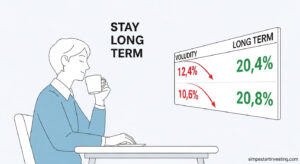
For a long-term investor who buys stocks to hold for five or ten years, after-hours trading is mostly “noise.” It is a distraction that can lead to impulsive decisions. If you believe in a company’s future, a 5% drop at 6:00 PM on a Thursday shouldn’t change your entire investment plan.
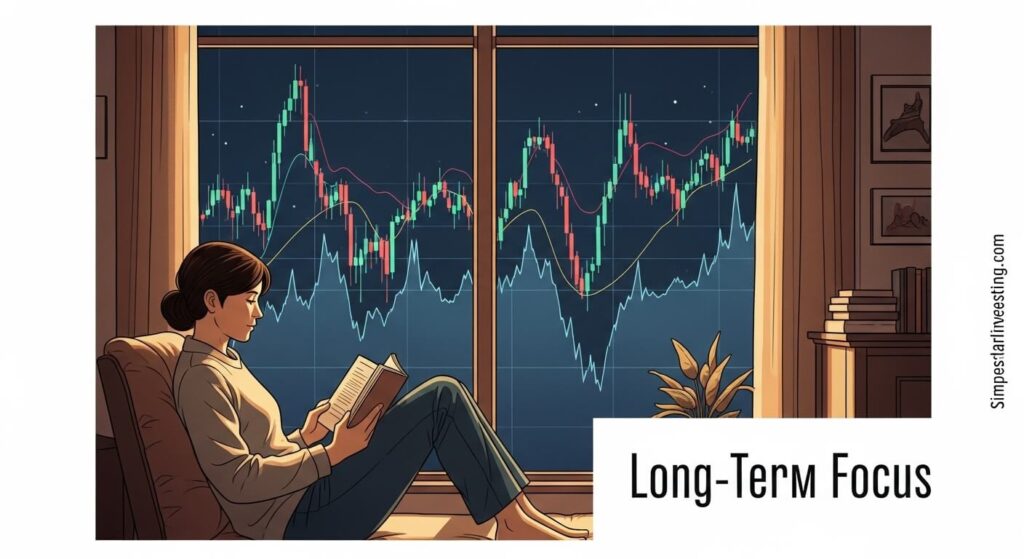
The market’s after-dark activity is a tool, not a requirement. By understanding how it works, you gain the “superpower” of not panicking when the morning news shows a different price than the one you saw yesterday. You realize that the market is a 24-hour conversation, and you can choose when you want to join that conversation.
Summary of Best Practices for Beginners
If you feel you must participate in the extended-hours market, keep these simple rules in mind:
- Always use limit orders. Never let the market decide your price when the lights are low.
- Check the volume. Look at how many shares have actually been traded in the after-hours. If only 100 shares have moved, the price change might not be “real.”
- Expect the unexpected. Be prepared for the price to move in the opposite direction the moment the regular market opens at 9:30 AM.
- Stay calm. News always sounds more dramatic when the market is closed and there are fewer people to balance out the opinions.
After-hours trading is one of the most fascinating parts of the financial world. It is where the first reactions to history happen. But for those just starting their journey, it is often best viewed as a spectator sport. Watch the drama, understand the mechanics, but keep your hard-earned money in the “daylight” until you are fully comfortable with the risks of the dark.
Disclaimer: This content is for educational purposes only and does not constitute financial advice. The stock market involves significant risk, and extended-hours trading carries additional risks including lower liquidity and higher volatility. Always consult with a qualified financial professional before making investment decisions.