Imagine you are standing in a massive parking lot filled with thousands of different vehicles. On one side, you see sleek, neon-colored sports cars. They look incredibly fast, they are expensive to maintain, and everyone is talking about how quickly they can go from zero to sixty. On the other side, you see sturdy, silver pickup trucks. They aren’t the flashiest, but they have a reputation for lasting thirty years, and they always get the job done without breaking down.
In the world of the stock market, this is exactly what growth vs value investing looks like.
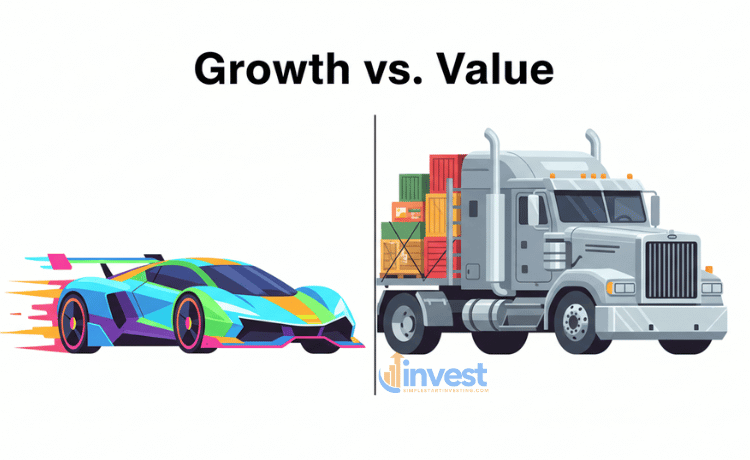
When you start your journey as an investor, one of the first big questions you will face is whether you want to own the “race cars” or the “reliable trucks.” This choice isn’t just about picking a stock; it is about choosing a philosophy that matches your personality and your financial goals. Whether you are looking at high-tech giants like Tesla or steady household names like Walmart, understanding the dance between growth and value is the key to building a portfolio that lets you sleep at night.
What Is Growth Investing? (The “Race Car”)
Growth vs value investing starts with understanding the seekers of speed. Growth investing is a strategy where you focus on companies that are expanding much faster than the average business in the economy. These companies usually have a “secret sauce”—maybe it is a groundbreaking technology like Artificial Intelligence, or a brand that younger generations absolutely love.

In simple terms, growth investors are looking for the next big thing. They don’t care if the company is expensive today because they believe it will be much, much bigger five or ten years from now.
A Real-World Example: Nvidia (NVDA)
Think about a company like Nvidia. For many years, they were known mostly for making parts for gaming computers. But then, the world shifted toward Artificial Intelligence. Suddenly, Nvidia’s products became the “brain” for almost every AI system on the planet.
If you bought Nvidia as a growth investor, you weren’t looking at how much money they made yesterday. You were betting that every data center in the world would eventually need their chips. Growth companies like this usually take all the profit they earn and immediately plow it back into the business—hiring more engineers, building more factories, and inventing new products. Because of this, they almost never pay you a “dividend” (a cash reward for owning the stock). Your profit comes only if the stock price goes up.
The Common Beginner Mistake
Many new investors see a growth stock that has already doubled in price and think, “I missed it. It’s too expensive to buy now.”
The Correct Financial Logic
High price doesn’t always mean “bad deal.” In growth investing, you are paying a premium for future potential. If a company like Amazon seems expensive today but eventually controls half of the world’s retail market, that “expensive” price today might actually be a bargain in hindsight. The goal isn’t to buy a cheap stock; it’s to buy a company whose future is much brighter than the market currently realizes.
What Is Value Investing? (The “Reliable Truck”)
If growth investing is about the future, value investing is about the “here and now.” Value investors are like bargain hunters at a high-end garage sale. They look for solid, profitable companies that—for some reason—are being ignored or unappreciated by the rest of the stock market.

Think of it as buying a 100 dollar bill for only 80 dollars. You know the bill is worth 100 dollars, but the person selling it is in a rush or doesn’t realize what they have. Eventually, you believe the rest of the world will realize the true value, and the price will rise to where it belongs.
A Real-World Example: Coca-Cola (KO)
Consider Coca-Cola. It is a company that has been around for over a century. They aren’t inventing a new way to travel to Mars, and they probably won’t grow their sales by 50% next year. However, they have a massive, loyal customer base and a “Reliable Truck” business model.
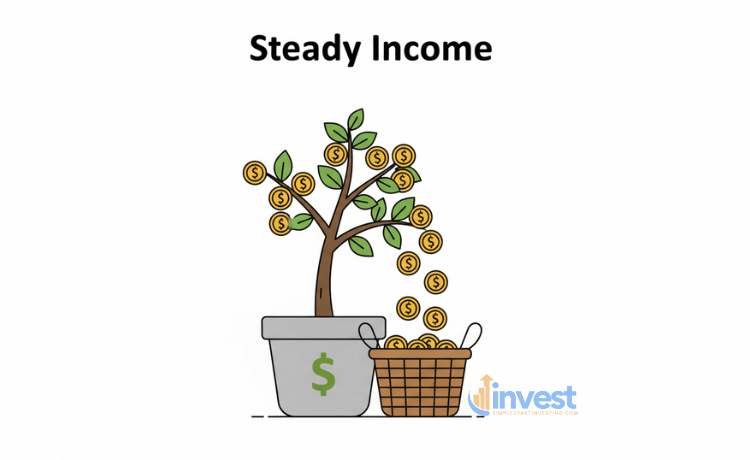
Because they are already so big, they don’t need to spend every single dollar on expansion. Instead, they take a portion of their profits and send it directly to your bank account every three months in the form of a dividend. If the stock market gets nervous and tech stocks start crashing, people usually keep buying soda. This makes value stocks like Coca-Cola or JPMorgan Chase feel much more stable during a “bumpy ride.”
The Common Beginner Mistake
Beginners often think that because a value stock’s price hasn’t moved much in two years, it’s a “bad” investment. They get bored and sell it to chase a shiny new tech stock.
The Correct Financial Logic
Value investing is about “Total Return.” While the stock price might grow slowly, you are often being paid to wait through dividends. If you reinvest those dividends to buy more shares, your wealth can grow quietly and powerfully over time. A stock that stays at 50 dollars but pays you 2 dollars every year in cash is often a better long-term move than a “hot” stock that goes to 100 dollars and then crashes back to 20 dollars.
Growth vs. Value Investing: The Tug-of-War
When comparing growth vs value investing, it is helpful to look at how they behave differently in the real world. The market usually goes through cycles where one style outperforms the other.
1. Interest Rates and the Economy
Interest rates are like gravity for the stock market. When rates are high, it is more expensive for companies to borrow money. This hits growth stocks harder because they often rely on borrowing to fund their massive expansion projects.
Value stocks, on the other hand, often have plenty of cash in the bank and less debt. This is why you might see banks or energy companies like ExxonMobil doing well when interest rates are higher, while high-flying tech companies start to struggle.
2. The Price-to-Earnings (P/E) Ratio
In the investment world, we use a simple logic to see how “expensive” a stock is. Imagine a company makes 1 dollar of profit for every share you own.
- If the stock price is 50 dollars, people are willing to pay 50 times the earnings. This is common for a growth stock.
- If the stock price is 15 dollars, people are only paying 15 times the earnings. This is more typical for a value stock.
As a beginner, don’t let these numbers scare you. Just remember: Growth investors pay a high price because they expect that 1 dollar of profit to become 10 dollars soon. Value investors pay a low price because they think that 1 dollar of profit is already worth more than 15 dollars.
Why Is This Comparison Important Right Now?
In the current market of 2026, we are seeing a “split” in the economy. Some companies are using AI to grow at record speeds, while others are struggling with the higher costs of doing business.
The gap between the “expensive” growth stocks and “cheap” value stocks is quite wide. This means that if you only buy growth, you might be taking on a lot of risk if those companies don’t meet their sky-high expectations. If you only buy value, you might miss out on the incredible technological shifts that are changing the world.
The Concept of a “Value Trap”
One of the most dangerous things for a beginner is a “Value Trap.” This is a company that looks cheap—its stock price has been falling for years—but it is cheap for a reason. Maybe their product is becoming obsolete, or they have too much debt.
- Example: Imagine a company that makes DVD players. The stock price might be very low, but since no one buys DVD players anymore, that “bargain” is actually a sinking ship.
- The Fix: Always ask yourself, “Is this company still relevant?” A true value stock is a good company having a bad day, not a bad company having its last day.
Which Style Fits Your Personality?
Choosing between growth vs value investing isn’t just about the numbers; it’s about how you handle stress.
You Might Be a Growth Investor if:
- You have a long time before you need your money (10-20 years).
- You enjoy following the latest news in tech and innovation.
- You don’t mind seeing your account balance drop by 20% in a single month, as long as you believe in the long-term goal.
- You aren’t looking for monthly income right now.
You Might Be a Value Investor if:
- You prefer a “steady as she goes” approach.
- You love the idea of getting a “check in the mail” (dividends) every quarter.
- You get nervous when you see stocks making wild price swings.
- You enjoy the feeling of finding a “deal” that everyone else has missed.
Can You Have Both? (The “Blended” Approach)
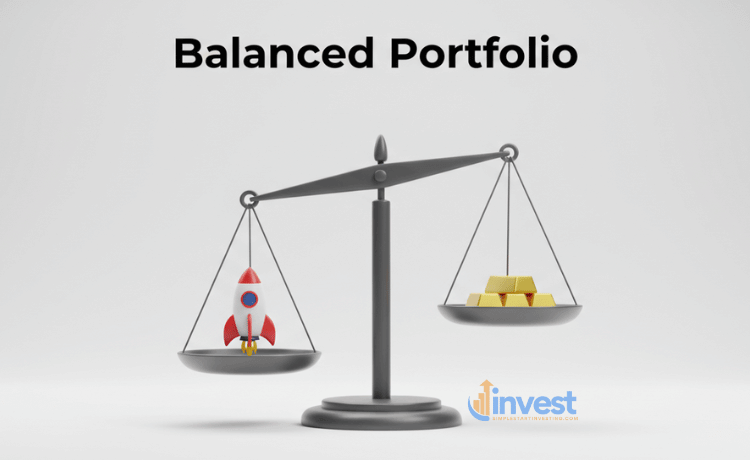
Most successful investors don’t actually choose just one. They use a “Blended” or “Core and Satellite” strategy.
- The Core: You put the majority of your money into a mix of both. This is often done through an Index Fund or ETF that tracks the entire S&P 500. This way, you own both the Apple (Growth) and the Procter & Gamble (Value).
- The Satellite: You take a smaller portion of your money and “tilt” it toward the style you prefer. If you are young and aggressive, you might add extra growth stocks. If you are approaching retirement, you might add extra value stocks.
How the Math Works for a Beginner
Let’s say you have 1,000 dollars to start. If you put it all in a single growth stock and that stock drops by 50%, you now have 500 dollars. That can be painful to watch. But if you put 500 dollars in Growth and 500 dollars in Value, and the growth stock drops by 50% while the value stock stays flat and pays you a 5% dividend…
- Your 500 dollars in growth becomes 250 dollars.
- Your 500 dollars in value becomes 525 dollars (including the dividend).
- Total balance: 775 dollars.
By mixing the two, you have created a “cushion” that protects you from the extreme highs and lows of the market.
Tax Rules You Should Know (2026 Guidelines)
In the United States, how you are taxed depends on which style you choose. It is important to keep these current IRS rules in mind for this year:
- Dividends (Common in Value): Most dividends from big U.S. companies are “Qualified.” For many people making a moderate income, the tax rate on these is 15%. If your total income is below about 49,000 dollars (for single filers) or 99,000 dollars (for married couples), you might actually pay 0% in federal taxes on those dividends this year.
- Capital Gains (Common in Growth): You only pay tax on growth when you sell the stock for a profit. If you hold the stock for more than one year, you get a “long-term” rate, which is usually 15%. If you sell in less than a year, you pay your normal income tax rate, which is much higher.
Pro-Tip: If you love growth stocks, try to hold them for at least a year and a day to keep more of your profits. If you love value stocks, consider holding them in a tax-advantaged account like a Roth IRA where those dividends can grow tax-free.
Note: Tax regulations can change; please check current IRS guidance or consult a professional.
Summary: Finding Your Lane
At the end of the day, growth vs value investing is about balance. The stock market needs both the innovators and the stalwarts to function.
If you are just starting, don’t feel pressured to pick a “team.” Many of the world’s best investors, including Warren Buffett, have used both styles throughout their careers. They look for “Growth at a Reasonable Price” (often called GARP). They want the race car, but they want to buy it at a truck price.
Start small, stay consistent, and remember that the best investment style is the one you can stick with for the next twenty years.
Key Takeaways for Beginners:
- Growth is about potential, innovation, and reinvesting profits. (Think: Tesla, Amazon).
- Value is about stability, dividends, and buying “deals.” (Think: Coca-Cola, Walmart).
- Growth stocks tend to be more volatile (bigger price swings).
- Value stocks often provide steady cash flow through dividends.
- Diversification (owning both) is usually the smartest move for someone just starting out.
Disclaimer: This content is for educational purposes only and does not constitute financial advice. Investing involves risk, including the possible loss of principal.